Category Archives: Holidays & Festivals

Sukkot – The Feast of Tabernacles

etrogandlulavWe made it! That’s the way I feel today after observing two of three Jewish High Holy days. Both Rosh Hashanah and Yom Kippur are hard holidays. During this time, we repent, fast, pray all day and take measure of our souls and sins against God and our fellow man. After all, we must first recognize our sins before we can authentically repent and seek His forgiveness.

The other day I was riding on the subway, and I sat next to a young Hasidic boy. He was a senior in a Jewish religious school for boys – a Yeshiva – and I asked him how his observance of the holy days had gone so far. He looked at me and said, “it was hard.” When I asked why, he recounted for me the difficulties inherent in the Day of Atonement observances: self-denial, fighting the worshiping crowds in a room that seemed far too small for this most holy day of the year, and going hungry from one evening to the next.

I sympathized and told him that this was the way I grew up, and that although I looked like a secular Jew, my love for God and need to be close to Him was strengthened by my own observance of the holiday. I did not go much further than this, but I did make the point that one does not need to be a religious Jew to desire a deeper proximity to the Holy One of Israel.

Some of my Christian friends seem to think that Jewish followers of Jesus, like myself, should not fast or spend the day confessing our sins and repenting – because we have our atonement through the Messiah! Of course, this is true, and I am grateful for the decision I made to ask Yeshua to be my Lord and Messiah when I was 19 years old. I have never looked back.

But as a Jewish person, I still follow many of the traditions of my forefathers, as we can draw closer to God through repentance, prayer, and denying the flesh. Not to make atonement for ourselves, as this is an impossibility, but rather to deepen our appreciation of the work of Yeshua the Messiah on our behalf as we view our sins more honestly and take time to inspect our souls. It is only when we understand our sinfulness do we really recognize what was done for us at Calvary.

But now it’s the middle of the week of the Feast of Tabernacles! The load of guilt is either gone or no longer the focus of the community, and Jewish people are all smiles. The sense of release is palpable; I can feel the joy in the air.

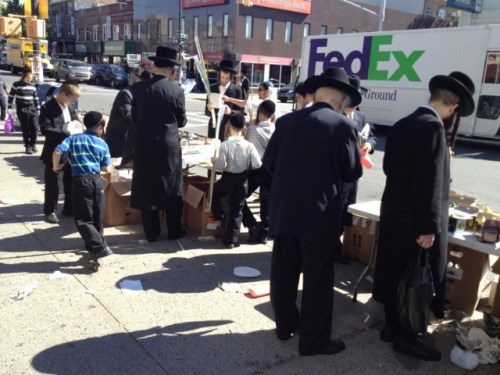
I visited one of our ultra-Orthodox Jewish areas in Brooklyn and watched as crowds of Hasidim gathered around street vendors selling the lulav, etrog and other materials needed to observe the festival. During the observance of Tabernacles, Jewish people wave the combined branches of myrtle, palm and willow which are wrapped together and shaken to all four sides and up and down to remind us of God’s sovereignty over all things. These are shaken along with the lemon-like etrog – a large and beautiful citrus fruit that reminds us of the final harvest of fruit in Israel. (Leviticus 23:40)
sukkot shopping 2

This conclusion to the cycle of feasts calls our attention to God’s faithfulness and fills our souls with expectation that the harvests will be renewed in the year to come, as He brings the rain and performs the miracle of bringing forth fruits, vegetables and grain from seeds planted.

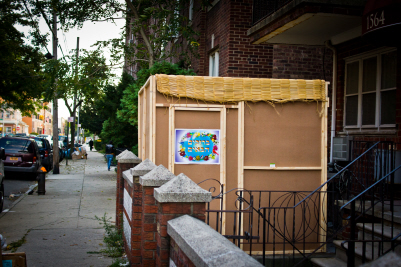
Sukkot (booths) dotted the Orthodox areas of Brooklyn as well. We are commanded to live in little tabernacles during the seven days of the festival to remind us of the manner in which the Lord provided for us during the wilderness wanderings. This tradition also helps us remember that He who provided during a difficult 40 years is the same One who provides for us today. And even though we live in very flimsy and vulnerable tabernacles made of flesh, God is loving and powerful and will care for us as He did for our ancestors during their wanderings through the desert.
sukkah5

The lessons of this joy-filled holiday are as endless as the faithfulness and goodness of God!

For me as a Messianic Jew, the most profound message of the Feast of Tabernacles came when God sent His Messiah, born of a Jewish virgin, to live in a frail, human tent and to dwell among us;

And the Word became flesh, and dwelt among us, and we saw His glory, glory as of the only begotten from the Father, full of grace and truth. (Jn. 1:14)

We have seen the Glory of the One who carried us through the desert as if on eagles’ wings (Ex. 19:4), from the revelation at Sinai to the Promised Land. This same Lord is the One who said, “Come to Me, all who are weary and heavy-laden, and I will give you rest” (Matt 11:28). This is a much-appreciated change from the “hard” holidays of Rosh Hashanah and Yom Kippur. We no longer need to repent and focus on atonement for sin, but instead are commanded to rejoice and enjoy what God has done for a broken world!

Rejoice – for Messiah died and rose and will come again when we will dwell together in His Tabernacle of grace. The whole earth will be filled with His majesty and glory.

and you shall rejoice before the Lord your God for seven days. (Lev. 23:40)

Be sure to find out more about Sukkot by clicking here.
3 Comments

Filed under Holidays & Festivals

Shedding Tears of Repentance – Avinu Malkenu (Our Father, Our King)

One of the most beautiful and moving penitential prayers in the Jewish liturgy is entitled Avinu Malkenu (Our Father, Our King). It is prayed – and more often sung – a number of times throughout the Jewish year, but it really comes to prominence during the Jewish High Holy Days, being sung during the Rosh Hashanah New Year’s service and again on Yom Kippur – the Day of Atonement.

There are a few different versions of this prayer, some longer and others more abbreviated. But it is always prayed or sung with some degree of pathos, as its words praise God for His faithfulness and are intended to move those who pray Avinu Malkenu to repentance. When sung properly, this prayer will break your heart.

In Jewish life, the Avinu Malkenu prayer is motivated by a desire to be forgiven of sin. In Jewish tradition, Rosh Hashanah begins a process of ten days of repentance that culminates in the observance of the Day of Atonement. During these ten days, it is said that the books of those destined for life and death are opened in heaven. God, the supreme judge, weighs the good and evil deeds of men and women and decides their fate for the year.

Avinu Malkenu is mournfully sung as an appeal to God to notice our good deeds and our repentance, and to forgive our sins. Then, it is believed, we will have a good year—and if we pass away, then we would go to heaven rather than the Jewish concept of hades.

It is worth reading a version of the full prayer, but this is not easily found. It is written out in The Authorized Daily Prayer Book (revised edition) by Dr. Joseph H. Hertz, which is published by Bloch publishing company in New York City. One of the later editions would be best to read – I personally own the 1979 edition of this Jewish prayer book, and the prayer can be found on pages 167-168.

A number of versions of the Avinu Malkenu prayer are also found in the special prayer book called the Machzor, which has been developed throughout centuries of Jewish tradition and is used during Rosh Hashanah and Yom Kippur. You can borrow it from the library or purchase a copy at http://www.artscroll.com/Products/MPSP.html, which has an array of excellent Jewish resources that are oftentimes beautifully printed.

The following is an abridged version of the prayer in English:

Hear our prayer. We have sinned before Thee. Have compassion upon us and upon our children. Help us bring an end to pestilence, war, and famine. Cause all hate and oppression to vanish from the earth. Inscribe us for blessing in the Book Of Life. 
Let the New Year be a good year 

for us.[1]

The prayer appeals to God’s grace and compassion. It is an admission of sin and guilt, and calls upon those who pray it to change their lives and do good by making the world a better place for all. The prayer calls upon God to write our names in the Book of Life and to grant us the assurance of sins forgiven—at least for one more year!

I appreciate the sentiments of this traditional prayer, and hope it will move you as well. This is a significant time of the year for anyone who wants to draw near to the Lord. As a Messianic Jew, I appreciate the High Holidays as they remind me of my own need to repent and seek the Lord more deeply. In fact, knowing that Yeshua is the Messiah and the ultimate sacrifice for sin (Hebrews 10:8-14) helps me to appreciate this prayer and season of the year even more.

I am not seeking atonement or forgiveness through repentance, fasting or any other human effort. Our efforts to earn forgiveness from a Holy God are impossible, as this gift is only granted by God Himself through the work of His Son. But we do drift from God during the course of our lives. This is why it is worthwhile to pause our usual activities and seek His face, repenting and turning from our everyday sinful behavior and asking Him for greater grace and the strength to live for Him.

There is nothing like hearing Barbara Streisand, who is originally from Brooklyn, sing this magnificent prayer. Click on the following link, open your heart, and enjoy this moving Jewish melody, which epitomizes the hopes of the Jewish people during this time period between Rosh Hashanah (the New Year) and Yom Kippur (the Day of Atonement).

http://www.youtube.com/watch?v=0YONAP39jVE&list=RD02vDCcar_u5eY


[1] http://www.metrolyrics.com/avinu-malkeinu-lyrics-barbra-streisand.html

7 Comments

Filed under Holidays & Festivals

Rosh Hashanah

We are about to observe the Jewish New Year, which is called Rosh Hashanah, literally meaning “the head of the year.” Rosh Hashanah is the first of the three Fall Feasts; it is followed by Yom Kippur (the Day of Atonement) and Sukkot (the Feast of Tabernacles). It is celebrated on the first day of the month of Tishrei in the Jewish calendar.

Rosh Hashanah is one of the seven great festivals appointed by God, all of which are listed in Leviticus chapter 23 and mentioned in a number of other passages in the Scriptures. There is also a vast amount of Rabbinic teaching describing the festivals and their observance.

Each of these holy days was established by God and revealed to the children of Israel through Moses, who received the calendar as part of the Sinai revelation. These holidays are supremely important to the Jewish people, and both Rosh Hashanah and Yom Kippur are observed each year by the majority of Jewish people, whether secular or religious. Rosh Hashanah is also an important family holiday, and many Jewish families around the world will have special dinners and spend time together, as well as attending Synagogue.

In the Bible, this festival is called Yom Teruah, which is Hebrew for “the day of the blowing of the trumpet.” In this sense, it functions as a call to attention for the Jewish people, preparing us for the Day of Atonement coming ten days later.

The blasts of the shofar (ram’s horn) sounded on Rosh Hashanah also remind us of the obedience of Abraham, who was willing to offer his only son as a sacrifice in obedience to God, though God stopped Abraham before he went through with it! The shofar reminds us that God demands full and unquestioning obedience.

The great theme of Rosh Hashanah is repentance. In fact, the first day of Rosh Hashanah begins a season of ten days of repentance, which are often called the Ten Days of Awe by the Jewish people. The observance of the Day of Atonement concludes these ten days. Most Jewish people believe that repentance is the path that leads to the forgiveness of sin, which is secured in the closing moments of Yom Kippur.

Though it is difficult to explain the difference, forgiveness is stressed in the Jewish community far more than personal salvation, especially as understood by most Christians. Jewish people are not as apt to think about personal salvation, a secured future beyond the grave and the power of God infused into our everyday existence by the presence of the Holy Spirit. All too often, Christians read concepts that are commonly understood by born again believers into Judaism. However, Jewish people do think about forgiveness during this time of year and are usually eager to repent before God and reconcile with anyone they may have offended.

However, in this view, forgiveness is seen as temporal, needing annual renewal and received on the basis of both God’s grace and mercy as well as one’s repentance and willingness to obey His Law found in the five books of Moses – at least this is the traditional Jewish teaching on the subject.

So why is Rosh Hashanah important to me as a Jewish follower of Jesus the Messiah?

Allow me to give a few reasons why I personally observe Rosh Hashanah as well as what it means to me.

Observing Rosh Hashanah is a wonderful way of identifying with my Jewish people on a more spiritual level, rather than focusing on Israel or on social, cultural or political concerns that might be important to Jewish community life.

This festival causes me to reflect and take stock of my life and especially my relationship with God. Seasons of spiritual reflection are wonderfully enriching and necessary in the midst of our busyness – even if we are busy doing the Lord’s work. Rosh Hashanah reminds me of my own need to repent regularly of my sins and to be faithful and obedient to God’s Word.

It also provides a wonderful time with my family, as well as being a fruitful season of witness in which I am able to invite Jewish friends and neighbors to our services and Bible studies around the globe. It is one thing to tell a Jewish person they can be Jewish and believe in Jesus… and it’s quite another to sit next to them at a Messianic Jewish Rosh Hashanah service, listening to the blowing of the shofar and the chanting of familiar prayers, and hearing the message of Messiah. In some ways, this is much more powerful. As believers, we know and proclaim that repentance from sin is only one part of the path to forgiveness and personal salvation… as it is only when we receive Yeshua as our Messiah that we are able to enjoy eternal forgiveness, freedom from condemnation, and the power to live transformed lives!

The shofarreminds us of what lies ahead, as the blast of trumpets will announce Messiah’s return on the day when those who believe will be raised to new and everlasting life.

As Rabbi Saul – the Apostle Paul writes,

For the Lord Himself will descend from heaven with a shout, with the voice of the archangel and with the trumpet of God, and the dead in Christ will rise first. Then we who are alive and remain will be caught up together with them in the clouds to meet the Lord in the air, and so we shall always be with the Lord. (1 Thessalonians 4: 16-17)

There is much more to say about this festival – so I highly recommend that you visit the Chosen People Ministries website for Rosh Hashanah resources!

I would be interested in knowing what Rosh Hashanah means to you, and in whether or not you find spiritual value in setting aside time for deeper reflection and for repentance.

2 Comments

Filed under Holidays & Festivals