The Gospel is Moving with Power in Israel

Dear friend,

Shalom in His grace! I recently returned from Israel where I spent three weeks encouraging the Chosen People Ministries staff and had the joy of working on some exciting new strategies for reaching and discipling Israelis!

As you probably have gleaned from the past few newsletters—I have Israel on my heart! We are excited about what God is doing everywhere – from New York City to Los Angeles, Chicago to Toronto, and across the globe; we regularly see Jewish people coming to faith in Jesus!

But, the Gospel seems to be moving in power within Israel as more and more Israelis are showing an interest in Jesus!

This reminds me of a passage of Scripture in the Book of Romans, where the Apostle Paul identifies himself as a Jewish believer in Jesus to the believers in Rome. He describes himself as part of the remnant “according to God’s gracious choice” (Romans 11:5)!

The eleventh chapter of Romans is filled with prophecy and looks forward to the second coming of Christ. Paul very clearly lets the Romans know that though the remnant of Israel seem few, the day is coming when the Jewish people will all believe in Jesus…at least, I believe, all the Jewish people who are alive at that incredible moment in human history.

We also understand that the reason the Jewish people will come to faith in Jesus is because God promised He would be faithful to the Jewish nation. He still loves His chosen people and has not forgotten His plan revealed thousands of years ago to the fathers, Abraham, Isaac, and Jacob! As he writes to the Romans,

From the standpoint of the gospel they are enemies for your sake, but from the standpoint of God’s choice they are beloved for the sake of the fathers; for the gifts and the calling of God are irrevocable. (Romans 11:28-29)

Will we be alive to see this great turning of the Jewish people to Jesus the Messiah? MAYBE.

I believe that every follower of Jesus should be future oriented, looking towards the great day when God will consummate His promises and we will all be changed, our sinful and broken world will be restored and the knowledge of the glory of God will fill the earth as the waters fill the sea. (Habakkuk 2:14)

There is so much we will never know about the future until it comes! But, there is quite a bit we can know about what God has promised in His word, especially as it relates to Israel and her neighbors in the Middle East.

Chosen People Ministries would like to help you learn more about what is to come. We have prepared an incredible conference focusing on the current Middle East conflict to help us better understand what is happening today and what will take place tomorrow from a biblical perspective.

Please consider coming to the Dallas/ Fort Worth Metroplex for what might very well be a once-in-a-lifetime conference on the Gospel and the Middle East featuring Joel Rosenberg and great Bible scholars from both Dallas Theological Seminary and Southwestern Baptist Theological Seminary.

The dates are October 13-14, 2017 and there will be testimonies from Messianic Jews and former Muslim believers in Jesus. You will enjoy the soulful and beautiful music of Marty Goetz and the dynamic Israeli contemporary music of Miqedem, coming to us from Israel. Click here to learn more and to register!


Blessings in our Messiah,

Mitch

Leave a comment

Filed under Conference

Update from Jerusalem

Dear friend,

Shalom from Jerusalem! I am visiting our staff in Israel for a few weeks and it is exciting to see what God is doing in the Holy Land!

As you might know, we have a beautiful center in Jerusalem as well as a new facility we are renting in the greater Tel Aviv area. Our Israel team has grown to over 20 staff members and they are serving the Lord in many different ways: ministering to the poor and elderly Holocaust survivors, leading congregations, reaching out to families and young adults, conducting children’s camps, and a whole lot more.

We are also continuing our Isaiah 53 Hebrew campaign and expanding it to Russian Jews living in Israel. We now have our Isaiah 53 Explained evangelistic book available in Russian, as well as a Russian version of our Isaiah53.com website. Over the last year we have received book requests from more than 1,000 Hebrew-speaking Israelis who want to know more about the Lord, and we have been doing our best to follow up with them.

I expect that once the Russian campaign gets going in Israel, we will have many more Jewish people from the former Soviet Union show an interest in the Gospel. The Russian Jews have been very open to Jesus ever since the fall of the Soviet Union and we have found this to be true in the United States, Germany, and Israel where we have already planted a number of Russian-language Messianic congregations. Continue reading

1 Comment

Filed under Israel

Luther and the Jewish People

Dear friend,

The festivities in Germany and around the globe celebrating the 500th anniversary of the Protestant Reformation have begun! These great festivities will culminate on October 31, 2017 as this was the exact date when Martin Luther hammered the 95 Theses to the door at the Wittenberg Chapel (arguments against the system of indulgences practiced by the medieval Catholic church). Of course, there is some discussion about the historical accuracy of this event as he may have simply sent the 95 Theses to the Archbishop of Mainze (in today’s Germany).

This event caused a spiritual revolution that transformed what followers of Jesus believed and the ways in which we practice our faith. There will be a lot to read and view about these events in the months ahead and it would be enriching for believers to better understand the role of Martin Luther and the impact of the Reformation.

Continue reading

3 Comments

Filed under Jews and Christians

What is the role of the Jewish people today?

Shalom dear friend in the Messiah,

We are at war! Personally, I would rather not acknowledge this, because like you, I much prefer seasons of peace and prosperity. I would rather not focus on passages like Ephesians 6:12, where the Apostle Paul describes our warfare,

For our struggle is not against flesh and blood, but against the rulers, against the powers, against the world forces of this darkness, against the spiritual forces of wickedness in the heavenly places.

We understand that whereas the real war we are fighting is against Satan and his soldiers, these heavenly battles are constantly spilling over to planet earth. The devil is attacking every front, hoping to find us asleep, at ease or deluded into thinking that everything is okay.

Continue reading

1 Comment

Filed under Jews and Christians

What holiday do Jews and Christians have in common?

Introduction

The Festivals of Israel

Commonly known to Christians as Pentecost, Shavuot is one of four spring festivals and one of three “Aliyah” festivals found in the Hebrew Scriptures, when Jewish men were commanded to go up to Jerusalem and worship at the Temple. The festivals of Israel were designed by God to focus the hearts and minds of the Jewish people on the redemptive message of God’s person and plan.

The seven great festivals outlined in Leviticus chapter 23 all point to the coming of the Messiah. Jesus had the Festivals, along with other passages of Scripture, in mind when he told the two disciples on the road to Emmaus,

And He said to them, “O foolish men and slow of heart to believe in all that the prophets have spoken! Was it not necessary for the Christ to suffer these things and to enter into His glory?” Then beginning with Moses and with all the prophets, He explained to them the things concerning Himself in all the Scriptures. (Luke 24:25-27)

The four Spring Festivals – Passover, the Festival of Unleavened Bread, First Fruits and Shavuot – were fulfilled in the first coming of Jesus, and the three Fall Festivals, Yom Kippur, Rosh HaShanah and Sukkot will be fulfilled in His second coming.

The First Three Spring Festivals

Passover is a prophetic portrait of the Lamb of God who takes away the sin of the world. The celebration of unleavened bread reminds us of the sinless nature of the Savior. First Fruits, which took place on the Sunday after the Sabbath of Passover speaks of the Messiah who would rise as the first fruit from among the dead.

The Fourth Spring Festival

The Biblical Names

Shavuot – “Weeks” – 7 weeks after Passover

The fourth and final spring festival is called Shavuot, which means “weeks” in Hebrew. Beginning with Passover, Israel is commanded to count seven whole weeks until the 50th day at which point Shavuot is observed.

You shall also count for yourselves from the day after the sabbath, from the day when you brought in the sheaf of the wave offering; there shall be seven complete sabbaths. You shall count fifty days to the day after the seventh sabbath; then you shall present a new grain offering to the Lord. You shall bring in from your dwelling places two loaves of bread for a wave offering, made of two-tenths of an [c]ephah; they shall be of a fine flour, baked with leaven as first fruits to the Lord. Along with the bread you shall present seven one year old male lambs without defect, and a bull of the herd and two rams; they are to be a burnt offering to the Lord, with their grain offering and their drink offerings, an offering by fire of a soothing aroma to the Lord.  You shall also offer one male goat for a sin offering and two male lambs one year old for a sacrifice of peace offerings. The priest shall then wave them with the bread of the first fruits for a wave offering with two lambs before the Lord; they are to be holy to the Lord for the priest. On this same day you shall make a proclamation as well; you are to have a holy convocation. You shall do no laborious work. It is to be a perpetual statute in all your dwelling places throughout your generations. (Leviticus 23:15-21) 

Pentecost – “Fifty” – 50th day after Passover

In Christian tradition the festival is called Pentecost – the Greek term which means “50”, as this fourth spring festival is observed on the 50th day after Passover.

The Traditional Jewish Names

Chag HaKatzir, which means “The Harvest Holiday.”

Chag HaBikurim, meaning “The Holiday of First Fruits.” This name comes from the practice of bringing fruits to the Temple on Shavuot.

Chag ha Azereth  – Jewish tradition designates it as “Chag ha Azereth” or simply “Azereth” (the “feast of the conclusion” or simply “conclusion”).

The Biblical Commands

  1. Count 50 days. Shavuot always falls 50 days after the second night of Passover. The 49 days in between are known as the Counting of the Omer. The counting for the 50 days was to begin on that “day after the Sabbath” (Leviticus 23:15), the day when the First Fruit/sheaf was waved.
  1. Offer two leavened loaves of bread concluding the grain harvest (Leviticus 23:17), which was the Tithe (Leviticus 27:30).
  2. The two loaves were the symbolic results of the one sheaf waved before the Lord on the Day of First Fruits mentioned in Leviticus 23:11.
  3. There were other offerings to be offered that day.
  4. Shavuot is also one of the three pilgrimage feasts which required all Jewish men to appear before the Lord at the Temple in Jerusalem.

Jewish Traditions

There are many Jewish traditions associated with Shavuot, such as reading the Book of Ruth, spending the entire night studying Torah until dawn, chanting the Ten Commandments, decorating synagogues and homes with aromatic spices, and partaking of a dairy meal and dessert.

The Book of Ruth is traditionally read during Shavuot because the biblical account takes place during the summer harvest. The book of Ruth celebrates God restoring honor and dignity to Naomi and her Moabite daughter-in-law, Ruth. Ruth is a gentile who identifies with the Jewish people by committing herself to Naomi and Naomi’s people, the Jewish people. King David, Ruth’s great-grandson, was born and died on this festival.

Many religious Jews commemorate Shavuot by spending the entire night studying Torah at their synagogue or home. They also study other biblical books and portions of the Talmud. This all-night gathering is known as Tikun Leyl Shavuot and at dawn participants stop studying and recite Shacharit, the customary morning prayer.

The Foods of Shavuot

What Jewish holiday would be complete without a signature cuisine? Shavuot is no different! According to long-standing tradition with a blurry origin, dairy foods such as cheese, cheesecake and milk products are eaten on Shavuot. A popular Shavuot delicacy is cheese blintzes. Some believe the tradition is related to The Song of Songs and based upon the passage that references milk and honey in chapter 4, verse 11.

Your lips, my bride, drip honey; Honey and milk are under your tongue, and the fragrance of your garments is like the fragrance of Lebanon.

Many believe that this line is comparing the Bible to the sweetness of milk and honey. In some European cities children are introduced to Bible study on Shavuot and are given honey cakes with passages from the Bible, primarily passages from the first five books of Moses (the Torah), written on them.

Zman Matan Torah –– One of the Hebrew titles for the holiday in Jewish tradition is Zman Matan Torah, “the season of the giving of the Law,” as the rabbis believed that the Law – the Torah, was given on Shavuot.  A special holiday bread with a ladder design embedded into the loaf is eaten – a reminder of the Jewish tradition that Moses climbed a ladder to heaven to receive the Law.

The Messianic Fulfillment of the Festival

Now, if Passover is fulfilled in the death of the Lamb of God, Unleavened Bread in His sinless character, and First Fruits in His resurrection, then we must ask ourselves – how is Shavuot (Pentecost) fulfilled by the first coming of Jesus?

It is no coincidence that God selected this Jewish festival as the day when He would send His Holy Spirit.

The Promise of the Spirit

The 120 Disciples (Acts 1:15) were in one place, in one mind, praying and focusing on God’s work. They were waiting in obedience to the command of Jesus (Acts 1:4-5) and also in obedience to the Laws of Shavuot regarding “no work” (Leviticus 23:21).  Many were pilgrims who had left their homes in other places to be part of this festival. God would bless their obedience now in a powerful way.

Jesus opened the eyes of the two disciples traveling on the road to Emmaus and explained to them what was in the Old Testament scriptures about Himself and then pointed them towards the coming of the Holy Spirit, which He described as the “promise of the Father.”  This implies that the coming of the Holy Spirit was the subject of Old Testament prophecy. This is detailed further when the Holy Spirit falls and Peter explains the event in light of Joel chapter 2:28-32.

Then He opened their minds to understand the Scriptures, and He said to them, “Thus it is written, that the Christ would suffer and rise again from the dead the third day, and that repentance for forgiveness of sins would be proclaimed in His name to all the nations, beginning from Jerusalem. You are witnesses of these things. And behold, I am sending forth the promise of My Father upon you; but you are to stay in the city until you are clothed with power from on high.”  (Luke 24:45-49)

And further, before His ascension to the right hand of the Father He says to His disciples,

Gathering them together, He commanded them not to leave Jerusalem, but to wait for what the Father had promised, “Which,” He said, “you heard of from Me; for John baptized with water, but you will be baptized [f]with the Holy Spirit [g]not many days from now.” (Acts 1:4-5)

Signs and Wonders

After some days of patient waiting, the presence and power of the Holy Spirit fell upon the disciples on the 50th day after Passover.  It was a new revelation given on a new Shavuot/Pentecost!  The initial giving of the Torah by Moses at Mount Sinai had come with signs and wonders in the heavens as seen in Exodus 19.

So it came about on the third day, when it was morning, that there were thunder and lightning flashes and a thick cloud upon the mountain and a very loud trumpet sound, so that all the people who were in the camp trembled. And Moses brought the people out of the camp to meet God, and they stood at the foot of the mountain. Now Mount Sinai was all in smoke because the Lord descended upon it in fire; and its smoke ascended like the smoke of a furnace, and the whole mountain quaked violently. When the sound of the trumpet grew louder and louder, Moses spoke and God answered him with thunder. (Exodus 19:16-19)

There were signs and wonders in the Upper Room marking this new Pentecost as well.  It was the birthday of a new revelation and the fulfillment of God’s promises to pour out His Spirit in the last days!

The Tradition of All Israel Being Present at Sinai

According to Jewish tradition, our Sages taught that every Jew who would ever live was at Mount Sinai, pledging their obedience to the Law. The rabbis believed in the pre-existence of the soul and that every Jew who would ever live was there at Mount Sinai, with or without a body! The rationale for this is that every Jewish person at that moment agreed to keep the Torah.  The verse used to teach this is in Exodus 24:7.

Then he took the book of the covenant and read it in the hearing of the people; and they said, “All that the Lord has spoken we will do, and we will be obedient!”

The Jewish tradition that every Jew present at Mount Sinai that day actually heard the giving of the Law in their own native tongue makes sense, as in order to obey the Jewish people needed to understand what they heard.  Now, this is just a tradition and we do not believe this actually took place. But, the Jewish tradition is ancient and could very well have been known by Jesus and His disciples.

This new Pentecost took place 50 days after Jesus, the Lamb of God, died for our sins. There were signs and wonders, just like at Mount Sinai and those who heard the disciples preaching understood this new revelation in their own native tongue. The new had come in a similar manner as the old, and therefore had greater authority for the disciples if indeed they knew the tradition.

How gracious of God to use our culture and human understanding to communicate His truth to us! He communicates with us in ways we can understand:  God could make His point otherwise, but He proves Himself in ways that humans can comprehend since our ability to fully grasp spiritual truth is so limited.

Perhaps the best example of this is the Son of God Himself, who took on flesh in order to communicate with you and me…to show us His love and to help us better understand the Father through His role model and example.

We too need to internalize and embody the Good News in ways our families, friends, and neighbors can understand – that is through love, helping in practical ways, and doing whatever it takes to help those we pray for understand that God is not far away, He is close and He loves them.

Lessons from the Feast of Shavuot

Jews and Gentiles Together:  Live in Unity

There were Jewish people from almost every region in the Diaspora who were now part of this first harvest on the Day of Pentecost. They seemed to decide as a group that they did not want to return home immediately after the festival, but rather to spend time with one another. Note Luke’s description in Acts chapter 2,

And all those who had believed were together and had all things in common; and they began selling their property and possessions and were sharing them with all, as anyone might have need. Day by day continuing with one mind in the temple, and breaking bread from house to house, they were taking their meals together with gladness and sincerity of heart, praising God and having favor with all the people. And the Lord was adding to their number day by day those who were being saved. (Acts 2:44-47)

This first band of Messianic brothers were all Jews as there were no known Gentile believers at this point. In fact, the Lord would teach these early Jewish believers what it meant to live in unity and work through their differences so that they were prepared for the harvest of non-Jews that would come a short time later, beginning with Cornelius in Acts chapter 10.

The Holy Spirit draws our attention and focus to Jesus and it is when we focus on the Messiah and Lord that we find unity.  The Spirit of God seals us, baptizes us and connects us to Jesus and one another in a way that is supernatural and miraculous and without parallel in this world of divisions and conflict.  We are not perfect and sometimes we do not work at unity, but it is clear from the text that the impact of the First Day of Shavuot in the New Covenant calendar was a season of amazing unity.  This is the work of the Holy Spirit.

Paul described our unity in greater depth in writing to the believers in Ephesus,

But now in Christ Jesus you who formerly were far off have been brought near by the blood of Christ. For He Himself is our peace, who made both groups into one and broke down the barrier of the dividing wall, by abolishing in His flesh the enmity, which is the Law of commandments contained in ordinances, so that in Himself He might make the two into one new man, thus establishing peace, and might reconcile them both in one body to God through the cross, by it having put to death the enmity.  (Ephesians 2:13-16)

The Lord wants us to become His by the power of the Holy Spirit and to work together in unity as so much more can be done together than apart as we proclaim the Good News of Jesus to a broken and needy world.

Preach with Power

We believe in the deity of the Holy Spirit and that He existed in perfect fellowship with the Son and the Father in the Old Covenant and for all eternity. However, the ministry of the Holy Spirit in the New Covenant is quite different than in the Old Covenant.  The Holy Spirit did not change, but His role certainly did.  His role in the world today is well described by Jesus in the Gospel of John, where we read,

But I tell you the truth, it is to your advantage that I go away; for if I do not go away, the Helper will not come to you; but if I go, I will send Him to you. And He, when He comes, will convict the world concerning sin and righteousness and judgment;  concerning sin, because they do not believe in Me; and concerning righteousness, because I go to the Father and you no longer see Me; and concerning judgment, because the ruler of this world has been judged. (John 16:7-11)

The term translated Helper, “parakletos” literally means “one who is called alongside”…to help, strengthen and to partner with each child of God in their life and ministry. The work of the Holy Spirit in our hearts and lives is all-important, as first He regenerates us – we become born again…born from above – then He indwells us, fills us, and empowers us to preach.

We see the power of the Holy Spirit unleashed in the early sermons of the Book of Acts, especially through Peter’s preaching,

Now when they heard this, they were pierced to the heart, and said to Peter and the rest of the apostles, “Brethren, what shall we do?” Peter said to them, “Repent, and each of you be baptized in the name of Jesus Christ for the forgiveness of your sins; and you will receive the gift of the Holy Spirit. For the promise is for you and your children and for all who are far off, as many as the Lord our God will call to Himself.” And with many other words he solemnly testified and kept on exhorting them, saying, “Be saved from this perverse generation!” So then, those who had received his word were baptized; and that day there were added about three thousand souls. They were continually devoting themselves to the apostles’ teaching and to fellowship, to the breaking of bread and to prayer.  (Acts 2:37-42)

But, there is more!

The Holy Spirit not only empowers the preacher, but also convicts the hearer

The Holy Spirit convicts those who hear the preaching to repent of their sin and be saved.  Convincing others that Jesus is the Messiah and by believing in Him we receive the gift of everlasting life is God’s job – through His Holy Spirit. He will convict and draw seekers to Himself as this work is His work and not ours.

The Global Harvest

But you will receive power when the Holy Spirit has come upon you; and you shall be My witnesses both in Jerusalem, and in all Judea and Samaria, and even to the remotest part of the earth. (Acts 1:8)

For I am not ashamed of the gospel, for it is the power of God for salvation to everyone who believes, to the Jew first and also to the Greek. (Romans 1:16)

The festival of Shevuot/Pentecost reminds us of God’s plan to bring the Good News of salvation through the Messiah to the world.  This was His plan all along!  When God told Abram that He would bless the world through His descendants, it was clear that God’s choosing of the Jewish people was not for the sake of the Jewish people alone but for the entire world.  He said to Abram,

“And I will bless those who bless you, and the one who curses you I will curse.
And in you all the families of the earth will be blessed.”
(Genesis 12:3)

The blessing He promised through the Jewish people is the Gospel – the Good News about the Messiah Jesus who died and rose for our sins.  Perhaps this is why the Day of Pentecost may be viewed as the birth of the church – the mysterious New Covenant community made up of Jews and Gentiles. As Paul writes,

To be specific, that the Gentiles are fellow heirs and fellow members of the body, and fellow partakers of the promise in Christ Jesus through the gospel. (Ephesians 3:6)

This mystery Paul is describing is the joining together of Jews and Gentiles in God’s family – set apart through the sacrifice of the Messiah Jesus and united together by His Holy Spirit.

The two loaves, made with leaven, remind us that Jews and Gentiles, sinners redeemed by God’s grace in Jesus may be made acceptable to God.  As the two loaves, we are also representative of the “rest of the harvest.” And it is now our joy to work in the harvest fields of the Lord until He returns!

Jews and Gentiles have been brought together through the miracle of Pentecost and share a common Lord, common life, and common calling to reach the world for Jesus in the power of His Spirit.

And together, empowered by the Holy Spirit, we have a common mission – to bring the Good News of Jesus the Messiah to the Jew first, and also to the Gentiles! (Romans 1:16).
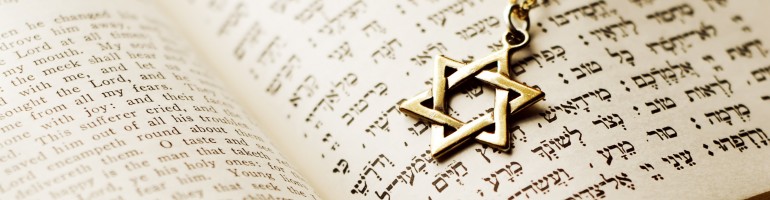
3 Comments

Filed under Jewish Holidays

God Keeps His Promises

The modern state of Israel is simply the resurrection of the nation God created through Abraham.


Shalom in the Messiah,

I wish I had been alive on May 14, 1948!

I cannot imagine what it was like for Bible-believing Christians to see the Jewish people reestablished as a nation in the land of Israel. I would imagine that believers who heard the announcement on the radio or read about it in the newspapers probably thought about some very specific passages in the Old Testament, which promised that the Land of Israel would be the possession of the Jewish people. For example,

The Lord said to Abram, after Lot had separated from him, “Now lift up your eyes and look from the place where you are, northward and southward and eastward and westward; for all the land which you see, I will give it to you and to your descendants forever. I will make your descendants as the dust of the earth, so that if anyone can number the dust of the earth, then your descendants can also be numbered. Arise, walk about the land through its length and breadth; for I will give it to you.” (Genesis 13:14-17)

On that day the Lord made a covenant with Abram, saying, “To your descendants I have given this land, From the river of Egypt as far as the great river, the river Euphrates….” (Genesis 15:18)

“I will give to you and to your descendants after you, the land of your sojournings, all the land of Canaan, for an everlasting possession; and I will be their God.” (Genesis 17:8)

Thus says the Lord, who gives the sun for light by day and the fixed order of the moon and the stars for light by night, who stirs up the sea so that its waves roar; The Lord of hosts is His name: “If this fixed order departs from before Me,” declares the Lord, “Then the offspring of Israel also will cease from being a nation before Me forever.” (Jeremiah 31:35-36)

“I will put My Spirit within you and you will come to life, and I will place you on your own land. Then you will know that I, the Lord, have spoken and done it,” declares the Lord. (Ezekiel 37:14) Continue reading

Leave a comment

Filed under Uncategorized

The revival of the Gospel in Israel

Dear friend in the Messiah,

Shalom! I never thought I would have the joy of writing to you about the incredible discipleship and training opportunities we have today among Israeli young adults! I remember my first trip to Israel in 1976, while still in seminary, and there were only a few hundred Jewish believers in Israel. Well, times have changed and the Lord has worked in great power to touch the lives of thousands of Israelis. In fact, we are now seeing what I call a “second generation” movement of Israeli young people coming to the Lord and dedicating their lives to serving the Lord!

This is why your Mission to the Jewish People has initiated a special training and mentoring program among this new wave of young Israelis, which we call Living Waters.

Let me tell you about our Living Waters mentoring program in Israel!

Continue reading

1 Comment

Filed under Uncategorized

Messiah in the Passover

Passover and Easter are like bookends holding together a narrative of faith 
that spans thousands of years.


Shalom!

Happy Passover and Easter season! I look forward to this time of year when we observe Passover, which is a foreshadowing of the most defining moment in human history—the death and resurrection of Jesus the Messiah.

The two holidays are forever linked in much the same way as the Old and New Testaments are joined in one great story of God’s love and redemption. Yet, the historical distinctions between them are at the core of the religious self-understanding of so many Jewish people and Christians.

It is thought that Passover is for the Jews and Easter is for the Christians. However, in the Bible and in the mind and heart of God, I believe they are twin sisters of the same redemptive truth. The cross only makes sense in the shadow of the blood-smeared doors of the Israelite slaves in Egypt.

How I pray that my Jewish family and friends might one day recognize the continuity of this one great story and its fulfillment in the Messiah of Israel—Jesus. Passover and Easter are like bookends holding together a narrative of faith that spans thousands of years, dozens of authors, and Spirit-breathed texts (2 Timothy 3:16).

Yet, it is still one grand story of God’s love and creation, of man’s fall and spiritual wanderings, and of the prophetic hope exquisitely fulfilled when the Savior spoke these words at His last Passover supper with His disciples.

And when He had taken some bread and given thanks, He broke it and gave it to them, saying, “This is My body which is given for you; do this in remembrance of Me.” And in the same way He took the cup after they had eaten, saying, “This cup which is poured out for you is the new covenant in My blood.” (Luke 22:19-20)

In order to help this season be all the more meaningful to you, I have some really good news! 

Our staff has produced a 350-plus-page book entitled, Messiah in the Passover. It is a reference book and there is something in this volume for everyone! It includes an in-depth study of the Passover throughout biblical history, church history, and Jewish history—all of which leads to a deeper understanding of the Passover today and how the Jewish people celebrate this remembrance of the redemption from Egypt. 

We also cover some very practical topics, such as how to use the Passover in sharing the Gospel with your Jewish friends and linking the Last Supper, which was a Passover Seder, with the Lord’s Supper, where Jesus announced His death and resurrection through the traditional elements of the Passover meal.

We provide a Jesus-centered Hagaddah, or guide, to a family Passover that you can use in your own home and also provide Passover lessons for your children so that they can better grasp this great Old Testament story.

And, we included a number of delicious recipes so you can enjoy many of the traditional Passover foods yourself! 

The book is now available for pre-order. We are also happy to send you a copy of the book for your donation of $200 or more. As you know, we depend upon God and your generous support to continue our ministry of reaching the Jewish people with the message of redemption. 

We have also developed a new website entitled—you guessed it…Messiah in the Passover. So please visit www.messiahinthepassover.com to enjoy a bundle of wonderful features including Passover “how to” videos and some additional detailed studies that will enable you to learn more about the Jewish heritage of our faith.

Please remember to pray for Your Mission to the Jewish People this month as we share the message of Messiah in the Passover with thousands of Jewish people, both online through our Facebook campaigns, and in person through our Messiah in the Passover presentations at churches, and banquets at our centers and Messianic congregations. Find out more by visiting our website and find a presentation near you.

Passover, Prophecy, and Jesus

Allow me to share with you the following excerpt from my chapter written on the Passover in the Gospel of John from the Messiah in the Passover book:

Often referred to as His Passion, this last week is the most eventful of Jesus’ short life. Certainly, it is the most significant from a human perspective, as it includes His death and resurrection—the penultimate moment of human history.

His final week, according to John, also includes various teachings, which are unique to this Gospel [of John] such as His Upper Room Discourse, teaching on the Holy Spirit, High Priestly Prayer, etc.

The last week of Jesus’ life is also significant because many Old Testament prophecies were fulfilled during this week, especially those involving His atoning death and resurrection.

The agenda, goals, and purposes of His last week are outlined in both the Old and New Testaments and driven by the necessity for Jesus to fulfill all that is predicted about Him in the Law, the Prophets, and the Writings, as well as His own predictions in the Gospels.

In particular, three Old Testament passages heavily influence the agenda of the Messiah’s last week on earth: Isaiah 53, Daniel 9:24–26, and Leviticus 23. These texts create a path for what Yeshua would do and when He would do it.

  1. Isaiah 53—The prediction of the Messiah’s suffering, death, and resurrection, along with Israel’s response to His message.
  2. Daniel 9:24–26—The prediction of the Messiah’s death as detailed in the prophecy of the seventy weeks.
  3. Leviticus 23—The pattern of the Messiah’s passion as revealed through the Passover, which will especially influence the last week of Jesus’ life.

The Jewish festivals found in Leviticus 23 appear to be prophetic types and in one way or another are fulfilled in the person and work of Jesus (we view the first four “spring” festivals as fulfilled in His first coming and the three additional “fall” festivals as fulfilled in His second coming).

Additional Old Testament prophecies such as Psalm 22 and Zechariah 12:10 also help to paint a prophetic portrait of our Messiah’s last days on earth. As the Apostle Peter writes,

As to this salvation, the prophets who prophesied of the grace that would come to you made careful searches and inquiries, seeking to know what person or time the Spirit of Christ within them was indicating as He predicted the sufferings of Christ and the glories to follow. (1 Peter 1:10–11)

There is no doubt that the Savior of the world was born to die in order to fulfill many direct prophecies and types. Especially that of the Lamb of God, which is a direct comparison to the Passover lamb whose blood was smeared on the doorposts of the Israelite homes to protect their firstborn males from the tenth plague of the Exodus story.

The Apostle John, in the book of Revelation, describes Jesus as “the Lamb who has been slain” (Revelation 13:8). The Apostle Peter adds that we,

. . .were not redeemed with perishable things like silver or gold,…but with precious blood, as of a lamb unblemished and spotless, the blood of Christ. For He was foreknown before the foundation of the world, but has appeared in these last times for the sake of you. (1 Peter 1:18–20)

The predicted role of Jesus as the suffering and sacrificial Lamb of God who will die for sin and rise from the grave is not peripheral to the plan of God, but rather is at the very heart of who Jesus is and what He came to accomplish. Isaiah had already used the prophetic imagery of the Passover lamb in his well-known chapter 53.

He was oppressed and He was afflicted, yet He did not open His mouth; like a lamb that is led to slaughter, and like a sheep that is silent before its shearers, so He did not open His mouth. (Isaiah 53:7)

This last week of the Savior’s life would conclude with the Passover!

I hope you will be blessed and enriched and that the Messiah of the Passover will be more precious to you than ever before!

Your brother,

Mitch

1 Comment

Filed under Passover, Uncategorized

Respect Cuts Both Ways: Christians Can Celebrate Passover Too

This article was also published by Christianity Today on April 10, 2017.


On April 6, 2017, Christianity Today (CT) published an article entitled, “Jesus Didn’t Eat a Seder Meal: Why Christians Shouldn’t Either” by rabbis Yehiel E. Poupko and David Sandmel. The article argues that Christians should refrain from participating in Christian Seders as a matter of historical and ecumenical respect. We disagree on both points.

There is great interest today by Christians to learn more and participate in Seders to help them better understand the Jewish roots of the Christian faith. In particular, knowing more about the Seder helps Christians explore the Jewish background of the Last Supper celebrated by Jesus, whom we know was a first-century Jewish teacher, and his disciples, who were also Jewish. Both Jesus and his disciples would have grown up observing the Passover in whatever fashion Jewish people living at the time observed the feast.

We agree with the rabbis regarding the importance of caution in the way the sacred traditions of the Jewish faith are handled.

We also agree that Jesus did not celebrate the Passover the way Jewish people commonly observe the festival in the 21st century. However, the Last Supper accounts in the Gospels record a number of themes and practices held in common with the Passover Seder. Perhaps the Last Supper should be viewed as a primitive Seder, which was used by Yeshua as the backdrop for his claim to be the fulfillment of the types and prophecies in the Hebrew Scriptures for a greater Lamb, a greater redemption from bondage (to sin), and a new perspective on salvation through His shed blood.

Many Christians and especially Messianic Jews (Jewish believers in Jesus) exercise caution in the way the Messiah is linked to the Passover Seder. In the introduction to a new book entitled Messiah in the Passover, which we edited, Christian readers in particular are encouraged to both study and celebrate the Passover as a way to deepen their appreciation for the Jewishness of the Savior. To describe the book’s approach Dr. Glaser writes,

In general, we have taken a very cautious approach and will try and understand the Jewish backgrounds of the New Testament as best we can and not simply presume that the Mishnaic tractate Pesahim or today’s Passover Haggadah can simply be read into the Last Supper. Yet, we point out where we do find striking parallels between the religious customs observed by Jesus and His disciples at the Last Supper with later Jewish religious developments, and so many of our authors will suggest that these traditions could have been practiced during the Last Supper.[1]

These parallels include the drinking of at least two cups of wine:

And when He [Jesus] had taken a cup and given thanks, He said, “Take this and share it among yourselves; for I say to you, I will not drink of the fruit of the vine from now on until the kingdom of God comes.” . . . And in the same way He took the cup after they had eaten, saying, “This cup which is poured out for you is the new covenant in My blood. (Luke 22:17-18, 20)

The breaking of bread, which should be understood as matzah, unleavened bread as we know this meal, took place on Passover. Luke records, “Now the Feast of Unleavened Bread, which is called the Passover, was approaching” (Luke 22:1). Yeshua says,

And when He had taken some bread and given thanks, He broke it and gave it to them, saying, “This is My body which is given for you; do this in remembrance of Me.” (Luke 22:19)

Dr. Bock notes in his chapter,

What makes this meal so different is that Jesus not only refers to the Exodus and ties the meal to Israel’s history, but also completely recasts the meal as a vehicle for describing His coming death as a substitutionary sacrifice. The Lucan reference “for you” points to the substitutionary nature of the sacrifice. In Mark 14:24 Jesus speaks of His shed blood given “for many,” an allusion to Mark 10:45, presenting the idea that Jesus will die as a “ransom for many.” This is in fact a very likely Messianic allusion to Isaiah 53:12, where the Servant bears the sin of the many.

In the Lucan version, the bread is His body and the wine pictures His blood shed for His disciples. Whether Jesus spoke of “the many” as in Mark 14:24 or of the sacrifice being “for you” as in Luke 22:19–20, the point is crystal clear, as Jesus is about to die as an offering made on behalf of others. The allusion to establishing a covenant (Mark 14:24) or a new covenant (Luke 22:20) also assumes a sacrifice and the shedding of blood (Heb. 9:15–22) to inaugurate a covenant.

So in both versions the meal is portrayed as a commentary on Jesus’ forthcoming work, which is the ultimate act of deliverance the Passover anticipated. What started as Israel’s deliverance also had in mind ultimately blessing for the world (Gen. 12:1–3). In places within the meal and service where you would naturally expect to hear about the deliverance of Israel through the first Exodus, we see Jesus pointing His disciples to His substitutionary death for sinners—a second and even greater Exodus deliverance.[2]

Dr. Glaser’s chapter refers to Passover traditions embedded in the Gospel of John, which reflect first-century Jewish life and parallel the celebrations of today.[3] First, John sets the time of the events recorded as taking place during the time of the Passover: “Now before the Feast of the Passover” (John 13:1).

The foot washing that takes place alludes to the various washings in the context of the Passover meal (John 13:3-12). Both the significance of the ritual and the timing as taking place during the meal goes beyond the usual custom of foot washing upon entry to a Jewish home. The dipping of the morsel seems to be more ceremonial than part of a meal and could refer to one of the dipping’s of the Seder, albeit these were further developed in time to come. We are suggesting that Jesus and His disciples celebrated the Passover the same way any other first-century Jewish family may have done at the time.[4]

It is understood that the Messiah did not celebrate what was created over multiple centuries. Yet, oral traditions may have existed at the time that was eventually included in the Passover celebration.

Christians read and believe the history of Israel recorded in the Old Testament, as well as the New Testament. Jewish and non-Jewish followers of Jesus believe the Passover is a paradigm for salvation that finds its fulfillment at the Last Supper when Yeshua gave new meaning to what was observed at that time. Christians who observe the Passover almost always use an adapted version of the Haggadah that takes this Messianic fulfillment into consideration. This is what Messianic Jews and various church groups and Christian church denominations encourage.

The rabbis might very well misunderstand what transpires during a Christian or Messianic Jewish Passover Seder. As the authors of the article suggest,

. . . adopting another’s ritual shows a lack of respect. Even when pursued with the best of intentions, taking another faith’s sacred ritual and transforming it into an expression of one’s own tradition displays a misunderstanding of the complex nature of faith traditions.

The Lord’s Supper, which was probably an adapted and early version of a Passover meal, is referred to many times in the New Testament (e.g., 1 Cor. 11:23-26). Jesus made it part of our faith tradition—not as an outsider but as a Jew who claimed to be the fulfillment of the Messianic hope of the Jewish people.

It can be assumed that the great themes of redemption and salvation had already woven its way into first-century Jewish Passover observance, as nascent as it may have been at the time of Jesus. Jesus affirms this and does not dismiss the importance of the original Passover deliverance commemorated at the Feast. He simply assured the disciples that there was more to come. This was why He used the Passover celebration as a jumping-off point to declare that God’s New Covenant with the Jewish people would begin with His sacrificial death.

The rabbis would do well to view Christian observance of the Passover as fulfilled in Jesus as a sign of appreciation and a way of honoring Jewish tradition. In fact, many Christians who take the Lord’s Supper in the context of a Messianic Passover Seder find it far more meaningful as it ties two of the most profound statements of Jesus to both Jewish and salvation history.

The first century Jewish backgrounds to Communion drives so many Christians to identify with the Jewishness of their faith. This should be viewed as a step forward in Jewish Christian relations as for so many years the chasm between Christians and Jews was wide and even antagonistic. Progress has been made and in many ways there is a greater appreciation and respect among Christians today for the Jewish faith than ever before. This should be affirmed rather than criticized.

Many have noted the deep roots of Torah, from Exodus 12, in whatever Jesus celebrated that evening with His disciples. The links between the two events existed historically and remain canonized in Scripture. Paul said Jesus is our Passover lamb (1 Cor. 5:7). What Jesus did at this meal was to fulfill an Old Testament type established in the book of Exodus. Both the original Exodus and the cross deliver people and show that God keeps His promises. When believers in Jesus observe a Seder, they affirm and celebrate these links and the continuity of the Testaments.

The rabbis conclude,

The Seder is uniquely Jewish, born of the Jewish reading of the Torah, shaped by the architecture of our magisterial Perushim-Pharisees and their rabbis, and given artistry and beauty through 2,000 years of Jewish experience. Christians best honor their Jewish neighbors, to whom they wish to express the love of Christ, by recognizing that the Seder meal is the unique spiritual heritage of the Jewish people and respecting it as such.

We believe such statements undo the bridges built over the last 50 years of Jewish-Christian relations. The question of whether or not Jesus celebrated a Passover Seder as we now know it today is to some degree moot. He observed the Passover in the same way as any other first-century Jew. This event can draw Jews and Christians closer to one another rather than driving an additional wedge between our faith communities.

What is concerning to us is when Christians do not see any identification with the Jewish people and the Jewish backgrounds of their faith. But more to the point, we simply cannot rob Christians of their heritage in Jesus—especially not the events of the Last Supper, which was clearly some type of Passover celebration.

We believe respect cuts both ways.

Dr. Mitch Glaser
President, Chosen People Ministries
New York, New York

Dr. Darrell L. Bock
Executive Director of Cultural Engagement and
Senior Research Professor of New Testament Studies
Dallas Theological Seminary | 
Dallas, Texas


[1] Mitch Glaser, “Introduction” in Messiah in the Passover, ed. Darrell L. Bock and Mitch Glaser (New York: Chosen People Ministries; Grand Rapids: Kregel Publications, 2017).

[2] Darrell L. Bock, “Passover in the Gospel of Luke,” in Bock and Glaser, Messiah in the Passover, chap. 4.

[3] See Mitch Glaser, “Passover in the Gospel of John,” in Bock and Glaser, Messiah in the Passover, chap. 5.

[4] Glaser, “Introduction.”

3 Comments

Filed under Jewish Holidays, Jews and Christians, Passover

Jesus, the Passover Lamb

Dear friend in the Messiah,

Shalom in His peace. April is an important month for both Jews and Christians as we celebrate some of our most faith-defining holidays: Passover, Good Friday, Easter, and a number of other sacred occasions, depending on our backgrounds.

Churches will be packed as multitudes remember the death of our Savior and celebrate His resurrection from the dead. Thousands upon thousands of folks who do not usually go to church, many of whom do not know the Lord, will attend services this month, hear the Gospel, and be saved.

Something similar happens in the Messianic Jewish community and throughout the branches and centers of Your Mission to the Jewish People – from Israel to New Zealand and in my hometown of Brooklyn!

Our Messianic congregations and centers will host evangelistic Passover Seders where you can bring your Jewish friends to hear the Gospel in a Jewish context during a holiday they are familiar with and have celebrated their entire lives.

Of course, many of our Jewish family and friends have not yet had the joy of linking the celebration of Passover with the coming of the Messiah. This will be new and eye-opening information for your Jewish friends, presented in a way that is not offensive in any way.

I hope you will be able to bring your friends and family to one of our Passover banquets. If you would like to know where you can attend a local Passover banquet, please call 212-223-2252 and we would be happy to pass along this information to you.

Our staff will also be traveling around North America presenting Messiah in the Passover. This is a wonderful presentation connecting the Last Supper and the Lord’s Supper! May I tell you a little bit more about the Messiah in the Passover Presentation?

During the presentation, a table draped with a white tablecloth is placed on the platform and beautifully set up with the many traditional Passover elements. Our staff member then explains each element, one by one…expounding on the traditional Jewish Passover Seder in light of the Last Supper.

The Jewish backgrounds of the cup of wine and the broken bread Jesus partook of during the evening before His death will be explained, as will the connection between the blood smeared on the doorposts of the Israelite homes in Egypt at the first Passover, with the blood shed by our Messiah on Calvary.

A NEW BOOK: MESSIAH IN THE PASSOVER

There is so much more to tell you about Messiah in the Passover that we decided to write an entire book on the topic! In fact, as you read this letter, the book is being printed and is literally “hot off the press.” I am especially proud of this volume, as it has been a labor of love to produce, and Chosen People Ministries’ staff members authored most of the chapters.

The title of the book is Messiah in the Passover and it was edited by Dr. Darrell Bock, a professor of New Testament at Dallas Theological Seminary and a Chosen People Ministries board member, and myself. We cover a full range of topics including the biblical foundations for the Passover and the Lord’s Supper, the Passover throughout Jewish and Church history, as well as how Jewish people celebrate Passover today.

We provide all that is needed to conduct a Passover Seder in your home which glorifies the Messiah Jesus as the Lamb of God. We have included crafts for the children, delicious Passover recipes, and great detail about how to use the Passover Seder as an evangelistic opportunity to reach your Jewish friends.

A NEW WEBSITE

We have also created a new website entitled—you guessed it…Messiah in the Passover! All you need to do is visit www.messiahinthepassover.com and you will discover the “world of the Passover.” This exciting new site is full of wonderful information, including a number of instructional videos. We also included a very special Passover demonstration that you can send to Jewish friends who do not yet know the Lord.

I hope that you will read some of the book online, order a copy or two, enjoy the videos, and even try some of the recipes! Most of all, I hope you will find the book and the website to be helpful in reaching your Jewish loved ones for the Lord. Passover provides a great way to explain the Gospel to Jewish people in a very Jewish-sensitive way! In fact, one of our most experienced staff members has written a chapter on this very topic.

AN EXCERPT FROM THE BOOK

May I share with you a brief section from the book, written by Dr. Rich Freeman? Rich is one of our senior staff members and the following is a brief paragraph from his conclusion. Rich writes,

“Jesus is the Lamb of God who takes away the sin of the world.

He is the fulfillment of Passover. Like the first Passover lambs sacrificed to redeem Israel from slavery in Egypt, Jesus’ death on the cross redeems us from slavery to sin. Reflecting on all of this, the Apostle Paul says, “Christ our Passover also has been sacrificed” (1 Cor. 5:7), and just as the first Passover was very personal and the Israelites personally applied the blood of the lambs to the doors of their houses, we too, by faith, need to personally apply the blood of Jesus, the Lamb of God, to the doors of our hearts.”

Have you made Passover personal? I am sure you will find the Messiah in the Passover book and website to be enriching, and that it will bless you, your family, and your church. You will discover that seeing the Bible through Jewish eyes, and understanding the Jewish roots of the faith, will draw you closer to the Jewish Messiah you love!

This is my fondest hope for the Messiah in the Passover book and website—that the Lord will use these tools to bring you closer to Him.

THERE IS A REASON GOD CHOSE HIS PEOPLE AND WE LOVE THE JEWISH MESSIAH – A FINAL CONCERN AND PRAYER REQUEST

May I share one last concern and prayer request with you? I mentioned last month that we are now witnessing a tragic rise of antisemitism across the globe. Over the last few months, we have received daily reports of increased antisemitism in Europe, North America, and even on our campuses. Last month, you may have heard about the gravestones in a Jewish cemetery in University City, Missouri–a very Jewish suburb of St. Louis.

This is simply horrible and should not happen in a liberty-loving country like ours. I thought these types of heinous expressions of antisemitism ended with the Holocaust; however, unfortunately, this is not true! Antisemitism is on the rise! I believe that followers of Jesus need to link arms and oppose antisemitism.

We understand from the Bible that God chose the Jewish people for a special purpose; we have received the Bible and our Savior through the Jewish people. We also know that one day the Jewish people will repent and turn to Jesus, and then He will return (Romans 11:11-29)! If any group of people should support and stand with the Jewish community, it should be those who serve the God of Israel and love the Jewish Messiah.

So, may I suggest a few ways you can show His love and grace to the Jewish people?

PRAY

Of course, the most obvious way to support the Jewish people is to pray for them. As the Psalmist writes, “Pray for the peace of Jerusalem; ‘May they prosper who love you’” (Psalm 122:6). Please pray for the end of antisemitism, for the protection of Jewish families, and for the Prince of Peace to reign in the hearts of the Jewish people in Jerusalem and everywhere.

INVITE

Ask your pastor to host a Chosen People Ministries presentation at your church or Messianic congregation.

ACT LOCALLY

The Lord has given us a “Great Commission” to reach a broken world with the message of the Gospel (Matthew 28:19-20)—to the Jew first and also to the Gentile (Romans 1:16).

I hope and pray you will reach out to your Jewish friends and neighbors with the Gospel, but, we also need you to speak-up locally if you see some type of antisemitism in your community or even in your state. This will be a powerful testimony to the Jewish community. Thanks again for your love, prayers, and generous support! Have a happy Easter and Passover as we celebrate the Lamb of God—Jesus who is the Savior for all!

In Him,

Mitch

Leave a comment

Filed under Passover