Tag Archives: rosh hashanah

Blow a Trumpet in Zion

Jewish people are getting ready to celebrate the Jewish New Year, or Rosh Hashanah, at the very beginning of next month. I hope you take the time to wish a Jewish friend, Chag Sameach (Happy Holiday)! 

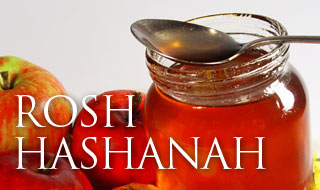
During Rosh Hashanah, we have a wonderful Jewish tradition of serving apples and honey to family and friends, representing our wishes for them to enjoy a happy and sweet year! So, do not be shy. Bring over a nice plate of apples and honey to a Jewish friend or a Rosh Hashanah card as an act of kindness to build your friendships with the Jewish people in your life. 

A HIGH HOLIDAY GIFT FOR CHRISTIAN CHILDREN

I also have some great news for you: We have completed our latest Jewish holiday animated video—this one is about the Jewish New Year and is ideal for Sunday school-age kids. 

We would love to see this resource help Christian children understand their Jewish neighbors and begin to develop a love for Jewish people at a young age. This animated video is delightful and has a very powerful gospel presentation geared for children. You can show it to a Sunday school class, at a Christian school or homeschool group, in your own home, at a Good News Club, or at a Vacation Bible School. All you need is a phone, tablet, or television. 

So, dear friend, mom, dad, or grandparent, please use the video. Who knows, maybe you will have the opportunity to show the animation to a Jewish child or two as well! 

THE JEWISH HOLIDAYS POINT TO JESUS

I love the Jewish holidays because God designed each one to promote some of the most significant themes of Scripture, which describe His person, plan, and promises. Let me start by giving you a few essential facts about Rosh Hashanah, the Jewish New Year. 

MORE ABOUT THE JEWISH NEW YEAR

I must first tell you the words “New Year” or Rosh Hashanah (“the head of the year”) are not used in the Bible. Jewish tradition, however, connects it to Leviticus chapter 23:23, which mentions a day of rest and a day of trumpet (or shofar) blasts. This holiday also falls in the seventh month of the year. 

The Hebrew calendar is quite different from the Gregorian calendar most widely used today, and the Hebrew month Tishrei, the seventh month, usually aligns with our September or October, which is why the holiday is observed in the fall. 

Why do Jewish people observe the New Year in the seventh month? It is a good question, which most Jewish people cannot answer. But if you saw the movie Fiddler on the Roof, you probably remember the song, “Tradition!” Jewish tradition tells us the New Year should be linked to the holiday described in the biblical text as the month of the blowing of the shofar, or ram’s horn. 

Tradition is not bad, but you must be able to separate tradition from Scripture. The Hebrew word rosh means “head,” and shanah means “year.” So, the festival named in the Bible as the “Blowing of the Shofar” is now viewed as the “Head of the Year,” or Rosh Hashanah, and the holiday when we blow the shofar. 

May I take us one step deeper into the Jewish background and meaning of Hebrew terms? The Hebrew Bible does not include the word “blowing” (Lev 23:24). The Hebrew word used, teruah, is one of the sounds the shofar makes when blown! I find it best to translate the term as “toot toot.” Of course, I smile when I write this. But it is true; the literal name of the festival is a sound. But it is a very important sound. 

We must dive even deeper, though, into the overall background of the Jewish festivals to better understand this first holiday of the seventh month! 

THE FESTIVALS’ ROAD TO REDEMPTION

We find the seven great festivals of Jewish people meticulously detailed in Leviticus 23. All the festivals point to the past, the present, and the future in one way or another as each festival is prophetic. To help you understand Rosh Hashanah—the first fall festival—let us examine the Sabbath and the spring festivals. 

The Sabbath (Leviticus 23:3):

Leviticus 23 begins by introducing us to the archetypal festival, the weekly Sabbath. 

The Sabbath, which is in many ways the foundation for the seven annual festivals, looks back to God’s rest from His labor after creating the heavens and the earth in six days. Moses then commanded Jewish people to cease from work every seventh day from Sinai onward. However, many Jewish people fully understand how the past and present Sabbath also points to a greater Sabbath to come, when the ultimate Davidic King will sit on the throne of David, and there will be peace throughout the earth (Isaiah 9:7). We believe this Davidic King is none other than Jesus, the Jewish Messiah for all. 

Passover and Unleavened Bread (Leviticus 23:5–8):

The first holiday of the Jewish year points to the redeeming Lamb of God who takes away the sin of the world in a greater way than the lamb slain by the Israelites in Egypt and whose blood they splashed upon their doorposts. 

We know Jesus, the Messiah, fulfills this prophetic picture. The Festival of Unleavened Bread is a picture of how He lived a life without sin, as leaven is a symbol of sin. But this prophetic roadmap to redemption does not end with His death! 

First Fruits (Leviticus 23:9–14):

The Feast of First Fruits is the third festival in the spring. This holiday was divinely scheduled to fall the day after the Sabbath related to Passover. Jesus died on Friday, the beginning of the Sabbath, and was in the grave Friday, Saturday, and part of Sunday, then He rose in power as “the first fruits of those who are asleep” (1 Corinthians 15:20). 

Feast of Pentecost (Shavuot) (Leviticus 23:15–21):

Pentecost (from the Greek word meaning “fifty”) is next and is the day God chose for the Holy Spirit to fall upon the early band of Messianic Jewish future evangelists, who obediently waited for the promise of the Father. 

Many Jewish sages and scholars believe the first Pentecost reflects the giving of the law at Mount Sinai when the Israelites saw similar signs and wonders as God Himself gave new revelation. 

A GREATER ISAAC

Hashanah (Lev 23:23–25). At the heart of this first fall festival is the blowing of the shofar, the ram’s horn. In Jewish tradition, this looks back to Genesis chapter 22, known as the Akedah in Hebrew, which translates to “binding” or “tying” in English. 

This passage describes Abraham’s son Isaac, who was bound to the altar by his loving and obedient father whom God tested to see if he would kill his son with a knife as a sign of his faith. Thank God we know his hand was stayed, and God provided a ram caught by its horns in the thicket as a substitutionary sacrifice for Isaac. His potential sacrifice on Mount Moriah represented the first of multiple thousands of animal sacrifices eventually offered at this same location where King Solomon later built the Temple. 

Isaac is a type—a pattern—of the Messiah. He was innocent, beloved by his father, and almost sacrificed, though there was no reason for his untimely death. God called Abraham to climb the mountain and sacrifice his son as a test. The shofar is blown to remind Jewish people of Abraham’s obedience and Isaac’s willingness to be sacrificed. As Messianic Jews and Gentile Christians, we are certain this prophetic pattern was fulfilled in the death and ultimate resurrection of Jesus the Messiah. God, in His great love, sent His only perfect Son to atone for the sins of all humanity. 

Yet, we still wait for another blowing of the shofar one day, which will announce the coming of the Lord. Paul writes in 1 Corinthians, “In a moment, in the twinkling of an eye, at the last trumpet; for the trumpet will sound, and the dead will be raised imperishable, and we will be changed” (1 Cor 15:52). 

We pray for the salvation of Jewish people and all people! We especially pray many Jewish people today will recognize the greater Isaac, Jesus, who through His atoning sacrifice, sets us free from sin and death at the very moment we give our lives to Him and recognize He is our Savior and Lord! Our staff in the United States, Israel, and eighteen other countries around the globe proclaim this message to our beloved Jewish people. 

While we long for His return, we also want more time because we hope to see so many others come to faith. Nevertheless, our hearts still cry out, “Come, Lord Jesus” (Revelation 22:20). May we hear the sound of the heavenly trumpet soon! 
Leave a comment

Filed under evangelism, Holidays & Festivals, Jewish Christian Dialogue, Jewish Holidays, Jews and Christians, Judaism, Messianic Jewish, Uncategorized

The Gospel in the Jewish Holidays

Shalom, dear friend.

September is the month that Jewish people worldwide observe the three major Jewish holy days commanded by God in Leviticus 23. These holy days are observed in the seventh month of the Hebrew calendar, which usually falls during September and often spills over into October.

The Jewish New Year (Rosh Hashanah), the Day of Atonement (Yom Kippur), and Tabernacles (Sukkot) are all within three weeks of one another.

This season is an important time for Your Mission to the Jewish People. Excluding Passover, we usually have more Jewish seekers attend our many services around the globe during this season than at any other time of the year!

The Jewish holy days, given to Israel at Mount Sinai, cannot be canceled. World wars, famines, even pandemics must bow to God’s commands and calendar! Your Mission to the Jewish People will observe the festivals as we do every year, but this year we will give our celebrations a small “twist.”

In fact, we expect more people to join us this year than in years past since we will be holding services virtually and space is unlimited! We plan to host all three holiday celebrations online. We will enjoy our beautiful high holiday traditions and the wonderful Messianic Jewish music of Joshua Aaron on Rosh Hashanah, Marty Goetz on Yom Kippur, and Paul Wilbur on the Feast of Tabernacles.

Each festival will focus on Jesus, who celebrated the Jewish holidays and fulfilled them as well.

Please Join Us

I am hoping that you will invite your Jewish friends to join our online services. Many Jewish people will have nowhere to go in person to observe the holy days this year. Join us in praying that Jewish non-believers will be drawn to our glorious and beautiful Savior through these holiday events.

The following is the list of services. Please visit chosenpeople.com/highholidays, register, and join us!

New Year’s Eve – Friday, September 18 at 4:00 p.m. and 7:00 p.m. (EDT)

Day of Atonement Eve – Sunday, September 27 at 4:00 p.m. and 7:00 p.m. (EDT)

Feast of Tabernacles Eve – Friday, October 2 at 4:00 p.m. and 7:00 p.m. (EDT)

Hopeful Holidays in the Messiah

The holidays are a great time to celebrate the hope we have in Jesus, the Messiah. When you combine His Jewish background with the glory of His person as the fulfillment of all the Jewish people hoped for over multiple millennia, it is a stunning experience. So, please join us and allow the Lord to re-energize your sense of hope in Him.

The holidays also illustrate some of the great biblical themes we appreciate. The New Year points to new beginnings. One of the traditional themes of Rosh Hashanah, (literally, the head of the year in Hebrew), is repentance for our sins, leading to the next holiday focused on atonement and forgiveness.

The Day of Atonement foreshadows God’s provision of atoning blood through the death of Jesus on Golgotha. The festival of Sukkot, the Feast of Tabernacles, points to the great day when He returns, establishes His kingdom on earth, and the world is filled with His presence as the waters fill the seas (Habakkuk 2:14).

The theme of life-giving water is tied to the Feast of Tabernacles, which celebrates the final fruit harvest and ingathering of crops. Without water, we would never make it to the final harvest. Traditionally, Jewish people even pray for rain during the festival.

Jesus claims that, when we believe in Him, rivers of living water will flow from our souls!

Now on the last day, the great day of the feast, Jesus stood and cried out, saying, “If anyone is thirsty, let him come to Me and drink. He who believes in Me, as the Scripture said, ‘From his innermost being will flow rivers of living water.’” But this He spoke of the Spirit, whom those who believed in Him were to receive; for the Spirit was not yet given, because Jesus was not yet glorified. (John 7:37-39)

Your Prayers and Support

Your prayers and support have been such a vital part of helping Chosen People Ministries advance the work of Rabbi Leopold Cohn, our founder. We continue to follow the rabbi’s vision—to reach out to Jewish people worldwide with the unchanging gospel of our Lord Yeshua the Messiah.

We are able to continue this historic ministry because of your love, generosity, and prayers. Meanwhile, pandemic or no pandemic, we are preaching the gospel, and Jewish people are coming to faith. We are intensifying our online outreach campaigns in the United States and Israel. And we are following up on the thousands of contacts with Jewish people we receive through Zoom and phone calls, and God is blessing these efforts.

What is Next for Chosen People Ministries?

The future for our 126-year-old ministry will be similar to what believers have been doing since the day Jesus rose from the dead. We will depend upon the Lord to lead us, and in obedience to the unchanging Word of God, we will continue to advance His kingdom! Where He leads we will follow, knowing that He is always with us, which was His promise to His disciples (Matthew 28:20).

Your Mission to the Jewish People will continue to preach the gospel to the Jew first and also to the Gentile—you can count on this. Whether in the United States, Israel, or anywhere else in the world, we will look for new and creative ways to tell others about our eternal hope: the forgiveness of sins and the abundant life through Jesus the Messiah, which is available to all who believe.

We will minister online through Zoom, video, social media, and personally whenever possible…face-to-face and mask-to-mask! We know this present pandemic will pass, and we will safely begin conducting larger-group Bible studies and in-person worship services. We look forward to future street campaigns, campus ministries, and more! We experimented this past year with a new “gap year” residential campus work at New York University that was highly successful. We will do it again thanks to the generous support of a foundation.

My dear friends, the Light of the world has not been extinguished. He shines even brighter in the darkness. As the Savior said, “We must work the works of Him who sent Me as long as it is day; night is coming when no one can work. While I am in the world, I am the Light of the world” (John 9:4–5).

And we will keep working for Him!

Again, we hope you will join us for one of our special holiday services!

Your brother in the Messiah,
Mitch

Leave a comment

Filed under evangelism, Holidays & Festivals, Jewish Holidays

Finding the Hope of Yeshua in the High Holy Days

Dear friend in the Messiah,

I must admit that I am pretty tired of the pandemic! I cannot wait until it is officially over. I am praying for the Lord, our ultimate Healer, to work in the minds of brilliant scientists to come up with a vaccine and medications to counter the devastating impact of this disease that has killed so many people!

However, my hope is not in epidemiologists, though I pray for them and respect their hard work to find a cure. My hope is in the Lord.

We are social and spiritual creatures—especially as followers of Jesus—who love being with family and friends. We love sweet fellowship, praying as a community, worshiping and singing together, and hearing God’s Word unmediated by a screen.

All of us continue to mourn for what we have lost during the pandemic: schools, jobs, businesses, and, most significantly, loved ones who have suffered from the virus. I am grateful for our Savior’s words of promise, “Blessed are those who mourn, for they shall be comforted” (Matthew 5:4). Therefore, we will continue to seek comfort from the Lord and His unchanging Word.

Psalm 121 has greatly encouraged me: “I will lift up my eyes to the mountains; from where shall my help come? My help comes from the Lord, who made heaven and earth” (Psalm 121:1–2). In Him, we find our help, our hope, and joy for living!

LESSONS FOR CHRISTIANS FROM THE JEWISH HIGH HOLIDAYS

We are about to celebrate the Jewish New Year, which is called Rosh Hashanah. In Hebrew, Rosh Hashanah literally means “the head of the year.” There are ten days between the Feast of Trumpets (Rosh Hashanah) and the Day of Atonement (Yom Kippur) according to the holy days calendar outlined in Leviticus 23:23–27. In Jewish tradition, these ten days are called the Ten Days of Repentance. Our Jewish sages tell us that we have ten days to make things right between ourselves and God and between ourselves and our fellow man.

As followers of Jesus, we do not believe we are able to earn God’s forgiveness—He provides salvation and forgiveness graciously and freely (Ephesians 2:8–9). Our sin always requires payment, and the Day of Atonement graphically illustrates this. The Scriptures depict the Levitical priests offering blood sacrifices at the Temple altar for sinful humanity throughout the centuries until the Temple was destroyed.

As Moses explained, “For the life of the flesh is in the blood, and I have given it to you on the altar to make atonement for your souls; for it is the blood by reason of the life that makes atonement” (Leviticus 17:11).

Yet, we know that these offerings pointed to Jesus, the perfect sacrifice for our sins. As the author of Hebrews wrote, “He has been manifested to put away sin by the sacrifice of Himself” (Hebrew 9:26).

This atonement, achieved through the Messiah’s once-for-all death, was effective for all sins, for all time, and for all people. Unfortunately, most of my Jewish friends and family do not understand this. Jewish people today are generally unfamiliar with the Temple’s sacrificial system, which ended when the Romans destroyed this magnificent house of worship in AD 70.

Sacrifice for sin is now only a corporate historical Jewish memory. Modern Jews now only read about the Temple sacrifices in the Bible or Jewish literature and visit the Western Wall in Jerusalem, which was an outer wall of the Temple mount that still stands and reminds us of what once was!

Most Jewish people do not think about sin or atonement in the same way Christians do. Contemporary Judaism adjusted to the destruction of the Temple and teaches that the performance of good deeds is a substitute for the sacrifices of animals. Modern Judaism teaches that one’s name is written in the Book of Life when good deeds outweigh wicked deeds.

Yet, Jewish tradition teaches that the Temple will be rebuilt one day and that sacrifices will be restored. However, most Jewish people do not know about this future rebuilding of the Temple as it is believed by only the most ultra-religious within the Jewish community.

In fact, the Jewish people to whom I am the closest seem to live as agnostics or even atheists most of the year. Yet, surprisingly, many open their hearts to God and even yearn for forgiveness of sin during the high holidays. Maybe this is why the Day of Atonement is the most well-attended Jewish service of the year!

All human beings appear to have a deep inner longing for forgiveness; to forgive others and to be forgiven—even to forgive ourselves.

THE VALUE OF THE HIGH HOLIDAYS FOR ALL

As a Messianic Jew, Rosh Hashanah and Yom Kippur cause me to think about my relationship to God more profoundly. They remind me that atonement for sin came at a high price—Jesus’ death on the cross. God’s love and grace move me profoundly during the holidays as I reflect upon my sin and the forgiveness I have received through Jesus the Messiah. My heart cries out in joy with the Apostle Paul: “Therefore there is now no condemnation for those who are in Christ Jesus” (Romans 8:1).

Classical Judaism, on the other hand, teaches that humanity sins, yet it is not inherently sinful. Contemporary Jewish faith holds that we are free to choose righteousness or sin, and when we fail, atonement via repentance is always possible! Therefore, God’s offer of His grace, mercy, and forgiveness is received based upon our remorse and willingness to change.

When I found Jesus as my Savior, I became convinced of the opposite as I have broken with Jewish teaching on this topic because of what the Bible says (Romans 3:23) and because I know that I am sinful by nature. Yet, I do believe that regular personal repentance is a key to spiritual transformation. This is why I observe the high holidays. They are times for spiritual reflection, which are wonderfully enriching and essential for spiritual growth.

THE HIGH HOLIDAYS AND YOU

Your Mission to the Jewish People will observe the Jewish high holidays beginning with Rosh Hashanah, then Yom Kippur, and finally, the Feast of Tabernacles (Sukkot). We have planned three online services on September 18, 27, and October 2, 2020.

I hope you will join us and invite your friends—especially your Jewish friends who do not know the Lord and might not be able to attend synagogue services in person because of the pandemic.

It is one thing to tell a Jewish person they can be Jewish and believe in Jesus. It is quite another to sit next to them during a Messianic Jewish high holiday service listening to the blowing of the shofar, the chanting of familiar prayers, and hearing a Jesus-centered holiday message.

ROSH HASHANAH AND HOPE

I would like to add one closing thought about hope—one of my favorite topics these days. The Jewish holidays bring us hope as each festival looks forward to our bright future in relationship to the God of Abraham, Isaac, and Jacob. As followers of Yeshua, we know this world will one day fade away, as the trumpet will sound and those who believe will rise to a new and everlasting life.

Rabbi Saul—the Apostle Paul—wrote:

“For the Lord Himself will descend from heaven with a shout, with the voice of the archangel and with the trumpet of God, and the dead in Christ will rise first. Then we who are alive and remain will be caught up together with them in the clouds to meet the Lord in the air, and so we shall always be with the Lord” (1 Thessalonians 4:16–17).

We have a great hope, brothers and sisters! Our hope is a person—Jesus, who died for our sins once and for all and rose from the grave conquering death. He is the resurrection and our life!

Thank you again for your faithfulness and generosity.

Your brother,
Mitch

Leave a comment

Filed under Holidays & Festivals, Jewish Holidays, Jews and Christians

Rosh Hashanah

We are about to observe the Jewish New Year, which is called Rosh Hashanah, literally meaning “the head of the year.” Rosh Hashanah is the first of the three Fall Feasts; it is followed by Yom Kippur (the Day of Atonement) and Sukkot (the Feast of Tabernacles). It is celebrated on the first day of the month of Tishrei in the Jewish calendar.

Rosh Hashanah is one of the seven great festivals appointed by God, all of which are listed in Leviticus chapter 23 and mentioned in a number of other passages in the Scriptures. There is also a vast amount of Rabbinic teaching describing the festivals and their observance.

Each of these holy days was established by God and revealed to the children of Israel through Moses, who received the calendar as part of the Sinai revelation. These holidays are supremely important to the Jewish people, and both Rosh Hashanah and Yom Kippur are observed each year by the majority of Jewish people, whether secular or religious. Rosh Hashanah is also an important family holiday, and many Jewish families around the world will have special dinners and spend time together, as well as attending Synagogue.

In the Bible, this festival is called Yom Teruah, which is Hebrew for “the day of the blowing of the trumpet.” In this sense, it functions as a call to attention for the Jewish people, preparing us for the Day of Atonement coming ten days later.

The blasts of the shofar (ram’s horn) sounded on Rosh Hashanah also remind us of the obedience of Abraham, who was willing to offer his only son as a sacrifice in obedience to God, though God stopped Abraham before he went through with it! The shofar reminds us that God demands full and unquestioning obedience.

The great theme of Rosh Hashanah is repentance. In fact, the first day of Rosh Hashanah begins a season of ten days of repentance, which are often called the Ten Days of Awe by the Jewish people. The observance of the Day of Atonement concludes these ten days. Most Jewish people believe that repentance is the path that leads to the forgiveness of sin, which is secured in the closing moments of Yom Kippur.

Though it is difficult to explain the difference, forgiveness is stressed in the Jewish community far more than personal salvation, especially as understood by most Christians. Jewish people are not as apt to think about personal salvation, a secured future beyond the grave and the power of God infused into our everyday existence by the presence of the Holy Spirit. All too often, Christians read concepts that are commonly understood by born again believers into Judaism. However, Jewish people do think about forgiveness during this time of year and are usually eager to repent before God and reconcile with anyone they may have offended.

However, in this view, forgiveness is seen as temporal, needing annual renewal and received on the basis of both God’s grace and mercy as well as one’s repentance and willingness to obey His Law found in the five books of Moses – at least this is the traditional Jewish teaching on the subject.

So why is Rosh Hashanah important to me as a Jewish follower of Jesus the Messiah?

Allow me to give a few reasons why I personally observe Rosh Hashanah as well as what it means to me.

Observing Rosh Hashanah is a wonderful way of identifying with my Jewish people on a more spiritual level, rather than focusing on Israel or on social, cultural or political concerns that might be important to Jewish community life.

This festival causes me to reflect and take stock of my life and especially my relationship with God. Seasons of spiritual reflection are wonderfully enriching and necessary in the midst of our busyness – even if we are busy doing the Lord’s work. Rosh Hashanah reminds me of my own need to repent regularly of my sins and to be faithful and obedient to God’s Word.

It also provides a wonderful time with my family, as well as being a fruitful season of witness in which I am able to invite Jewish friends and neighbors to our services and Bible studies around the globe. It is one thing to tell a Jewish person they can be Jewish and believe in Jesus… and it’s quite another to sit next to them at a Messianic Jewish Rosh Hashanah service, listening to the blowing of the shofar and the chanting of familiar prayers, and hearing the message of Messiah. In some ways, this is much more powerful. As believers, we know and proclaim that repentance from sin is only one part of the path to forgiveness and personal salvation… as it is only when we receive Yeshua as our Messiah that we are able to enjoy eternal forgiveness, freedom from condemnation, and the power to live transformed lives!

The shofarreminds us of what lies ahead, as the blast of trumpets will announce Messiah’s return on the day when those who believe will be raised to new and everlasting life.

As Rabbi Saul – the Apostle Paul writes,

For the Lord Himself will descend from heaven with a shout, with the voice of the archangel and with the trumpet of God, and the dead in Christ will rise first. Then we who are alive and remain will be caught up together with them in the clouds to meet the Lord in the air, and so we shall always be with the Lord. (1 Thessalonians 4: 16-17)

There is much more to say about this festival – so I highly recommend that you visit the Chosen People Ministries website for Rosh Hashanah resources!

I would be interested in knowing what Rosh Hashanah means to you, and in whether or not you find spiritual value in setting aside time for deeper reflection and for repentance.

2 Comments

Filed under Holidays & Festivals