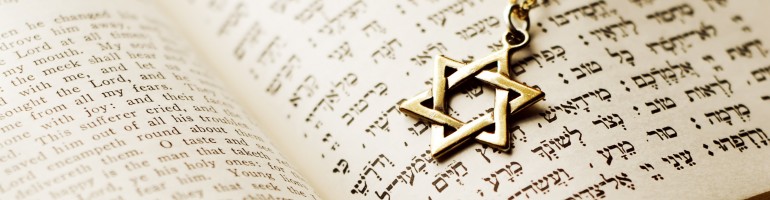
Jewish people are getting ready to celebrate the Jewish New Year, or Rosh Hashanah, at the very beginning of next month. I hope you take the time to wish a Jewish friend, Chag Sameach (Happy Holiday)!
During Rosh Hashanah, we have a wonderful Jewish tradition of serving apples and honey to family and friends, representing our wishes for them to enjoy a happy and sweet year! So, do not be shy. Bring over a nice plate of apples and honey to a Jewish friend or a Rosh Hashanah card as an act of kindness to build your friendships with the Jewish people in your life.
A HIGH HOLIDAY GIFT FOR CHRISTIAN CHILDREN
I also have some great news for you: We have completed our latest Jewish holiday animated video—this one is about the Jewish New Year and is ideal for Sunday school-age kids.
We would love to see this resource help Christian children understand their Jewish neighbors and begin to develop a love for Jewish people at a young age. This animated video is delightful and has a very powerful gospel presentation geared for children. You can show it to a Sunday school class, at a Christian school or homeschool group, in your own home, at a Good News Club, or at a Vacation Bible School. All you need is a phone, tablet, or television.
So, dear friend, mom, dad, or grandparent, please use the video. Who knows, maybe you will have the opportunity to show the animation to a Jewish child or two as well!
THE JEWISH HOLIDAYS POINT TO JESUS
I love the Jewish holidays because God designed each one to promote some of the most significant themes of Scripture, which describe His person, plan, and promises. Let me start by giving you a few essential facts about Rosh Hashanah, the Jewish New Year.
MORE ABOUT THE JEWISH NEW YEAR
I must first tell you the words “New Year” or Rosh Hashanah (“the head of the year”) are not used in the Bible. Jewish tradition, however, connects it to Leviticus chapter 23:23, which mentions a day of rest and a day of trumpet (or shofar) blasts. This holiday also falls in the seventh month of the year.
The Hebrew calendar is quite different from the Gregorian calendar most widely used today, and the Hebrew month Tishrei, the seventh month, usually aligns with our September or October, which is why the holiday is observed in the fall.
Why do Jewish people observe the New Year in the seventh month? It is a good question, which most Jewish people cannot answer. But if you saw the movie Fiddler on the Roof, you probably remember the song, “Tradition!” Jewish tradition tells us the New Year should be linked to the holiday described in the biblical text as the month of the blowing of the shofar, or ram’s horn.
Tradition is not bad, but you must be able to separate tradition from Scripture. The Hebrew word rosh means “head,” and shanah means “year.” So, the festival named in the Bible as the “Blowing of the Shofar” is now viewed as the “Head of the Year,” or Rosh Hashanah, and the holiday when we blow the shofar.
May I take us one step deeper into the Jewish background and meaning of Hebrew terms? The Hebrew Bible does not include the word “blowing” (Lev 23:24). The Hebrew word used, teruah, is one of the sounds the shofar makes when blown! I find it best to translate the term as “toot toot.” Of course, I smile when I write this. But it is true; the literal name of the festival is a sound. But it is a very important sound.
We must dive even deeper, though, into the overall background of the Jewish festivals to better understand this first holiday of the seventh month!
THE FESTIVALS’ ROAD TO REDEMPTION
We find the seven great festivals of Jewish people meticulously detailed in Leviticus 23. All the festivals point to the past, the present, and the future in one way or another as each festival is prophetic. To help you understand Rosh Hashanah—the first fall festival—let us examine the Sabbath and the spring festivals.
The Sabbath (Leviticus 23:3):
Leviticus 23 begins by introducing us to the archetypal festival, the weekly Sabbath.
The Sabbath, which is in many ways the foundation for the seven annual festivals, looks back to God’s rest from His labor after creating the heavens and the earth in six days. Moses then commanded Jewish people to cease from work every seventh day from Sinai onward. However, many Jewish people fully understand how the past and present Sabbath also points to a greater Sabbath to come, when the ultimate Davidic King will sit on the throne of David, and there will be peace throughout the earth (Isaiah 9:7). We believe this Davidic King is none other than Jesus, the Jewish Messiah for all.
Passover and Unleavened Bread (Leviticus 23:5–8):
The first holiday of the Jewish year points to the redeeming Lamb of God who takes away the sin of the world in a greater way than the lamb slain by the Israelites in Egypt and whose blood they splashed upon their doorposts.
We know Jesus, the Messiah, fulfills this prophetic picture. The Festival of Unleavened Bread is a picture of how He lived a life without sin, as leaven is a symbol of sin. But this prophetic roadmap to redemption does not end with His death!
First Fruits (Leviticus 23:9–14):
The Feast of First Fruits is the third festival in the spring. This holiday was divinely scheduled to fall the day after the Sabbath related to Passover. Jesus died on Friday, the beginning of the Sabbath, and was in the grave Friday, Saturday, and part of Sunday, then He rose in power as “the first fruits of those who are asleep” (1 Corinthians 15:20).
Feast of Pentecost (Shavuot) (Leviticus 23:15–21):
Pentecost (from the Greek word meaning “fifty”) is next and is the day God chose for the Holy Spirit to fall upon the early band of Messianic Jewish future evangelists, who obediently waited for the promise of the Father.
Many Jewish sages and scholars believe the first Pentecost reflects the giving of the law at Mount Sinai when the Israelites saw similar signs and wonders as God Himself gave new revelation.
A GREATER ISAAC
Hashanah (Lev 23:23–25). At the heart of this first fall festival is the blowing of the shofar, the ram’s horn. In Jewish tradition, this looks back to Genesis chapter 22, known as the Akedah in Hebrew, which translates to “binding” or “tying” in English.
This passage describes Abraham’s son Isaac, who was bound to the altar by his loving and obedient father whom God tested to see if he would kill his son with a knife as a sign of his faith. Thank God we know his hand was stayed, and God provided a ram caught by its horns in the thicket as a substitutionary sacrifice for Isaac. His potential sacrifice on Mount Moriah represented the first of multiple thousands of animal sacrifices eventually offered at this same location where King Solomon later built the Temple.
Isaac is a type—a pattern—of the Messiah. He was innocent, beloved by his father, and almost sacrificed, though there was no reason for his untimely death. God called Abraham to climb the mountain and sacrifice his son as a test. The shofar is blown to remind Jewish people of Abraham’s obedience and Isaac’s willingness to be sacrificed. As Messianic Jews and Gentile Christians, we are certain this prophetic pattern was fulfilled in the death and ultimate resurrection of Jesus the Messiah. God, in His great love, sent His only perfect Son to atone for the sins of all humanity.
Yet, we still wait for another blowing of the shofar one day, which will announce the coming of the Lord. Paul writes in 1 Corinthians, “In a moment, in the twinkling of an eye, at the last trumpet; for the trumpet will sound, and the dead will be raised imperishable, and we will be changed” (1 Cor 15:52).
We pray for the salvation of Jewish people and all people! We especially pray many Jewish people today will recognize the greater Isaac, Jesus, who through His atoning sacrifice, sets us free from sin and death at the very moment we give our lives to Him and recognize He is our Savior and Lord! Our staff in the United States, Israel, and eighteen other countries around the globe proclaim this message to our beloved Jewish people.
While we long for His return, we also want more time because we hope to see so many others come to faith. Nevertheless, our hearts still cry out, “Come, Lord Jesus” (Revelation 22:20). May we hear the sound of the heavenly trumpet soon!
 Dr. Mitch Glaser