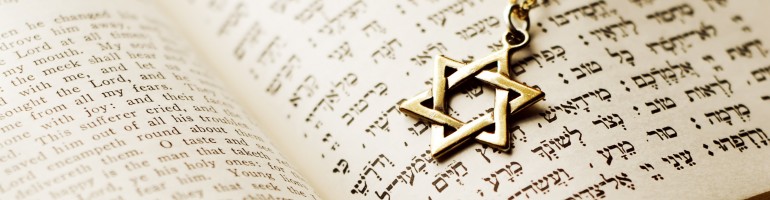
Is the New Testament Antisemitic?

The topic of this month’s newsletter is the fault line that separates Judaism and Christianity and creates a Grand Canyon-sized chasm between Jewish people and Jesus. Must this be? The highly sensitive and difficult question we will address is whether or not the message of Jesus that is conveyed through the Gospels is intrinsically antisemitic. This is a question that most Christians would never even think to ask. But every Jewish person knows that this assumption is one of the primary underlying reasons for the rejection of Christianity by Jewish people. Allow me to explain further.

Jewish historian Solomon Grayzel wrote, “The history of Judaism and Christianity is written in blood and punctuated in violence.” It is understandable why Jewish believers are reluctant to become involved with the church. From childhood, we are taught that Christians (the people in churches!) are the enemies of the Jewish people. The church was supposedly the institution responsible for persecuting our ancestors. Many of us find it painful to step inside a local church, whatever the denomination. How can we enjoy the company of those who inspired the murder and destruction of our people? Am I exaggerating? Perhaps, but if you were brought up in a Jewish home like mine, my words should at least ring with familiarity, if not authenticity.

Is there any truth to the accusation that Christians persecuted Jews? Of course there is! And I will not qualify that statement by placing quotation marks around the word Christian. If I say that all those who mistreated Jews were Christians in name only, I am arrogantly dismissing early church leaders such as Origen, Tertullian, and Augustine, not to mention Reformers such as John Wycliffe and Martin Luther. Painful as I find it, I do not have the authority to write these individuals out of history, much as I might like to.

To deny the past would be foolish. To forgive these men posthumously would be presumptuous because they never asked for forgiveness. Yet, to think that they characterize what God intended the church to be would be foolish and useless.[i]

I still remember when I was first considering the message of Jesus. I was only 19 years old, living far away from home, where I had been raised in what I call a non-practicing Orthodox Jewish home. This might sound a bit odd, but many Jewish people are raised in one of the various denominations of Judaism—Orthodox, Conservative or Reform—and are not especially religious. But, for what it’s worth, when I practiced Judaism I did so as a modern Orthodox Jew. Truthfully, at this time in my life, it was more a case of Orthodox Judaism being the Judaism I preferred not to practice. I was far from God, although I was open to all sorts of religious and spiritual ideas – except Christianity!

Because I knew virtually nothing about the tenets of Christian faith, my major objections to the message of Jesus were not theological or biblical. They stemmed from the deeply ingrained cultural and historical memory I referred to earlier. I was raised in New York City and lived in a very Jewish community. I knew some Christians at school, mostly ethnic Catholics who didn’t seem to like Jewish people! At least that was my impression. In fact, everything I knew about Christianity was negative towards the Jews. I also believed that those who perpetrated the Holocaust were Christians and I knew that my grandparents had moved to the United States to get away from the Christians that were persecuting them in Russia.

So, you might ask, what was it that brought me over the line to faith in Jesus? How did I reconcile who I was as a Jew with belief that He was the Messiah?

Briefly, there were three reasons why I ultimately became a follower of Jesus. First of all, I met Gentile Christians who loved the Jewish people. They might not have known much about Judaism, but they showed God’s love to all. They especially enjoyed meeting Jewish people, as they were avid Bible students and understood the importance of the Jewish people and Israel in the plan of God.

Also, I began reading the story and words of Jesus in the Gospels because of my encounters with these Gentile Christians, who eventually helped two of my best friends come to faith in Yeshua. In what seemed like a miracle to me, I found a New Testament in a phone booth in the middle of a campground in the Redwood Forest…a long story! As I began reading the New Testament, I immediately felt a deeply emotional conflict. On one hand, I felt so guilty reading this book, which I thought was the inspiration for millennia of antisemitism. Yet, on the other hand, I was unmistakably drawn to the compelling words of Jesus. On top of that, my close reading led me to the surprising conclusion that the Gospels were not antisemitic as I had thought. In fact, they seemed so Jewish!

However, what really put me over the line was the person of Jesus Himself. I just fell in love with Him. He was strong, bold, courageous, truthful, and so deeply spiritual. His words grabbed hold of my heart in ways that I cannot even explain. It became obvious to me that He was the Messiah and the fulfillment of all that my Jewish people hoped for through the centuries. I found myself asking how Jesus could possibly have inspired hatred of the Jewish people when He was so clearly Jewish, with a great love for His people. And I confess, this is a dark mystery I do not fully understand to this day. As He said at a moment of intense rejection by the Jewish leaders of His day, “Jerusalem, Jerusalem, who kills the prophets and stones those who are sent to her! How often I wanted to gather your children together, the way a hen gathers her chicks under her wings, and you were unwilling” (Matthew 23:37).

And so I was left staring at the chasm between myself as a Jewish person, feeling the burden of thousands of years of intransigence towards Jesus, while at the same time wanting to embrace Jesus as my Messiah. Without, I hope, sounding trite, for me the bridge was actually Jesus Himself. He reflected the depths of spirituality I was longing for but could not quite find within the Judaism in which I was raised. I did not want to reject Judaism or who I was as a Jew, but I desperately wanted to know God intimately and personally. Jesus became my Messiah, Redeemer, and my Bridge to my heavenly Father. I finally understood what He meant when He said, “I am the way, and the truth, and the life; no one comes to the Father but through Me”(John 14:6).

Coming to faith in Jesus as my Messiah was the most difficult and most profoundly wonderful decision I ever made in my life. I now follow Yeshua, the Jewish Messiah and join arms with any others who do the same, although I try to be clear-sighted about the failings of people and institutions. There remains much to lament on that score.

I hope that you enjoy the rest of this newsletter as we look at some difficult New Testament passages that have been interpreted in an antisemitic way throughout the years. We are going to try and help you know to how to handle these texts and understand them within a first-century Jewish context—which is the key to unlocking their meaning. I also asked my friend Dennis to share his story, and I hope you enjoy it. It is my prayer that you will reflect upon what you read and ask God to show you if Jesus is indeed the Jewish Messiah for all.

Mitch Glaser


[i] Direct quote from the following article written by Dr. Mitch Glaser. https://jewsforjesus.org/publications/havurah/havurah-mm88-02/the-egg-and-miriam-or-a-post-easter-assessment/

Leave a comment

Filed under Uncategorized

Music and Coffee? Yes Please!

Have you ever felt like you were simply not getting through to your friends, family, co-workers, and neighbors?

I have come to the conclusion that the only strategy for preaching the gospel that dismally fails one hundred percent of the time is not preaching the gospel at all! So don’t give up!

The power of the Good News is alive, dynamic, and powerful! (Romans 10:14) 

The Lord calls upon us all to be His preachers by making ourselves available to share the Word with others.

Sometimes sharing can be difficult.  

My dad always seemed to be open to the gospel. One day, I was sitting with him in his car on a street corner in Brooklyn talking to him about Jesus.

My dad saw the transformation in my life when I came to faith, and I usually did not have to work hard to get him to listen to me for a few moments. But this time around, he stopped me mid-sentence and said, “Son, I love you and will listen to you talk about what you believe all day. But you need to know that I just don’t get it! I don’t believe in God, the afterlife, or the supernatural.   I respect your belief in Jesus, but it just doesn’t work for me.”

I was crushed.

I wish I could tell you my dad received the Lord before he passed away. If he did, I was not aware of it. I am still sad and bewildered as to why I came to faith and, as far as I know, he did not. Maybe I did not make the right arguments, or was too pushy, or did not give him the right gospel tract?

When people you love do not accept salvation, it breaks your heart. But one day, even these tears will be wiped away.

Meanwhile, we need to obey the Lord and proclaim the good news whenever possible.

Let me tell you about some exciting developments in Israel that reflect how the Lord is changing lives today with the power of the gospel.

Israeli Café Nights!

One of the wonderful ministries we conduct at the Ramat Gan Center, very close to the heart of bustling Tel Aviv, is our weekly Café Nights. Jason, who leads this ministry, can tell us all about it!

Jason writes, “Here in Israel, socializing at coffee shops is a crucial part of the young adult scene. So, we run an outreach with live music and free lattes! This can draw a significant crowd. We call these events Café Nights. We offer varieties of coffee, tea, hot chocolate, and some local items, along with fountain sodas and some elegant snacks. We also hire accomplished musicians and spend hours creating a warm, inviting atmosphere.

These outreach events are run by our staff and trained volunteers. Our goal is to do everything with the highest standards. This means that we use high-quality ingredients and, as a result, we have a reputation for always having exceptional coffee in addition to friendly people and great music.

We do not charge for anything. Because of this, people ask a lot of questions, which gives us opportunities to get into deep conversations that wouldn’t otherwise occur.

Here is one great story out of many on how God is using the Ramat Gan Center to reach young Israelis.

A young man in his thirties walked in looking for something fun to do. He lives nearby and passed the Center on his way home. He asked a lot of questions since he had never met a Jewish follower of Jesus before. He was very open and took an Isaiah 53 Explained book in Hebrew to read. A few weeks later, he came back and had many more questions. We are continuing to talk with him.

We are grateful for your support, and your prayers are invaluable…as we know that the real power is not in the method but in His Word and the miracle of His grace by the power of the Holy Spirit!

Please continue to pray for us and for the work of Chosen People Ministries around the world!

Blessings to you in the name of Jesus,
Mitch Glaser

Leave a comment

Filed under Uncategorized

CELEBRATING THE HIGH HOLY DAYS: Old Covenant Instructions Fulfilled in Jesus and the New Covenant

Shalom in the great name of our Messiah Jesus,

SUMMER MINISTRY

We had an exciting summer of ministry. First of all, we enjoyed celebrating the 70th anniversary of the modern State of Israel with 600 fellow believers from 14 countries who joined us in Jerusalem! We had various Israeli teams lead us in worship each evening after touring all day. Then we listened to some great messages on the topic of Israel’s restoration to the Land. It was wonderful!

Back home, we held another Shalom Brooklyn outreach with dozens of Chosen People Ministries staff and volunteers “hitting the streets” in New York City to talk with Jewish people about the Lord. We especially focused some of our efforts toward reaching very religious Jewish people, and we are continuing to learn how to approach these precious people. We also held two children’s camping programs in the United States (East and West Coast) and a few in Israel, as well.

I was especially blessed by this year’s Living Waters retreat, where we spent a long weekend with 30 Israeli young adults between the ages of 18 and 35. Lawrence Hirsch, our Australian director, taught through the book of First Peter. It is exciting to see this new generation of young Israelis who love the Lord growing in their faith and desire to reach their fellow young Israelis!

FALL FEASTS

The summer was fruitful, but now, along with Jewish people across the globe, we are turning our hearts and minds to the fall festivals of Israel according to the Hebrew calendar. These festivals include the New Year (Rosh Hashanah), the Day of Atonement (Yom Kippur), and the Feast of Tabernacles (Sukkot).

The first holiday we celebrate is Rosh Hashanah, as the Bible instructs in Leviticus 23. The Hebrew name of the holiday, Yom Teruah, literally refers to the sound the trumpet makes.

“Speak to the sons of Israel, saying, ‘In the seventh month on the first of the month you shall have a rest, a reminder by blowing of trumpets, a holy convocation’” (Leviticus 23:24).

In Jewish tradition, the holiday became known as the New Year and usually refers to the beginning of the civil year for the Jewish people. However, according to the Bible, Passover initiates the new year and is described as the beginning of the “religious year.” You would have to understand thousands of years of Jewish tradition to figure this out!

Allow me to make reference to the book The Fall Feasts of Israel, which I wrote with my wife, Zhava, and which was published by Moody Press. We have included a full explanation in the book of how this tradition developed. You can order the book on the enclosed card or by going online to our Chosen People Ministries store at chosenpeople.com/store.

THE MEANING OF THE TRUMPET

On Rosh Hashanah, trumpets are sounded in synagogues all over the world and the story of the binding of Isaac in Genesis 22 is read. This story is called the Akedah, which means “binding” in Hebrew. The blowing of the shofar, the ram’s horn, reminds us of the ram caught in the thicket, which was sacrificed as a substitute for Isaac.

According to the Jewish sages, the blowing of the shofar and the reading of the Akedah on Rosh Hashanah remind us of the righteousness of our father Abraham and of his willingness to sacrifice his son, Isaac. Classical Judaism teaches that forgiveness of sin comes through repentance, merit that is earned by our good works, and obedience to the Law.

Traditional Judaism also reminds us that, if our efforts fall short of pleasing God, we have merit available to us from the overflow and abundance earned by Abraham in this one act of obedience. This makes up for where we are deficient. Therefore in Judaism, the blowing of the shofar and the reading of the Akedah point us to a deeper understanding of God’s mercy and grace and to His forgiveness in spite of our human failure to merit atonement. This teaching of classical Judaism, in a sense, points us to the merit earned on our behalf by Jesus, God’s Son, at the cross.

As the Apostle Paul writes, “But God demonstrates His own love toward us, in that while we were yet sinners, Christ died for us” (Romans 5:8).

JOHN 3:16 AND GENESIS 22 – A COMPARISON

The story of the binding of Isaac and its themes of mercy, grace, and God’s provision for sin, remind me of a verse in the New Testament well known throughout the ages and found in the Gospel of John: For God so loved the world, that He gave His only begotten Son, that whoever believes in Him shall not perish, but have eternal life” (John 3:16).

The comparisons between this text and the story of Isaac are profound and give us insight into the continuity of God’s plan between the Old and New Covenants. They also further unlock the mystery of God’s grace during this holiest season of the Jewish year.

In Genesis 22:2, we are brought into a conversation between God and Abraham. God spoke to Abraham and said, “Take now your son, your only son, whom you love, Isaac, and go to the land of Moriah, and offer him there as a burnt offering on one of the mountains of which I will tell you.”

God calls upon Abraham to sacrifice his son as a burnt offering. He describes Isaac as Abraham’s only son, and Jesus is described the same way in John 3:16. In John 17:24, Jesus acknowledges that He is loved by His Father, “For You loved Me before the foundation of the world.”

This is only the beginning of the similarities. We also should note the willingness of Abraham to offer his son. In Genesis 22:1, Abraham says, Hineni, literally, “I am here” and available to do whatever you ask. This was Abraham’s response to God’s calling before he ever knew what would be required of him. This is a striking parallel, as God, the Father of our Messiah Jesus, is also willing to offer His only Son as a sacrifice because He is motivated by His love for us.

There are also many ways in which Isaac points to the “only Son,” Jesus, in John 3:16. Both Jesus and Isaac are children of a promise. The birth of Isaac was predicted in a prophecy in Genesis 15:1-5. Jesus’ birth was also predicted in the prophecies of Isaiah 7:14 and 9:6-7. Both Isaac and Jesus were born in miraculous ways. Abraham and Sarah were well past childbearing and Mary was a virgin.

Both Jesus and Isaac were innocent. Though Isaac was not sinless, nor was he an innocent child, he certainly did not deserve to be sacrificed. Jesus WAS sinless and did not deserve to die because of His sins. The prophet Isaiah also predicted this in chapter 53:6-9.

Both Jesus and Isaac were obedient to their father. During the binding of Isaac in verse 9, Isaac did not struggle or wrestle with his father who was an old man by this time. Isaiah prophesied that the Servant—Jesus—would submit to God’s will without struggle (Isaiah 53:7). We see this prophecy fulfilled in Luke 22:39-42 where Jesus says to His Father, “Yet not My will, but Yours be done.”

It is also curious to see that Isaac carried the wood for the sacrifice up the mountain. “Abraham took the wood of the burnt offering and laid it on Isaac his son, and he took in his hand the fire and the knife. So the two of them walked on together” (Genesis 22:6). Isaac carried the means of his own sacrifice to the place where he would be slain. In a similar manner, Jesus carried the cross up the mountain to Calvary, where He would be crucified on the very wood He carried.

There is one further point of comparison between John 3:16 and Genesis 22. The sacrifice of Isaac is a prophetic picture of the death and resurrection of Jesus the Messiah. In Genesis 22:5, Abraham has the other young men, who are accompanying the two of them, remain with the donkey while he and Isaac continue on their journey. Abraham is either revealing the magnitude of his faith or he is in some way trying to trick these other men by implying that he and Isaac would return after whatever he was to do on the mountain was complete.

It is clear to me that Abraham, a man of great faith, believed that, though Isaac would die, somehow he would live as well. God had promised that Isaac would be the father of an entire nation and Abraham believed that God kept His promises. Abraham seemed to believe in the resurrection of Isaac; just one more way Isaac was a type—a prophecy—of His greater son, Yeshua, who would clearly die and rise from the dead. This is what is meant in Hebrews 11:17-19“By faith Abraham, when he was tested, offered up Isaac, and he who had received the promises was offering up his only begotten son; it was he to whom it was said, ‘In Isaac, your descendants shall be called.’ He considered that God is able to raise people even from the dead, from which he also received him back as a type.”

We might wonder why God would go to such lengths to show us all of this by making such an odd request of an old man to sacrifice his only son. The answer is evident. The Lord was teaching Abraham, and us, that forgiveness of sin doesn’t come through the sacrifice we provide. Only through the sacrifice He provides in His own beloved Son, Yeshua the Messiah, can men and women, Jews and Gentiles, find atonement for their sins. In so many beautiful ways, the story of the binding of Isaac is a prophetic portrait of the true Messiah to come!

I pray that you will have a blessed holiday season. Please remember to pray for Your Mission to the Jewish People as we share the Good News of the Messiah’s death and resurrection during our High Holiday services and outreach efforts during this sacred time.

And we rejoice that, as John wrote, “For God so loved the world, that He gave His only begotten Son, that whoever believes in Him shall not perish, but have eternal life.”

Jesus perfectly fulfilled this passage and, through faith in Him, we receive the gift of everlasting life, which is our prayer for the Jewish people during this very special season of the year.

In Messiah,

Mitch Glaser

Leave a comment

Filed under Uncategorized

124 Years and Counting!

Shalom!

I wanted to share some of my thoughts with you, as I know you love the Jewish people and support our ministries that bring the message of Messiah Jesus to Israelis and Jewish people throughout the world! It is important to remember that we serve an unchanging God who is a promise maker and a promise keeper.

Our vision for the future is built upon His faithfulness and on the success of the past! Our ministry rests upon four foundational pillars that have not changed since the day Rabbi Leopold Cohn began Chosen People Ministries in 1894:

THE FOUR PILLARS OF OUR MINISTRY

#1 YESHUA IS UNCHANGING
“Jesus Christ is the same yesterday and today and forever.” (Hebrews 13:8)

#2 THE GOSPEL IS THE SAME
“For I delivered to you as of first importance what I also received,
that Christ died for our 
sins according to the Scriptures, and that He was buried, and that He was raised on the third day according to the Scriptures.” 
(1 Corinthians 15:3-4)

#3 THE WORD OF GOD IS PERFECT AND POWERFUL
“For the word of God is living and active and sharper than any two-edged sword, and piercing as far as the division of soul and spirit, of both joints and marrow, and able to judge the thoughts and intentions of the heart.” 
(Hebrews 4:12)

#4 GOD HAS PRESERVED A REMNANT TODAY AND WILL SAVE THE NATION “TOMORROW”
“In the same way then, there has also come to be at the present time
a remnant according to God’s gracious choice.”
(Romans 11:5)

So what does God want us to do in light of the glorious tomorrow He has prepared for the Jewish people? I have been charged by the board of Chosen People Ministries to help our staff fulfill our mission statement:

Chosen People Ministries exists to pray for, evangelize, disciple, and serve the Jewish people and to help others do the same.

We accomplish this by:

  • Planting congregations
  • Establishing Messianic centers
  • Backpacking ministry
  • And our web-based Isaiah 53 campaigns

Our outreach to Israelis through our web-based Isaiah 53 campaign is bearing great fruit. Hundreds of Israelis are asking for the Isaiah 53 Explained book in Hebrew, and we are spending $200 per day for the ads on Facebook.

We have ministries in seventeen countries, soon to be eighteen (we will soon add a ministry to traveling Israelis in Brazil!), as by God’s grace we extend the international influence of Chosen People Ministries.

We could not do this without you – our fellow travelers along the way, prayer partners, supporters, and dear friends in the gospel.

Your brother in the Messiah,


Mitch Glaser

Leave a comment

Filed under Uncategorized

Israeli Soldier Encounters Yeshua

Shalom from Jerusalem! I am writing this quick note from the Holy Land. I have been here for a month working with our staff, participating in Chosen People Ministries’ celebration of the 70th anniversary of the founding of the modern State of Israel, mentoring young leaders, and sharing the gospel with Israelis.

We also organized a special outreach event at our Ramat Gan/Greater Tel Aviv Center. We invited all those who have responded to our Hebrew Facebook ads by ordering a copy of the book I wrote, Isaiah 53 Explained. It was billed as a Meet the Author event. Of course, the author of Isaiah 53 is only Isaiah in part, since God Himself is the true author of Scripture (2 Timothy 3:16)! So, they came to meet me, but I was hoping and praying they would meet Him!

A handful of Israeli non-believers attended, for which I was grateful. The conversations were lively with a lot of interaction, and they respectfully listened as I shared the truth of the gospel from this great chapter of the Bible. Afterward, I spoke with Ronit,* a young woman currently in the army who attended the event in her fatigues! She came with another young female soldier from her unit who was her friend. Ronit approached me with a copy of Isaiah 53 Explained in Hebrew and asked if I would sign the book. I did, and I also asked her what she thought of my talk. She was all smiles and told me how much she enjoyed it. Then she said something I will never forget. I asked her if she had heard about Jesus before and she said, “Absolutely!” When I asked how, she hugged her friend and said, “This is my friend and she has been talking to me about the Messiah…and it is beginning to make sense to me.” She replied that there was another female soldier who was a believer in her unit, and with a big smile said, “They are the best people I have ever met!”

I was delightfully surprised by her heartfelt and evident respect and love for her two believing friends. There is no doubt in my mind that she is not far from the kingdom. I was reminded of the power of our personal witness in word and through our lives! As Peter describes,

But sanctify Christ as Lord in your hearts, always being ready to make a defense to everyone who asks you to give an account for the hope that is in you, yet with gentleness and reverence” (1 Peter 3:15).

Please keep reading for another moment and let me explain what really goes into my being able to meet a young woman like Ronit.

First of all, we need to write and edit books like Isaiah 53 Explained. We had to print the book and pay for the mailing costs, Facebook ads, and rent for a center in very expensive Tel Aviv. Remember, we cannot easily rent a church or another facility for an outreach as there is only one church within twenty-five miles of our center!

I am so grateful for your sacrificial gifts that help us make the message of the gospel known to a sinful and broken world.

In fact, if this precious young soldier is the only person that ever comes to faith because of the ways God uses our very “human and frail” efforts, then I will be satisfied and rejoice. But, we know there will be others and that God is faithful to His word. As Paul writes, “So then neither the one who plants nor the one who waters is anything, but God who causes the growth” (1 Corinthians 3:7).

Please continue to pray for the work of Chosen People Ministries. You have a vital part in bringing the gospel to Jewish people in Israel, Brooklyn, and around the globe through your prayers, support, and encouragement.

Thanks so much and I pray you have a great rest of the summer.

2 Comments

Filed under Israel, Jews and Christians, Judaism

Who Are The Haredim?

Shalom in the name of our Messiah Jesus.

I am writing from Israel where Chosen People Ministries is hosting about 600 fellow believers for a tour, a Bible conference, and a glorious celebration of Israel’s seventieth anniversary. The fellowship has been wonderful and so many of us have had good opportunities to share the gospel with both Jewish Israelis and lots of Arab Muslims as well.

We have also enjoyed having many of the Chosen People Ministries Israel staff share their testimonies and tell us about the good things God is doing in the Holy Land. Please pray for our ongoing work in Israel among Holocaust survivors, children, soldiers, young people, and families. Please pray for Maxim, one of our most faithful and effective workers who needs a kidney transplant and is on daily dialysis. We are praying for a donor! Meanwhile, he leads our work among the elderly Holocaust survivors. We had the joy of having about fifty survivors join us for dinner the other night, and we heard the testimony of one of them who came to faith through this ministry. There was not a dry eye among us!

There is so much more to tell, and I will try and dedicate an upcoming newsletter to our work in Israel, especially as we enter this seventy-first year of modern Israel’s existence. All I can say is that there are many more Jewish believers in Jesus in Israel today than probably since the first century. According to a recent survey, there are about  25,000-30,000 Jewish believers in Jesus in Israel. We are using Facebook to reach many Israelis. A week does not go by when we do not send out more than fifty Isaiah 53 Explained books in Hebrew to Israelis who request them.

We even have quite a few who indicate that they are religious Jews. This is amazing and encourages us to pray that the Lord will reach even the most observant Jewish people in Israel and across the globe. I share the same broken heart as the Apostle Paul who wrote, “Brethren, my heart’s desire and my prayer to God for them is for their salvation. For I testify about them that they have a zeal for God, but not in accordance with knowledge” (Romans 10:1-2).

ULTRA-RELIGIOUS JEWISH PEOPLE: THE LAST FRONTIER?

If I asked you what group of Jewish people would become the largest group of Jewish people in the next twenty years, you would probably answer, “non-religious Jewish people.” This is really common wisdom as our society is becoming more and more secular as the days go by. And this is true of the Jewish people as well. Already, most Jewish people do not regularly attend synagogue any more than non-Jews attend church. I cannot speak about Hindus or Buddhists but can only surmise that the more they live in the West, the more they will also become secularized.

Our world is quickly moving further and further away from the Creator and this is especially true in North America and Europe. Yet, this is not the whole story according to those who study the Jewish community. In fact, it is predicted that the most identifiable group of Jewish people in the years ahead might actually be those who are identified as ultra-Orthodox, or what we call Haredim. The Hebrew word Haredim means “to tremble,” since these very religious Jewish people tremble before God and show Him honor and devotion by keeping the Law, known as the Torah, which refers to the five books of Moses as interpreted by the sages of the Jewish people.

MY OWN JEWISH UPBRINGING

I was raised modern Orthodox, went to synagogue, learned about the Jewish religion, and studied how to read the Bible in Hebrew. But, I was still very different from the religious Jews you see wearing black clothing, having lots of children, and living the Haredi lifestyle. There are a few hundred thousand of these folks in Brooklyn alone and about a million in Israel, with the majority in Jerusalem.

I wish I could tell you that there are many Haredim who have come to know the Lord, but really there are just a few. When they come to faith in Jesus, they often lose their families and jobs and are rejected by the community. Of course, the community does not really understand the gospel. They do not know that Jesus and His first disciples were Jewish and they are only aware of the type of Christianity that persecuted the Jewish people. Most religious Jewish people have never met a born-again Christian!

ON THE DEREKH

This burden for the Haredim led Chosen People Ministries to spearhead a conference with other Jewish ministry leaders this past January. “On the Derekh” means “On the Path.” We named the conference as such since Haredi Jewish people place a high value of walking by the ways of God and staying true to the Torah. When they are not, they often say they are “off the derekh.” So we want to get them back on the derekh by coming to faith in Yeshua! The conference focused on learning, brainstorming, and praying for the salvation of ultra-Orthodox Jewish people. It was the first conference of its kind since the Holocaust and all who attended recognized how much our movement needs God’s wisdom and power to know how to present Yeshua to the Haredi Jewish community. As believers in Jesus, we know that He is the one true path! In John 14: 6, Yeshua says, “I am the way, and the truth, and the life. No one comes to the Father except through me.”

This week-long conference on reaching ultra-Orthodox Jewish people was held at our Charles Feinberg Brooklyn Messianic Center, which is in the heart of one of the key Orthodox Jewish areas of Brooklyn. I gave a lecture on evangelistic work in the past, and Zhava, my wife, taught on the history of the ultra-Orthodox Jewish movement. She lectured about how this community began and how so many of these precious people ended up in Brooklyn! We also had sessions on what is currently being done to reach these folks with the gospel and had many discussions on the development of strategies and new tools for evangelism.

We had about fifty people attend the training conference, and most were missionaries to the Jewish people from more than a dozen different ministries. We studied together, prayed, and discussed various strategies and ways that we can work together to reach this group with the gospel. One of the high points of the conference was having an Orthodox rabbi speak to our group about the lifestyle of this unique community of Jewish people.

We also conducted a prayer walk through the Orthodox areas of Brooklyn and had short conversations with many, even about the Lord. It was a great time, and I believe that in the future we will do a lot more to reach this group for the Lord.

WHAT’S NEXT?

We are asking you and others to pray for God to raise up leaders with a heart for outreach among the Haredim. We are working toward creating resources to support those who leave the community. Last year, during our summer outreach, Shalom Brooklyn, we completed more than one hundred surveys of Haredim on the streets of Brooklyn and discovered that 12 percent of Haredim say that they have read at least parts of the New Testament. This is probably a higher percentage than I had previously thought!

This was encouraging, and we believe this indicates an openness to reading the New Testament. We are also developing ads on Facebook and using other forms of social media. We are committed to finding new and creative ways to share the gospel with these beloved Haredim. In fact, Chosen People Ministries has dozens of staff and volunteers sharing the gospel this month on the streets of Brooklyn. They are again using surveys as a way to learn more about the Haredim, and, oftentimes, the surveys lead to good conversations about the gospel.

We are also experimenting this summer with service projects in the Haredi community. We clean up parks in the religious areas, visit the sick and elderly, and find other ways to show God’s love through the Messiah Jesus to Haredi families. These things are always a good testimony. We also have a special burden for ultra-Orthodox Jewish women. Our Shalom Brooklyn teams, especially women, are meeting Haredi women and their children in local parks and trying to befriend some of them. As you will read further, the Haredi moms have many children, and as believers we have a lot to learn from them about raising children.

Your prayers and support are so important to us, especially as we begin to focus more of our efforts on reaching the Haredim. One of my favorite passages of Scripture is Zechariah 12:10 where the prophet tells us what is going to happen at the second coming of Jesus. Zechariah writes,

I will pour out on the house of David and on the inhabitants of Jerusalem, the Spirit of grace and of supplication, so that they will look on Me whom they have pierced; and they will mourn for Him, as one mourns for an only son, and they will weep bitterly over Him like the bitter weeping over a firstborn.

When I think about those Jewish people turning to Jesus at this future moment, I envision the majority of the men dressed in black with long beards and side curls and the women wearing long dresses and scarves on their heads. Can you see it? Who else would be so eagerly expecting the Messiah at that time?

So, please pray with me for the salvation of the ultra-Orthodox Jewish community and for our staff and volunteers in Israel and for those on the streets of Brooklyn who are sharing the gospel with the Haredim and many others. We could not do this without your loving generosity and prayers.

Shalom from Jerusalem.

1 Comment

Filed under Uncategorized

The Next Generation of Israeli Believers!

The Lord is moving powerfully among young Israelis today in ways I never thought possible!

We are thanking God that young, native-born Israelis are now coming to faith in Jesus the Messiah! We are not only experiencing a “second generation” of Israelis coming to faith and serving the Lord—they are also sharing the Good News with their friends, army buddies, and families.

One of the great challenges Your Mission to the Jewish People faces today is how to help disciple this new generation of Israeli believers. We really need your help.

THE NEW GENERATION OF ISRAELI FOLLOWERS OF JESUS

My first trip to Israel as a believer was in 1976. I met a handful of Messianic Jews, and there were probably only a dozen Messianic congregations at the time. Most of the Israelis I met had become believers outside the Land. Many had actually come to the Lord during the “Jesus Movement” of the 1970s, and moved back to Israel or immigrated under the Law of Return to be a witness in the Holy Land. By the mid-1990s, there were probably a few thousand Jewish believers in Israel. But now, based on our most current research, there might be as many as thirty thousand Israeli Jewish followers of Jesus.

This younger generation of Israeli believers is in need of deeper biblical studies and practical ministry training. They want to impact their families, cities, communities, and country. They want to pray with one another, collaborate with each other in evangelistic efforts, and be used as God’s instruments to unify the Church in Israel.

New ministries are also growing within Israel, such as crisis pregnancy centers, drug rehabilitation centers, and extensive ministries among the poor and elderly Holocaust survivors—most of whom are over the age of 80.

Younger Israelis are some of the most digitally connected in the world, and Chosen People Ministries is using online videos, websites, and social media to reach this generation. We are touching the lives of  thousands of Israelis through our Hebrew language Isaiah 53 Campaign. This campaign, focusing on the prophecy of the Suffering Servant in Isaiah 53, has been used of God to touch thousands of Jewish people throughout the world. This has been especially true in Israel.

We have sent 5,000-plus Isaiah 53 Explained books in Hebrew at the request of   Israelis—95 percent of whom are not yet believers in Jesus! More than a half million Israelis have watched the Hebrew language testimonies we helped develop with our partners at One for Israel Ministry. This success is why we have begun a number of ministries geared toward the younger generation. We are doing all we can to personally follow up with these contacts. We are continually thanking God that we are seeing Israelis coming to faith through various ministries to both young and old.

RAMAT GAN CENTER

Ramat Gan, an urban suburb east of Tel Aviv, is home to hundreds of thousands of unreached young Israeli families. We have established and staffed a new Center in this area, and we have already shared the gospel through our café, public lectures, Bible studies, a moms’ group, and more! The Lord is working powerfully, and through the generosity of friends and supporters, we have already been able to add a couple of Israeli believers to our staff this year.

The Center has also been used by other ministries in the greater Tel Aviv area for outreach to soldiers, discipleship Bible studies, and more! The ministry is growing and we are thrilled with what the Lord is doing. Again, younger Israelis are more open to the gospel today than I can remember, so the opportunities to proclaim the Good News are plentiful.

LIVING WATERS

This new generation of Israeli believers is more engaged with Israeli society and needs practical training in church leadership, evangelism, and discipleship strategies. This is why we have developed mentoring retreats called Living Waters, where we gather twenty-five to thirty of these young Israeli believers for a weekend of training and fellowship. The retreats take place once or sometimes twice a year.

Some of our Living Waters mentees sell medical and technology products, lead moms’ Bible studies, lead youth and soldiers ministries, and others work as software engineers. You name it! Each one is thoroughly engaged in their local congregations and usually responsible for a key area of ministry. They need the input we provide to encourage their hearts and to develop skills for their lives and ministries. Through the Living Waters mentoring retreats, we impart practical biblical teaching as well as hands-on life and ministry skills, while creating and strengthening relationships and helping these young believers build a lifetime of gospel partnerships. I know you would like to hear from some of the young leaders for yourself!

Ariel Z. works with youth in a Russian-speaking congregation:

“I currently serve in a local congregation and have found the subject of ‘burnout’ to be very relevant. It was encouraging to know that I was not the only one experiencing burnout at times, but that it has also been a concern for others. The seminar was very helpful to me as Dr. Polischuk addressed the subject not only from a psychological point of view but also from the Scriptures. I was already aware of some of the ways to avoid burnout, but many were also new to me, such as the importance of having a hobby!”

David S. is a business manager at a Bible college and works with youth in a Hebrew-speaking congregation:

“The topics of the seminar were very interesting and relevant to my life. As a married couple, we have been asked many questions during our conversations with singles and other couples, and we need the wisdom to know how to answer those questions. The lectures helped me to know how to advise on issues such as burnout or marriage problems. The lectures gave me a deep desire to offer support and encouragement to the body in Israel.”

YOUR PARTNERSHIP IN BUILDING GOD’S WORK IN ISRAEL

It is clear that the Lord is at work among Israelis and that the indigenous Church within Israel is changing dramatically. It is a joy to know that we are part of God’s plan to raise up a new generation of Israelis to proclaim the Good News within Israel and to disciple those who come to faith. This generation will make a difference in the very moral fiber and culture within Israel, since these young Israeli believers are no longer marginalized in the same way as their parents once were.

This is an important time in history for us to be fully engaged in shaping the lives and vision of these young leaders, who in time will become significant leaders within the Israeli Church. We not only have the privilege of training new leaders, but we also have an opportunity to be involved in having a direct impact on secular society for the Lord.

Your brother in the Messiah,

Mitch


1 The tractate of the Mishnah about Passover
2 Literally, washing or cleansing
3 Literally, To wash or bath
4 Leviticus 8:6, Leviticus 16:24-25
5 Craig S Keener, The Gospel of John: A Commentary (Peabody, Mass.: Hendrickson Publishers, 2003), 906.
6 Ibid. 906–907.
7 Carson, D. A.. The Gospel According to John. (Leicester, England; Grand Rapids, MI: Inter-Varsity Press; W.B. Eerdmans, 1991), p. 473.

1 Comment

Filed under Israel

Jesus, the Passover Lamb

We are approaching the Passover
/Easter season, and I pray this will be a spiritually enriching time for you and your family. Hundreds of Jewish people—
both believers in Jesus and seekers—will be attending Chosen People Ministries’ Passover events around the globe. Please remember to pray for these outreaches, as many Jewish people will be introduced to the Lamb of God for the first time in a very “Jewish way!”

Your Mission to the Jewish 
People has produced two new books, which are now available. Both books cover similar material, but the longer book, Messiah in the Passover, goes into greater depth regarding Passover in the Bible, Jewish history, and even Church history. The Gospel in the Passover focuses on the way in which Jesus fulfills the festival.

Passover and the Gospel of John
My chapter in Messiah in the Passover focuses on the Gospel of John, and so, based on that wonderful Gospel, I will try to answer this question: “Was the Last Supper a Passover Seder?” The following is a small portion of the chapter.
The Gospel of John is critical to understanding the Jewish story of Jesus. Many scholars argue that the Gospel of John was primarily written to Gentiles, perhaps because of its A.D. 90 date of authorship as well as for a variety of textual reasons. However, the Gospel of John really should be viewed through a Jewish lens. John himself was Jewish and one of the earliest disciples of Jesus. Traditionally, and without argument, he is thought to be the author of the Gospel that bears his name, the Epistles (First, Second and Third John), and the Book of Revelation. According to early Church tradition, John lived longer than any of the other apostles and died as an exile in the late first century on the island of Patmos.

John’s first-hand experience with Jesus gives him great insight into the details of Jesus’ life. He traveled with the Messiah, heard His sermons, and was perhaps the one who was described as “beloved.” He was present at the foot of the cross, unlike his peers, and was given the task of caring for Miriam (Mary), the mother of Yeshua (John 19:26-27).

He was present with Jesus at every Jewish festival the Savior celebrated. Perhaps this is why we learn some unique aspects of the last Passover supper of Jesus through John—especially from the teaching of the Savior during that meal, generally referred to as the Upper Room Discourse.

John mentions Passover quite often in his Gospel. In his very first mention of Jesus, John refers to Him as “the Lamb of God who takes away the sin of the world” (John 1:29). We may assume that his hearers would have understood this comment in light of the Passover.

John describes three different Passovers observed by Jesus: John 2:13, 6:4, and the final Passover, the focus of this chapter, found in John 11:55, 12:1, and 13:1, with additional references in John 18:28 and 19:14. It should also be noted that Luke tells us that John was asked by Jesus to make preparations for this final Passover meal (Luke 22: 8-13).

The Foot Washing
We understand that the Seder observed by Jesus and His disciples would have been more primitive and not as well developed as what was described 200 years later in the Mishnaic tractate, Pesachim,1 or found in the modern Haggadah, the guide to our modern Passover Seder. However, some of the traditions recorded by John run parallel to our modern day Passover Seder and cause us to think that, in fact, Jesus observed a similar Passover to what we know today and what I was raised celebrating each year! As most of us know, Jesus washed His disciples’ feet during the Last Supper.

The washing of hands during the Passover Seder is foundational to foot washing. The modern Haggadah calls upon participants to wash their hands twice for the sake of establishing ritual purity. The first ritual hand washing is called, in Hebrew, Urchatz.2 In this instance, water is poured from a cup, once over each hand and recited without a blessing in preparation for taking the greens, either parsley or lettuce, which is part of the traditional Seder meal.

The second hand washing is called Rachtzah3 and it is done a little later in the Passover service just prior to eating the matzah (unleavened bread). This time, a blessing is said when pouring the water over the hands: “Blessed are You, Lord our God, King of the Universe, who has sanctified us with His laws and commanded us to wash our hands.”

These washing traditions harken back to those linked to ritual purity found in the Torah and in particular to various commandments associated with the priesthood and Temple offerings, especially the preparation of the priests for their duties.4 Again, our modern Passover Seder rituals developed over centuries and cannot be simply “read into” the Passover Seder of Jesus. In this instance, however, it appears that the washing of the disciples’ feet should be associated with the liturgy of the Last Supper (or Last Seder) rather than the common washing of feet when entering a house as a guest.

The strongest indication is that the disciples are already sitting at the table and engaged with dinner when the foot washing begins. 5 Jesus decided to use His washing the disciples’ feet rather than their hands to teach the disciples some early lessons about true humility, suggesting that true spirituality is not simply a matter of performing rituals correctly but a matter of the heart. The lessons in humility demonstrated and then taught through changing the hand washing into a foot washing is dramatic and powerful.

So when He had washed their feet, and taken His garments and reclined at the table again, He said to them, “Do you know what I have done to you? You call Me Teacher and Lord; and you are right, for so I am. If I then, the Lord and the Teacher, washed your feet, you also ought to wash one another’s feet. For I gave you an example that you also should do as I did to you. Truly, truly, I say to you, a slave is not greater than his master, nor is one who is sent greater than the one who sent him. If you know these things, you are blessed if you do them. (John 13:12-17)

There are many rabbinic teachings found in the Mishnah and Talmud that emphasize the importance of humility.6 We find similar thoughts about humility in the words of Jesus Himself spoken during the Sermon on the Mount, especially as gleaned from the first three beatitudes (Matthew 5:3-5).

Reclining at the Table
Once again, we have good evidence that this meal is a Seder as Dr. Don Carson, in his commentary on the Gospel of John, suggests that the “reclining” posture of the disciples during the meal is another hint that the meal was a Passover Seder: “In short, the posture of Jesus and his men is a small indicator that they were, in fact, eating the Passover meal.” 7

The reclining posture of the disciples and Jesus indicates that the meal was a “special meal” and in this instance, because of the other elements mentioned and the date it took place, it may be seen as a Passover Seder.

The Sop and the Betrayal
Another key to understanding this meal as the Last Seder of Jesus comes when Jesus indicates to His disciples that Judas is going to betray Him. In response to Peter’s asking who the perpetrator will be, Jesus responds, ‘“That is the one for whom I shall dip the morsel and give it to him.’ So when He had dipped the morsel, He took and gave it to Judas, the son of Simon Iscariot” (John 13:26).

The dipping of the “morsel” likely refers to one of the various “dippings” that are part of the Seder. It could refer to the dipping of the greens (parsley or lettuce), the bitter herbs, or the charoset (the sweet mixture of apples, nuts, and honey used to symbolize the sweetness of redemption in the midst of the bitterness of slavery represented by the other dippings). We might not know which dipping Jesus is referring to exactly, but clearly this is an unusual action for a regular meal, but not for a Passover Seder.

There are many other reasons why we believe that the dinner recorded by John was an early version of a Passover Seder, but perhaps the above will suffice for now and give you a hunger to learn more about the Passover and the ways Jesus, the Lamb of God, fulfills the Feast.

Enjoy the rest of the newsletter and remember to pray for our staff serving in 17 countries around the globe as they present the Messiah through the Passover in churches, homes, and Messianic congregations and speaking one-on-one with Jewish people who need to know the Lord.

Thanks for your prayers for our ministry. Happy Passover and may the power of His resurrection give you strength to serve Him faithfully!

Your brother,

Mitch


1 The tractate of the Mishnah about Passover
2 Literally, washing or cleansing
3 Literally, To wash or bath
4 Leviticus 8:6, Leviticus 16:24-25
5 Craig S Keener, The Gospel of John: A Commentary (Peabody, Mass.: Hendrickson Publishers, 2003), 906.
6 Ibid. 906–907.
7 Carson, D. A.. The Gospel According to John. (Leicester, England; Grand Rapids, MI: Inter-Varsity Press; W.B. Eerdmans, 1991), p. 473.

2 Comments

Filed under Uncategorized

Reaching the Most Unreached Within the Jewish Community

Dear friend,

Shalom in His grace. Thank you for your prayers and faithful support of Chosen People Ministries. Your generosity is deeply appreciated!

One of the passages of Scripture that I find to be moving and encouraging is found in Romans 10, where the Apostle Paul speaks of Jewish people who were faithful to God and to the law. Of course, Paul’s argument is that even though a person might try to keep God’s law, it is simply impossible to do so! He writes,

Brethren, my heart’s desire and my prayer to God for them is for their salvation. For I testify about them that they have a zeal for God, but not in accordance with knowledge. For not knowing about God’s righteousness and seeking to establish their own, they did not subject themselves to the righteousness of God. (Romans 10:1-3)

The Jewish apostle to the Gentiles is explaining to his readers that, no matter how righteous or holy one looks on the outside, God looks at the heart, and, as Scripture teaches over and over again, the hearts and souls of men and women are tainted by sin and thereby unable to please God with human effort alone (Romans 3:23, Jeremiah 17:9). This is the glory of the Gospel: that God sent His only Son, in that while we were yet sinners, Jesus the Messiah died for us (Romans 5:8).

REACHING THE MOST UNREACHED WITHIN THE JEWISH COMMUNITY

My heart especially goes out to a particular group of Jewish people who live in Brooklyn, the greater New York/New Jersey area, Jerusalem, and in many major Jewish population centers around the world. This group of people is commonly known as ultra-Orthodox and include those we usually refer to as “old-style Orthodox,” dressed in long black coats, with beards, long side curls, and women all wearing long skirts.

There is another name for this group of Jewish people. In Hebrew, they are called “Haredim.” In English, this means the trembling ones, as they are said to live lives trembling before God. The Hebrew word is drawn from Isaiah 66:2, where the prophet writes, “…to him who is humble and contrite of spirit, and who trembles at My word.

NUMBERS AND NEIGHBORHOODS

There are approximately 15 million Jewish people in the world today, and about 2 million of them may be classified as Haredim. This group of Jewish people resists contact with the outside world, dresses distinctively as mentioned above, maintains a strong community that is founded upon the very traditional Orthodox version of the Jewish faith, and has lots of children! The children do not go to regular schools but rather attend what is known as a Yeshiva, a Jewish parochial school. There are schools for boys and schools for girls, for younger and older children. Many current Haredim do not attend college. Instead, the men continue to study the Bible and Jewish literature through their mid-20s and then continue to seriously study even while working at their jobs.

As Paul wrote, they have a zeal for God, and this group of Jewish people clearly does have a zeal for God that is impressive. They are awaiting the coming of the Messiah who they believe will fulfill the prophecies found in the Old Testament, but they do not believe that the Messiah will be God, as Jewish people traditionally do not believe God is triune. Of course, Messianic Jews do believe that Jesus is God in the flesh and that God is three persons—co-eternal, co-essential, co-equal—but in truth, this is viewed as idolatry by the Haredim and by most traditional Jewish people. They believe the coming Messiah will bring the Jewish people back to God, restore the Temple, and fulfill all of the promises of Moses and the prophets in establishing His kingdom in the Holy Land with Jerusalem as the capital.

How is it possible for our hearts not to long for the salvation of the Haredim? They are my neighbors in Brooklyn and I pray for their salvation. There are very few Haredim who profess faith in Jesus, as those who do are usually treated as outcasts by their community and families. It is so difficult for a Jewish person from one of these communities to follow the Lord and to stand for Him in the midst of their community.

A TRAINING CONFERENCE DESIGNED TO REACH HAREDIM

We just finished a week long conference at our Feinberg Messianic Center located in the heart of one of the Orthodox Jewish areas of Brooklyn. This was the first conference on how to reach the Haredim that we know of since the Holocaust. I gave a lecture on what missions to the Jewish people have done in the past to reach these folks. My wife, Zhava, taught on the history of the ways in which the Hasidic and ultra-Orthodox Jewish movement came into being and how so many of them ended up in Brooklyn!

We had sessions on what is currently being done to reach Haredim with the Gospel and had many discussions on the development of strategies and new tools for evangelism. We also walked the Hasidic areas of Brooklyn and had a time of prayer that was very meaningful. It was a great time and I believe that in the future we will do a lot more to reach the Haredim.

I was raised “Modern Orthodox.” so of course I went to synagogue and learned Hebrew and how to understand the Scriptures, etc. However, my family was very different from those who live the “Haredi” lifestyle. There is an excellent movie out now entitled, One of Us (you can look it up on YouTube), which describes the lives of those who have left the Haredi community. It will help you to understand and pray for this group of people as it tells the story of those who have left the community in order to live a more “normal” American way of life.

REACHING THE ULTRA-ORTHODOX

Again, I wish I could tell you that there were many Haredim who have come to know the Lord, but really, there are just a few. When they come to faith they often lose their families and jobs and are rejected by the community. Of course, the Haredi community does not understand the Gospel. They do not realize that Jesus and His first disciples were all Jewish. They think Jesus founded a new religion called “Christianity” that has persecuted the Jewish people throughout the centuries. They feel threatened by the “Christianity” they have heard about and know very little about the true Gospel and the real Messiah—Jesus!

Most Haredim have never heard the Gospel. I would be surprised to find out if any Haredim actually know Gentile Christians, as they remain in their community for life, work, education, and even for shopping, since they must have the highest level of kosher foods available.

OUR PLAN AND YOUR PARTNERSHIP

We are planning to do more outreach among the Haredim in 2018! We will be utilizing social media and more public types of advertising — in Yiddish— which is the language that most of them speak. I cannot describe in detail what we are planning because I know that many within the Jewish community read our letters. So, please pray that what we are planning in 2018 will be fruitful and well received.

I can tell you that the strategy will be focused in the New York area and that many who are part of our Brooklyn staff will be involved in implementing the strategy and follow-up with those showing interest in the Gospel.

Your prayers for ministries in Brooklyn, where there are almost 1 million Jewish people, are deeply appreciated. Perhaps as much as a third of these Jewish people would be classified as Haredim. God is blessing Chosen People Ministries on every front —in New York City, Israel, and in the 15 other countries where we minister to the Jewish community. We could not do this without you!

Your brother in the Messiah,


Dr. Mitch Glaser
President of Chosen People Ministries

2 Comments

Filed under Uncategorized

Remembering Billy Graham

Yesterday marked the passing of a great man of God: the evangelist Billy Graham. Though he did far more than preach the Gospel to millions and lead millions to the Lord, as founder of Christianity Today, leading his own organization, the Billy Graham Evangelistic Association, and helped begin significant Christian groups like the Evangelical Council for Financial Accountability, and the Lausanne Consultation on World Evangelism, he will still be known as an evangelist. Clearly Billy Graham viewed evangelism as his highest priority.

He was also a good father and husband, and kept a team together for five decades. He trained some of the most capable leaders of our day, including his son, Franklin, who now leads the BGEA and Samaritans Purse.

My view of Billy Graham changed drastically after I became a believer in Jesus. I was raised a Jewish New Yorker, and Billy Graham was not someone I paid attention to or who had any impact on my life. Once in awhile, I would watch one of his sermons on WOR channel 9 in New York. I changed channels quickly, as every Jewish person knew that we should not watch or listen to Christian evangelists like Billy Graham. I found him easy to listen to, although I admit I did not quite know what to do with him. He evidently had integrity, but he seemed so “puritanical” to me and he was just very Gentile and the epitome of what I was not. On the other hand, he did speak with passion and fervency that I appreciated, even as a young Jewish teenager living in New York City.

After I became a believer in Jesus I understood that every other believer in Jesus was my brother or sister, including Billy Graham. I learned a lot about the Bible and how to share the Gospel from him. When I was a brand new believer I even volunteered to counsel for one of his other evangelists at some rallies in the San Francisco Bay area where I was living at the time. I was really helped by learning how to share the Good News using my five fingers (anyone remember the hand illustration?) and appreciated the way he stood for the Lord in the public square.

Billy Graham produced two films, which were of particular significance to me as a Messianic Jew. The first was His Land, which showed how modern Israel was the fulfillment of prophecy. I loved it and took all my friends to see it! Billy Graham connected me to my own homeland and I was better able to understand what God did in Israel through the lens of Scripture for the first time. I could tell at that point that Mr. Graham was a friend of the Jewish people and of the nation of Israel, which he proved over and over again through his long 99 years of life.

The second film was the story of Corey Ten Boom – The Hiding Place. This movie again gave a clear Gospel message that was a powerful tool for Jewish evangelism. I saw the movie in Beverly Hills in a theater packed with Jewish people and you could hear a pin drop through the movie as we watched a Gentile woman suffer for her faith and love for the Jewish people. I understood that Billy Graham had a deep love for the Jewish people and for the nation of Israel.

Later on as I continued in my ministry, especially in the greater New York area, I had the privilege of being part of a number of committees for the Billy Graham rally held in Central Park on September 25th, 1991. One of my mentors was the chairman of the campaign committee and brought me into many different areas of the internal organization of the event. We formed a group that worked with Cliff Barrows and Dan Southern, who ran the campaign locally, to organize the follow up of the Jewish contacts. We also wrote papers and met and prayed together in order to help the Graham organization better understand the Jewish nuances of New York City. I was humbled because the Graham team really listened to us and changed their usual Crusade model for something that would be friendlier to the variety of ethnic groups in New York City – including the Jewish people.
They did not use the word crusade, which is a sensitive term for Jewish people. They had Marty Goetz sing some Messianic songs on the platform and Kathy Lee Epstein Gifford share her testimony as a Messianic Jew. The entire experience was wonderful. I was proud to be part of it and with great joy we were able to follow up on dozens of Jewish people who had committed their lives to the Lord at the Central Park rally.

The icing on the cake for me personally was when Billy Graham decide to do his last series of rallies in New York City in the Borough of Queens, where I grew up. I was asked to pray on the Sabbath, Friday night, June 24th, 2005, at the rally in Flushing Meadows Park, the site of the 1964 World’s Fair. It just so happens that I was raised a couple of miles from this venue and I was able to stand up that night and pray for the Jewish people of the greater New York area. I sat behind Billy – he sat in a chair because he was already too weak to stand and preach. The message was only 15-20 minutes long and his gentleness, directness, and love for the crowd was apparent and actually overwhelming – you could just sense it. I sat stunned by the pristine simplicity of the message preached by this man of God. I even had the joy of praying with a Jewish man that night to receive the Lord.

Billy Graham, though he did not really know me outside of the night I prayed for the service, was a big influence in my life. I had a deep affection for this man. I am sure that I am just one of millions of lives that he touched so deeply. I thank God for Billy Graham and want to go record as one of the many Jewish people who admired and respected him for his godly example, Gospel conviction, love for Israel and the Jewish people, and desire to bring Jewish people to a saving knowledge of Jesus the Messiah. He will be missed by all of us until the reunion!

1 Comment

Filed under Billy Graham