Tag Archives: Passover

Passover: Holding On to Hope

There is just something about Passover that brings hope to the Jewish soul. Maybe it is because the entire Passover service looks forward to a greater day of redemption.

Throughout the Passover Seder (ritual meal), we are reminded of that dramatic moment when God, through Moses, commanded each Israelite family in Egypt to take an unblemished lamb, slaughter the animal, and apply its blood to the doorpost of their home. According to Exodus 12:1–13, those who obeyed the Lord and smeared the blood on their doorposts would be spared from the Lord slaying their firstborn sons.

The blood shall be a sign for you on the houses where you live; and when I see the blood I will pass over you, and no plague will befall you to destroy you when I strike the land of Egypt. (Exodus 12:13)

During today’s Passover meal, we raise the shank bone of a lamb as a symbol of the slain lamb. Jewish people throughout the ages acknowledge this historic act of redemption and look forward to an even greater day and more robust culmination of this prophetic pattern.

Passover is a celebration of hope in the God of Abraham, Isaac, and Jacob who will never allow His chosen people to be destroyed. The Passover points us forward and annually reminds us of the God who parted the sea and led the Jewish people through forty years of wilderness wanderings.

Today, we also reflect upon a modern miracle—that this same God, after centuries of dispersion, has been bringing the children of Israel back to the Promised Land. He will not allow His chosen people to remain separated from the Land of Israel (Genesis 15:18–21) as He is a promise-keeping God who spoke through the prophet Jeremiah:

Thus says the Lord, who gives the sun for light by day and the fixed order of the moon and the stars for light by night, who stirs up the sea so that its waves roar; The Lord of hosts is His name: “If this fixed order departs from before Me,” declares the Lord, “then the offspring of Israel also will cease from being a nation before Me forever.” (Jeremiah 31:35–36)

The Jewish people have hope for the future because of the faithfulness of God!

“HATIKVAH”: THE ANTHEM OF HOPE

The hope of the Jewish people is reflected in the lyrics of Israel’s national anthem, “Hatikvah”:

As long as deep in the heart,
The soul of a Jew yearns,
And forward to the east.
To Zion, an eye looks
Our hope will not be lost.
The hope of two thousand years
To be a free nation in our land,
The land of Zion and Jerusalem

“Hatikvah” began its life as a nine-stanza Hebrew poem entitled “Tikvatenu” (“Our Hope”). Its author was a nineteenth-century Hebrew poet, Naftali Herz Imber (1856–1909), who was from eastern Europe. Inspired by the early Zionist movement, Imber wrote the poem in 1878 while still living in Europe.

Imber settled in Israel in 1882 when it was part of the Ottoman Empire. He worked as personal secretary and Hebrew tutor to Sir Laurence Oliphant (1829–1888), a British author, politician, world traveler, and Christian Zionist. Oliphant even launched various efforts to encourage Jewish resettlement in the historical Land of Israel.

Imber dedicated “Tikvatenu” to Oliphant. The poem became a song and was embraced by many early Jewish pioneers to Israel before the start of the modern Zionist movement in 1897.1

The anthem reminds us that hope has always been central to the Jewish story.

WHAT IS HOPE?

Hope, or tikvah in Hebrew, is more than a mere wish; it is a confident expectation tied to the promises of God, similar to its description in the New Testament (Hebrews 6:18–19). Tikvah carries rich meanings, including expectation, longing, and trust. Hope is more than a feeling; it is a lifeline. It is derived from a root word meaning “to bind together,” much like a rope that connects us to something secure.2

The same word appears in Joshua 2:18, where the scarlet rope (tikvah) hanging from Rahab’s window symbolized the hope of deliverance. Just as that rope represented salvation for Rahab and her family, hope connects us to God’s promises and secures our future.

Imagine that rope—God holds one end, and we hold the other. Life may pull us into pits of despair or storms of uncertainty, but this rope keeps us tethered to God’s faithfulness. We need to hold on to hope and remain fastened to God’s fidelity and His promises to the Jewish people.

OUR GLORIOUS HOPE

The prophet Isaiah describes this hope for a peace-filled world in chapter two of his prophetic book: 

And they will hammer their swords into plowshares and their spears into pruning hooks. Nation will not lift up sword against nation, and never again will they learn war. Come, house of Jacob, and let us walk in the light of the Lord. (Isaiah 2:4b–5)

Our hopes for peace and a world without war and pain is anchored to this glorious promise—a future where peace and justice reign under God’s rule through the greater Son of David, Jesus the Messiah (1 John 3:2–3).

HOPE FOR TOMORROW IN ISRAEL TODAY

This cherished hope was yet again tested for the Jewish people on October 7, 2023, and continues to today.

It is heartbreaking to see Israeli families suffering from a lack of hope. Even if peace is somehow made with Hamas, Hezbollah, and other jihadist groups—and even if the threat from Iran is tempered—it is still a great challenge for families to enjoy any sense of normalcy after going through what Israel has endured for the past eighteen months.

Yet, we do see some sparkles of light through the ministry of Your Mission to the Jewish People in Israel today.

A couple of months ago, I met three new Israeli believers who came to faith within the last nine months, and we have an ongoing discipleship ministry to each of them. I met them at our Friday night monthly Sabbath outreach dinner at our current rented center in Tel Aviv!

We also launched a Facebook campaign called Psalms of Hope that has led to more than 4,000 Israelis downloading our modern Hebrew version of the Psalms. It has been exciting to see God working in this way.

More than 150,000 new immigrants entered Israel these last few years. Many of them speak either Russian or Ukrainian as their first language, and we continue to have the opportunity to present the good news to nearly 1,000 of these precious and hurting new Israelis. We provide practical and spiritual help, assist them in buying needed appliances, and other essentials for their new homes. We accompany them to state and medical institutions as many of our staff speak both Russian and Hebrew. In general, we play a crucial role in their integration into Israeli society. We organize Sabbath meals and Jewish holiday celebrations, family retreats, kids’ classes, practical seminars, Bible studies, and more.

We blessed more than 2,000 soldiers around Israel by providing personal hygiene products, flashlights, chargers, and other items. We organized barbecues with concerts on military bases for hundreds of soldiers. These are excellent opportunities to share our faith and demonstrate our commitment to supporting all members of Israeli society, including our brave soldiers. We work closely with the believing soldiers as well.

We also continue to assist evacuated families and Holocaust survivors from the north and south of Israel—especially in towns near the borders with Gaza and southern Lebanon—by providing practical and spiritual help and by organizing concerts and events.  

God’s work in Israel today gives us hope for tomorrow.

HOLDING ON TO HOPE

Hope is our lifeline, securing us to the promises of God. Like the scarlet rope in Rahab’s window, it signifies deliverance and a future filled with peace and joy. As we cling to this hope, we find comfort, direction, and the strength to live godly lives. Let us hold firmly to the rope of hope, knowing that God is faithful to fulfill every promise.

Now may the God of hope fill you with all joy and peace in believing, so that you will abound in hope by the power of the Holy Spirit. (Romans 15:13)

  1. Erin Parfet, “Hatikvah,” Shalom Learning Center, May 31, 2024, https://shalomlc.org/dance-and-song/hatikvah. ↩︎
  2. William Lee Holladay and Ludwig Köhler, A Concise Hebrew and Aramaic Lexicon of the Old Testament: Based upon the Lexical Work of Ludwig Koehler and Walter Baumgartner, (Leiden: Brill, 2000), 394. ↩︎
Leave a comment

Filed under Holidays & Festivals, Israel, Jewish Christian Dialogue, Jewish Holidays, Jews and Christians, Messianic Jewish, Passover, Uncategorized

Passover Points to a God Who Keeps His Promises

I would like to wish you a Happy Passover and Easter.

Since the exodus, Jewish people have celebrated Passover as a memorial to God’s love, power, and plan for His chosen people. It is a reminder of how the Lord of the universe, against all odds, promised to deliver the Israelites from Egyptian bondage and bring them back to the land of Israel (Genesis 15:13–14). Passover reminds us God has not forgotten His promises to His people.

If God keeps His promises to Jewish people, then we have further confidence He will keep His promises to all those who have trusted in Jesus!

Each year, on the fourteenth day of Nisan on the Hebrew calendar, God asks the people of Israel to stop whatever they are doing and observe the Passover—regardless of circumstances. The Jewish community observed the festival amid the darkest moments of Jewish history—the Crusades, pogroms in Eastern Europe, the Holocaust, and the wars following the formation of the modern State of Israel in 1948. 

Despite the terrible loss of life on October 7, 2023, and the ongoing war we currently face in Israel, Jewish people will again remember God’s miraculous redemption and faithfulness revealed in the Passover! The observance of Passover is a higher priority than all other events or challenges we face as families and as Jewish individuals. Our busy schedules must bow to the Lord’s commands and plans—this is true not only for Jewish people but for every follower of Jesus as well! 

The prioritizing of God’s will we learn from observing the Passover and other holidays is a critical lesson for those who want to follow the Lord. We need to be ready to drop what we are doing in order to obey the Lord and follow Him. This practice is an important lesson Christians can learn from Jewish people. 

PASSOVER: HOPE FOR SHATTERED TRUST

On October 7, most Israelis lost trust in the army and government, whose preparation for and response to the flagrant violation of Israel’s borders was insufficient at best. I cannot blame my fellow Jewish people living in Israel for feeling this way, as they were profoundly disappointed by those entrusted to protect them. When we draw back the curtains of history and look at the story of Passover, we see there is only One who merits our complete trust—God Himself. 

Egypt trusted in their numerous gods, but the God of Israel proved Himself stronger than them all. The Lord delivered His people “with a mighty hand and an outstretched arm” (Deuteronomy 26:8). Passover teaches us God shows up at the right time, even when it seems all odds are stacked against Jewish people. We trust in God alone for Israel’s ultimate deliverance from her enemies at the end of days.

The Bible teaches all humankind is damaged by sin, which clouds our judgment and often causes us to place the concerns of this world above God’s concerns. Even the people we love sometimes disappoint us because of sin. Sin also taints all human institutions, which ultimately disappoint us.

God warned Israel not to trust in man but rather in God:

Woe to those who go down to Egypt for help and rely on horses, and trust in chariots because they are many and in horsemen because they are very strong, but they do not look to the Holy One of Israel, nor seek the Lord! (Isaiah 31:1)

I understand this passage very personally, as I trusted in the world until the day I met the Jewish Messiah, who delivered me from my false reliance and enabled me to stand upon the rock of His faithfulness. Though it may take some time, and we may struggle with trusting in the Lord and not leaning on our own understanding—or the understanding of others—the Lord will always prove Himself trustworthy. My prayer for my people today is for this disenchantment with institutions and people to lead to a deeper trust in the God of Israel and His promises.

IN GOD WE SHOULD TRUST

When I think about the future of Jewish people, I think of passages in the prophets like Isaiah 62, Amos 9, and Jeremiah 31. Perhaps we can take a quick look at this last passage and remember God’s promises of Israel’s deliverance: 

Thus says the Lord, “If the heavens above can be measured and the foundations of the earth searched out below, then I will also cast off all the offspring of Israel for all that they have done,” declares the Lord. (Jeremiah 31:37)

God’s faithfulness to His covenant with Abraham will not allow Him to stand by and watch the destruction of His chosen people. The Lord Himself will make sure Israel fulfills the purposes for which He created and chose them. Passover is an excellent example. For the Israelites to fulfill their divine calling, they had to dwell in the land of promise. Egypt’s power could not stand in the way, and God rescued His people with great signs. Passover is a reminder of God’s faithful track record. Because He has saved and sustained His people thus far, we can be confident He will continue.

We already see signs of Jesus’ soon return when all Israel will recognize Him as the Savior. Many Jewish people have returned to the land of Israel in unbelief and will one day experience the fullness of the Spirit of God. The dry bones of Ezekiel 37 will come alive! Yet, this fulfillment is only the beginning. Jewish people simply living in the land does not satisfy the totality of the Abrahamic promise, as Israel must inherit the land and dwell in peace with her neighbors:

In that day Israel will be the third party with Egypt and Assyria, a blessing in the midst of the earth, whom the Lord of hosts has blessed, saying, “Blessed is Egypt My people, and Assyria the work of My hands, and Israel My inheritance.” (Isaiah 19:24–25) 

As we well know, this has yet to happen! However, it will come to pass when Jewish people turn to Jesus, and He returns to reign as King. Jerusalem, Israel, and the world will then be transformed.

Too often, we end Israel’s story at the cross and see Jewish people replaced by those who follow Jesus—including Jewish people and Gentile nations—without understanding the day will come when Jewish people return to the Lord and Messiah. Only then will the world be blessed as the Holy One promised to Abraham (Genesis 12:3).

Darrell Bock, a New Testament scholar, often says the inclusion of the Gentiles does not demand the exclusion of the Jewish people from the purposes of God (Romans 11:17–18).

Another incredible blessing we look forward to when Jesus returns is God Himself will once again rule over His creation without the limitations the fall caused. As Jeremiah wrote:

They will not teach again, each man his neighbor and each man his brother, saying, “Know the Lord,” for they will all know Me, from the least of them to the greatest of them, declares the Lord, for I will forgive their iniquity, and their sin I will remember no more. (Jeremiah 31:34)

For those who follow Jesus, part of this verse has already come to pass, as God has forgiven all our sins because of our faith in the Lamb of God, who takes away the sins of the world. However, this prophecy has obviously yet to be fulfilled entirely. Nevertheless, I believe the universal reign of the one true King is one of the glorious results of the second coming of Jesus!

Passover not only reminds Jewish people of God’s plan of redemption but also reminds those who love the Jewish Messiah today He will come again to deliver our beautiful-but-broken world from the darkness and frailty of sin once and for all. 

Passover makes me cry out: “Come, Lord Jesus!” (Revelation 22:20).

Happy Easter and Passover from your Chosen People Ministries family,
Mitch

P.S. My heart still breaks for the hostages. We must not forget about them but continue to pray for their release from captivity, especially during Passover!

Leave a comment

Filed under evangelism, Holidays & Festivals, Israel, Jewish Christian Dialogue, Jewish Holidays, Jews and Christians, Judaism, Messianic Jewish, Passover, Uncategorized

Yeshua the Messiah: A Prophet Greater than Moses

Thanks for taking a moment to catch up with Your Mission to the Jewish People, especially during the Passover and Easter season when the connection between the Old and the New Testaments is so clear. During this time of year, we see the death and resurrection of Jesus foreshadowed in the Old and gloriously fulfilled in the New!

In this issue, we explore the relationship between two of our greatest Jewish biblical heroes—Moses and Jesus. It is fascinating to consider how these two centerpieces of our faith spoke about one another: Jesus referred back to Moses, while Moses pointed ahead to Messiah. Indeed, the Bible describes both Moses and Jesus as prophets. The tremendous messianic prediction in Deuteronomy 18 is probably familiar:

The Lord said to me, “They have spoken well. I will raise up a prophet from among their countrymen like you, and I will put My words in his mouth, and he shall speak to them all that I command him. It shall come about that whoever will not listen to My words which he shall speak in My name, I Myself will require it of him.” (Deut 18:17–19)

This prophet will speak God’s last word for humanity; therefore, we must obey him!

THE IMPORTANCE OF MOSES FOR THE JEWISH PEOPLE

I grew up in a traditional Jewish home in New York City. My religious training was Orthodox, and I knew Moses was the most important Jewish person who ever lived. He was greater than David, the prophets, and even Abraham! God gave the Law on Mount Sinai through Moses, and in almost every version of modern Judaism, Moses is the central figure of the Jewish faith. For Jewish people, no one is more important than Moses.

We learn, especially those raised Orthodox, the Messiah will come and be a great leader, but he will not necessarily be more significant than Moses himself. You might ask if Jewish people believe Moses is more important than a future Messiah. In the down-to-earth, everyday understanding of Judaism, the vote would be very close!

Because of this view, the following words of the writer of Hebrews may have struck a discordant note, even back then, in the hearts and minds of whoever read this brief treatise:

Therefore, holy brethren, partakers of a heavenly calling, consider Jesus, the Apostle and High Priest of our confession; He was faithful to Him who appointed Him, as Moses also was in all His house. For He has been counted worthy of more glory than Moses, by just so much as the builder of the house has more honor than the house. For every house is built by someone, but the builder of all things is God. Now Moses was faithful in all His house as a servant, for a testimony of those things which were to be spoken later; but Christ was faithful as a Son over His house—whose house we are, if we hold fast our confidence and the boast of our hope firm until the end. (Heb 3:1–6)

Judaism also tells many stories about the greatness of Moses; he is Moshe Rabbeinu, our most excellent teacher of all time—or so most Jewish people think! According to the very words of Moses himself, however, there is more to his story of redemption.

JESUS’ SUPERIORITY TO MOSES IN THE NEW COVENANT

The writer of Hebrews argued more explicitly than the passage in Deuteronomy for the superiority of Jesus and the New Covenant He inaugurated. Hebrews 3:1–6 describes how Jesus would in all ways be superior to Moses, especially verse 3: “For He has been counted worthy of more glory than Moses, by just so much as the builder of the house has more honor than the house” (Heb 3:3).

Hebrews 11 also reveals this point of Jesus’ superiority. The author took us on a tour of the “Heroes of Faith,” biographical snapshots of previous giants of the faith. The author focused on their faithfulness and achievements, underscoring the entire premise of the book of Hebrews.

The argument of Hebrews is simply this: Jesus is superior to all those who came before Him. He is better than the angels, Moses, the Levitical priests, and even the high priest. He also provides a better rest, a better sacrifice, a better covenant, and a better hope!

However, by asserting Yeshua is better, the author does not suggest the angels, the patriarchs, Moses, the Levites, and the Old Testament are no longer valuable! Instead, it means Yeshua is God’s ultimate revelation for the world’s blessing:

God, after He spoke long ago to the fathers in the prophets in many portions and in many ways, in these last days has spoken to us in His Son, whom He appointed heir of all things, through whom also He made the world. And He is the radiance of His glory and the exact representation of His nature, and upholds all things by the word of His power. (Heb 1:1–3)

The apostle John also records Jesus mentioning Moses while speaking to Jewish people who were still trying to make up their minds about Him and His claims:

You search the Scriptures because you think that in them you have eternal life; it is these that testify about Me; and you are unwilling to come to Me so that you may have life. Do not think that I will accuse you before the Father; the one who accuses you is Moses, in whom you have set your hope. For if you believed Moses, you would believe Me, for he wrote about Me. But if you do not believe his writings, how will you believe My words? (John 5:39–40, 45–47)

Jesus certainly believes Moses wrote about Him and urges His listeners to consider Moses’ words. These passages in Hebrews and John summarize the relationship between Jesus and the Hebrew Scriptures, and how the New Covenant fulfills the Old Testament. The Old Covenant and the great saints listed in Hebrews were part of the plan of God, which ultimately led to the glorious fulfillment in the Messiah Himself.

JESUS, THE PERFECT LEADER

I. M. Haldeman, a fiery Baptist preacher who pastored the First Baptist Church of Manhattan for forty years and was a great friend of Chosen People Ministries, wrote about the uniqueness of Moses and how he foreshadowed the Messiah Jesus:

The life of Moses presents a series of striking antitheses. He was the child of a slave, and the son of a queen. He was born in a hut, and lived in a palace. He inherited poverty, and enjoyed unlimited wealth. . . . He was educated in the court, and dwelt in the desert. He had the wisdom of Egypt, and the faith of a child. He was fitted for the city, and wandered in

the wilderness. He was tempted with the pleasures of sin, and endured the hardships of virtue. He was backward in speech, and talked with God. He had the rod of a shepherd, and the power of the Infinite. He was a fugitive from Pharaoh, and an ambassador from Heaven. He was the giver of the Law, and the forerunner of Grace. He died alone on mount Moab, and appeared with Christ in Judea.1

I would love to have heard this powerful and passionate pastor preach these words! What a beautiful description of the greatness of Moses’ character.

Moses himself told us someone like himself would appear one day as the ultimate leader of the Jewish people. Though Moses was a great political, religious, and military leader,

this meek and humble prophet pointed to an even greater Jewish leader—the Messiah Jesus. Though he may not have had a complete understanding, Moses pointed to a greater prophet—God Himself enwrapped in flesh, proclaiming a greater exodus through His finished work on Calvary. Jesus offers a greater revelation of divine truth to Jewish people and Gentiles and invites us all to obey His words.

Jesus is God’s final word of grace, salvation, and hope for a dark and sinful world.

Yeshua is the perfect leader. Moses himself understood the limits of his humanity. He was superb but far from perfect. He brought the Israelites closer to God, and he brought God closer to the Israelites. But Yeshua brought a better and permanent salvation through His once-for-all sacrifice for sin and triumphant resurrection from the dead. He also provided an eternally durable and glorious New Covenant for Israel and the nations of the world (Jeremiah 31:31–35).

The Passover prophetically portrays this New Covenant, which foreshadows the work of Messiah as the perfect lamb whose blood was shed and smeared over the doorposts of our hearts, enabling us to enter the very presence of God Himself forever (John 1:29).

Moses was a great leader whom God used to reveal His plan and purposes for the Jewish people, but he pointed to someone greater than himself. We now know this greater One has come, and His name is Yeshua, the Savior of the world. We celebrate this salvation during Passover and Easter by remembering the exodus led by Moses, who paved the way for eternal salvation for all who believe in Jesus.

The One greater than Moses has come, and His name is Jesus the Messiah!

Have a blessed Passover and Easter season. Remember to pray for and spread the good news to those who first brought the message of salvation to you—the Jewish people!

1 Quoted in Arthur W. Pink, Gleanings in Exodus (Chicago: Moody Publishers, 1981), 16.

Leave a comment

Filed under evangelism, Holidays & Festivals, Israel, Jewish Christian Dialogue, Jewish Holidays, Jews and Christians, Judaism, Messianic Jewish, Passover

The Power of God through Plagues

I love Passover. It is my favorite Jewish holiday and by far the most delicious. The array of traditional Passover dishes is magnificent. I wish you could have tasted my grandmother’s chicken and matzah ball soup—not to mention her homemade gefilte (stuffed) fish. (By the way, do not ever ask a Jewish person what parts of the fish they used! That would be a big mistake.)

As a Messianic Jew, I have found Passover more meaningful now than I did before coming to know the Lord. As you know, the Lord’s Supper—one of our most cherished spiritual ceremonies—grew out of the Passover Seder. You can find all the intricate details by going to our website and reading further or buying one of our Passover books listed on the back of this newsletter. Each book includes a Messianic Passover Haggadah (Passover guide) with Jesus at the center of the service—and some wonderful recipes.

If you want to observe the Passover as fulfilled in Jesus, the Lamb of God, you can this year! Passover lasts an entire week. Though we usually celebrate the Seder on the first two nights, any night during that week will do. I know it would be a wonderful experience for you, your children, Sunday school class, or small group.

It will also further prepare your hearts for Good Friday and Resurrection Day, especially since the first night of Passover and Good Friday coincide this year!

Each year at this time, I try to address a Passover-related topic in detail. This year, it will not surprise you that I would like to help us better understand the role that plagues play in the plan of God, especially during Passover.

THE TEN PASSOVER PLAGUES

The recitation of the ten plagues is a central part of the Passover Seder and one of the most memorable moments during the Seder for Jewish children. Traditionally, we dip our little finger or a spoon into a glass of red wine and put the drop of liquid onto our plates while loudly reciting the name of each plague. We call out the plagues in English and Hebrew: blood (dam), frogs (ts’fardei’a), vermin (kinim), flies (arov), pestilence (dever), boils, (sh’chin), hail (barad), locusts (arbe), darkness (choshech), and death of the firstborn (makat bechorot).

The recitation of the plagues is not an isolated moment in the Seder. It is part of the overall recounting of the story of God’s deliverance of the Jewish people from Egyptian bondage. There are two reasons why we drop the wine on our plates. One reason is that it more dramatically portrays the plagues as judgments falling upon the Egyptian slavemasters. The other is because Jewish tradition tells us to reduce our joy (symbolized by the sweet wine) by one drop for each plague that fell upon the Egyptians.

The lesson here is clear: even though the Egyptians enslaved us, we recognize they are fellow human beings and God’s creation. Therefore, our rabbis teach us we should not rejoice in their judgment but rather remember God’s love for all peoples and nations.

We will now look briefly at the three primary purposes for the plagues. First, God uses plagues to bring judgment upon the ungodly. Through the plagues, He also reveals His power and character. Lastly, they fulfill prophetic events.

JUDGMENT

The great German theologians and early twentieth-century biblical scholars Carl Friedrich Keil and Franz Delitzsch coined the term “penal miracles” in their well-read commentary on the Hebrew Scriptures. In other words, there were plagues, or miracles, that also served as judgments and punishments upon the disobedient.

Each plague brought judgment upon the Egyptians, who were otherwise unwilling to allow the Jewish people to leave Egypt and worship the one true God. This chastisement is an excellent reminder that God is loving but also righteous and holy and takes offense at human sin. At times, He brings about temporal judgment upon humanity. He did so with the flood, the plagues, and even the captivity of the Jewish people by pagan nations.

REVELATION

Jewish people understand that God brought the plagues upon the Egyptians as divine judgments designed to move both the Egyptians and Jewish people into action. Biblical plagues are purposeful. While they bring terrible consequences upon the disobedient and rebellious, God often mysteriously uses them for purposes beyond punishment.

Take note of Uzziah, Naaman, and even Miriam, Moses’ sister. God struck each of them with leprosy to accomplish His divine purposes. Like the healing of the blind man in John chapter nine, plagues fell upon individuals for the glory of God and the good of mankind. “Jesus answered, ‘It was neither that this man sinned, nor his parents; but it was so that the works of God might be displayed in him’” (John 9:3).

God used the plagues to judge the Egyptians and reveal His power, holiness, and presence in human history. Still, God’s will and works are always for repentance and a turning away from sin to the one true God.

Exodus 7:1–7 shows Moses speaking of plagues as signs and wonders. Throughout the Scriptures, signs and wonders usually describe the miraculous, but in Exodus 7, the words are interchangeable with the word for judgment:

Then the Lord said to Moses, “See, I make you as God to Pharaoh, and your brother Aaron shall be your prophet. You shall speak all that I command you, and your brother Aaron shall speak to Pharaoh that he let the sons of Israel go out of his land. But I will harden Pharaoh’s heart that I may multiply My signs and My wonders in the land of Egypt. When Pharaoh does not listen to you, then I will lay My hand on Egypt and bring out My hosts, My people the sons of Israel, from the land of Egypt by great judgments. The Egyptians shall know that I am the Lord, when I stretch out My hand on Egypt and bring out the sons of Israel from their midst.” So Moses and Aaron did it; as the Lord commanded them, thus they did. Moses was eighty years old and Aaron eighty-three, when they spoke to Pharaoh. (Exod 7:1–7, emphasis added)

FULFILLMENT OF PROPHECY

God sometimes uses plagues to fulfill prophecy, as when He promised to deliver the Israelites out of slavery in Egypt and return them to their land of promise. “The Egyptians shall know that I am the Lord, when I stretch out My hand on Egypt and bring out the sons of Israel from their midst” (Exodus 7:5, emphasis added).

Ezekiel 36:23 parallels Exodus 7:5 and refers to another day of deliverance and restoration for Israel and the Jewish people: “‘I will vindicate the holiness of My great name which has been profaned among the nations, which you have profaned in their midst. Then the nations will know that I am the Lord,’ declares the Lord God, ‘when I prove Myself holy among you in their sight’” (Ezek 36:23).

Both passages show that one of God’s great purposes in bringing the Jewish people out of captivity and back to the land of promise was for them to be a sign to the nations testifying that the God of Israel is true and all-powerful. In effect, the Jewish people’s deliverance through the ten plagues and their return to the land of Israel reveals the prophetic fulfillment of the Abrahamic Covenant found in Genesis 12:1–3. Moses predicted this result in chapter six of the book of Exodus:

Say, therefore, to the sons of Israel, “I am the Lord, and I will bring you out from under the burdens of the Egyptians, and I will deliver you from their bondage. I will also redeem you with an outstretched arm and with great judgments. Then I will take you for My people, and I will be your God; and you shall know that I am the Lord your God, who brought you out from under the burdens of the Egyptians. I will bring you to the land which I swore to give to Abraham, Isaac, and Jacob, and I will give it to you for a possession; I am the Lord.” (Exodus 6:6–8)

We must view the exodus, including the plagues, as one means by which God fulfilled His promises to Israel and, as we later see in the book of Revelation, His future judgment upon mankind.

WHERE DOES THE PANDEMIC FIT IN GOD’S PLAN?

It would be appropriate at this moment to compare COVID-19 to the plagues and try to understand where this pandemic might fit in with the purposes of God. I am not suggesting that God directly imposed COVID-19. There have been many terrible plagues throughout history that have devastated humanity. Although the coronavirus was exceptionally destructive, we have no reason to believe that the spread of this virus is the result of God’s direct judgment.

We must tether our understanding of the divine purpose of plagues, world wars, and the greatest tragedies of human history to Scripture. But, of course, the Bible does not speak about the coronavirus, the Black Plague, or the Spanish Flu. Therefore, the adage, “Where the Bible is silent, so am I,” is appropriate here. We must avoid conjecture and not speak for God before He has spoken to us.

On the other hand, we cannot deny that God used plagues as judgments and will do so again in the future. COVID-19 has awakened us to the possibility that plagues, along with other signs, will take place in the end times before the second coming of the Messiah. This view of plagues is also traditional Jewish teaching. Bible-believing Christians, Messianic Jews, and religious Jewish people would agree that “pestilence” or plagues are signs of the coming of the Messiah and will take place in the “last days.” The Messiah Himself declared this to be true during the Olivet Discourse (Luke 21:10–11): “Then He continued by saying to them, ‘Nation will rise against nation and kingdom against kingdom, and there will be great earthquakes, and in various places plagues and famines; and there will be terrors and great signs from heaven.’”

Hopefully, one day, we will look back and see the good our heavenly Father accomplished through this global trial. We pray that somehow blessings will come for all through this time of pain and suffering (Romans 8:28). We also pray that we will remember in the light the lessons we learned in the darkness. Perhaps these lessons will even prepare us in some way for the future.

Let us pray the Lord will use the experiences and losses of the last few years to shape our character, reorder our priorities, and draw us closer to Him. May the pandemic remind us all that the Lord is coming soon and that we need to prepare. And what better way to get ready for His return than to continue doing what He told us to do by committing ourselves to evangelism, discipleship, and training a new generation of disciples until He returns! (Matthew 28:19–20).

Stay faithful, vigilant, and filled with His Spirit. The Lord is coming soon—Maranatha!

Leave a comment

Filed under evangelism, Holidays & Festivals, Jewish Christian Dialogue, Jewish Holidays, Jews and Christians, Judaism, Messianic Jewish, Passover

Seeing God in the Darkness of Plagues

Shalom and greetings in the Messiah.

I pray this newsletter finds you hopeful in the Lord. Although the coronavirus still plagues us, we patiently await God’s help and healing.

In the darkness, the Light of the World continues to shine brightly. As David wrote in Psalm 23:4, “Even though I walk through the valley of the shadow of death, I fear no evil, for You are with me.” I cannot imagine a more comforting word in the entire Bible for these days.

I hope you have sensed the Lord’s presence with you even amid profound difficulties and loss. I have been reading the Sermon on the Mount in my quiet time, and the second beatitude has impacted me significantly, “Blessed are those who mourn, for they shall be comforted” (Matthew 5:4). If you are mourning, may the Lord comfort you.

Passover Is Around the Corner

We will be observing Passover at the end of this month. Since plagues will be on the minds of Jewish people and Christians who study the Hebrew Scriptures, I thought I would share some thoughts about the ten plagues.

There are many sparkling gems of truth to be found in studying the plagues. Even the Hebrew terms for the various plagues are meaningful. Although the actual Hebrew word for “plague” is only found once in the book of Exodus, the variety of terms used helps us understand their nature.

A Brief Summary of the Terms for Plagues and their Meaning

The plagues narrative begins in Exodus 7:1–5. There are five different references to the coming plagues in this passage.

Then the Lord said to Moses, “See, I make you as God to Pharaoh, and your brother Aaron shall be your prophet. You shall speak all that I command you, and your brother Aaron shall speak to Pharaoh that he let the sons of Israel go out of his land. But I will harden Pharaoh’s heart that I may multiply My signs and My wonders in the land of Egypt. When Pharaoh does not listen to you, then I will lay My hand on Egypt and bring out My hosts, My people the sons of Israel, from the land of Egypt by great judgments. The Egyptians shall know that I am the Lord, when I stretch out My hand on Egypt and bring out the sons of Israel from their midst.”

The Bible refers to the miraculous and revelatory nature of the plagues along with their punitive purposes. Through the plagues, God revealed both His power and character to the Egyptians and the Hebrews.

Some of the terms, such as “signs” and “wonders,” are almost always associated in the Hebrew Bible with the release of God’s power designed to turn unbelievers toward Him in repentance and faith. Similarly, God used the plagues to reveal His holiness, justice, and love, especially toward His chosen people. Have you ever thought of the plagues themselves as evangelistic in nature?

Ezekiel 36, a prophecy we see partially fulfilled today as the Jewish people are back in the Land in unbelief, parallels Exodus 7:5. Moses predicts a future day of deliverance and restoration for Israel and the Jewish people: “‘I will vindicate the holiness of My great name which has been profaned among the nations, which you have profaned in their midst. Then the nations will know that I am the Lord,’ declares the Lord God, ‘when I prove Myself holy among you in their sight. For I will take you from the nations, gather you from all the lands and bring you into your own land’” (Ezekiel 36:23–24).

Both passages make it clear that one of God’s purposes in bringing the Jewish people out of captivity to the Promised Land was to be a miraculous sign of God’s faithfulness. The regathering of the Jewish people to the Holy Land is an obvious miracle that should help the Gentile nations see what God has done and turn in faith to the God of Abraham, Isaac, and Jacob.

The Ten Big Ones!

The recitation of the ten plagues is an integral part of the Passover Seder and one of the most memorable moments of the meal. As a child, I always looked forward to reciting the plagues. Traditionally, Jewish people dip their pinky finger into a glass of sweet red wine and place a drop of it onto their plates as they shout the name of each of the ten plagues.

The recalling of the plagues is a way to remember the story of God’s deliverance of the Jewish people from Egyptian bondage. One traditional reason for why we drop the wine on our plates is that the drops represent the reduction of our joy, symbolized by the sweet wine—one drop for each plague that fell upon the Egyptians. Therefore, we do not rejoice in the judgment of the Egyptians, as Jewish tradition teaches mercy, but rather we should reduce our joy because of their suffering.

This unique part of the Seder reminds the Jewish people that God brought plagues upon others in mysterious harmony with His will. He used plagues to move both the Egyptians and Jewish people to action. Biblical plagues are purposeful, and, while causing terrible suffering, they are used by God for His divine purposes.

There are many biblical examples of plagues besides the ten in Exodus. God heaped affliction upon Job, the prophets, and many others. Sometimes, God caused the plagues, and other times He allowed them to happen for His divine purposes. For example, Naaman and Miriam (Moses’ sister) were both plagued with leprosy for God’s holy purposes and His glory.

Plagues, however, are not always punitive. “Jesus answered, ‘It was neither that this man sinned, nor his parents; but it was so that the works of God might be displayed in him’” (John 9:3). Like the healing of the blind man in John chapter nine, plagues and disease afford God opportunities to reveal His glory, goodness, and redemptive power.

COVID-19 and the Ten Plagues

Now, let us explore some ways we might better understand the role of the current COVID-19 pandemic in the plan of God. I am not suggesting that this virus was imposed directly by God as were the plagues in Exodus. Pharaoh hardened his heart, and God brought the ten plagues upon the Egyptians because of their leader’s misconduct. However, there is no reason to believe that the spread of the coronavirus is a divine punishment. The Bible never mentions the coronavirus, the Black Plague, or the Spanish Flu. Therefore, I believe the adage, “Where the Bible is silent, so am I.”

On the other hand, we cannot deny that God used plagues in biblical history as judgments and promises to do so in the future. Most believers would agree that plagues are signs of Jesus’ Second Coming. Luke wrote, “Then [Jesus] continued by saying to them, ‘Nation will rise against nation and kingdom against kingdom, and there will be great earthquakes, and in various places plagues and famines; and there will be terrors and great signs from heaven’” (Luke 21:10–11).

COVID-19 awakens us to the real possibility that plagues, along with other signs, will be part of a future season of endtime judgment before Jesus’ return. Plagues upon humanity are also part of the traditional Jewish view of the end times. This shared belief has caused some openness to Jesus on the part of ultra-religious Jewish people around the globe.

We can only hope and pray that our broken and sinful world might look beyond the suffering of today to see and believe that God longs to redeem us from the plagues of life. He is gracious and keeps His promises but is also serious about the judgment to come. While we need to proclaim the good news, we should not forget that there is also bad news for those who do not turn to the Messiah. Many Jewish people recognize this reality today, and we have, by His grace, seen quite a few Jewish people turn to Jesus during the pandemic.

Hopefully, we will look back one day and see more clearly the greater good our heavenly Father accomplished through this epidemiological trial. We pray that blessings will come for everyone throughout this time of pain and suffering (Romans 8:28) and that we will remember lessons learned in darkness when we return to the light.

I pray that the Lord will use this experience to shape our character, reorder our priorities, and draw us closer to Him.

Thank you for your love and prayers. I know you will enjoy reading about all the good the Lord has done in our midst during this difficult time. His miracles shine even brighter in dark times!

Blessings and Happy Passover,
Mitch

Leave a comment

Filed under Holidays & Festivals, Passover, Uncategorized

Moving Forward in Hope

Shalom, dear friend in the Messiah. I hope and pray that life is getting a little better for you and that you are adjusting to serving the Lord in a world where COVID-19 lockdowns are easing. This infectious disease and our efforts to mitigate its rapid and terrible impact on human life came at a high cost. The shutting down of society has led to severe economic repercussions and the loss of a sense of wellbeing as a nation. This crisis has been felt across the globe. Hopefully, we are entering a new season where the virus is better understood and controlled, and scientists are closer to creating treatments and a vaccine. Like you, I am trusting the Lord and approaching the days ahead with hope, looking forward to all He will do through Your Mission to the Jewish People. Due to the pandemic, there were many missed events, services, Bible studies, weddings, funerals, and family celebrations. However, those losses pale compared to the more than 100,000 people in the United States who died from COVID-19 and the suffering their loved ones have experienced. We suffered considerably in New York City as the virus spread and killed countless moms and dads, grandparents, and others, as we are now discovering. And we are not totally out of the woods yet! But, thank God, we are on our way. The brothers and sisters who serve with Chosen People Ministries have also suffered a great deal of loss because of the coronavirus. We have missed seeing our loved ones face-to-face and worshipping in person with our spiritual community. I am especially sad for those who could not visit their elderly parents and for those who lost loved ones from the disease but were unable to have a decent burial attended by family and friends. Some of us are also tired of working from our homes. We are ready to cope with whatever changes will be demanded of us when we get back to our offices, from wearing masks to social distancing and the inability to eat lunch together in our common room! MESSIAH IN THE PASSOVER AND YOUR MISSIONARIES Due to the timing of the coronavirus lockdowns, Jewish people, including myself, were unable to celebrate the Jewish holidays in person, most notably Passover, which is always such a sweet and joy-filled, family-oriented time. Many of our staff and their families celebrated Passover Seders through Zoom because they were unable to get together physically. It was not easy to enjoy eating our matzo ball soup separated from the rest of our family! I imagine that Gentile Christians felt equally disappointed about their Easter services, which are significant evangelistic opportunities for so many local churches! During this Passover season, we were also unable to make our regular visits to a large number of churches. Throughout the United States, churches had scheduled Chosen People Ministries for more than six hundred “Messiah in the Passover” presentations during March, April, and May. All of these were canceled because of restrictions placed on churches during the pandemic. We also had scheduled evangelistic Passover Seders and banquets at our Messianic congregations, centers, and branches in the regions where we minister. Generally, during this season, we would personally meet hundreds of new friends, prayer partners, supporters, and the not-yet-believing Jewish friends of congregants who would view our presentations as an opportunity to bring their friends to church. These cancellations represent a considerable loss of opportunity to demonstrate the link between the Last Supper and Passover and how Yeshua, the Messiah, the Lamb of God who takes away the sins of the world beautifully fulfills them both! It was also a loss of funding for our dedicated and faithful missionary staff. By God’s grace, we did experiment with some virtual Passover celebrations. I enjoyed an online Passover Seder with my family and presented Messiah in the Passover to my broader spiritual family through the wonders of Zoom, Facebook Live, and YouTube. I am so grateful for the creative ways our missionaries found to preach the gospel online and reach out to Jewish people through one-on-one conversations by phone and Zoom meetings. They have also expanded their Bible teaching ministries, discipleship of new Jewish believers, and even continued their ministry to local churches using the excellent digital tools many of us have recently discovered. Yet, we cannot truly recapture what we lost because we only celebrate the festival of Passover annually. You cannot turn back the clock! I am reticent to tell you how much money was lost that would have supported our missionaries during this season. Yet, a beautiful passage of promise in the book of Joel illustrates how the Lord is able and faithful to restore what the locusts have eaten. The prophet Joel wrote:
Then I will make up to you for the years that the swarming locust has eaten, the creeping locust, the stripping locust and the gnawing locust, My great army which I sent among you. You will have plenty to eat and be satisfied and praise the name of the Lord your God, who has dealt wondrously with you; then My people will never be put to shame. Thus you will know that I am in the midst of Israel, and that I am the Lord your God, and there is no other; and My people will never be put to shame. (Joel 2:25–27)
LET’S CELEBRATE I know the Lord will take care of our staff, and this is why I am planning another online video-based celebration on Thursday, July 23, at 7:00 PM Eastern Daylight Time. We will join in Messianic worship and invite Chosen People Ministries missionaries from around the globe to share what God is doing in their lives and their work for the Lord. We will also pray together and have a brief time of questions and answers. Thank you so much for your love and faithfulness. Your brother in the Messiah, Mitch

Leave a comment

Filed under evangelism, Israel, Jewish Holidays, Passover, Uncategorized

A Post-Passover Reflection: COVID-19 and the Ten Plagues of the Passover

The Ten Plagues

The Jewish digital magazine, The Tablet Magazine, printed a comic strip drawn by Jules Feiffer with the title, “Wherefore (Why) is this plague different than all other plagues?” The Feiferesque drawing has one man sitting by himself at a rather long Seder table. The humor might need a touch of explanation. One of the classic parts of the annual Seder is the Four Questions asked by the youngest reader in the home. The first question is, “Why is this night different from all other nights?” The boy posits the uniqueness of the Seder among so many other days of the year or even days dedicated to holiday observance. The little boy is asking, “What is different about the Passover Seder?” The various answers comprise the section of the Passover Haggadah called the Maggid, which is a term similar to Haggadah from the Hebrew word “to tell.” Maggid refers to the story stitched together from Exodus and various Jewish traditions over the centuries, telling the story of the redemption from Egypt.

The recitation of the ten plagues is a critical part of the Seder event and one of the most memorable moments for Jewish children during the Passover Seder. Traditionally, we dip a pinky into a glass of sweet red wine and drip a drop of the liquid onto our plates while loudly naming each plague. This a favorite moment for the children because they get to shriek and scream as loud as they wish. We usually recite them in Hebrew, but of course, in the United States, we also shout out the translation.

There are two explanations for why we drop the wine on our plate. One reason is that it more dramatically portrays the plagues as judgments falling upon the Egyptian slave masters. The other is because the rabbis tell us to reduce our joy (symbolized by the sweet wine) by one drop for each plague that fell upon the Egyptians. Though they enslaved us, they are fellow human beings and God’s creations, and therefore we should not rejoice because of God’s judgment upon them. The Lord needed to use plagues against Pharaoh, causing him to let the Jewish people go free so they could worship the God of Abraham, Isaac, and Jacob. Because of their suffering, we reduce our joy.

This vital part of the Seder reminds the Jewish people that God sent plagues upon others in mysterious harmony with His will. He used plagues to move both the Egyptians and Jewish people to action. Biblical plagues are always purposeful and, while causing terrible circumstances and suffering, they are often used mysteriously by God for His divine purposes.

There are many biblical examples of plagues, including the ten in Exodus, the affliction heaped upon Job, and many others. Sometimes God caused epidemics, and other times, He allowed them to fall upon Israel, individuals, and the Gentile nations. For example, Naaman and Miriam, Moses’ sister, were plagued with leprosy for God’s holy purposes and His glory. However, leprosy was a common disease and not a biblical plague, per se.

Plagues are not always punitive. Like the healing of the blind man in John chapter 9, plagues fell upon humanity for the glory of God and accomplish His purposes among mankind.

At times, there seem to both punitive and revelatory reasons for these afflictions.

COVID-19 and the Ten Plagues

We are not suggesting that COVID-19 is an infectious disease that was imposed directly by God, similar to those described in chapters seven through twelve of the book of Exodus. There have been many instances of plagues throughout human history and in Scripture. Although the coronavirus is particularly vicious, we have no reason to believe that the spread of the virus is the result of God’s judgment. Our knowledge is limited to Scripture, and of course, the Bible does not speak about the coronavirus, nor the Black Plague, nor Spanish Flu. The adage, “Where the Bible is silent, so am I,” is appropriate in this regard.

On the other hand, we cannot deny that God used plagues as judgments in the past and will do so in the future. COVID-19 has unfortunately awakened us to the possibility that plagues, along with other signs, will pave the way for future judgment and the coming of the Messiah, according to rabbinic eschatology. Evangelicals would agree that “pestilence” or plagues are also signs of His second coming, according to what the Messiah stated in Luke’s portrayal of the Olivet Discourse (Luke 21:10–11).

Hopefully, one day, we will look back and see the good our heavenly Father accomplished through this epidemiological trial. We pray that somehow blessings will come for all, through this time of pain and suffering (Romans 8:28) and that the lessons learned in the darkness we will remember in the light. Hopefully, we will learn the more profound lessons God intends from this horrific plague and that the Lord will use the experience and loss to shape our character, reorder our priorities, and draw us closer to Him.

Leave a comment

Filed under Israel, New York City, Passover, Uncategorized

Do not let your heart be troubled!

Dear friends,

Shalom in the great name of Jesus our Messiah. I am writing a quick note to see how you are doing and let you know how Chosen People Ministries is holding up amidst the coronavirus crisis. I particularly want to ask for your prayers and give you an opportunity to ask us to pray for you.

You have probably been through times like this or even far worse, but I feel like I am a “crisis veteran,” having gone through both 9/11 and Hurricane Sandy in New York City.

I must say I learned a lot from these other disasters. As believers in Jesus, we have a peace that is not tied to the world’s situation or condition. We have hope in the One who has overcome the world!

Two of my favorite Bible verses are found in John chapter 14. Jesus said:

“Do not let your heart be troubled; believe in God, believe also in Me” (John 14:1).

“Peace I leave with you; My peace I give to you; not as the world gives do I give to you. Do not let your heart be troubled, nor let it be fearful” (John 14:27).

As you meditate and reflect on these passages of Scripture, may they fill your heart with Shalom—the peace that can only come from the Prince of Peace, who lives in our hearts by His Spirit.

Allow me to share a couple of the challenges we are facing, which I hope will become the focus of your prayers for Chosen People Ministries.

Israel

We are having significant challenges in Israel, as its response to the virus has been swift and severe—probably for the good!

  • If you travel to Israel from outside the country, you will be quarantined for two weeks the moment you land.
  • Our Israeli staff, who planned to travel to the United States to speak in churches are able to do so, but they must be quarantined for two weeks when they get home. It is also almost impossible to get flights out of Israel!
  • We cannot conduct large public meetings. As a result, we have had to stop our larger Sabbath outreach dinners and concerts, as well as our public events and ministry for Holocaust survivors.

On the other hand, we also see people—both old and young—who are far more willing than usual to hear about the peace we have in Jesus the Messiah. I experienced this during 9/11 and Hurricane Sandy, as well.

This is not a time to be quiet and focus on our own survival; it is a time to reach out to those hurting around us who do not know the Lord.

Yet, we are so very human, and we confess that this is very hard to do…which is why we need to pray for one another.

At Home

We are experiencing significant challenges at home as well—especially during the Passover season, which began on April 8.

  • Most of the churches in which we were scheduled to speak have canceled the speaking engagements, including dozens of evangelistic Passover banquets.
  • Forty-five of our New York City office staff are now working from their homes, as we have been “shut down” by the government.
  • The same goes for a dozen staff members at our Florida office.
  • We need your prayers for good coordination, effective outreach, and good health for the staff. I am confident the Lord will lead us through it all.

I could go on, but I know you also are experiencing tremendous challenges. So please let us know how we can pray for you. You can visit and send a digital prayer request. Our prayer team is on standby and ready to receive your requests.

Thanks for reading this letter. I appreciate your prayers, and be sure to send your prayer requests, as we truly care about you and wholeheartedly believe in the power of prayer.

“The effective prayer of a righteous man can accomplish much” (James 5:16b).

Your brother,
Mitch

“Brethren, my heart’s desire and my prayer to God for them is for their salvation” (Romans 10:1)

Leave a comment

Filed under evangelism, Israel, New York City, Uncategorized

Passover and the Resurrection of Jesus

Shalom in the wonderful name of Jesus, our Messiah!

This Passover/Easter time of year has undoubtedly been the most challenging, and yet in some ways, the most meaningful holiday season my wife, Zhava, and I have ever experienced. As I am sure you know, the Passover Seder is the foundation for the Lord’s Supper and fulfilled all that the Passover foreshadowed in the Book of Exodus regarding redemption and salvation.

On the night He was betrayed, Jesus, our Messiah, celebrated His last supper, which was, in fact, a Passover Seder—His final one. He demonstrated to His Jewish disciples that He was the fulfillment of all the longings and dreams the Jewish people had imagined about the ultimate deliverance promised in the Old Testament Scriptures. On that night, Jesus declared Himself to be the bread of life as He identified His body with the middle piece of matzo—usually broken, hidden, wrapped, and brought back, which is part of the traditional Passover Seder.

He portrayed Himself as the lamb of God, whose shed blood redeems those who put their faith in His death on the cross. The entire message of redemption is presented in type in the Passover and fulfilled by Jesus in the Last Supper. It is as if God sketched the Book of Exodus in black and white, and painted the Gospel of Luke in brilliant color.

Luke writes,

And when He had taken some bread and given thanks, He broke it and gave it to them, saying, “This is My body which is given for you; do this in remembrance of Me.” And in the same way He took the cup after they had eaten, saying, “This cup which is poured out for you is the new covenant in My blood. (Luke 22:19–20)

Jesus is unquestionably the Lamb of God, who takes away the sin of the world. He is the One whom Isaiah described when he wrote, “He was oppressed and He was afflicted, yet He did not open His mouth; like a lamb that is led to slaughter, and like a sheep that is silent before its shearers, so He did not open His mouth” (Isaiah 53:7).

I observed Passover with many friends of Chosen People Ministries via video on Tuesday night and with my Jewish family on Thursday night. There were forty of us on a Zoom call, reading through the Passover Haggadah, which tells the story of the exodus. Of course, my family does not yet believe that Jesus is the rest of the story, so please continue to pray that they might see that Jesus is our Passover.

We also had a beautiful Passover Seder, with all of its Messianic fulfillment, with my daughter and son-in-law, his parents, and my youngest daughter, as well—each one in their own home, but all of us together via the Internet. It was quite something until we tried singing one of the well-known Passover songs, Dayenu. It is not possible to have forty people on a Zoom call singing anything together. But it was still a beautiful and joy-filled experience.

The Chosen People Ministries staff are all working remotely in the United States and around the globe. We are having amazing conversations, Bible studies, and web-based outreach campaigns. People are home, available, and open to spiritual solutions to the overwhelming problems we face today.

I also wanted to let you know that Zhava and I are well, and our kids are all safe and sound. We continue to be healthy even though thousands around us in the greater New York area are sick and perishing. It just breaks my heart!

This morning, I awoke to a beautiful and sunny Resurrection Day to discover that the United States had crossed the threshold of 20,000 deaths due to the coronavirus and that the New York area accounts for almost half of this number. The state of New York recorded just under 800 deaths again yesterday. It is challenging to hold on to the rescue rope of social distancing and the various mitigation measures we have taken as a nation—as crucial as this is!

For those of us who believe in Jesus, Easter offers a better hope—a superior hope—as our greatest hope does not lie in our attachment to this world but to our relationship with the One who has conquered death and disease. He is the Great Physician who heals both body and soul and will one day remove the curse of sin from our world and wipe away every tear from our eyes.

If there is one thing we can learn from resurrection Sunday, it is that life goes on. The disciples who approached the empty tomb saw that the stone was rolled away but did not immediately believe Jesus had risen from the grave. They questioned the story told by Mary and the other women for a short time until He appeared to two disciples on the road to Emmaus and the rest of the disciples later on.

The truth is, Jesus rose from the grave and conquered death. It looked like His life had ended and with it any hope that He would establish the Davidic Kingdom at that time. Even though it now seemed to the disciples that they were alone in this world, without their Savior and Lord, whose mission seemingly failed, the truth was quite different. Jesus had not failed and, though He died, He had risen and was now alive—as He had promised!

The resurrection is the testimony that the work of salvation was completed on Calvary, that the promise of the Holy Spirit to be with us throughout our lives would be fulfilled, and that, one day, He would gloriously return.

This is why the Apostle Paul, at the conclusion of his first letter to the congregation in Corinth, wrote so eloquently, “…but thanks be to God, who gives us the victory through our Lord Jesus Christ. Therefore, my beloved brethren, be steadfast, immovable, always abounding in the work of the Lord, knowing that your toil is not in vain in the Lord” (1 Corinthians 15:57–58).

This passage guides and strengthens my life. It has kept me going in the face of family and community opposition, through tough times and difficulties, and now even a pandemic. It is this confidence in His resurrection and glorious return that puts a smile on my face today and every day, as I hope it does for you.

Thank you for your prayers and your generous and very faithful support.

I pray that this Resurrection Day will remind you of the great hope we have today and tomorrow, as HE HAS OVERCOME THE WORLD.

He is Risen,

Mitch

2 Comments

Filed under evangelism, Holidays & Festivals, Uncategorized

Preparing for Passover

We are getting ready for Passover! The holiday begins on Friday, but preparations are moving full steam ahead.

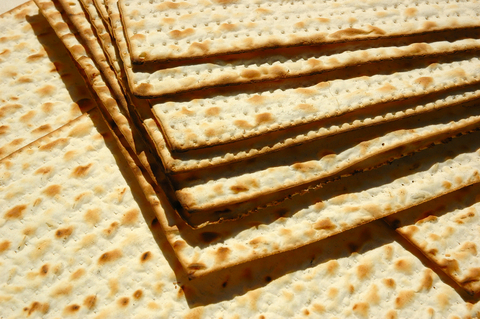
During Passover, the Jewish community refrains from eating leaven and eat what is known as matzah during the eight day holiday, as Moses and the nation of Israel fled Egypt in haste, not having time for our bread to rise and so we eat unleavened bread as a reminder of our leaving Egypt in haste.

Matzah

Matzah (unleavened bread) is eaten during Passover

For seven days there shall be no leaven found in your houses; for whoever eats what is leavened, that person shall be cut off from the congregation of Israel, whether he is a foreigner or a native of the land. You shall not eat anything leavened; in all your dwellings you shall eat unleavened bread (Ex 12:19-20).

As the Jewish community prepares for Passover, each family removes leaven from the home and stores – especially in heavily Jewish areas remove leavened products from their shelves. Then, during a ceremony called Bedikat Chametz, immediately before the first night of Passover and the first Passover Seder, we conduct a final search for leaven throughout the house, gather it together and throws it all out or burn it, symbolizing the house is purified or kosher for Passover.

Paul uses this understanding of the Jewish practice as the background to his statement in1 Corinthians 5:6-8.

Your boasting is not good. Do you not know that a little leaven leavens the whole lump of dough? Clean out the old leaven so that you may be a new lump, just as you are in fact unleavened. For Messiah our Passover also has been sacrificed. Therefore let us celebrate the feast, not with old leaven, nor with the leaven of malice and wickedness, but with the unleavened bread of sincerity and truth.

The community of Corinth evidently demonstrated a tolerance for gross immorality. Paul compares sin to leaven and commands the congregation at Corinth to clean out the sin from their midst in the same way the Jewish community removes leaven from their homes during Passover. Just as leaven permeates an entire lump of dough, sinful behavior affects the entire life of an individual and congregation. If the congregation at Corinth did not deal with the wicked behavior in their midst, then this behavior would defile the entire community.

When my wife makes challah, the traditional Jewish Festival bread, she puts a small amount of yeast into the dough. This small amount of yeast makes the entire loaf of challah leavened. In the same way, sin affects the entire life of a person. We cannot compartmentalize our lives and isolate sin to a particular area. Sin in one area affects all areas of our lives. We deceive ourselves when we think the small or hidden sins in our lives will not creep it’s way into our entire soul. Even the small and hidden sins will permeate and corrode our entire being.

When I kept silent about my sin, my body wasted away Through my groaning all day long.

For day and night Your hand was heavy upon me; My vitality was drained away as with the fever heat of summer. Selah. I acknowledged my sin to You, And my iniquity I did not hide;

I said, I will confess my transgressions to the Lord”; And You forgave the guilt of my sin. (Psalm 32:3-5)

Therefore, we should pursue righteousness, since our Messiah has removed the chametz, leaven, from our lives. Rabbi Saul (the Apostle Paul) describes those with leavened lives as depraved and wicked, but reminds his readers that those who are pure in motives and upright in character behave as if they are without leaven. The person free from leaven does not have a hidden or secret life. The preparation for Passover reminds us of the unrighteous behaviors we tolerate in our lives. If we tolerate immoral thoughts or actions, they will begin to affect our spiritual lives and ultimately destroy our soul.

We only deceive ourselves if we think that what we look at on the Internet, watch on television or do when others are not watching will not have any affect upon our spiritual life. We simply cannot behave badly towards our spouse or children, be dishonest in business or mean to at work if we are serious about honoring God. If we are going to have a healthy spiritual life we cannot tolerate our hidden and secret sins…the ones we only we know about, as the Lord knows them too1

In the spirit of Passover, let’s remove sin from our lives, so that we are kosher for Passover and can experience the joy that only godly obedience, in light of the redemption we have through Yeshua, can bring to our souls.

Mark the blameless man, and behold the upright; For the man of peace will have a posterity. But transgressors will be altogether destroyed; The posterity of the wicked will be cut off.(Psalm 37:37-38)

For more on Passover click on http://tinyurl.com/no7r8l8

1 Comment

Filed under Jewish Holidays, Jews and Christians, Judaism, Messianic Jewish, Passover