I am writing to you at a time when Israel is again battling against the new coronavirus variants, shutting down Ben Gurion Airport to visitors and restricting various everyday activities for all Israelis.
The pandemic hit Holocaust survivors in Israel harder than most as they are physically vulnerable and already some of the most emotionally traumatized people on the planet.
We all know the pandemic made life difficult for everybody, in every country, every community, and household. But imagine what it would be like if you were an eighty-six-year-old Holocaust survivor living in a cramped apartment for a year and a half without a computer or knowing how to use modern technology.
Israel went into lockdown because of the rapid spread of COVID-19, which resulted in the closing of the state-funded social clubs for Holocaust survivors in an effort to protect them from the spread of the disease. This created an opportunity for our staff at Chosen People Ministries—Israel to show His love by serving the survivors. Our staff received special permission from the government to visit these precious souls in their homes and provide them with food and other supplies. But almost more importantly, these visits provided personal connection, prayer, and comfort as our staff was able to share the good news of the Messiah with those who were open.
Our team sprang into action, and we taught dozens of Holocaust survivors how to use computers and even Zoom for virtual meetings. From Bible studies to live online concerts with worship music and teachings from Scripture, we provided a steady stream of hope and personal contact through Zoom events designed for those unable to leave their apartments. We must also remember that, during some of this time, the survivors lived in terror as missiles from Gaza were regularly flying overhead, and some of the rockets that were not stopped by the Iron Dome hit the ground near their apartments, which are very close to the border.
Maxim Katz, who leads our ministry to Holocaust survivors in Israel, described to me the ways in which hardship opened doors for ministry among hundreds of elderly Holocaust survivors and their families.
I am sorry to say that many Holocaust survivors whom Maxim and his team served, approximately seventy in total, passed away during the last year. To make matters worse, Maxim recalls that none of our staff were able to attend the funerals as only a few close family members were permitted to attend. This brought us to tears.
ANSWERS TO PRAYER
What encouraged us the most during this season were the hundreds of phone calls we received from Holocaust survivors and their curious, unbelieving family members asking for prayer. We spent hours upon hours talking with and praying for people over the phone.
One sweet ninety-year-old lady called Maxim and asked for prayer for her grandchildren, who are now in the army. The next day, Maxim received a phone call from an officer in the military who was this lady’s grandson. “My grandmother said you prayed for me,” he remarked. “Who are you, and why are you praying with and helping my grandmother?” he added. Maxim shared openly that he was a Jewish believer in Jesus and told him about our ongoing work among Holocaust survivors. Maxim’s testimony touched the man, and days later, he received a message from this officer saying he—an unbeliever—wanted to support the ministry financially! Not only that, but he continues to call Maxim to this day, asking questions about faith and sharing about his own spiritual journey.
Another precious lady in her late eighties called and asked us to pray for healing from cancer. Maxim and the team prayed for her and offered practical help as well because she had no family in Israel. She accepted Jesus as a result of our prayers and practical support. It was a beautiful picture of Jesus’ words: “Let your light shine before men in such a way that they may see your good works, and glorify your Father who is in heaven” (Matthew 5:16).
CHANGE AND ENCOURAGEMENT
Recently, an eighty-six-year-old man asked Maxim, “How did you come to the faith? How did God find you? Because you weren’t born a Christian. So, what happened?” After two hours of Maxim and even some other survivors sharing their testimonies, the man came to faith in Jesus!
Pray for these precious Holocaust survivors. We try to help them spiritually and practically, but we are also fighting the clock as many, especially during the pandemic, have passed away. Please pray that God will continue to open the hearts of the survivors and that He will send additional laborers to serve on our team who can especially help with home visits. It requires a lot of time to make these personal visits as the survivors are often so lonely.
The harvest is plentiful in Israel among Holocaust survivors! But the time is short. Matthew wrote, “Then He said to His disciples, ‘The harvest is plentiful, but the workers are few. Therefore beseech the Lord of the harvest to send out workers into His harvest’” (Matt 9:37–38).
So, please pray for new laborers and think about sharing financially in this urgent ministry so that we can take on some new workers for this effort…again, the time is short.
You can help us in this wonderful ministry through your prayers and support of new workers!
MAXIM’S TESTIMONY
Maxim was born in Siberia, Russia, in 1976 to a traditional Jewish family. Due to a problem at birth, he could not walk until he was nine years old, which made his childhood very difficult, especially making friends with other children. When he reached adulthood, he became very attracted to the world.
After some time, Maxim decided to move to Israel under the Law of Return, which allows Jewish people to immigrate to the Holy Land. He settled in the resort city of Eilat in the south of Israel with other immigrants from Siberia. But instead of finding a new life, he quickly became attracted to alcohol and chose the wrong kind of friends who were also heading down a path to nowhere!
But the Lord had His holy hand on Maxim and began drawing him to the Savior. He met some godly believers in Eilat and began to understand that there was a God who loved him. Going nowhere on his own, he prayed and asked for God’s help. Still, life became more difficult, and he ended up on the streets. Then, one day, Maxim called out to God for help as he knew that Jesus alone was the answer to ALL of his problems.
Eventually, God called Maxim to serve Him full-time, and he has been serving with Chosen People Ministries since 2002, teaching Bible studies, assisting the director of the work in Israel, and sharing the good news of Messiah with all who are willing to hear.
The Lord also brought Maxim a beautiful wife, Slavna, and together they minister for the Messiah in Israel among Holocaust survivors and among children as Maxim also leads our very fruitful camp programs.
THE ISRAEL PROJECT
Your Mission to the Jewish People has more than twenty staff members in the Holy Land serving the Messiah among His chosen people. Our Centers in Jerusalem and in the greater Tel Aviv area are again up and running, and Maxim and our other staff members are busy reaching Jewish people in Israel: Holocaust survivors, young adults, children, soldiers, and many others!
During this season of the year, when we think deeply about His miraculous birth and generosity toward us (Romans 5:8), please join me in prayer for the work of Chosen People Ministries in Israel.
Merry Christmas, and may He be glorified in all things!
Shalom and happy Jewish New Year! Fall is an important time of year for your Jewish friends and for Your Mission to the Jewish People. More Jewish people think about atonement and forgiveness of sin during this season than at any other time of the year.
We recently enjoyed a very fruitful season of high holiday services during which we introduced Jesus to Jewish people as the fulfillment of these great festivals. I believe the holy days are biblical types predicting the atoning death of our Messiah, especially the holiday of Yom Kippur—the Day of Atonement described in Leviticus chapter 16 and further detailed in Isaiah chapter 53!
We held services both online and in person and had thousands attend. Please pray for the follow-up to these evangelistic events—that many Jewish people who do not know the Lord will hear the gospel and find salvation! We have now found a way to link seekers together through a series of online small Bible study groups that have been very effective. We praise God for the Jewish people who gave their hearts to Jesus through these online Bible studies!
EXCITING NEWS
Recently, Mr. Woods, one of our loyal supporters, sold the home he and his wife lived in for many years and—in honor of his wife’s wishes and upon her passing into the presence of the Lord—donated the proceeds to Chosen People Ministries. This enabled us to establish a Challenge Grant fund, which increases the finances available to be used for ministry among the Jewish people. What a great gift in memory of his wife, their commitment to the Lord, and love for the Jewish people.
Initially, we plan to use a total of $100,000 ($25,000 per project) from this fund to move four key ministry projects forward during the next twelve months.
The Charles L. Feinberg New Missionary Training Fund
We plan to use up to $25,000 this year to subsidize students attending our Charles L. Feinberg Center for Messianic Jewish Studies in Brooklyn and globally online.
The Israel New Missionary Fund
We will provide another $25,000 from the Challenge Grant fund to support new missionaries in Israel who are unable to raise support for themselves, especially during these days when many local churches are not yet scheduling speaking engagements.
The Twenty-First Century Evangelism Fund
We are working on new websites, videos, evangelistic podcasts, digital outreach booklets, and much more. I am especially excited about the new evangelistic Hebrew website we are developing. I cannot tell you how much
we need to reach younger Israelis, and this is an excellent way. Digital evangelism is the future!
The Mission Support Fund
We find it takes one worker behind the scenes to support every three missionaries on the field. We simply could not get the work of evangelism and discipleship done without those who handle the “back office” work in New York City, Jerusalem, and around the globe. We have some major infrastructure projects planned, like upgrading our infotech systems that uphold our church, missionary, finance, and administrative ministries.
OPPORTUNITIES FOR THE NEW YEAR AND A NEW CENTURY
It is my hope to continue moving Chosen People Ministries ahead in the twenty-first century in the power of the Holy Spirit using all the tools these new times make available to preach the gospel. We wholeheartedly believe the everlasting, glorious, unchanging good news—that the Messiah has come, that His name is Jesus, that He died and rose for the sins of Jews and Gentiles, and that by believing in Him we will receive the gift of eternal life!
I am so appreciative of you and your love, prayers, and support of our 127-year-old ministry to God’s chosen people.
Shalom and Happy Jewish New Year! I am greeting you with a Happy New Year because Jewish people around the globe recently celebrated the Jewish New Year, called Rosh Hashanah. This month, we begin the Hebrew year 5782. Jewish tradition dates the new year from when creation is believed to have taken place.
I was born into a very traditional Jewish home in Brooklyn, New York, and grew up in Queens. I am not quite old enough to be a Brooklyn Dodgers fan, but I became a Mets fan, which is almost mandatory if you grew up in Queens!
I spent my childhood in a tightly knit Jewish community. I had a large and loving extended Jewish family surrounding me, and almost all my friends were Jewish, as were most of the kids at school.
I had my Bar Mitzvah at the age of thirteen, as is usual for most Jewish boys. I studied at Hebrew school for five years in preparation for this major event and rite of passage. As part of our training, we read through the Bible, studied Hebrew and the Jewish traditions, and celebrated all the Jewish holidays at synagogue and at home.
The Time Has Come—Again!
The Jewish New Year is not like the secular New Year. In Leviticus 23:24-25, you will not find the words “new year” used to describe the festival; instead the Bible describes the day as the blowing of the trumpet. On this day, according to the rabbis, God opens the books of life and death. Jewish people have ten days to get right with God, so the Jewish New Year begins a sobering and serious season of reflection. The trumpet blown on Rosh Hashanah is called a shofar (a ram’s horn) in Hebrew, and it is sounded to call the Jewish people to repentance before the Day of Atonement, the most sacred day of the Jewish year that follows ten days later.
According to Leviticus chapter sixteen, the high priest offered sacrifices of a bull and a goat on the altar. He then sprinkled the blood on the mercy seat to make atonement for sins not previously atoned for because of disobedience or ignorance. It was only on this day of Yom Kippur that the high priest stepped into the Holy of Holies, beyond the veil, and did what human beings could never do for themselves. The Hebrew Scriptures clearly teach that none of us can do anything to merit forgiveness of sin. The “making of atonement” is always done by someone other than ourselves.
The Ten Days of Awe
At the end of these ten days of repentance (known as the Days of Awe), we sound the shofar once again. Tradition tells us that God shuts the books of life and death as His last act on the Day of Atonement. At that moment, the fate of every Jewish person is sealed for the coming year. If we performed an adequate number of good works and thoroughly repented of our sins, then we will have a good year and find favor with God. If not, we will experience some type of judgment during that year. The results of our efforts—repentance, prayer, and fasting—last only a year as the process must be repeated annually.
However, as believers in Messiah Jesus, we have complete confidence that Messiah died for our sins “once for all,” according to Hebrews 7:27. We are forgiven! That is the reason I wish my believing friends a Happy New Year and Day of Atonement.
The psalmist promised that one day God would remove our sins as far as the east is from the west (Ps. 103:12). In Jeremiah 31:31–34, the prophet told us that the day is coming when the Lord will write His law on our hearts and forgive our sins. This hope of forgiveness caused the Jewish people to look forward to this great day of redemption throughout the darkest periods of Jewish life.
The Prophecy of the Binding of Isaac
The binding of Isaac in Genesis chapter twenty-two presents a beautiful prophetic portrait of this predicted hope of an ultimate sacrifice for sin. In this chapter, which is read every year in synagogues on Rosh Hashanah, God asked Abraham to climb Mount Moriah and sacrifice his son, Isaac.
Abraham and Isaac began walking toward the mountain. On the third day, Isaac innocently asked his father, “Behold, the fire and the wood, but where is the lamb for the burnt offering?” What a haunting question! Abraham respondedthat “God will provide for Himself the lamb for the burnt offering, my son” (Gen. 22:7–8).
Upon their arrival, Abraham bound his son and laid him on the altar. At that moment, I am sure Isaac thought his question was answered and that he was the sacrifice. But when the patriarch raised his knife, the angel of God stopped him!
The angel of the Lord called to him from heaven and said, “Abraham, Abraham!” And he said, “Here I am.” He said, “Do not stretch out your hand against the lad, and do nothing to him; for now I know that you fear God, since you have not withheld your son, your only son, from Me.” (Gen. 22:11–12)
Abraham looked toward the bushes and saw a ram caught in the thicket by his horns, and he sacrificed the ram instead of Isaac (Gen. 22:13). The horns that trapped the ram are why in traditional Judaism we sound the shofar on Rosh Hashanah. Hearing the sound from the ram’s horn reminds us that God provides the sacrifice.
We also understand that the Temple, the holy place where God ordained sacrifices to be made, was built on this same Mount Moriah. “Then Solomon began to build the house of the Lord in Jerusalem on Mount Moriah, where the Lord had appeared to his father David, at the place that David had prepared on the threshing floor of Ornan the Jebusite” (2 Chronicles 3:1).
My heart of faith wholeheartedly believes that Genesis chapter twenty-two points to Jesus. He is the beloved Son of the Father, just as Isaac was Abraham’s promised beloved son. Jesus was willing to lay down His life, but unlike Isaac, who was spared, Jesus was slain. Ultimately, He was crucified and died on this same mountain range within eyesight of the Temple Mount where many thousands of animals were sacrificed between the almost-death of Isaac and the atoning death of our Messiah Jesus.
Abraham named the sacred site, as described in verse fourteen, “Abraham called the name of that place The Lord Will Provide, as it is said to this day, ‘In the mount of the Lord it will be provided.’” He identified God Himself as the provider of the one sacrifice that really counts! In the fullness of time, God allowed His Son to die on a cross made of unhewn wood to accomplish what neither the potential sacrifice of Isaac nor the blood of bulls and goats for centuries could ever achieve. It was on Mount Moriah where God provided the gift of His only beloved Son, and it is through His shed blood that, by faith, we find everlasting atonement for our sins. We have peace with God through the death of Jesus, who died and rose for our sins.
As the Apostle Paul wrote, “Therefore, having been justified by faith, we have peace with God through our Lord Jesus Christ” (Romans 5:1).
He did not stop there, though. The rabbi from Tarsus continued:
For while we were still helpless, at the right time Messiah died for the ungodly. For one will hardly die for a righteous man; though perhaps for the good man someone would dare even to die. But God demonstrates His own love toward us, in that while we were yet sinners, Messiah died for us. Much more then, having now been justified by His blood, we shall be saved from the wrath of God through Him. (Romans 5:6–9)
Having embraced this great salvation through the Messiah Jesus when I was nineteen years old, I can tell you that it is true, and this decision changed the way I have observed the Jewish high holidays for all these years. I personally know the joy of forgiveness, and I hope you do as well!
Please pray for Your Mission to the Jewish People as we proclaim the glorious message of Yeshua’s atoning work as prophesied in the Hebrew Scriptures. I also hope this will help you pray for your Jewish friends. Please pray, as we share the message of salvation through the “greater” son of Abraham during the rest of this month. Finally, please pray the Lord will open the eyes of our beloved Jewish people to see that He is the true Messiah for all.
Thank you for your prayers and support of our 127-year-old ministry among the Jewish people. Your partnership is deeply appreciated.
“But in everything commending ourselves as servants of God, in much endurance, in afflictions, in hardships, in distresses, in beatings, in imprisonments, in tumults, in labors, in sleeplessness, in hunger, in purity, in knowledge, in patience, in kindness, in the Holy Spirit, in genuine love, in the word of truth, in the power of God; by the weapons of righteousness for the right hand and the left.” (2 Corinthians 6:4–7)
I recently rediscovered this powerful and well-known passage penned by the Apostle Paul, which describes the insurmountable difficulties he faced in bringing the gospel “to the Jew first and also to the Greek” (Romans 1:16).
Paul’s life was in constant danger. He was imprisoned, beaten, stoned, and shipwrecked three times. His evenings were undoubtedly not spent at a five-star hotel.
Paul challenged the believers in Corinth to follow him as he followed the Lord (1 Cor. 11:1). Most of us would not welcome the kind of opposition and suffering Paul met throughout his ministry. The world teaches us to avoid unnecessary hardship, and yet, the apostle embraced life’s difficulties and sorrows for the Lord. He wrote from a Philippian jail, “that I may know Him and the power of His resurrection and the fellowship of His sufferings, being conformed to His death” (Phil. 3:10). Yet, in all things, he found the victory through the Messiah Jesus—and so can we!
Jesus endured life’s hardships and even bore the pain of the cross, burying our sins and crushing the power of the grave! Jesus lived through an eternal moment of separation from His Father—whom He loved for all eternity and who loved Him—so that you and I would not suffer a moment of separation from our Creator.
Think of all the apostle endured for the sake of those he served and sought to bring into fellowship with the Father through the Son. Then consider all that Jesus, our beloved Messiah, gave up and suffered on our behalf. This might help us to gain a new perspective on all we endured, especially over the last year and a half.
Suffering teaches us lessons we could never learn in any other way. Our character is shaped far more in the schoolroom of suffering than when surrounded by those we love, the niceties of life, and even success. We often learn more through failure and pain than we do through success.
We all have our stories, of course, of how we experienced hardship for the Lord.
Many years ago, I was part of a messianic singing group invited to go to Northern Ireland by an Irish Christian who had a tremendous burden for his people. We ministered through messianic music and preaching in and around Belfast. The year was 1976, and bombs were exploding virtually every day in beautiful, lush, green, and very unsafe Northern Ireland.
At the time of this trip, I was a seminary student and a newlywed. Was I frightened? You bet I was! And my fear was justified! We all wrote notes to our unsaved Jewish families, sharing our faith and telling our loved ones why we were doing what we did. We were all ready to die for Jesus. Or so we hoped.
I remember one day we had an engagement at Queens University Belfast. We set up our sound equipment and began our music ministry. Hosts of students came and listened and interacted with us regarding the gospel. We started our final song but were interrupted by a loud boom. Within moments, shreds of charred paper began floating down from the sky like falling snow. A bomb had gone off close by, and we, along with the hundreds of students, were frightened because we had no idea whether the next bomb would explode closer to us.
Another day, we were singing in downtown Londonderry. We had to move from our original location as the establishment owner told us he no longer wanted us in front of his store. We were disappointed but continued our musical ministry two or three blocks away. We were not even halfway through our set of messianic music when we heard a loud explosion. You could feel the glass windows of the store imploding. The bomb went off at the very spot where we were supposed to sing but were asked to leave. To this day, I do not know if someone warned the owner of that retail store that a bomb would go off, and he told us to leave to keep us safe. All I know is that Romans 8:28 took on an entirely new meaning to me and our team!
I could also tell you about incidents where someone angry about my preaching the gospel physically attacked me. To this day, I believe those hostile encounters were small change compared to the price He paid for me on Calvary.
I love our Chosen People Ministries staff.
They suffer without complaint and trust the Lord through the most difficult of circumstances.
You will read about what our staff in Israel recently endured during the eleven-day war with Gaza. Most of our Chosen People Ministries workers in Israel are Jewish and made Aliyah because they love the Lord and want to live for Him in the Holy Land. But, unfortunately, they have endured a lack of acceptance, persecution by some religious Jews, and the everyday threat of terrorism and war.
Before going to Northern Ireland for the first time, the president of Biola University (I was attending graduate school there at the time), Dr. Clyde Cook, offered to pray with our group before the trip. I will never forget his prayer: “Lord, teach Mitch and his team that safety is not the absence of danger but the presence of the Lord.” I will never forget those words.
I pray that prayer today for our staff ministering in hard places. They endure rejection, threats, and difficulties that are all part of the worthy effort to share God’s love with our Jewish people, whom we love dearly.
Many Jewish people react and oppose us strongly because of centuries of persecution by misguided and mostly nominal Christians creating an almost impassable gap between the Jewish community and Jesus. Right now, our staff ministers in Israel, Argentina, New York, Russia, the United Kingdom, and so many other critical and strategic places where large numbers of Jewish people live. These busy urban areas are loud, unsafe, and expensive. Yet, our workers endure all these challenges for the sake of the gospel.
We need your prayers and generous support to share the gospel with Jewish people living in difficult places. We know we could move to someplace nicer, greener, and less expensive, but we choose to be where our Jewish people live, work, and raise their families.
One way I encourage our staff serving in difficult places is to remind them of the vast number of like-minded believers who pray for them and support their ministries.
You are so important to us but especially important to those who serve in hard places.
Why do we do this? Why do we choose to endure such hardship and difficulties? Why do we ask our spouses and children to live in places that are difficult and even dangerous?
Sometimes I ask myself this question, as I have lived in Brooklyn now for more than three decades, serving among one of the largest Jewish populations in the world. I chose to raise my children in this intense and often very hostile environment. But I have never looked back because of all the Lord has done for me. I know that our staff serving the Lord under challenging conditions feel the same way.
It is tough at times, but always—and I mean always— worth it!
What Dr. Cook prayed is so true, as safety and peace (shalom) are always available to us through the Prince of Peace who is with us and dwells within us. Paul gave us a rationale for the joy we can experience day in and day out as we share the gospel with Jews and Gentiles—even while suffering or working in difficult places.
Therefore, we are ambassadors for Christ, as though God were making an appeal through us; we beg you on behalf of Christ, be reconciled to God. He made Him who knew no sin to be sin on our behalf, so that we might become the righteousness of God in Him. And working together with Him, we also urge you not to receive the grace of God in vain. (2 Corinthians 5:20–6:1)
And I can assure you that our staff feels this way. We know that what we do for Jesus is eternally worthwhile because what He did for each of us will endure forever.
On behalf of our staff serving in difficult places, thank you from the bottom of my heart for your love, partnership, prayers, and sacrificial support!
Today, my heart is burdened for our beloved nation of Israel!
This past year has been challenging—especially the past few months—for every citizen of the Holy Land. COVID-19 ripped through Israel, killing thousands, especially within the Orthodox Jewish community; yet, today, Israel stands as an example of recovery from this dreaded disease. Thank God, the number of those infected is now almost nil on the Israeli side and decreasing among the Palestinians. We are beginning to see a restoration to life in person, including all of our ministries in Israel.
We have more than twenty staff members throughout Israel, with centers in Jerusalem and the Greater Tel Aviv area. We are already back to in-person Bible studies, events for elderly Holocaust survivors, outreach dinners, and ministry to younger Israelis, mainly through our outstanding work in the Tel Aviv suburb of Ramat Gan.
THE RECENT ELECTIONS
The recent elections again revealed the deep divisions within Israel. A coalition of religious Zionists led by Naftali Bennett and a more left-of-center group led by Yair Lapid replaced long-time Prime Minister Benjamin Netanyahu.
Efraim Goldstein, one of our long-term Chosen People Ministries staff members in Israel, summarized the recent election as follows:
The nation of Israel is establishing a new coalition government without Benjamin Netanyahu. The new leaders are a new generation of native-born Israelis.
Naftali Bennett leads the Yamina party and will be the new prime minister in a coalition agreement. As a former aide and cabinet minister for Netanyahu, he is determined to serve the nation of Israel. Gideon Sa’ar’s New Hope Party is a staunch right-wing supporter.
Yair Lapid of Yesh Atid was a journalist and is committed to reforming Israeli politics. For the past ten years, he has labored to gain credibility as a viable leader. Benny Gantz of the Blue and White Party served as chief of staff of the Israel Defense Forces, and he is currently the defense minister. This coalition will also be the first time that the United Arab List (Ra’am), led by Mansour Abbas, will vote to support a new government even though they will not have cabinet positions.
The breadth of views within the new government is wide! We will see if they can hold together and provide decisive leadership for Israel as they try to weather the fractious regional relationships throughout the Middle East.
THE GAZA WAR
Israel was regaining a sense of normalcy from COVID-19 when war broke out with Gaza in May. I was in close touch with our Israeli staff throughout the war and its aftermath. Let me share some of what our workers experienced in their own words.
Our Israeli director, Michael Zinn, writes,
We just had the war, and today we are already trying to forget about it. Israel suffered from the terrible terrorist organization Hamas’ attacks with more than 4,500 missiles launched within ten days! They killed twelve people, wounded hundreds, and caused millions of dollars worth of property damage. Hospitals treated many hundreds after panic attacks. On top of that, thousands of Arabs within Israel rioted, destroying Jewish properties, burning down synagogues, lynching Jews, and attacking police. Add to this picture the ongoing sound of the sirens and traces of the Israeli defense antimissiles in the sky. By this description, you can probably get some understanding of what we have experienced here recently. It was very difficult to remain calm when my daughter called me from Tel Aviv and told me there were hundreds of missiles in the air, and I heard the sound of them over the phone!
David Trubek, who serves at our Ramat Gan Center, adds,
During the recent conflict here in the Holy Land, we found ourselves back in a wartime routine. Hamas launched massive rockets targeted at our civilian populace. Arab Israelis rioted, looted, burned public buildings, and violently attacked their Jewish neighbors. Unfortunately, a small segment of our Jewish population also committed violence against the Arabs. Our outreach center is in the Tel Aviv district—an area bombarded with missiles. For days, we had to run for shelter several times a day. We had to get up in the middle of the night each time the sirens sounded, get the children, and run to the shelter.
On top of ensuring the safety of ourselves and our children, we asked God how He would use us to shine His light on people around us. During our time in the shelter, we had conversations with people about the love of God, the sin that destroys the world, the message of Yeshua, and the love He brings into this world. We decided with our congregation to meet on Zoom for prayer meetings. I felt in my heart the urgency to reach out to our local Arab brothers and ask them to join and pray together with us in unity for peace in the land of Israel.
Our staff deeply cares for their families and their fellow Israelis who need the Lord during this time of turmoil! They have a ministry of comfort, especially among the elderly Holocaust survivors they reach in the areas closest to Gaza.
Maxim Katz, serving in Jerusalem, writes,
We hope that in July and August we will be able to hold children’s camps. We had planned a vacation camp in May, but we had to cancel it due to the Gaza conflict. It breaks my heart because we could not gather our children together for almost two years. I see teenagers for whom the camps were an anchor of faith now living in the world. We pray that the Lord would give us wisdom and the opportunity to bring these young people back to Him.
When we sent the invitation to come to the camp in May, seventy children signed up in twenty minutes, and we had to turn more away. The Lord showed me again how important this ministry is. The kids were distraught when we canceled everything, and we are waiting for the summer with the hope that camp will happen. Today, we have almost a hundred applicants for the summer camps.
NEW OPPORTUNITIES
We know that war and general instability bring opportunities to share the gospel of peace. Many Israelis are seeking the Lord, which is why we believe we need to intensify our efforts in the Holy Land right now. The need TODAY is urgent.
The openness we are sensing is, without a doubt, growing among next-generation Israelis! This is why we are working intensively to develop new tools to reach Israelis through some of our new websites and social media efforts and, of course, through in-person ministry as the country re-opens post-COVID-19.
We are creating a website that addresses the thorny questions Israeli young adults are asking. Our new site and social media campaigns will speak to heart issues like loneliness, broken relationships, gender confusion, and other life issues that we know only a personal relationship with God through Jesus the Messiah can address!
We will continue to reach elderly Holocaust survivors for the Lord, intensify our family-oriented strategies by ministering to both parents and children, develop new congregations, and much more!
Clearly, the recent elections show that young Israelis are looking for new ideas, new leadership, and for many, a new way—other than Jewish Orthodoxy—to draw closer to God. We believe it is critical at this moment in Israel’s history to reach this younger generation.
THE CHALLENGE OF WEAKENING EVANGELICAL SUPPORT
Unfortunately, we have a problem within the American church as support for Israel is waning among younger evangelicals. According to a recent survey that Chosen People Ministries helped sponsor, support from younger evangelicals for the nation of Israel has dropped from 75 percent to 33 percent since 2018. We find that a lack of support for Israel often leads to lessened interest in Jewish evangelism.
However, there is a silver lining, as more than 40 percent of evangelical young people are undecided concerning their views on Israel. This indecision allows Your Mission to the Jewish People to educate the future leaders of the American church!
In light of the survey results, which Chosen People Ministries helped sponsor, we hope to create materials and conduct conferences in seminaries and local churches that encourage younger evangelicals to love Israel and support our efforts to reach Jewish people with the gospel.
Merry Christmas and Happy Hanukkah! I love this season of the year: lights, joy, lots of presents, and the ability to freely focus on our faith in Jesus—the reason for the season. When I say the reason for the season, I am including Hanukkah, not just Christmas!
There is an amazing connection between the two holidays. It is a bit hidden, but I am sure that, once you see it, you will be as thrilled about it as I am. We find this extraordinary link in John 10:30, where Jesus said, “I and the Father are one.”
We know from the gospel that the events in John chapter ten occurred during the Feast of Dedication (John 10:22–23), also called Hanukkah. The Hebrew word hanukkah means “dedication.” It is still the most often used name for this great holiday.
Jesus Celebrated Hanukkah!
Curiously, the only biblical mention of Hanukkah is in the New Testament. The origin of Hanukkah is in the intertestamental literature, particularly in the First and Second books of Maccabees, which many people consider significant records of Jewish history.
The story of Hanukkah serves as the stunning backdrop to the words of Jesus, particularly in John chapter ten and especially in verse thirty.
The saga begins with a well-known historical figure—Alexander the Great.
Upon his death in 323 BC, Alexander’s kingdom was divided among four of his generals. Eventually, the lands that included Israel came under the control of Antiochus Epiphanes in 168 BC. His name alone tells the story—the word epiphanes means “revealed” or “manifestation” and refers to the Greek gods who often took on human form. In this instance, Antiochus probably had Zeus in mind as he desecrated the Temple in Jerusalem by sacrificing to Zeus (1 Maccabees 1:54; 2 Maccabees 6:2).
Antiochus demanded loyalty from the Jewish people to Greek culture and the Greek gods. He sent his emissaries with a statue of himself to each village in Israel and made them bow down to it. According to Jewish tradition, the emissaries entered the town of Modi’in and demanded that the Jewish people bow down and worship the Greek gods and their representative, Antiochus.
But a family of Levitical priests was living there. Mattathias and his five sons refused to bow and began a revolt. Mattathias cried out, “Let everyone who has zeal for the Law and who stands by the covenant follow me!” (1 Maccabees 2:7). His call is one of the grand statements of loyalty and unity that every young Jewish child learns at his mother’s knee.
His family and followers fled to the Judean foothills and waged guerrilla warfare against the Syrian Greeks for the next three years, between 167–164 BC. When Mattathias died, Judah became the leader of the rebel forces.
During that time, Antiochus perpetrated one of the most heinous acts against the Jewish people recorded in all of history. After defeating Antiochius, the Maccabees discovered that he had sacrificed a pig on the altar in Jerusalem, one of the holiest sites in Israel. The Maccabees retook Jerusalem and wanted to cleanse the Temple. However, when they realized that a pig’s blood had defiled the altar, they took it apart and stacked the stones off to one side. In a very intriguing tradition recorded in 1 Maccabees, they left the rocks for someone more powerful to do the cleansing (1 Maccabees 4:46).
They built a new altar, and according to Jewish tradition, only had one day of oil left in the Temple’s eternal light (the seven-branched menorah), although it took eight days to cure olive oil to keep the light shining. The miracle that took place, according to tradition, was that the oil lasted for eight days, which allowed the Maccabees to prepare the oil needed and prevented them from being extinguished.
This legend provides the rationale for why we celebrate Hanukkah over eight days and why the symbol of light is so important. It reminds us that the ner tamid, the ceremonial light that shone in the Temple, must never be extinguished. Of course, the physical Temple was destroyed in AD 70 when the Romans conquered Jerusalem. Many Jewish people fled, and the Romans took the remaining Jewish people as captives. The menorah and other holy implements were looted and brought to Rome by the armies of Titus. To celebrate the victory, the Romans engraved these historical events inside the Arch of Titus, which you can still see today in the Roman Forum, near the Roman Colosseum.
The Declaration of Divinity
Jesus made His declaration of divinity in John 10:30 amid the grand traditions observed during the magnificent Hanukkah celebrations at the Second Temple. These traditions are described in the Mishnah, a collection of rabbinic commentaries on the Bible.
The story of Hanukkah, which would have taken place fewer than two hundred years earlier, was well-known by the Jewish people at that time. The average Jewish person living in Israel would have known that Antiochus Epiphanes, also called “Antiochus the Madman,” had declared himself to be a god. The Jewish people were commanded not to have any other gods but the Lord and were forbidden to worship idols (Exodus 20:3–4).
Indeed, the order to bow down and worship a statue would have been especially repugnant to the Jewish people. To this day, Jewish resistance to incarnation is rooted in the Jewish rejection of idolatry and the belief that God cannot be corporeal.
Resisting the claim that Jesus is God in the flesh has been viewed as a testimony of Jewish loyalty throughout the centuries. The fact that any Jewish person can overcome thousands of years of Jewish faith and tradition and accept Yeshua’s deity is a miracle.
The Deity of the Messiah Is Rooted in the Hebrew Bible
I was raised in a modern Orthodox Jewish home and taught to reject this possibility out of hand, not only for Jesus but for anyone.
I remember when I was thinking about becoming a believer in Jesus and was confronted with the idea that Jesus claimed to be God in the flesh. After reading the Gospels and seeing the way Jesus acted and spoke, I concluded that if anybody was God in the flesh—it would be Him. I am so glad that the Lord worked in my heart and enabled me to accept this glorious and fundamental truth—that Jesus is God, fully divine and fully human.
If Jesus was just a very bright and articulate itinerant Jewish rabbi, then you and I are still walking in our sins and face judgment on the last day. But because He is God in the flesh, His death provides a perfect atoning sacrifice for our sins, allowing you and me to receive forgiveness of sins and stand in the presence of the Lord forever.
I came to realize that the Hebrew Scriptures actually did teach that God could appear in the flesh. Isaiah 7:14, Isaiah 9:6–7, and several other prophetic passages in the Old Testament teach that God would take on flesh one day.
I understand why the Incarnation rubs Jewish people the wrong way. We were raised celebrating Hanukkah and taught that bowing to any corporeal God is idolatry.
I would agree that the Bible teaches against idolatry. Isaiah wrote with a combination of anger and humor, it seems, concerning how idolators worship:
Half of it he burns in the fire; over this half he eats meat as he roasts a roast and is satisfied. He also warms himself and says, “Aha! I am warm, I have seen the fire.” But the rest of it he makes into a god, his graven image. He falls down before it and worships; he also prays to it and says, “Deliver me, for you are my god.” (Isaiah 44:16–17)
Yet, we do not worship a God made of wood or stone but one who became a man while fully retaining His divine nature—a glorious mystery!
There is no stipulation against the true God taking on flesh. Without the Incarnation, Jesus would not fulfill the Messiah’s prophetic description and qualify as the Savior of the world. There is no other way to be the Messiah as no human being could accomplish what the Bible prophesied the Messiah would achieve. The deity of the Messiah is essential to His Messianic role in the story of redemption.
With this background, we understand that Jesus’ declaration that He and the Father are one was a declaration that He is God in the flesh. There is no other. Antiochus Epiphanes was a fraud; the statue was merely an image that was eventually destroyed.
Jesus is not an idol made of wood or stone, nor is He just a man or a great rabbi or miracle-worker. He is the fulfillment of the Old Testament prophecies that teach us that the true Messiah and Savior of the world would be God in the flesh.
Dear friend, it is the Incarnation that forms the magnificent bridge between the holidays. I cannot tell you how happy I am that our Messiah Jesus chose Hanukkah to declare Himself God in the flesh. What could be more appropriate? What could be more Jewish?
I hope you enjoy the additional teaching on this great topic in this newsletter.
Merry almost Christmas and thank you for your prayers and partnership. Chosen People Ministries, Your Mission to the Jewish People, is positioned to reach thousands of Jewish people during December, and I am excited. We could not be where we are today without God working through you!
I am especially pleased with the opportunities we have for online evangelism. We are now in the midst of evangelistic campaigns in the United States, England, and Israel. We are offering a booklet about the Jewish holiday Hanukkah entitled Hanukkah: A Bright Light for Dark Times, who we know is Jesus, the Light of the World! We have been speaking to Jewish people about Jesus on Zoom and in person as restrictions allow, and a growing handful of Jewish people in Israel and across the globe are coming to faith. We have baptized some new believers in the past few months too. God is moving!
No one, and nothing the devil can throw at us, can keep the gospel locked down!
FACING HARD TIMES IN THE POWER OF THE HOLY SPIRIT
Our dedicated missionaries are working through the many challenges facing them daily in their ministries. And the Lord is using these hard times, caused by COVID-19, to bring out the best in our staff. They are more creative, sacrificial, and dependent upon the Holy Spirit than ever before!
I am concerned, however, with our missionaries who have been enduringhard times in hard places! Your prayers can help our staff power through the challenges by His Spirit.
Let me tell you what these wonderful missionaries are facing.
Our staff in Israel and Brooklyn face regular opposition from religious Jewish people who protest our Bible studies and services—especially at our Greater Tel Aviv Messianic Center in the suburb of Ramat Gan. Some of our staff also face the challenge of having limited resources, as the regions where they serve do not have an abundance of local churches committed to Jewish missions. I wish we could send the staff everything they need, but we cannot as our resources in the United States are also limited.
Our missionaries here at home are also having a tough time because the opportunities to speak in churches—one of the primary ways our missionaries raise their support—is still severely limited because of the pandemic.
We are not sure when churches will fully reopen their doors to our ministries.
Our staff who work in hard places need the freedom to travel to other places to raise prayer and financial support, but it is impossible for our overseas staff to come to the United States to raise support right now.
Our global staff also face the challenges of working in countries plagued by government instability. For example, the governments of England, Israel, and Argentina are under pressure. Policies are changing and uncertainty rules, which make people hesitant to give to missions, even if they can.
COUNT YOUR BLESSINGS
We have to admit that even though we have endured some tough times over the last nine months, we also know there is a lot to be thankful for!
I hope you were able to gather with your family to celebrate Thanksgiving. Yet, I imagine you may have limited the number of your guests to protect your more vulnerable loved ones as we did. Our heavenly Father also protects those He loves. In one of my favorite passages in all of Scripture, Isaiah wrote:
Do not fear, for I have redeemed you; I have called you by name; you are Mine! When you pass through the waters, I will be with you; and through the rivers, they will not overflow you. When you walk through the fire, you will not be scorched, nor will the flame burn you (Isaiah 43:1–3).
Like our heavenly Father, we are “wired” to protect those we love!
We do have so much to be thankful for in the midst of hardship, including the freedom to express our faith, the availability of Bibles and other Christian literature, and loving families, even though we might have to see them via Zoom.
God is good—all the time.
Let me list a few reasons why I am so thankful this year.
1. Our online outreaches have been very successful.
2. Many Jewish people have come to faith during the pandemic.
3. There is growing interest in the gospel among ultra-religious Jewish people. We have never received as many inquiries from religious Jewish people as we have during the last few months.
4. The Chosen People Ministries staff is healthy. We are still working mostly from our homes, but some of us are also in the office a few days a week. And our congregations—at least some of them—are meeting again in person, following their own state and local requirements.
There is a lot to be thankful for each day, even in light of what we have lost. The Lord always makes up for our hardship, but in His way.
He promised Israel, “Then I will make up to you for the years that the swarming locust has eaten, the creeping locust, the stripping locust and the gnawing locust, My great army which I sent among you” (Joel 2:25).
He loves each of us so deeply and personally. Jesus taught His disciples this as well. Matthew wrote:
Do not worry then, saying, “What will we eat?” or “What will we drink?” or “What will we wear for clothing?” For the Gentiles eagerly seek all these things; for your heavenly Father knows that you need all these things. But seek first His kingdom and His righteousness, and all these things will be added to you (Matthew 6:31–33).
And He loves those who are preaching the gospel through Your Mission to the Jewish People.
I am grateful for you, too, as it is because of your sacrifice and generosity that the Lord cares for our dedicated staff worldwide, especially those serving in hard places! We currently have staff working in areas that cover 96 percent of the world’s Jewish population, which today is about 15 million!
We are thankful for you, and we pray regularly for the needs of our broader Chosen People Ministries family. Please feel free to send us your prayer requests at chosenpeople.com/pray. We want to thank God for what He is doing in your life and pray for your needs.
A belated Happy Thanksgiving and early Merry Christmas and Happy Hanukkah!
We gather each year on the first night of Yom Kippur to hear Kol Nidrei, a traditional and moving prayer that serves as Israel’s appeal to wipe away sins by annulling the obligations of the previous year—vows that we made between the previous Day of Atonement and today. It is written in Aramaic, and its origins are disputed. Some scholars say it was written during the Gaonic period (ninth century), but many others have suggested the prayer was born out of the dark days of the Inquisition when many Spanish and Portuguese Jewish people were forced to convert to Catholicism under threat of death or expulsion.[1]
Although we are not sure why or when the prayer was created, once it was paired with the soulful melody that now makes the prayer so moving, the impact of Kol Nidrei on the hearts of Jewish people is certain. Whether religious or secular, this Yom Kippur tradition has become one of the most powerful prayers in Jewish life and faith. It is not unusual to have non-religious Jewish people attend synagogue each year on erev (the evening of) Yom Kippur simply to experience the Kol Nidrei prayer.
There are a variety of ways to present Kol Nidrei, some with unique adaptations. The following version was presented at Beth Sar Shalom—Brooklyn, and I thought it was especially creative and beautiful. Listen to it if you have a moment!
Versions of the Prayer
A traditional version of the prayer:
All vows, obligations, oaths, and anathemas, whether called ‘ḳonam,’ ‘ḳonas,’ or by any other name, which we may vow, or swear, or pledge, or whereby we may be bound, from this Day of Atonement until the next (whose happy coming we await), we do repent. May they be deemed absolved, forgiven, annulled, and void, and made of no effect; they shall not bind us nor have power over us. The vows shall not be reckoned vows; the obligations shall not be obligatory; nor the oaths be oaths.
The leader and the congregation then say together:
“And it shall be forgiven all the congregation of the children of Israel, and the stranger that sojourneth among them, seeing all the people were in ignorance” (Num. xv. 26).[2]
A more modern translation/version:
All vows we are likely to make, all oaths and pledges we are likely to vow, or swear, or consecrate, or prohibit upon ourselves between this Yom Kippur and the next Yom Kippur, we publicly renounce. Let them all be relinquished and abandoned, null and void, neither firm nor established. Our vows are no longer vows, our prohibitions are no longer prohibitions, and our oaths are no longer oaths.
The whole community of the Children of Israel, and the strangers dwelling among them, shall be forgiven, for all of them were without premeditation.—Numbers 15:26
O pardon the iniquities of this people, according to Thy abundant mercy, just as Thou forgave this people ever since they left Egypt.
The Lord said, “I pardon them according to your words.” (three times)—Numbers 14:20[3]
Rabbi Eric Solomon, a reform rabbi, writes so poignantly about the impact of the Kol Nidrei,
Kol Nidre may have been initiated by the personal need of the marranos to repent for a forced conversion, but its power has reached far past that narrow scope. When we daven the Kol Nidre together as a community, we are looking beyond the simple meaning of the words; we are beginning to focus inward, preparing to unleash our darkest memories, and paving the path towards genuine reflection on God and repentance.[4]
The Appeal of the Prayer
Clearly, at the heart of the prayer is the request of the penitent beseeching God to withhold His judgment and to be merciful for not fulfilling vows of obedience, promises of changed behavior and keeping mitzvot. There is also an underlying understanding that when we live in obedience to God, we are blessed and when we do not, we are judged. Kol Nidrei is an appeal, asking God to release us from the promises we could not keep. The prayer expresses a desire to be forgiven for making unkept vows and for not meeting God’s expectations.
At its core, Kol Nidrei expresses our desire for forgiveness and God’s blessings. Somehow, we all know, in the depth of our souls, irrespective of our theology, that we are worthy of judgment and are in desperate need of forgiveness.
I cannot disagree with these sentiments. The Bible is very clear about these matters. Judaism typically does not affirm the depravity of man in the same way that Christianity does. Yet, the regularity of committing sin is obviously recognized by the very nature of Yom Kippur.
Biblical Blessings and Judgments
The Bible teaches that there is a causal relationship between obedience and blessings, and between disobedience and judgment. It is a theme woven throughout Scripture in more places than we can count, and it generally describes the nature of our relationship with God. In very summarized terms, when we do what He says, we are blessed and happy, and if we do not, then we are judged and, well, not very happy. Israel’s experiences of these blessings and judgments vary throughout the Old and New Testaments, but I am sure no one would argue this pattern is fundamental to Scripture.
Blessing and judgments are embedded in the very covenants the Holy One constructed to guide our relationship to Him.
The themes of blessings and judgments are tied to His perfect nature. He is holy and just, and we are sinful. Yet, God calls upon us to act against our nature and live righteously. If we do, we will be fulfilled and happy. If we do not—if we fail to act righteously—then judgment should be expected. If He should ignore our rebellion against His standards and do nothing about it, then He would appear to be unholy, unjust, unrighteous, and even weak, making demands that not even He could fulfill.
Would we really want to worship a God who had no standards? What if there were no ultimate justice? Or would we worship a God who had standards but did not act upon them? As uncomfortable as judgment might be, we would still rather adore and follow a holy and righteous God who enforced His standards…would we not?
Yet, the Bible teaches that this same God is also loving, gracious, and merciful. As He proclaimed to Moses when He passed by him on Sinai,
The Lord descended in the cloud and stood there with him as he called upon the name of the Lord. Then the Lord passed by in front of him and proclaimed, “The Lord, the Lord God, compassionate and gracious, slow to anger, and abounding in lovingkindness and truth; who keeps lovingkindness for thousands, who forgives iniquity, transgression and sin; yet He will by no means leave the guilty unpunished, visiting the iniquity of fathers on the children and on the grandchildren to the third and fourth generations.” (Exodus 34:5–7)
We also read in the Bible of His willingness to override His justice and to show mercy, which is not getting what you deserve for your sinful behavior, and grace, defined as receiving what you could never merit.
God’s Covenants
Again, these relationships, on a larger and national level for Israel, are embedded within the covenants He made with mankind, including a promise to not destroy the world again by a flood (Genesis 9:9–17) and built into the two great covenants that form the foundation of Jewish national existence; the Abrahamic Covenant and the Mosaic Covenant.
In the Abrahamic Covenant, the Lord promised Abram and his seed that He would preserve them as a people (Genesis 12), they will possess a land with boundaries outlined in Genesis 15, receive blessings from God (Genesis 12), and be used by God to bring these blessings to the world (Genesis 12:3).[5]
This covenant is described as without time or conditions. The Lord takes responsibility to fulfill these promises sometime in the future without fail.
The promised blessing (Genesis 12:2, “And I will bless you”) may be understood as including the people, the land, and Abram’s reputation, but seems to focus on the promise that God’s blessings are linked to His presence with His people.
The blessings go beyond the land to the hope given by God that His presence will remain with the Jewish people throughout their existence as a nation. Israel would be a nation that would ultimately know the presence of God in their midst. As the Lord promised to Abraham,
I have made you exceedingly fruitful, and I will make nations of you, and kings will come forth from you. I will establish My covenant between Me and you and your descendants after you throughout their generations for an everlasting covenant, to be God to you and to your descendants after you. I will give to you and to your descendants after you, the land of your sojournings, all the land of Canaan, for an everlasting possession; and I will be their God.” (Genesis 17:6–8)
These manifold blessings will be mediated through Abraham, reside with those who bless the children of Abraham, and flow to the entire non-Abrahamic world. If Israel is disobedient, then according to the covenant with Abraham, the Lord Himself will take the responsibility of turning the hearts of the Jewish people to Himself (Romans 11:25–29). Leviticus 26: 45 says, “But I will remember for them the covenant with their ancestors, whom I brought out of the land of Egypt in the sight of the nations, that I might be their God. I am the Lord.”
The Mosaic Covenant is a bit different. The covenant God made with Moses is causal in nature, and both judgments and blessings are linked to the behavior of the Jewish people; blessings for obedience and judgments for disobedience.
These two covenants determined the history of Israel. When the Jewish people were faithful, they were blessed and remained in the land, and when we were disobedient, the Jewish people experienced God’s judgment and were removed from the Land on the basis of the Mosaic Covenant.
722 BCE – The Assyrians dispersed the northern tribes.
604–586 BCE – The southern tribes go into Babylonian captivity and the Temple is destroyed.
AD 70 – The Romans disperse the Jewish people and destroy the Second Temple.
AD 132 – The Jewish people are further dispersed by Roman Emperor Hadrian.
However, the Lord never allowed His chosen people to languish in captivity for too long and brought Israel back from exile—on the basis of the Abrahamic covenant. Today, almost seven million Jewish people have been gathered back to the land of Israel, but certainly not on the basis of obedience to the Mosaic Covenant! Their return is tied to the unmerited grace described in the Abrahamic Covenant and is part of His unfolding purposes predicted in Ezekiel 36–37 and Romans 11:12; 15; 25–29.
Two Passages that Predict the Future of Israel Based Upon the Covenants
Perhaps the two passages of Scripture that are well-known and speak so profoundly to this causal relationship and pattern—Disobedience:Judgement::Obedience:Blessings—are found in Leviticus 26 and Deuteronomy 28, which are perhaps my least favorite passages of the Bible.
Deuteronomy Chapter 28
This chapter outlines the blessings and judgments that would befall Israel on the basis of the Mosaic Covenant. There are fourteen verses of blessings and fifty-four of judgment. The following three verses at the end of Moses’ discourse summarize the nature of these judgments:
It shall come about that as the Lord delighted over you to prosper you, and multiply you, so the Lord will delight over you to make you perish and destroy you; and you will be torn from the land where you are entering to possess it. Moreover, the Lord will scatter you among all peoples, from one end of the earth to the other end of the earth; and there you shall serve other gods, wood and stone, which you or your fathers have not known. Among those nations you shall find no rest, and there will be no resting place for the sole of your foot; but there the Lord will give you a trembling heart, failing of eyes, and despair of soul. (Deuteronomy 28:63–65)
We see that this has transpired and is a sober and serious reminder of God’s judgment for our sin.
Leviticus Chapter 26
This chapter is similar but includes more of a focus on grace and the Abrahamic Covenant. The two covenants are interwoven in this text. Chapter 26 begins with two additional reminders of God’s Mosaic commandments, and then, in verses three through thirteen, outlines the promised blessings of obedience.
For example,
If you walk in My statutes and keep My commandments so as to carry them out, then I shall give you rains in their season, so that the land will yield its produce and the trees of the field will bear their fruit. Indeed, your threshing will last for you until grape gathering, and grape gathering will last until sowing time. You will thus eat your food to the full and live securely in your land. (Leviticus 26:3–5)
However, Moses then presents twenty-five verses (Leviticus 26:14–39) of severe judgment for disobedience. Again, this is a reflection of the Mosaic Covenant and the result of our disobedience to the covenant demands. The Mosaic Covenant is a standard of holiness that reminds us of God’s expectations and standards that we will never achieve on our own.
Principles of Spiritual Restoration
We can learn so much from God’s plans and purposes for the nation of Israel. These principles govern our lives as well. Though the Mosaic Covenant is specific to the Jewish people and the Jewish people are the main focus of the Abrahamic Covenant, by virtue of its promises, it extends to the nations as well.
The hope of restoration is also seen in the midst of His judgments—a reminder of the promised future God has prepared for the nation of Israel on the basis of the Abrahamic Covenant. We read in Leviticus chapter twenty-six:
If they confess their iniquity and the iniquity of their forefathers, in their unfaithfulness which they committed against Me, and also in their acting with hostility against Me—I also was acting with hostility against them, to bring them into the land of their enemies—or if their uncircumcised heart becomes humbled so that they then make amends for their iniquity, then I will remember My covenant with Jacob, and I will remember also My covenant with Isaac, and My covenant with Abraham as well, and I will remember the land. For the land will be abandoned by them, and will make up for its sabbaths while it is made desolate without them. They, meanwhile, will be making amends for their iniquity, because they rejected My ordinances and their soul abhorred My statutes. Yet in spite of this, when they are in the land of their enemies, I will not reject them, nor will I so abhor them as to destroy them, breaking My covenant with them; for I am the Lord their God. But I will remember for them the covenant with their ancestors, whom I brought out of the land of Egypt in the sight of the nations, that I might be their God. I am the Lord. (Leviticus 26:40–45)
Personally, as a Jewish believer, I do not view the high holiday season as valuable for purely evangelistic reasons, though many Jewish people come to faith in Jesus during this special time of the year. I also do not fast and pray on Yom Kippur simply on behalf of the sins of my Jewish people and family. I have learned that the true value of the high holiday season, for me and all who cherish their Messianic heritage, is remembering that the God of Abraham, Isaac, and Jacob is a renewing and restoring God, and I take advantage of this season of the year to seek forgiveness and find the renewal that I believe is tearfully sought by the Kol Nidrei prayer.
I suggest we can draw two principles from God’s covenantal relationship with Israel that apply to our lives and are especially evident during the high holiday season.
The Lord will respond to our repentance with grace, mercy and forgiveness. Remember the words of Leviticus 26:40–42,
If they confess their iniquity and the iniquity of their forefathers, in their unfaithfulness which they committed against Me, and also in their acting with hostility against Me—I also was acting with hostility against them, to bring them into the land of their enemies—or if their uncircumcised heart becomes humbled so that they then make amends for their iniquity, then I will remember My covenant with Jacob, and I will remember also My covenant with Isaac, and My covenant with Abraham as well, and I will remember the land.
Notice the language. Moses certainly has the Abrahamic Covenant in mind. This covenant was made with Jacob, Isaac, and Abraham…in backwards order. This is the covenant that promises grace as the Lord staked His holy reputation on fulfilling what He promised. The day will come when Israel will experience these blessings again as the Lord will cause the hearts of the Jewish people to turn back to Him.
It is the reason we cry out for mercy on this holy day—because God is a God of restoration who keeps His promises. One day, Israel will turn from her disobedience and be totally restored as they live in the land, experience the blessings of God presence, and the nations will also enjoy the benefits of God’s kingdom on earth.
Theses verses remind us that judgment falls upon the chosen people because of our failure to obey the commandments in the Mosaic Covenant. But, the hope for Israel’s restoration is based upon a different covenant and different promises—those found in the Abrahamic Covenant. Even when Israel sins and is in exile, the Lord will still keep His holy hand upon His people. Not because of their obedience, but because of His faithfulness. “Yet in spite of this, when they are in the land of their enemies, I will not reject them, nor will I so abhor them as to destroy them, breaking My covenant with them; for I am the Lord their God. But I will remember for them the covenant with their ancestors, whom I brought out of the land of Egypt in the sight of the nations, that I might be their God. I am the Lord” (Leviticus 26:44–45).
If we were completely honest with one another, we would admit that our lives are a battleground! We are constantly struggling and battling against sin. The reason most people do not see this is because the battle is within. We are constantly sinning, repenting, and asking the Lord for renewal and transformation by the power of His Spirit. If not, then we are feeling defeated or, even worse, have given up. The good news is that God is a forgiving God by nature, and constantly extends His grace and mercy to those who have been bought by the blood of Yeshua! There is always hope for overcoming the sins that beset us. Victory is available but it might not look like the spiritual victory described in some Christian books or trite spiritual formulas. The battle for holiness that rages in our souls is one we will fight until we are perfected.
My hope and prayer for all of us is that we will seek the Lord and His strength while realistically recognizing the darkness of our souls. We should continue to fight the battles within our souls. Why? Because we know that the war was won on Golgotha as He said, “It is finished.” But we must keep fighting until He comes, knowing that He understands our frame and weakness and is always available to give us help, strength, and as Paul wrote, “Who is the one who condemns? Messiah Yeshua is He who died, yes, rather who was raised, who is at the right hand of God, who also intercedes for us” (Romans 8:34).
So, please do not give up! Remember that the fight for spiritual growth is part of walking with God. It is a battle worth winning though there will certainly be losses along the way. We need to expect some losses and remember that restoration is always available and begins with repentance.
I love Kol Nidrei. It is an honest prayer reminding me of my failures and the multitude of ways even the best among us break our promises to God and man. We might as well admit it! Though we believe in Yeshua, we still break His holy commandments written in both the Old and New Testaments. Does God cast us off for our sins? No! Jesus told us that time and again.
“All that the Father gives Me will come to Me, and the one who comes to Me I will certainly not cast out” (John 6:37).
And again,
“If we confess our sins, He is faithful and righteous to forgive us our sins and to cleanse us from all unrighteousness. If we say that we have not sinned, we make Him a liar and His word is not in us” (1 John 1:9–10).
Like Israel, we are secured by a grace covenant through the death and resurrection of the Messiah Yeshua. When we find ourselves drifting from Him, we must remember that He will not forget us as He does not forget Israel—He always has His hands upon us. There is always hope for grace and restoration, and Yom Kippur and the entirety of the high holiday season is a wonderful time to rededicate ourselves to the Lord, repent of our sins, and find grace that leads to restoration. This repentance and seeking His grace should continue every day of our lives. We really need to live a repentant lifestyle, which leads to a grace-filled life, filled with His powerful and comforting presence every day.
[1] For more on the origins of this important Jewish prayer, see Rabbi Lawrence A. Hoffman, ed., All These Vows: Kol Nidre, Prayers of Awe (Woodstock, Vt.: Jewish Lights Pub., 2011).
[5] See the excellent Journal article in the Masters Seminary Journal by Dr. Keith Essex on the Abrahamic covenant: Keith H. Essex, “The Abrahamic Covenant,” The Master’s Seminary Journal 10, no. 2 (Fall 1999): 191-212, https://www.tms.edu/m/tmsj10n.pdf.
I must admit that I am pretty tired of the pandemic! I cannot wait until it is officially over. I am praying for the Lord, our ultimate Healer, to work in the minds of brilliant scientists to come up with a vaccine and medications to counter the devastating impact of this disease that has killed so many people!
However, my hope is not in epidemiologists, though I pray for them and respect their hard work to find a cure. My hope is in the Lord.
We are social and spiritual creatures—especially as followers of Jesus—who love being with family and friends. We love sweet fellowship, praying as a community, worshiping and singing together, and hearing God’s Word unmediated by a screen.
All of us continue to mourn for what we have lost during the pandemic: schools, jobs, businesses, and, most significantly, loved ones who have suffered from the virus. I am grateful for our Savior’s words of promise, “Blessed are those who mourn, for they shall be comforted” (Matthew 5:4). Therefore, we will continue to seek comfort from the Lord and His unchanging Word.
Psalm 121 has greatly encouraged me: “I will lift up my eyes to the mountains; from where shall my help come? My help comes from the Lord, who made heaven and earth” (Psalm 121:1–2). In Him, we find our help, our hope, and joy for living!
LESSONS FOR CHRISTIANS FROM THE JEWISH HIGH HOLIDAYS
We are about to celebrate the Jewish New Year, which is called Rosh Hashanah. In Hebrew, Rosh Hashanah literally means “the head of the year.” There are ten days between the Feast of Trumpets (Rosh Hashanah) and the Day of Atonement (Yom Kippur) according to the holy days calendar outlined in Leviticus 23:23–27. In Jewish tradition, these ten days are called the Ten Days of Repentance. Our Jewish sages tell us that we have ten days to make things right between ourselves and God and between ourselves and our fellow man.
As followers of Jesus, we do not believe we are able to earn God’s forgiveness—He provides salvation and forgiveness graciously and freely (Ephesians 2:8–9). Our sin always requires payment, and the Day of Atonement graphically illustrates this. The Scriptures depict the Levitical priests offering blood sacrifices at the Temple altar for sinful humanity throughout the centuries until the Temple was destroyed.
As Moses explained, “For the life of the flesh is in the blood, and I have given it to you on the altar to make atonement for your souls; for it is the blood by reason of the life that makes atonement” (Leviticus 17:11).
Yet, we know that these offerings pointed to Jesus, the perfect sacrifice for our sins. As the author of Hebrews wrote, “He has been manifested to put away sin by the sacrifice of Himself” (Hebrew 9:26).
This atonement, achieved through the Messiah’s once-for-all death, was effective for all sins, for all time, and for all people. Unfortunately, most of my Jewish friends and family do not understand this. Jewish people today are generally unfamiliar with the Temple’s sacrificial system, which ended when the Romans destroyed this magnificent house of worship in AD 70.
Sacrifice for sin is now only a corporate historical Jewish memory. Modern Jews now only read about the Temple sacrifices in the Bible or Jewish literature and visit the Western Wall in Jerusalem, which was an outer wall of the Temple mount that still stands and reminds us of what once was!
Most Jewish people do not think about sin or atonement in the same way Christians do. Contemporary Judaism adjusted to the destruction of the Temple and teaches that the performance of good deeds is a substitute for the sacrifices of animals. Modern Judaism teaches that one’s name is written in the Book of Life when good deeds outweigh wicked deeds.
Yet, Jewish tradition teaches that the Temple will be rebuilt one day and that sacrifices will be restored. However, most Jewish people do not know about this future rebuilding of the Temple as it is believed by only the most ultra-religious within the Jewish community.
In fact, the Jewish people to whom I am the closest seem to live as agnostics or even atheists most of the year. Yet, surprisingly, many open their hearts to God and even yearn for forgiveness of sin during the high holidays. Maybe this is why the Day of Atonement is the most well-attended Jewish service of the year!
All human beings appear to have a deep inner longing for forgiveness; to forgive others and to be forgiven—even to forgive ourselves.
THE VALUE OF THE HIGH HOLIDAYS FOR ALL
As a Messianic Jew, Rosh Hashanah and Yom Kippur cause me to think about my relationship to God more profoundly. They remind me that atonement for sin came at a high price—Jesus’ death on the cross. God’s love and grace move me profoundly during the holidays as I reflect upon my sin and the forgiveness I have received through Jesus the Messiah. My heart cries out in joy with the Apostle Paul: “Therefore there is now no condemnation for those who are in Christ Jesus” (Romans 8:1).
Classical Judaism, on the other hand, teaches that humanity sins, yet it is not inherently sinful. Contemporary Jewish faith holds that we are free to choose righteousness or sin, and when we fail, atonement via repentance is always possible! Therefore, God’s offer of His grace, mercy, and forgiveness is received based upon our remorse and willingness to change.
When I found Jesus as my Savior, I became convinced of the opposite as I have broken with Jewish teaching on this topic because of what the Bible says (Romans 3:23) and because I know that I am sinful by nature. Yet, I do believe that regular personal repentance is a key to spiritual transformation. This is why I observe the high holidays. They are times for spiritual reflection, which are wonderfully enriching and essential for spiritual growth.
I hope you will join us and invite your friends—especially your Jewish friends who do not know the Lord and might not be able to attend synagogue services in person because of the pandemic.
It is one thing to tell a Jewish person they can be Jewish and believe in Jesus. It is quite another to sit next to them during a Messianic Jewish high holiday service listening to the blowing of the shofar, the chanting of familiar prayers, and hearing a Jesus-centered holiday message.
ROSH HASHANAH AND HOPE
I would like to add one closing thought about hope—one of my favorite topics these days. The Jewish holidays bring us hope as each festival looks forward to our bright future in relationship to the God of Abraham, Isaac, and Jacob. As followers of Yeshua, we know this world will one day fade away, as the trumpet will sound and those who believe will rise to a new and everlasting life.
Rabbi Saul—the Apostle Paul—wrote:
“For the Lord Himself will descend from heaven with a shout, with the voice of the archangel and with the trumpet of God, and the dead in Christ will rise first. Then we who are alive and remain will be caught up together with them in the clouds to meet the Lord in the air, and so we shall always be with the Lord” (1 Thessalonians 4:16–17).
We have a great hope, brothers and sisters! Our hope is a person—Jesus, who died for our sins once and for all and rose from the grave conquering death. He is the resurrection and our life!
Thank you again for your faithfulness and generosity.
I never expected the months after the joy-filled celebration of our 125th year would take us from the highest mountaintop to the lowest plane in such a short time. None of us could have ever imagined we would end up where we are today. The changes from July 2019 to June 2020 are unimaginable! And we have yet to reach our next normal.
Last July began a tremendously promising fiscal year. We had already enjoyed successful 125th-anniversary celebration events in three major cities, while also preparing for our Midwest Bible conference in Lake Lawn, Wisconsin, and Shalom New York, our most extensive evangelistic outreach to date. We finished our 125th-anniversary year with a Heritage Tour and Banquet at Grand Prospect Hall in Brooklyn, followed by a seminar at which three secular Jewish scholars, along with some of our staff, presented historical papers on the “Life and Times of Leopold Cohn.”
At the beginning of the spring coronavirus outbreak, most of us still had little idea of how the virus would impact New York City, and what it would do to our ministry, the economy, and all of the ramifications we have been experiencing since then. Thankfully, we were already using Zoom and online platforms for administrative work and evangelism. We had a Jewish man come to faith through one of our Brooklyn congregation’s first online services. We have also had several other Jewish people come to the Lord due to our Zoom Bible studies, services, and online evangelistic campaigns.
Like many organizations, we quickly set up routines and processes to work from home. We currently have several task forces meeting regularly to consider new ways of getting things done and maximizing the lessons we have learned during the pandemic. We are also studying longer-term issues, as this pause provides us with the opportunity to reflect upon the work we do and the way we do it. We plan on reopening wisely, productively, and safely. Our task forces will spearhead our New York and Florida offices reopening, and our congregations, as well.
We look forward to a gradual return to the office, but we do not expect to be back in our Manhattan, Florida, and Brooklyn buildings until late summer. We anticipate resuming our services, Bible studies, and in-person meetings slowly. However, we will repopulate our offices with three imperatives in mind—we must do it legally, safely, and according to what is most necessary for the work.
Still, Your Mission to the Jewish People has been incredibly busy! I hope you enjoy this summary of our accomplishments since last summer and during this difficult time.
Your Brother in Messiah,
Mitch
Your Mission to the Jewish People has continued our evangelism and outreach efforts. We want you to know what has been going on:
Online Conferences held this year:
April 7 — Messiah in the Passover / 7,099 views
April 13 — Staff Town Hall / 114 views
April 22 — Donor Teleconference / 8,218 callers
April 22 — Eschatology Survey / 20,913 views
May 18-19 — Craig Keener Webinar / 5,406 views
June 5 — Music for the Mishpocha / 8,623 views
Many people viewed the ministry-wide “virtual” Messiah in the Passover demonstration. We also know of about fifty churches who showed the video to their congregants. The Zoom roll out of our Eschatology survey of 1,000 Evangelical pastors and our Bible conference with Dr. Craig Keener, the current president of the Evangelical Theological Society, were high points.
House of Living Waters
In September 2019, we initiated our new “residential” outreach near the New York University campus in Manhattan. Four young men lived in a rented apartment and ministered on campus during the past year. We received a two-year grant of $140,000 per year for this endeavor, so we will continue in the fall of 2021!
Youth Camps and Programs
Teen Winter Camp—Kesher Ice held in Maryland / 38 participants
Teen Outreach New York City—Kesher New York / 15 participants
The Charles L. Feinberg Seminary
We began offering courses by Zoom, enabling those who could not move to Brooklyn to take classes. We will continue to do this as well as provide more standard types of online, asynchronous classes. The total number of matriculating Feinberg students (including recent graduates) is 18.
Church Ministries & Missionaries
Our ministry in churches is uncertain for the moment, as we have yet to see how many churches will reopen and want us to come and preach as planned this fall.
This fiscal year, our missionaries completed only 501 church meetings (as compared to 1,144 meetings last year) that raised only $272,000.
Missionaries in the Field
US – raising support (paid) 72
US – raising support (unpaid) 6
Foreign – raising support 44
Foreign – deployed from US 13
International Centers
Argentina (2) (owned by CPMUS)
Jerusalem (owned by CPMUS)
Ramat Gan (rented by CPMUS)
Domestic Ministries Centers
Brooklyn Messianic Center
Manhattan Messianic Center
Boynton Beach Messianic Center
Chicago Kedzie Messianic Center
Domestic Congregations (8)
Sha’ar Adonai (Manhattan)
Beth Sar Shalom (Brooklyn)
Son of David (MD)
Kehilat Sar Shalom (Northern VA)
Beit Hesed (Chicago/Russian)
Yeshua Ben David (Pittsburgh, PA)
Shuvah Yisrael (Orange County, CA)
Digital Campaigns
The ministry advertised the Isaiah 53 Campaign, I Found Shalom testimonies, and free booklet giveaways or downloads on Facebook. In response, we received approximately 79,806 contacts since last July.
Hebrew Isaiah 53 Campaign in Israel had 1,395 book requests
Jewish Believers: 86
Jewish Unbelievers: 1,158
Gentile Believers: 111
Gentile Unbelievers: 40
Video Testimonies
We now have 105 testimonies online at ifoundshalom.com, which have been watched more than 3,000,000 times on all of our platforms.
Our Hope Podcast
A weekly podcast is now available called Our Hope (ourhopepodcast.com). There have been more than 7,000 downloads to date.
Digital and Social Media
Our social media channels are very active and include YouTube, Facebook, Instagram, TikTok, blogs, and videos that cross a variety of platforms.
We are developing Beth Sar Shalom, a stage one outreach site, and are still working on Follow Messiah, a second-stage seeker site and Chosen People Answers.
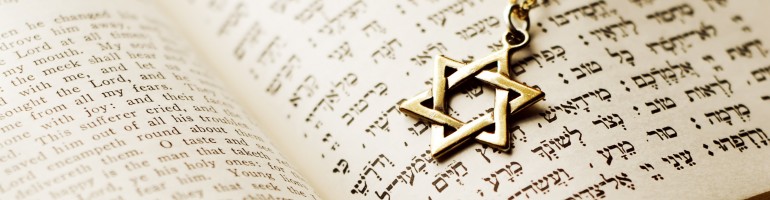
 Dr. Mitch Glaser