Category Archives: Judaism

A High Holidays Message: Hungry for Repentance? Try Fasting!

Matthew 6:16–18

“Whenever you fast, do not put on a gloomy face as the hypocrites do, for they neglect their appearance so that they will be noticed by men when they are fasting. Truly I say to you, they have their reward in full. But you, when you fast, anoint your head and wash your face so that your fasting will not be noticed by men, but by your Father who is in secret; and your Father who sees what is done in secret will reward you.”

Introduction

When I was growing up, in my home and in my friend’s home, fasting was required—but not enjoyed—and it was perfectly legitimate to share your misery with everyone. I understand this might not be the case in more religious Jewish homes and with some individuals, but this was true in my experience.

I have put together our family fasting rules.

Glaser Household—The Seven Rules of Fasting:

  1. Eat a huge meal the night before—as late as possible.
  1. Wake up the next morning as late as possible—1:00 pm is good!
  1. Take multiple naps during the day.
  1. Prepare for a headache by 3:00 pm, and accept the fact that Tylenol is not food.
  1. Remember, if you are sick, you do not have to fast; begin thinking through various illnesses a week ahead of time to make sure you have your list of symptoms prepared.
  1. Plan the break-fast well; decide between bagels and lox and a dairy meal or Chinese food. You may begin thinking about the meal after 4:00 pm, but try not to be consumed (get it?) … it is just a meal.
  1. Set your watch ahead by thirty minutes the day before (so you will not be late for synagogue) and question your watch only after you have taken your first bite. After all, if you have already broken the fast, then you cannot go backwards and should just keep eating!

I believe my family may have been just like yours! How many of us fast just because it is tradition?

As followers of Yeshua the Messiah, should we fast on Yom Kippur, and if so, why? We may have been taught that we fast to earn atonement, but the Bible and even Jewish tradition does not teach this. This common misconception might be why you, as a believer, have a problem with fasting on Yom Kippur. So, without my telling you what to do or trying to make up your mind for you on whether you should fast, let us look at the Scriptures and hear from God on this important matter.

If we do choose to fast, the words of Yeshua will guide us in how to get the most value out of fasting, the nature of the reward for those who fast well, and what can we do in the next twenty-four hours to receive this reward from the Lord.

The Jewish View on Fasting—Especially on Yom Kippur

As a start, we need to get some background about fasting from both the Hebrew Scriptures and Jewish tradition.

According to common Jewish thinking, fast days fall into three main categories: (1) fasts decreed in the Bible or instituted to commemorate biblical events; (2) fasts decreed by the rabbis; (3) private fasts.[1]

In Judaism, we observe five minor fasts[2] and two major fasts. The two major fasts are Yom Kippur and Tisha B’Av, the ninth of the month of Av when we commemorate and increase our mourning over the destruction of the Temple.[3] The fast for Tisha B’Av is a major fast in traditional Judaism, but it is not a fast required by the Torah, as is the case with Yom Kippur.

In dealing with fasting beyond the Torah, it may be useful to categorize the instances by their occasions. These categories show fasting as: (1) a sign of grief or mourning, (2) a sign of repentance and seeking forgiveness for sin, (3) an aid in prayer, (4) an experience of the presence of God that results in the endorsement of His messenger, and (5) an act of ceremonial public worship.[4]

And we see illustrations of this in the life of King David who fasted for the life of his son, Daniel who fasted and prayed on behalf of the Jewish people, and many other instances of fasting in the Hebrew Scriptures.

Dr. Kent D. Berghuis writes in his doctoral dissertation on fasting,

The various references to fasting in the Hebrew Bible and Jewish tradition begin to converge in several key theological themes. The most basic ancient purpose of fasting as a sign of mourning in times of death or disaster branches into two main theological ideas, namely fasting as repentance for sin and fasting to intensify prayer when seeking God’s favor. Both of these ideas, however, presuppose an even more basic theological idea that the OT occasionally highlights through fasting references: that God is the ultimate source and sustainer of life, and human life depends on connection to his presence and obedience to his words.[5]

According to the prophet Zechariah, the Jewish people during his day fasted a number of times, and one day, these fasts will become feasts in the Messianic kingdom as there will be no more mourning or repentance.

Then the word of the Lord of hosts came to me, saying, ‘Thus says the Lord of hosts, “The fast of the fourth, the fast of the fifth, the fast of the seventh and the fast of the tenth months will become joy, gladness, and cheerful feasts for the house of Judah; so love truth and peace”’” (Zechariah 8:18–19).[6]

This idea of fasting-today-turned-into-feasting-tomorrow is a wonderful biblical theme that Yeshua discussed with the disciples of John the Baptist in Matthew 9:14:

“Then the disciples of John came to Him, asking, ‘Why do we and the Pharisees fast, but Your disciples do not fast?’”

Yeshua answered in verse 15:

“And Jesus said to them, ‘The attendants of the bridegroom cannot mourn as long as the bridegroom is with them, can they? But the days will come when the bridegroom is taken away from them, and then they will fast.’”

In other words, fasting was linked to mourning and repentance, and since Yeshua was present, it was time to rejoice and not to mourn. After He left, it became more acceptable to fast. This also implies that, when He returns, it will be a time of joy and not mourning—a time for a Messianic banquet at which we will feast instead of fast. This is important, as we fast today not because we are mourning that we do not have the Messiah, but rather because we want to grow closer to Him.

The Key Yom Kippur Texts: (Leviticus 16; 23:26–32; Numbers 29:7)

It is important to know that the word for fast (צום) does not appear in the biblical passages about Yom Kippur. Instead, the phrase meaning “humble your souls” (וְעִנִּיתֶ֖ם אֶת־נַפְשֹׁתֵיכֶ֑ם) appears, which at times is also translated “afflict yourselves.”[7] It is actually used in Isaiah 53, where the prophet predicted that the Messiah would bear all of our afflictions:

Surely our griefs He Himself bore, and our sorrows He carried; yet we ourselves esteemed Him stricken, smitten of God, and afflicted (Isaiah 53:4).

In the traditional Jewish mindset, afflicting oneself and fasting were often synonymous. Afflicting ourselves might include other aspects of self-denial aside from fasting. We do not need to limit fasting to food!

Thus, the rabbis declare that ʿinnah nefesh, enjoined for the Day of Atonement (Leviticus 16:29, 31; 23:27–32), consists not only of fasting but of other forms of self-denial such as abstention from “washing, anointing, wearing shoes, and cohabitation” (Yoma 8:1; cf. Targum Jonathan, Leviticus 16:29).[8]

Leviticus 16:29–31

“This shall be a permanent statute for you: in the seventh month, on the tenth day of the month, you shall humble your souls and not do any work, whether the native, or the alien who sojourns among you; for it is on this day that atonement shall be made for you to cleanse you; you will be clean from all your sins before the Lord. It is to be a sabbath of solemn rest for you, that you may humble your souls; it is a permanent statute.”

Leviticus 23:26–32

“The Lord spoke to Moses, saying, ‘On exactly the tenth day of this seventh month is the day of atonement; it shall be a holy convocation for you, and you shall humble your souls and present an offering by fire to the Lord. You shall not do any work on this same day, for it is a day of atonement, to make atonement on your behalf before the Lord your God. If there is any person who will not humble himself on this same day, he shall be cut off from his people. As for any person who does any work on this same day, that person I will destroy from among his people. You shall do no work at all. It is to be a perpetual statute throughout your generations in all your dwelling places. It is to be a sabbath of complete rest to you, and you shall humble your souls; on the ninth of the month at evening, from evening until evening you shall keep your sabbath.’”

Numbers 29:7

“Then on the tenth day of this seventh month you shall have a holy convocation, and you shall humble yourselves; you shall not do any work.”

An Introduction to the message:

Fasting is not a way to earn forgiveness from sin. Fasting is a way to help us repent of our sin and everyday lack of dependence upon God. It should not be viewed as an end in and of itself.

Rather than repentance helping us to fast, fasting helps us to repent.

Yeshua, in speaking about fasting in Matthew 6:16–18, reminded His hearers that character is paramount and that our motives are what matter, not the externals of religious observance. Fasting, if done for the right reason, will lead an individual to repent in a way that could have great spiritual impact and lasting transformation.

Let us look closely at the text and try to understand what the Messiah is told His disciples.

The Context of the Sermon on the Mount

Yeshua focused on three areas of piety—good deeds, prayer, and fasting—all of which are acceptable and expected of godly people. He was not upset with what the Jewish religious leaders were doing, but how they were doing it. He was not upset with them for giving money to the poor, praying, or fasting. He was concerned with the way some of them were focusing on the externals of piety rather than on the condition of their hearts and motivation.

The Messiah believed that some of the religious leaders were eager to please men rather than God, and that is why they did religious things. The consistent message of the Bible is that God is far more interested in the condition of our hearts, our motivation for godly acts (like fasting), and our resultant behavior. As the Prophet Micah wrote,

“With what shall I come to the Lord and bow myself before the God on high? Shall I come to Him with burnt offerings, with yearling calves? Does the Lord take delight in thousands of rams, in ten thousand rivers of oil? Shall I present my firstborn for my rebellious acts, the fruit of my body for the sin of my soul? He has told you, O man, what is good; and what does the Lord require of you but to do justice, to love kindness, and to walk humbly with your God?” (Micah 6:6–8, emphasis added).

Fasting, a spontaneous phenomenon in the days of the First Temple, may have entered the calendar as a regular and recurring event only after the exile.[9] Theologian Kent Berghuis tells us that fasting had already become a regular part of Jewish religious life by the time of Jesus.[10]

Yeshua was obviously upset with a group of hypocrites who did good deeds and helped the poor but broadcasted their good deeds so that everyone knew what they were doing! Their motivation was to receive accolades from man rather than secret rewards from God (Matthew 6:2–4).

It is unfortunate that, throughout church history, religious Jews, especially the pharisees, were regarded as hypocrites. This is unfounded, so I do not want you to walk away from this message thinking the same thing! Yeshua was referring to a certain group who loved the praise of men rather than the praise of God. This charge cannot be laid at the feet of every religious Jew—either during the time of Jesus or today.

In fact, rather than thinking about others, it would be better to think about ourselves—our hearts and our motivation for worship and doing what we do. Are we in any way guilty of the same things that Jesus was concerned about regarding this group of hypocrites?

Yeshua clearly affirmed giving to the poor, praying, and fasting. But He instructed His listeners to do these things secretly for God, not publicly for the praise of man. If we obey His instructions, then “[our] Father who sees what is done in secret will reward [us]” (Matthew 6:4). Note His following instructions (emphasis added):

  • Matthew 6:2—“So when you give to the poor, do not sound a trumpet before you, as the hypocrites do in the synagogues and in the streets, so that they may be honored by men. Truly I say to you, they have their reward in full.”
  • Matthew 6:3–4—“But when you give to the poor, do not let your left hand know what your right hand is doing, so that your giving will be in secret; and your Father who sees what is done in secret will reward you.”
  • Matthew 6:5 —“When you pray, you are not to be like the hypocrites; for they love to stand and pray in the synagogues and on the street corners so that they may be seen by men.”
  • Matthew 6:6—“But you, when you pray, go into your inner room, close your door and pray to your Father who is in secret, and your Father who sees what is done in secret will reward you.”
  • Matthew 6:16–18—“Whenever you fast, do not put on a gloomy face as the hypocrites do, for they neglect their appearance so that they will be noticed by men when they are fasting. Truly I say to you, they have their reward in full. But you, when you fast, anoint your head and wash your face so that your fasting will not be noticed by men, but by your Father who is in secret; and your Father who sees what is done in secret will reward you.”

Jesus was not telling them not to fast, but to do so in the right way with the right heart.

He did not say if you fast, but when you fast, just like when you pray and when you give to the poor (vv. 16–17). The Lord expects us to fast at times, but to fast in an authentic way that glorifies Him and brings us a reward.

Jesus wants His followers to fast with the right motivation, indicated by their doing so quietly and without seeking public accolades (Matthew 6:18). Matthew 6 makes clear that Yeshua expected that at times we will fast, and so, you will be doing nothing wrong by fasting for the 24 hours of Yom Kippur. But it is important to know why you are fasting and to do so correctly.

Pastor and author, John Piper, wrote the following on authentic fasting:

Jesus calls them hypocrites. Why? Because the heart that motivates fasting is supposed to be a heart for God. That’s what fasting means: a heart-hunger for God. But the heart motivating their fasting is a heart for human admiration…. So there are two dangers that these fasting folks have fallen into. One is that they are seeking the wrong reward in fasting, namely, the esteem of other people. They love the praise of men. And the other is that they hide this with a pretense of love for God…. So Jesus tests our hearts to see if God himself will be our sufficiency—when nobody else knows what we are doing. When no one is saying, “How are you getting on with the fast?” No one even knows—no one but God!… If God is not real to you, it will be miserable to endure something difficult with God as the only one who knows.[11]

So, now instead of the Glaser Household Rules for Fasting, let me share with you eight other insights I have gleaned from Scripture on fasting that might be helpful.

  1. Fasting deepens our personal worship of the Lord.

The relationship between fasting and prayer is very important, and this can be seen in Daniel’s prayer of repentance.

So I gave my attention to the Lord God to seek Him by prayer and supplications, with fasting, sackcloth and ashes. I prayed to the Lord my God and confessed and said, “Alas, O Lord, the great and awesome God, who keeps His covenant and lovingkindness for those who love Him and keep His commandments, we have sinned, committed iniquity, acted wickedly and rebelled, even turning aside from Your commandments and ordinances. Moreover, we have not listened to Your servants the prophets, who spoke in Your name to our kings, our princes, our fathers and all the people of the land.” (Daniel 9:3–6)

If one is going to get the most value out of fasting, it is also important that we spend time in prayer, because fasting is not only about what we are denying (ourselves and this world), but what we are trying to appropriate and receive from the Lord—things that this world cannot give that will satisfy our souls.

Believers fast to make more of Jesus in heaven and less of ourselves and things on Earth. Fasting helps us to separate between our needs and our wants—to differentiate what is necessary and appropriate from what is extravagant. When we fast, we realize that a sip of water and a taste of bread that sustains physical life is all we need and that the rest of our diet—especially good food—should be viewed as signs of God’s grace and love. A great meal should cause us to give praise to a great God who created the building blocks for that meal.

  1. Fasting encourages repentance and leads to changed behavior and an increase in doing good deeds. 

Theologian Richard Foster reflects,

More than any other single Discipline, fasting reveals the things that control us. This is a wonderful benefit to the true disciple who longs to be transformed into the image of [Yeshua]. We cover up what is inside us with food and other good things, but in fasting these things surface. If pride controls us, it will be revealed almost immediately. Anger, jealousy, strife, fear—if they are within us, they will surface during fasting. At first we will rationalize that our anger is due to our hunger; then we will realize that we are angry because the spirit of anger is within us. We can rejoice in this knowledge because we know that healing is available through the power of Christ.[12]

On this topic, Piper also adds,

So here we have another test of authenticity. Jesus said, If you are fasting to be seen by others, you have your reward. That’s it. Isaiah says, If your fasting leaves you self-indulgent in other areas, harsh toward your employees, irritable and contentious, then your fasting is not acceptable to God. It’s not what he chooses. God is mercifully warning us against the danger of substituting religious fervor for righteous living.[13]

  1. Fasting is more about focusing on what you do than on what you do without.

One of the passages that speaks directly to this principal is Isaiah chapter 58. The prophet linked fasting to transformed behavior. He argued that if your fasting is not connected to godly living, then your fast is in vain. This does not mean we should not fast, but that we cannot try to please God by fasting and then displease Him the next moment by acting badly, disobeying Him, sinning against our fellow man, or withholding what is right, generous, and helpful to our fellow man.

Isaiah 58 wrote:

Is this not the fast which I choose, to loosen the bonds of wickedness, to undo the bands of the yoke, and to let the oppressed go free and break every yoke? Is it not to divide your bread with the hungry and bring the homeless poor into the house; when you see the naked, to cover him; and not to hide yourself from your own flesh?…And if you give yourself to the hungry and satisfy the desire of the afflicted, then your light will rise in darkness and your gloom will become like midday. And the Lord will continually guide you, and satisfy your desire in scorched places, and give strength to your bones; and you will be like a watered garden, and like a spring of water whose waters do not fail. (Isaiah 58:6–7; 10–11)

  1. Fasting strengthens your fellowship with other believers and leads to greater ministry and guidance. 

Acts 13:1–2 says, “Now there were at Antioch, in the church that was there, prophets and teachers: Barnabas, and Simeon who was called Niger, and Lucius of Cyrene, and Manaen who had been brought up with Herod the tetrarch, and Saul. While they were ministering to the Lord and fasting, the Holy Spirit said, ‘Set apart for Me Barnabas and Saul for the work to which I have called them.’”

Like the believers in the early church, sometimes we need to fast to seek His direction at important times in our lives or when we have a great need for guidance. This could be one good reason to fast during Yom Kippur.

  1. Fasting leads to a greater dependence upon God. 

Maybe you have heard it said, “You do not have to be overweight to be a glutton.” Some of us who are overweight are not gluttonous at all, and some of us who are quite fit can be gluttonous because we focus on the extravagance of good food without proper gratitude to God.

When we fast, we come to grips with the value of our “daily bread.” Fasting helps us to identify our lack of dependence upon God for our daily bread and our lust for food and other treats in this world, which cause us to focus on the created rather than on the Creator.

  1. Fasting leads to humility; therefore, those who fast should be discreet and not call attention to their fasts.

Mother Teresa won the Nobel Peace Prize in 1979 and is considered one of the most influential people of the twentieth century. This little story reveals her heart and how she illustrates the godly sacrifices that come from self-denial—fasting or otherwise. 

As the story goes, a well-known Christian speaker was visiting with Mother Teresa and everyone removed their shoes for prayer.

In most parts of India, it is a custom for everyone to remove their shoes when entering any place of worship. Shane noticed that when Mother Teresa took her shoes off for daily prayer, her feet were knobby, gnarled, deformed and pressed in the wrong directions. Shane wondered whether it was a birth defect, the result of an accident, the side effects of a disease or illness or perhaps due to leprosy. A sister of the Missionaries of Charity explained.

Mother Teresa and her sisters relied on donations for everything, including their shoes. They received donations of used shoes once in a while for distribution among the needy. When a load of used shoes would come in, Mother Teresa used to dig through the pile of shoes and consistently chose the worst pair for herself regardless of how badly they may have fitted. Her feet deteriorated by wearing substandard shoes. She crippled herself showing love and compassion to those that had nothing.

Mother Teresa loved the needy so much that she wanted them to have the best of the worst and not the worst.[14]

She said of herself, “I am a little pencil in the hand of a writing God who is sending a love letter to the world.”[15]

  1. Fasting helps you to identify with the suffering of others—the poor, those deprived of basic human needs, the misery of injustice, and the poverty of the soul.

Fasting reminds us of what we have and of how generous God has been to us. By doing without food, we appreciate what we have and become more sensitive to what others do not have.

Writer Rahel Musleah reminds us of this truth in her article entitled, “A Day to Bare our Souls and Find Ourselves”:

‘Fasting is an important way to feel our own privilege,’ says Reimer. ‘We have a choice whether to eat, but that’s not a choice we all have. I use fasting to identify with people who don’t have enough.’ As a child of survivors, Reimer grew up with stories of her parents living on a slice of bread a day—or less. ‘When I fast, part of me connects backward to their history. Then I look forward, to what my obligation is to others in the same place.’ Her congregation, the Worship and Study Congregation, part of Harvard Hillel, follows Kol Nidrei with an appeal for Project Bread, which provides food for the hungry.

‘I often joke that Yom Kippur is the day to invite people for lunch,’ says Reimer, who nonetheless uses the break in services to run home to set up for the post-fast meal. ‘It’s different than feeding myself,’ she muses. ‘It’s about my need to feed others.’ The haftarah—the reading from the Prophets—satisfies her sensitivity toward social justice. ‘It says that all the outside ritual is unimportant; all that matters is reaffirming our concern for others, our commitment to care for the needy, the outcast and those who are less fortunate.’[16]

  1.  Fasting for the right reasons and in the right way brings great reward.

I appreciate what the great Methodist preacher John Wesley said in one of his sermons concerning the question, “How are we to fast, so that it may be acceptable to the Lord?” He provided the following five instructions:

1. First, let it be done to the Lord, with our eye firmly fixed on Him.

2. Secondly, if we do desire this reward, let us beware of thinking we will merit anything from God by our fasting.

3. Thirdly, let us be careful to humble our souls as well as our bodies.

4. Fourthly, let us always join fervent prayer with fasting, pouring out our souls before God, confessing our sins, humbling ourselves under his mighty hand, laying open before him all our needs, all our guiltiness and helplessness.

5. Lastly, one other thing needs to be mentioned with regard to fasting: in order for our fasting to be acceptable to the Lord, we need to add prayers and gifts to the poor; works of mercy, within our power, both to the bodies and souls of men, for: “With such sacrifices God is pleased.”[17]

What then is the promised reward? And is it worth going without food? Yeshua said, “Your Father who is in secret; and your Father who sees what is done in secret will reward you” (Matthew 6:18).

While an answer to prayer may come, or direction in a problem, the greatest reward is clearly the Lord Himself; it is His presence. This is the reward most cherished by every believer in every age and even more so for those who have had their sins forgiven and know Yeshua as their Messiah.

Conclusion

May I suggest a menu for Yom Kippur?

A Day of Atonement menu should include the following:

  • The appetizer—repentance
  • The main course—fasting leading to our dependence upon God for all things
  • Side dishes—faith, wisdom, guidance
  • Dessert—joyful transformation and good deeds

What’s new about fasting as believers in Yeshua?

We fast on Yom Kippur not to obtain atonement and forgiveness of sins. As believers in Yeshua, we fast knowing our sins are forgiven by Yeshua’s once-for-all sacrifice. Piper explains this “new fasting” as follows:  

What’s new about the fasting is that it rests on all this finished work of the Bridegroom. The yearning that we feel for revival or awakening or deliverance from corruption is not merely longing and aching. The first fruits of what we long for have already come. The down payment of what we yearn for is already paid. The fullness that we are longing for and fasting for has appeared in history and we have beheld his glory. It is not merely future.

We have tasted the powers of the age to come, and our new fasting is not because we are hungry for something we have not tasted, but because the new wine of [Messiah’s] presence is so real and so satisfying. The newness of our fasting is this: its intensity comes not because we have never tasted the wine of [Messiah’s] presence, but because we have tasted it so wonderfully by his Spirit and cannot now be satisfied until the consummation of joy arrives.[18]

Hasidic Story

An old Hassidic story really sums up the role and reason for fasting both during Yom Kippur and at other times for the person seeking a deeper relationship with the God of Israel.

A man once complained to Chassidic master Rabbi Bunim of Peshischa:

“I saw it written in the holy books that if a person fasts a certain number of times, he will merit that Elijah the Prophet will reveal himself to him and teach him the secrets of the Torah. Well, I fulfilled the regimen of fasts, exactly as prescribed, yet Elijah did not reveal himself to me.”

Rabbi Bunim told the man the following story:

Once, the holy Baal Shem Tov had to travel to a far-off destination on a matter of extreme importance to the welfare of a Jewish community. As was his custom on such trips, the Baal Shem Tov told his coachman, Alexis, to drop the reins and turn around in his bench. No sooner had the coachman turned his back on the horses that the road began to literally fly under their feet, and they traversed a many weeks’ journey in a few hours.

The horses, noticing that they were galloping past the feeding stations without stopping, thought to themselves: “Perhaps we are not horses after all, but human beings. Otherwise, why are we not being given oats and water at the customary places? Surely we will eat with the men, when they stop for their meals at the crossroads inns.”

But the inns, too, flew by, one after another, with dizzying speed. “It seems,” the horses now surmised, “that we are not men after all, but angels, who do not partake of earthly food at all.”

But then the Baal Shem Tov and his disciples arrived at their destination and rushed off to attend to their holy mission, while Alexis unhitched the horses and led them to the barn, where they guzzled water and devoured oats like the horses they were…

“The purpose of a fast,” concluded Rabbi Bunim, “is to refine the person, to have him transcend, if only for a few hours, the gross materiality of the human state. But if the moment the fast ends he attacks his food with the fervor of a man who hasn’t eaten all day, what has been achieved?”[19]

As believers in Yeshua the Messiah, there are benefits and blessings that come with fasting that can last a lifetime. It is good for the body and for the soul.


[1] “Jewish Holidays: Fasting and Fast Days,” Jewish Virtual Library, accessed September 18, 2020, https://www.jewishvirtuallibrary.org/fasting-and-fast-days.

[2] “Three of these five fasts commemorate events leading to the downfall of the first commonwealth and the destruction of the first Temple, which is commemorated by the major fast of Tisha B’Av. Following is a list of minor fasts required by Jewish law, their dates, and the events they commemorate: The Fast of Gedaliah, Tishri 3, commemorates the killing of the Jewish governor of Judah, a critical event in the downfall of the first commonwealth. The Fast of Tevet, Tevet 10, is the beginning of the siege of Jerusalem. It has also been proclaimed a memorial day for the six million Jews who died in the Holocaust. The Fast of Esther, Adar 13, commemorates the three days that Esther fasted before approaching King Ahasuerus on behalf of the Jewish people. The fast is connected with Purim. If Adar 13 falls on a Friday or Saturday, it is moved to the preceding Thursday, because it cannot be moved forward a day (it would fall on Purim). The Fast of the Firstborn, Nissan 14, is a fast observed only by firstborn males, commemorating the fact that they were saved from the plague of the firstborn in Egypt. It is observed on the day preceding Passover. The Fast of Tammuz, Tammuz 17, is the date when the walls of Jerusalem were breached, another major event leading up to the destruction of the First Temple.” See Tracey R Rich, “Minor Fasts,” Judaism 101, accessed September 18, 2020, https://www.jewfaq.org/holidaye.htm.

[3] For a more extensive list, see “Jewish Holidays: Fasting & Feast Days,” https://www.jewishvirtuallibrary.org/fasting-and-fast-days.

[4] “Jewish Holidays: Fasting and Fast Days.”

[5] Kent D. Berghuis, Christian Fasting: A Theological Approach (Richardson, TX: Biblical Studies Press, 2013), https://bible.org/seriespage/chapter-1-fasting-old-testament-and-ancient-judaism-mourning-repentance.

[6] “Fixed fast days are first mentioned by the post-Exilic prophet Zechariah who proclaims the word of the Lord thus: ‘The fast of the fourth month, the fast of the fifth, the fast of the seventh and the fast of the tenth…’ (Zechariah 8:19; cf. 7:3, 5). Jewish tradition has it that these fasts commemorate the critical events which culminated in the destruction of the Temple: the tenth of Tevet (the tenth month), the beginning of the siege of Jerusalem; the 17th of Tammuz (the fourth month), the breaching of the walls; the ninth of Av (the fifth month), when the Temple was destroyed; and the third of Tishri (the seventh month), when Gedaliah, the Babylonian-appointed governor of Judah, was assassinated. Some scholars maintain that these fast days are much older, marking the beginning of a Lenten period which preceded the seasonal festivals, and to which only later tradition affixed the events of the national catastrophe.” See “Jewish Holidays: Fasting and Fast Days,” Jewish Virtual Library, https://www.jewishvirtuallibrary.org/fasting-and-fast-days

[7] “However, it is not specifically described as a ‘fast’ in the Hebrew Bible, nor is fasting enjoined. That is, the words from the root צום are not employed, nor is there any explicit reference to abstaining from food. Instead, the Hebrew uses a broader term ( תְּעַנּוּ אֶת־נפְשֹׁתֵיכֶם, which may have included fasting as an understood application) and commands the people to ‘afflict,’ ‘deny,’ or ‘humble yourselves.’ Jewish tradition practiced fasting on that day, as also evidenced by the Targums (which actually used the Aramaic cognate of צום), the Qumran literature, and the NT. Since Jewish tradition universally has interpreted the instructions of these passages to include fasting as a sign of afflicting and humbling oneself, it is possible that other places in the Bible that mention humbling, affliction, and the like may have in fact tacitly included fasting. This connection is clear in Ps 35:13, ‘I humbled my soul with fasting’ ( עִנֵּיתִי בַצּוֹם נַפְשִׁי) (NASB). Here, fasting is explicitly the means of ‘humbling’ oneself. Isa 58:3 similarly links these terms: ‘Why don’t you notice when we fast? Why don’t you pay attention when we humble ourselves?’ In this poetic text, צַּמְנוּ stands in parallel relationship to עִנִּינוּ נַפְשֵׁנוּ in the next line. It is reasonable that a similar logical relationship exists with the Day of Atonement admonitions, even though the Hebrew text itself is not explicit. Fasting is a particular expression of the more general concept of humbling oneself. The first use of צוּם and the first narrative reference to fasting after Moses is Judg 20:26, when Israel fasted during the Benjamite civil war.” See Kent D. Berghuis.

[8] “Jewish Holidays: Fasting & Feast Days,” JewishVirtualLibrary.org.

[9] “As the fasts of Israel turned routine, the prophets urged the people to true justice in anticipation of the eschatological day when their mourning would be turned to gladness, their fasting to feasting. Against the backdrop of Jewish fasting that occasionally obscured true humility, repentance and justice through hypocrisy and ritual, the eschatological realization of the ideal that fasting anticipated came in the person of Jesus Christ. … During the Second Temple period, daily or biweekly fastings were practiced for reasons of asceticism, especially among women (Judith 8:6; Luke 2:37; TJ, Ḥag 2:2, 77d), but also among men (Luke 18:12; Mark 2:18), or in preparation for an apocalyptic revelation (Dan. 10:3, 12; ii Bar. 12:5; 20:5–21:1; 43:3; iv Ezra 5:13–20; 6:35; Sanh. 65b; TJ, Kil. 9:4, 32b). The Jewish literature of the Second Temple period also advocates fasting as a way of atonement for sins committed either unintentionally (Ps. of Sol. 3:9) or even deliberately (Test. Patr., Sim. 3:4), or to prevent them (ibid., Joseph 3:4; 4:8; 10:1–2). These reasons for fasting were strengthened by the destruction of the Second Temple and even more by the repression of the Bar Kokhba revolt and the subsequent religious persecutions. The Second Temple period literature also stressed that a fast without sincere repentance is valueless and senseless (Test. Patr., Ash. 2:8; 4:3; cf. ibid., Joseph 3:5 – in addition to the fast, Joseph gave his food to the poor and the sick). In the Second Temple period fasting was also seen as an “ascetic exercise” which serves to purify man and bring him closer to God.” See Kent D. Berghuis.

[10] Finally, fasting as a discipline, a routine for the pious, is attested only in post-biblical times in the Apocrypha, Pseudepigrapha, and Qumran literature. See “Jewish Holidays: Fasting & Feast Days,” JewishVirtualLibrary.org.

[11] John Piper, “Fasting for the Father’s Reward,” desiringGod, February 5, 1995, https://www.desiringgod.org/messages/fasting-for-the-fathers-reward.

[12] Richard Foster, Celebration of Discipline: The Path to Spiritual Growth (San Francisco: Harper, 1998), 55.

[13] John Piper, “A Fast for Waters That Do Not Fail,” desiringGod, February 12, 1995, https://www.desiringgod.org/messages/a-fast-for-waters-that-do-not-fail.

[14] T.V.Antony Raj, “Mother Teresa’s Feet,” Impressions (blog), February 9, 2013, https://tvaraj.com/2013/02/09/mother-teresas-feet/.

[15] Mother Teresa, “Mother Teresa > Quotes > Quotable Quote,” Goodreads, accessed September 24, 2020, https://www.goodreads.com/quotes/30608-i-m-a-little-pencil-in-the-hand-of-a-writing.

[16] Rahel Musleah, “A Day to Bare Our Souls—And Find Ourselves,” http://barbarany9.blogspot.com/2006/10/day-to-bare-our-soulsand-find.html.

[17] John Wesley, “When You Fast,” Bible Bulletin Board, accessed September 24, 2020, https://www.biblebb.com/files/jw-001fasting.htm.

[18] John Piper, “When the Bridegroom Is Taken Away, They Will Fast—With New Wineskins,” desiringGod, January 8, 1995, https://www.desiringgod.org/messages/when-the-bridegroom-is-taken-away-they-will-fast-with-new-wineskins.

[19] “After the Fast,” Chabad.org, accessed September 24, 2020, https://www.chabad.org/library/article_cdo/aid/73823/jewish/After-the-Fast.htm.

Leave a comment

Filed under Holidays & Festivals, Jewish Holidays, Jews and Christians, Judaism

Looking for Answers Only God Can Provide

Dear Friend,

Shalom in His grace. I hope and pray you are well, healthy, and serving the Lord with joy!

I want to share a great story with you of how a young Israeli came to faith through our Isaiah 53 Explained Facebook ads and the follow-up so wonderfully and faithfully carried out by Randall and Luda, two of our staff members in Israel. Randall wrote to me, and I think he should tell the story!

Hi Mitch,

“M” (name left out for privacy purposes) is a young man, twenty-five years old, originally from Uruguay, who immigrated to Israel with his family in his early teens. He was very good at soccer and played professionally. He has some believing family members, perhaps grandparents, but they were not active in a congregation, so there was not much influence on “M.”

Curiously, when he would see pictures of Jesus, he had a feeling that He was somehow watching over him and that, because of Jesus, everything would be all right. After his father’s recent death, we happened to follow up on his request for your Hebrew Isaiah 53 Explained book.

Somehow, Rachel (one of our Israeli staff members) got to the post office during the COVID-19 crisis to send him a Hebrew New Testament. He was delighted, as he had no biblical knowledge other than Bible classes in Israeli school.

“M” is very friendly and, at first, may have viewed us in light of his focus on education—as just an interesting learning experience. However, he was strongly attracted to the Word, the message of the gospel, and the person of Jesus. After several weekly ZOOM meetings, he agreed to pray to ask for forgiveness for his sins and receive Jesus as Savior.

The Isaiah 53 outreach is a great privilege. The book has opened dialogue with hundreds or even thousands of Israelis, apart from the exposure on the internet.

Now, “M” is trying to finish his high school comprehensive exams, which he never did because of chasing his soccer career.

He is between jobs and is also changing apartments soon. Over the next couple of ZOOM sessions, we plan to discuss linking him with other believers.

Please keep us in your prayers.

Randall

There are many others in Israel, the United States, and worldwide who have come to faith during the pandemic! Our inability to sit face-to-face or mask-to-mask with people who are ready to give their lives to the Lord does not limit God’s saving power.

He is working powerfully among His chosen people around the globe. If I have learned anything from the pandemic, it is this: all people, including my Jewish people, are looking for answers that only God can provide.

And the harder the times, the more intense the search!

A PERSONAL TESTIMONY

I came to faith during the Jesus movement after almost being killed in a drug deal and finding little meaning in the lifestyle I embraced in my late teenage years. It was a dark time, and I was searching without realizing it. I also had no idea what I was looking for, but I knew I needed a new lease on life—a new beginning!

My two Jewish best friends accepted the Lord during those days and shared the gospel with me. I heard their words, but they did not make sense. As a Jewish person, my impulse was to reject Jesus out of hand. After all, whoever heard of Jews believing in Jesus?! I had not, and I had never met a Jewish person who believed in Jesus before my two friends came to faith.

Thank God, He did not give up on me. After months of searching, answered prayers, and reading the New Testament, I accepted the Lord as my Messiah and Savior. And just like “M,” I grew to love the Bible. From then on, all I wanted was to serve the Lord and tell others about Him! I feel the same today as I did then, almost five decades ago!

THE APOSTLE PAUL WAS JEWISH, TOO!

I remember when I discovered that the Apostle Paul was Jewish. That was a shock. I understood that Jesus was Jewish, but the Jewish community generally views Paul as a renegade. I continued to read the Epistles he wrote with this new understanding, and along with Abraham, Moses, King David, and (of course) Jesus, Paul became one of my Jewish heroes.

I had many of the same questions that Paul had. For example, Why did the Jewish people not believe in Jesus when He first came? Why have my ancestors and leaders of the Jewish community generally rejected Jesus’ claim to be the Messiah? Has God rejected the Jewish people for rejecting Jesus?

Paul, or Rabbi Saul, answered these questions in the book of Romans, especially in chapters 9 to 11. I was so impressed with his burden for his Jewish people.

Paul wrote,

I am telling the truth in Christ, I am not lying, my conscience testifies with me in the Holy Spirit, that I have great sorrow and unceasing grief in my heart. For I could wish that I myself were accursed, separated from Christ for the sake of my brethren, my kinsmen according to the flesh…. (Romans 9:1–3)

In simple terms, Paul said he was willing to go to hell if it meant that a Jewish person might go to heaven. Paul had a deep burden for his people.

In Romans 10:1, we also learn that Paul prayed for the salvation of his people. He wrote, “Brethren, my heart’s desire and my prayer to God for them is for their salvation.” The apostles struggled through many of the same challenges I had when I first came to faith.

Did all Israel reject Yeshua? Did God reject the Jewish people? No! The proof is that Paul, himself, in Romans 11:1, declared that he was a Jew! Had God rejected the Jewish people for their unbelief? No! Paul was living evidence of God’s faithfulness.

Paul was a Jewish believer, but he also said there is a remnant of Jewish people who believe in Jesus, preserved by God throughout time. Did Paul believe that God rejected His chosen people because they had decided not to follow Jesus? Heaven forbid!

Paul told the Roman believers that there is a remnant today, just as there was in ancient Israel (Romans 11:2– 4). He recounted the story that appears in 2 Kings 18 when, following a great victory over the prophets of Ba’al, Elijah traveled to the desert. He told the Lord he felt all alone, and God showed him that he had company. There were seven thousand men who had not bowed the knee to Ba’al.

Paul stated a principle for the ages based upon this story when he wrote,

“In the same way then, there has also come to be at the present time a remnant according to God’s gracious choice” (Romans 11:5).

I am part of this remnant today, as is “M.” We are not alone, though for now, we are a growing few.

The Lord is preserving a remnant today for His glory, though we know that one day the entire nation of Israel will come to Jesus. In Romans 11, Paul concluded that God has not rejected the Jewish people and that a day is coming when the Jewish people who are alive at the time of the Second Coming will turn to Jesus.

For I do not want you, brethren, to be uninformed of this mystery—so that you will not be wise in your own estimation— that a partial hardening has happened to Israel until the fullness of the Gentiles has come in; and so all Israel will be saved. (Romans 11:25–26)

THE SPECIAL MANDATE FOR GENTILE BELIEVERS (ROMANS 11:11)

Paul answered another critical question in this triad of chapters. What is the Gentile believer’s role in God’s plan for the Jewish people?

The apostle said there is a biblical mandate for Gentiles in the Body of Messiah to reach Jewish people with the gospel message. In fact, according to Paul’s statement in Romans 11:11, the Gentiles are to make the Jewish people jealous.

As a mission to the Jews, we understand that we are to help our Gentile brothers and sisters accomplish this great work. It is part of our organizational mission statement to help (empower and equip) our brothers and sisters in the church to evangelize and disciple Jewish people.

Chosen People Ministries hopes to encourage, provide materials, and build strategic bridges with Gentiles in the Body of Messiah to fulfill this mandate in the twenty-first century.

We are partners in the gospel, and together we will reach Jews like me, “M,” and many others for the Savior.

Thank you so much for your faithful prayers and support. Let us look forward to the great future God has prepared for those who love Him as we try to help as many as we can to love Him too.

Blessings,
Mitch

1 Comment

Filed under evangelism, Israel, Jews and Christians, Judaism, Uncategorized

Understanding the Hebrew Scriptures

Shalom!

For decades we have dedicated the October edition of our newsletter to addressing both those who already believe in Jesus and those who are seeking the Lord. If you are one of those curious and brave individuals who is pursuing a relationship with the living God, let me especially thank you for taking the time to read the newsletter. This month, we are focusing on the Hebrew Scriptures, or as it is known to many, the Old Testament. Of course, if you are Jewish and do not accept the New Testament as holy Scripture, then there really is no such thing as an Old Testament! The Hebrew Scriptures is simply known as the Jewish Bible, with the first five books being referred to as the Torah.

We will discuss the impact and importance of the Hebrew Scriptures in Western society and in the hearts of those who believe these words were spoken by God Himself at Mount Sinai and through the mouths of prophets.

The Hebrew Scriptures impact every area of life: from issues of the heart, to practical wisdom, amazing prophetic predictions of the age to come, and of course our moral code and behavior. The older testament—if you can appreciate this new terminology—has been extremely influential in our lives, personally and corporately, even when we did not realize it! In fact, as the article will suggest, the Hebrew Scriptures have helped shape our culture and society more than the Constitution and Bill of Rights combined. Additionally, a good argument can be made to demonstrate that these documents that were so foundational in the formation of our country were based upon the words of the Hebrew Scriptures.

It would be virtually impossible for me, as a Messianic Jew, to believe in Jesus if I did not believe that the Hebrew Scriptures referred to Jesus in the promises and prophecies regarding the coming of the Messiah. This rationale for faith in Yeshua (His Hebrew name) is critical for a Jewish follower of the Messiah and also for those who are not Jewish. When more than a thousand years of biblical prophecy are so remarkably fulfilled in this one person, it gives us tremendous confidence in Him and also in the Old Testament where He is described. So much of what we understand about salvation, the nature of God, and His plan for each of us is firmly rooted in the Hebrew Scriptures. As King Solomon wrote so beautifully,

Trust in the Lord with all your heart and do not lean on your own understanding. In all your ways acknowledge Him, and He will make your paths straight. (Proverbs 3:5–6)

Admittedly, at times, the Hebrew Bible is not the easiest to understand, especially in light of today’s cultural trends and ideas about morality. Frankly, the Hebrew Bible might seem out of sync with our modern world upon a first, surface-level glance. But, consider that the voice of the Hebrew Scriptures, though contrary to many of our current cultural values, might very well be a voice worth listening to. It has led so many of us to a fulfilling and meaningful life. The Psalmist David wrote about those who read, meditate, and obey what is written in the Hebrew Scriptures:

How blessed is the man who does not walk in the counsel of the wicked, nor stand in the path of sinners, nor sit in the seat of scoffers! But his delight is in the law of the Lord, and in His law he meditates day and night. (Psalm 1:1–2)

I hope that you will enjoy the rest of the newsletter. My prayer is that it will motivate you to study the Hebrew Scriptures, to learn more about God’s plan for you, and that the very specific predictions about the coming of the Messiah will become personally meaningful to you. There is so much in these 39 books of the Old Testament to understand, and I hope you will take the time to read through the entirety of the Hebrew Scriptures to try and better understand one of the world’s great works of literature. You might not take my position in believing that the Old Testament is the inspired Word of God, but I think, if you have an open heart, you will find so many of the statements in these ancient pages to be comforting, relevant, and life-changing.

Enjoy the journey, and, if you are seeking the Lord, may I encourage you to take a look at followmessiah.com, which is a 16-part video study of the Scriptures, both the Old and New Testaments, which will help guide you towards a deeply personal relationship with the God of Abraham, Isaac and Jacob.

A belated Happy Jewish High Holidays!

Mitch

Leave a comment

Filed under Jews and Christians, Judaism, Messianic Jewish, Uncategorized

Israeli Soldier Encounters Yeshua

Shalom from Jerusalem! I am writing this quick note from the Holy Land. I have been here for a month working with our staff, participating in Chosen People Ministries’ celebration of the 70th anniversary of the founding of the modern State of Israel, mentoring young leaders, and sharing the gospel with Israelis.

We also organized a special outreach event at our Ramat Gan/Greater Tel Aviv Center. We invited all those who have responded to our Hebrew Facebook ads by ordering a copy of the book I wrote, Isaiah 53 Explained. It was billed as a Meet the Author event. Of course, the author of Isaiah 53 is only Isaiah in part, since God Himself is the true author of Scripture (2 Timothy 3:16)! So, they came to meet me, but I was hoping and praying they would meet Him!

A handful of Israeli non-believers attended, for which I was grateful. The conversations were lively with a lot of interaction, and they respectfully listened as I shared the truth of the gospel from this great chapter of the Bible. Afterward, I spoke with Ronit,* a young woman currently in the army who attended the event in her fatigues! She came with another young female soldier from her unit who was her friend. Ronit approached me with a copy of Isaiah 53 Explained in Hebrew and asked if I would sign the book. I did, and I also asked her what she thought of my talk. She was all smiles and told me how much she enjoyed it. Then she said something I will never forget. I asked her if she had heard about Jesus before and she said, “Absolutely!” When I asked how, she hugged her friend and said, “This is my friend and she has been talking to me about the Messiah…and it is beginning to make sense to me.” She replied that there was another female soldier who was a believer in her unit, and with a big smile said, “They are the best people I have ever met!”

I was delightfully surprised by her heartfelt and evident respect and love for her two believing friends. There is no doubt in my mind that she is not far from the kingdom. I was reminded of the power of our personal witness in word and through our lives! As Peter describes,

But sanctify Christ as Lord in your hearts, always being ready to make a defense to everyone who asks you to give an account for the hope that is in you, yet with gentleness and reverence” (1 Peter 3:15).

Please keep reading for another moment and let me explain what really goes into my being able to meet a young woman like Ronit.

First of all, we need to write and edit books like Isaiah 53 Explained. We had to print the book and pay for the mailing costs, Facebook ads, and rent for a center in very expensive Tel Aviv. Remember, we cannot easily rent a church or another facility for an outreach as there is only one church within twenty-five miles of our center!

I am so grateful for your sacrificial gifts that help us make the message of the gospel known to a sinful and broken world.

In fact, if this precious young soldier is the only person that ever comes to faith because of the ways God uses our very “human and frail” efforts, then I will be satisfied and rejoice. But, we know there will be others and that God is faithful to His word. As Paul writes, “So then neither the one who plants nor the one who waters is anything, but God who causes the growth” (1 Corinthians 3:7).

Please continue to pray for the work of Chosen People Ministries. You have a vital part in bringing the gospel to Jewish people in Israel, Brooklyn, and around the globe through your prayers, support, and encouragement.

Thanks so much and I pray you have a great rest of the summer.

2 Comments

Filed under Israel, Jews and Christians, Judaism

Reaching Jewish People in the Other Holy Land

MitchGlaser_Portrait copyDear friend in the Messiah,

I’m writing to you on behalf of those who would never communicate with you.

I’m writing on behalf of my mother and father, grandparents, uncles and aunts and literally hundreds of thousands of Jewish people who were born and raised in Brooklyn, New York City—the current home of almost a million Jewish people.

I’m writing on behalf of hundreds of thousands of ultra-Orthodox Jewish people and Russian Jewish immigrants—many of whom cannot write in English and are already quite elderly!

By now you realize I’m writing to you on behalf of the many Jewish people in the borough of Brooklyn, who do not believe in Jesus.

These are the people who would never ask you to send them a missionary!

1606PZLW_BrooklynTVMovieTourJuniorsBelieve me, so many of these dear, precious Jewish people in Brooklyn are very able to communicate. As you well know, there have been many famous Jewish people from Brooklyn, who are teachers, professionals, thinkers, artists, and musicians. Within the Jewish community, we know that most of our leading Jewish rabbis and Jewish theologians either come from or still live in Brooklyn, which I affectionately call the other Holy Land.

There are also hundreds of thousands of Jewish people in Brooklyn who are more secular and do not think they need a relationship with God at all.

Allow me to tell you a quick story about one of my favorite Brooklyn Jewish family members—my father.

Whereas my mom was raised in a more Orthodox Jewish home, my paternal grandpa was a tailor and a butcher and did whatever it took to help his family survive. He was a good man, but not religious, though his family, of course, celebrated all of the Jewish holidays. My dad followed suit.

Some years before my father passed away, we were sitting in his car in an area of Brooklyn called Bensonhurst, where he lived. I was speaking to him about Jesus, and the conversation went on for about 15 minutes. He listened attentively, and I actually thought that he was more open to the Gospel than ever before. I was excited! So I kept on talking.

By the way, this is a mistake some of us make when sharing the Gospel with non-believers. We should make sure to take a breath every once in a while and ask the person we are speaking to if they are still interested in what we are saying!

Eventually, I paused, and my father looked at me and said, “Son, I really love you, and I know it makes you happy to talk to me about your faith; I’m always happy to listen.”

I stayed quiet for a moment to see what else my dad would say and thankfully he kept talking! He continued, “It’s not that I have anything against Jesus, but I don’t even believe in God.”

I was stunned and disappointed because I thought that he was becoming more open to the Lord. I thanked my dad for being so honest. He knew I would not be happy with his position, but loved me enough to tell me the truth.

My dad was typical of many secular Jewish post Holocaust men and women who live in Brooklyn, in Israel and around the world! A recent study of Israelis reported that 50% of those living in Israel claim to be secular Jews. This does not mean they do not identify as Jews—as my father had a strong Jewish identity. It simply means that they do not practice the Jewish religion outside of celebrating many of the holidays which are viewed as part of the Israeli national calendar.

Those who need the Gospel the most do not know it…and would never ask us to send them missionaries. We know Jesus said the field is ripe for harvesting and the laborers are few, but those who are part of the harvest are SILENT.

They will never issue the invitation for us to come!

My dear brothers and sisters—the initiative is ours to take, as Jesus has already told us to go!

Shalom Brooklyn
Your Mission to the Jewish People has been preaching the Gospel to Jewish people day in and day out…in Brooklyn and throughout the world for almost 123 years! Sometimes we intensify our efforts, as we will this summer in both Brooklyn and Israel.

1606PZLW_SB-Prayer-Brooklyn-DSC08141Would you please pray for our intensive summer outreach in Brooklyn called Shalom Brooklyn?

The Hebrew word shalom means “peace” and Jesus is the Prince of Peace according to Isaiah 9:6. These verses adorn the plaque on the front of our Brooklyn Messianic Center, in the heart of Orthodox Jewish Brooklyn. Isaiah writes,

For a child will be born to us, a son will be given to us; And the government will rest on His shoulders; And His name will be called Wonderful Counselor, Mighty God, Eternal Father, Prince of Peace.

Dozens of Chosen People Ministries’ staff and volunteers will be on the streets of Brooklyn for two weeks proclaiming the Good News of Jesus the Messiah to both religious and secular Jewish people. We will be reaching out to both Russian Jewish and Orthodox Jewish communities in Brooklyn. Additionally, we will be placing evangelistic ads on Facebook directed towards Jewish people in the greater New York area.

We expect there will be hundreds of Jewish people who will be interested in receiving a copy of Isaiah 53 Explained and in learning more about the Lord.

I would also appreciate your prayers for our two short-term mission trips to Israel this summer. Chosen People Ministries’ staff and volunteers will be reaching Holocaust survivors, young secular Israelis and religious Jewish people who will listen.

Give on Behalf of Those Who Would Never Ask for Help
We also need your financial support. This summer of outreach is going to be a huge investment, especially as we enhance the work on the street with our Facebook ad campaigns. We are offering a free copy of Isaiah 53 Explained in English, Hebrew and Russian. We can deliver this book into the hands of a Jewish person for $5, inclusive of printing costs as well as the ads.

1606PZLW_SB-EVANG-DSC08406Your gift of $50 will enable us to send ten books and your gift of $500–100 books. We also need your support to help
underwrite
the evangelistic outreaches on the streets of Brooklyn and in Israel. We have budgeted $10,000– $25,000 per week for these efforts, and we have four weeks of outreach planned between Brooklyn and Israel.

Thank you for your willingness to pray and give generously so that we can reach Jewish people with the Gospel of Jesus our Messiah. I especially want to thank you on behalf of those who would never ask or thank you—until they come to faith in Jesus the Messiah.

Have a joy-filled summer in the Messiah and please pray for our summer outreaches!

Yours on behalf of those who are SILENT…but desperately need the Lord,

Mitch

Leave a comment

Filed under Brooklyn, Judaism, New York City

Preparing for Passover

We are getting ready for Passover! The holiday begins on Friday, but preparations are moving full steam ahead.

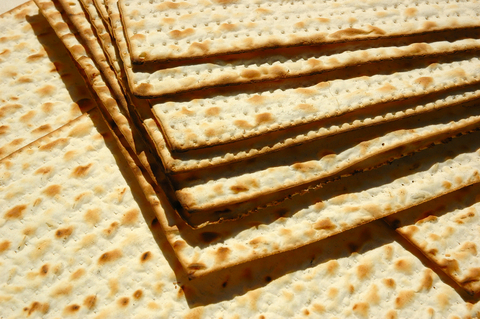
During Passover, the Jewish community refrains from eating leaven and eat what is known as matzah during the eight day holiday, as Moses and the nation of Israel fled Egypt in haste, not having time for our bread to rise and so we eat unleavened bread as a reminder of our leaving Egypt in haste.

Matzah

Matzah (unleavened bread) is eaten during Passover

For seven days there shall be no leaven found in your houses; for whoever eats what is leavened, that person shall be cut off from the congregation of Israel, whether he is a foreigner or a native of the land. You shall not eat anything leavened; in all your dwellings you shall eat unleavened bread (Ex 12:19-20).

As the Jewish community prepares for Passover, each family removes leaven from the home and stores – especially in heavily Jewish areas remove leavened products from their shelves. Then, during a ceremony called Bedikat Chametz, immediately before the first night of Passover and the first Passover Seder, we conduct a final search for leaven throughout the house, gather it together and throws it all out or burn it, symbolizing the house is purified or kosher for Passover.

Paul uses this understanding of the Jewish practice as the background to his statement in1 Corinthians 5:6-8.

Your boasting is not good. Do you not know that a little leaven leavens the whole lump of dough? Clean out the old leaven so that you may be a new lump, just as you are in fact unleavened. For Messiah our Passover also has been sacrificed. Therefore let us celebrate the feast, not with old leaven, nor with the leaven of malice and wickedness, but with the unleavened bread of sincerity and truth.

The community of Corinth evidently demonstrated a tolerance for gross immorality. Paul compares sin to leaven and commands the congregation at Corinth to clean out the sin from their midst in the same way the Jewish community removes leaven from their homes during Passover. Just as leaven permeates an entire lump of dough, sinful behavior affects the entire life of an individual and congregation. If the congregation at Corinth did not deal with the wicked behavior in their midst, then this behavior would defile the entire community.

When my wife makes challah, the traditional Jewish Festival bread, she puts a small amount of yeast into the dough. This small amount of yeast makes the entire loaf of challah leavened. In the same way, sin affects the entire life of a person. We cannot compartmentalize our lives and isolate sin to a particular area. Sin in one area affects all areas of our lives. We deceive ourselves when we think the small or hidden sins in our lives will not creep it’s way into our entire soul. Even the small and hidden sins will permeate and corrode our entire being.

When I kept silent about my sin, my body wasted away Through my groaning all day long.

For day and night Your hand was heavy upon me; My vitality was drained away as with the fever heat of summer. Selah. I acknowledged my sin to You, And my iniquity I did not hide;

I said, I will confess my transgressions to the Lord”; And You forgave the guilt of my sin. (Psalm 32:3-5)

Therefore, we should pursue righteousness, since our Messiah has removed the chametz, leaven, from our lives. Rabbi Saul (the Apostle Paul) describes those with leavened lives as depraved and wicked, but reminds his readers that those who are pure in motives and upright in character behave as if they are without leaven. The person free from leaven does not have a hidden or secret life. The preparation for Passover reminds us of the unrighteous behaviors we tolerate in our lives. If we tolerate immoral thoughts or actions, they will begin to affect our spiritual lives and ultimately destroy our soul.

We only deceive ourselves if we think that what we look at on the Internet, watch on television or do when others are not watching will not have any affect upon our spiritual life. We simply cannot behave badly towards our spouse or children, be dishonest in business or mean to at work if we are serious about honoring God. If we are going to have a healthy spiritual life we cannot tolerate our hidden and secret sins…the ones we only we know about, as the Lord knows them too1

In the spirit of Passover, let’s remove sin from our lives, so that we are kosher for Passover and can experience the joy that only godly obedience, in light of the redemption we have through Yeshua, can bring to our souls.

Mark the blameless man, and behold the upright; For the man of peace will have a posterity. But transgressors will be altogether destroyed; The posterity of the wicked will be cut off.(Psalm 37:37-38)

For more on Passover click on http://tinyurl.com/no7r8l8

1 Comment

Filed under Jewish Holidays, Jews and Christians, Judaism, Messianic Jewish, Passover

Let’s Keep the Discussion Going

I am grateful for all of you have commented on the recent blog where I respond to the religious Jewish people establishing the Kiruv Center near our new Charles Feinberg Messianic Center on Coney Island Avenue and Avenue P in Brooklyn. There was quite a bit of interest in the topic and a willingness to discuss the issues.

The dialogue has been excellent, but there are so many responses I really cannot answer each one. Let me try and summarize some of the key issues that seem to be under discussion.

1. Can you be Jewish and believe that Jesus is the Messiah and God in the flesh?

2. Is there a good case for Jesus begin the Messiah predicted in the Tenach? (the Old Testament for those who are not Jewish)

3. In what ways can you express yourself as a Jew if you believe in Jesus? Can/should you do this religiously and if so in what tradition of religious Judaism? How do we combine belief in Jesus with being Jewish?

4. Did Yeshua call upon Jeiwsh believers to abandon the Torah?

5. Can Jewish people who believe in Yeshua and those who do not, find non-acrimoniuos ways to relate to one another and even help one another where responding to mutual concerns; Israel, anti-Semitism etc.?

6. Can you be forgiven of sin without an atoning sacrifice?

7. What is the difference between the Jewish view of salvation and that of Messianic Jews or Christians?

For these and other questions please take the discussions to http://isaiah53.com/forums. This will be a better venue for our ongoing discussions.

Thanks!

2 Comments

Filed under Brooklyn, Israel, Jewish Christian Dialogue, Jews and Christians, Judaism, Messianic Jewish, New York City

Orthodox Jewish Group Opposes Chosen People Ministries’ Brooklyn Messianic Center.

A new website has just been posted entitled The Missionary Threat. It is sponsored by an Orthodox Jewish group that is trying to counter our efforts to share the Gospel with Jewish people, as well as for their own aim of trying to influence more secular Jewish people to become Orthodox.

They have posted a video that focuses on the ministry of our new Charles Feinberg Center in the heart of Orthodox Jewish Brooklyn:

This is not the first time that this group has leveraged our efforts to bring the Gospel to the Jewish people in Brooklyn to enhance their fundraising drives. I cannot blame them – in fact, I think it is quite entrepreneurial!

The last time this happened, I wrote to the leader of this group, which is located only a few blocks from our new center, and invited him to meet with me so that at least he would see the face of his alleged enemy. I never received a response back, and can only assume that it’s a lot easier for people to attack an unknown person rather than someone they have met and might even grow to like as a person – though disagreeing with their message and perspective.

How I feel about this?

In fact, I think I am the Jewish person who is alluded to in the video.

First of all, I’m actually not really upset at all. I find it easy to love and appreciate these folks who are so dedicated to their task that they feel part of what they must do is oppose us as we bring the Gospel to the heart of Orthodox Jewish Brooklyn. They are simply doing what they believe the God of Israel is calling them to do! After all, I feel the same way.

However, I do not want to minimize the seriousness of the matter. Chosen People Ministries believes that no man or woman, Jew or Gentile, can go to heaven or have an abundant relationship with God outside of believing that Jesus (Yeshua) is the promised Messiah. It is through His death and resurrection for our sin and believing in Him that we can enter into a deep and personal relationship with God. These are the eternal issues that are at stake – and it is no joke!

Perhaps it’s easier to see the black-and-white issues when you are involved with reaching Jewish people for Jesus, especially those who are more Orthodox. You see, Orthodox Jewish people believe in the God of Israel as revealed in the Bible. They accept the Bible as God’s word, and most are very sincere about keeping the Law and pleasing God.

Orthodox Jews usually have wonderful families, good ethics and share many of the same values as true followers of Jesus. In many ways, we are in the same trenches together with the Orthodox Jewish community when it comes to fighting against the growing decadence and secularism of our modern culture and calling for people to draw close to the Lord!

In fact, I will keep praying that the Lord would create some bridges of friendship and fellowship between ourselves and those who have chosen to oppose us, because we have so much in common. Please pray that we might even be able to work together with these folks in areas of common concern both within the Jewish community and in society.

I knew that the Lord was leading us to establish this Center in the heart of Orthodox Jewish Brooklyn. Our “opponents” are correct in reporting how expensive the project was, and how I and many others within the Chosen People Ministries family believe in the profound importance of shining the light of Messiah in the midst of this intense concentration of religious Jewish people – perhaps one of the largest in the world.

I hope that you will watch the video and pray for our Orthodox Jewish friends. Their efforts remind me of the ways in which Paul describes some of his fellow religious Jewish enthusiasts when he wrote in the book of Romans,

Brethren, my heart’s desire and my prayer to God for them is for their salvation. For I testify about them that they have a zeal for God, but not in accordance with knowledge. For not knowing about God’s righteousness and seeking to establish their own, they did not subject themselves to the righteousness of God. For Messiah is the end (the fulfillment) of the law for righteousness to everyone who believes (Romans 10:1-4).

A few of our very wise and experienced staff members asked me to reconsider sending out this website and video. The reason is that they were concerned that our Gentile Christian friends would in some way get a negative view of Jewish people, especially Orthodox Jewish people, as a result of this video.

I understand that some who are reading this letter may not know many Jewish people personally, but I want to assure you that if you did know some of the Jewish people who are opposing us – you would really like them. They are good people, but they simply need to know that Jesus is the Messiah. I hope you’ll think positively of them and that you will join us in prayer.

It’s important to remember that Jewish people have had some very bad experiences with Christianity. From the Crusades, the Pogroms and ultimately the Holocaust, Jewish people have developed a mentality that Christianity is antagonistic towards the Jewish people. And quite frankly, when describing “institutional and more nominal Christianity,” this is not far from the truth.

This means that we have to demonstrate through our lives and action that true Christians love the Jewish people. We must make sure our Jewish friends understand that we do not want anyone to change religion, but to follow a person – Jesus the Messiah. We are preaching a relationship, not a religion. This is so important for Jewish people to understand – and for you to try and help your Jewish friends comprehend.

The basic and most fundamental reason why Jewish people do not believe in Jesus is because of the fear that once a Jewish person starts believing in Jesus, he or she gives up being a Jew. This is not true (Romans11:1), but it’s up to us to communicate this to our Jewish friends, relatives and neighbors.

Now, since the founders of this center did such a great job of encouraging others to fund their work of bringing Jews back to Orthodox Judaism, let me return the favor. It is obvious to me that we are doing the right thing, and I hope that you will support us and in particular support the work of our Messianic Jewish center in the heart of Orthodox Jewish Brooklyn.

Please write Charles Feinberg Center in the “Special Designation” field

We not only need your financial support, but we are desperate for your prayers – as what we want most in life cannot be accomplished with money. We want the God of Israel to open the hearts of our Jewish friends and family so that they too will believe that Jesus is the promised Messiah.

Your brother,

Mitch

70 Comments

Filed under Brooklyn, Jewish Christian Dialogue, Jews and Christians, Judaism, Messianic Jewish, New York City

A Response to the Murder of Three Israeli Teenagers

It is hard to think about the usual matters of ministry after hearing about the three Israelis Yeshiva students who were mercilessly slain by terrorists. It is a reminder of how sinful and cruel our world can be and how our Jewish people continue to be subjected to such fierce hatred. These terrible circumstances also remind us that the is little time left for our work of preaching the Gospel.

I received the following note from one of our dear friends and supporters which also reminds me of just how much some Christians are moved by Gods love for the Jewish people.

This brother and friend writes,

Bro. Mitch,

When we learned of the news about the three kidnapped boys, we were deeply moved as we had been following this story daily in the online Israeli newspapers. I am privileged to teach an adult SS class each week and they enjoy being kept up to date on news from Israel. I use Powerpoint to show map locations, headlines, and had shown pictures of the boys with their names. I know people were praying for them.

What an opportunity to support Israel wholeheartedly when the circumstances are so clear. So I can only shake my head and realize that we are seeing prophecy unfold in my lifetime. Soon, Israel will be hated by every nation.

Thanks for your tireless efforts to reach God’s Chosen People with the Gospel about their Messiah.
——————

I am grateful for those who stand with the Jewish people and rejoice with the victories of the Jewish people and who and mourn for our people during the very dark times as we have experienced this week.

Please remember to pray for the families of those who lost their sons and for the people of Israel that they might be encouraged and kept safe during these trying times. As we know, Israel will not simply accept these murders and so times will certainly get tougher and more tense over the next few weeks…so pray fervently.

I prayed this prayer;

Father in heaven, we live in disturbing times. The innocent have been murdered and we have again come face-to-face with the cruelty of mankind. Our world needs redemption through your promised Messiah more than ever. Our hearts grieve for parents and siblings who lost their sons and brothers and for the whole household of Israel. We pray for the perpetrators as you told us to pray for our enemies. We pray that your justice will prevail and that those who killed these three teenagers will be brought to trial and punished for their crimes. Most of all Lord, we pray for peace in the Middle East. Please give wisdom to Israel’s leaders and to our own elected officials as battle against terrorism in Israel, Syria, Iraq and throughout the world. Thank you that we know through the promises of Scripture that your holy purposes will ultimately prevail and that true justice will fill the earth when your Son returns and rules on his rightful throne. Until then, Lord, please be merciful to us and we beg you – help us to find a way to stop terrorism and this continued slaughter of our innocents.

AMEN

3 Comments

Filed under Boycotts against Israel, Christ at the CheckPoint, Israel, Judaism, Messianic Jewish, Middle East, Palestinian

The PCUSA’s Divestment Dilemma

The Presbyterian Church USA recently approved an initiative to divest stock holdings in companies allegedly profiting from Israel’s occupation of Palestinian territories.[1]

This decision, as well as others that were made at the 221st General Assembly held last week in Detroit,[2] demands a response from followers of Jesus and especially from Messianic Jews like myself – Jewish people who believe Jesus is the Jewish Messiah for all.

However, one needs to look at the divestment vote of the PCUSA holistically. When this is viewed as one decision among many, it is easier to see what is at the heart of this vote.

Reasons for the PCUSA’s Divestment

Let’s start with some good points. The 310 delegates who voted in favor (303 voted against) of the PCUSA divesting their stock holdings in three companies – Hewlett-Packard, Motorola Solutions and Caterpillar – probably did so with noble intentions.

Most of the delegates probably believed this symbolic gesture; removing about 21 million dollars in invested funds might cause Israel to reconsider its approach to the current conflict.

The PCUSA delegates who voted for the divestment measures believed their vote is an expression of Christian ethics, affirming the dignity of all humanity created in the image of God, and that true Christians are called to support the oppressed and withstand the oppressors. The assumption of course is that Israelis are genuinely oppressing Palestinians – an assumption that may be heartfelt, but naïve.

I would also assume that those who voted for divestment did so out of a sincere heart of love and compassion for Palestinians whom they believe are victims of Israeli aggression. The PCUSA also affirmed Israel’s right to exist. However, this is especially challenging today because of the decision by the Palestinian Authority to unite with Hamas, who persistently deny Israeli’s right to exist. Unfortunately, the PCUSA statement ignored the linkage between the Palestinian Authority and this known terrorist group.

I speak in many PCUSA churches, and believe that there are many sincere and devoted believers among the 1.8 million members of this great historic church body. However, I question whether or not the pro-Israel PCUSA voice is being heard, as so many have simply given up and left the denomination.

Flaws in the Rationale for Divestment

Let me suggest a few reasons why the PCUSA’s decision to divest is faulty.

First of all, the delegates have chosen to believe the Palestinian narrative of the conflict and therefore – despite the PCUSA’s claim that they have not sided with either Israel or the Palestinians – they have. The PCUSA has decided to accept the charges against Israel by the Palestinian side and have acted upon them. This includes measures taken by Israel in Gaza and hotbed areas of the West Bank to prevent further acts of terrorism. The profound role of terrorism has not even been addressed in the PCUSA decision to divest.

The PCUSA has also “paraded” a few left-wing Israeli peace activists to demonstrate that there are Jewish Israelis who agree with their position. According to the Times article,

Of more influence was the presence at the church’s convention all week of Jewish activists, many of them young, in black T-shirts with the slogan “Another Jew Supporting Divestment.” Many of them were with Jewish Voice for Peace, a small but growing organization that promotes divestment and works with Palestinian and Christian groups on the left.[3]

This effort to show Jewish support is a tactic practiced by the Palestinian media machine and has now been evidently adopted the PCUSA as well. Israel is a free country and dissent may freely be expressed there, as in the United States. The PCUSA should have asked an Israeli government official to speak, or at least had had someone representing the mainstream views of average Israelis. The event must be seen as heavily orchestrated towards persuading delegates to pass the divestment measures.

I just returned from Israel, where Palestinian spokespersons for Hamas and other similar groups reported that the three Israeli boys who have recently disappeared were not kidnapped, but are merely missing – though the evidence is virtually decisive that they were kidnapped and may have already been killed. The Palestinian media machine claims that the Israelis are using this as an excuse to “crack down on” the Palestinians.

Most PCUSA delegates have been influenced by a booklet produced by the anti-Israel lobby of the PCUSA entitled “Zionism Unsettled,” which perpetuates the most radical political viewpoints of the Palestinian media machine.[4] This document has been disavowed by many within the PCUSA as much too one-sided, yet it has been the major influence and provided the essential political perspective for the divestment decision.

Ultimately, one of the main reasons the vote passed at this General Assembly, despite failing to be approved in the past, is because many of those who supported Israel have already left the denomination because of a variety of issues.

The PCUSA’s General Departure from Scripture

Other issues were also affirmed at this General Assembly, besides divestment from the three companies. For example, the New York Times reported the following:

The Presbyterian Church (U.S.A.) voted at its General Assembly on Thursday to change its constitution’s definition of marriage from “a man and a woman” to “two people,” and to allow its ministers to perform same-sex marriages where it is legal.

The vote giving discretion to ministers to marry gay couples takes effect on Sunday, at the close of the General Assembly.[5]

This issue has been more schismatic for the average PCUSA congregation than the divestment issue, but together these decisions speak to a trend. Viewing these decisions by the PCUSA General Assembly as aspects of one agenda will sober evangelicals who may have unwittingly embraced the divestment decision without understanding the underlying values moving the PCUSA leadership in this direction.

The PCUSA seems to be leaving its biblical moorings. Instead of allowing Holy Scripture to judge the trends and philosophies of our day, the opposite is happening – today’s trends and values are beginning to determine the ethical, moral and political decisions of the church.

Dangerous Results of the PCUSA’s Decision

As a Messianic Jew, I am also very concerned with the decisions of the PCUSA. I am very disturbed with the lack of understanding or commitment to the literal promises of God in the Old Testament to the Jewish people. In fact, a literal interpretation of the Old Testament would have caused the PCUSA to make a different decision on the issue of gay marriage as well.

Disregarding a more literal view of the Old Testament can easily lead God’s people along the path of moral relativity and spiritual decline, as when we spiritualize God’s commandments, we become rudderless boats navigating the turbulent rivers of discipleship in today’s world.

I grieve over the increment general turn of the PCUSA from a heartfelt concern for the spiritual welfare of the Jewish people to the current loss of evangelistic zeal for Jewish people. In fact, in the first half of the 20th century, the Presbyterians – which then included a number of more conservative groups that have since split from the larger body – were active in Jewish missions and believed that reaching Jewish people for Jesus was important. The Home Mission Board of the Presbyterian Church at the time supported dozens of workers among the Jewish people and Neighborhood Houses that were funded as Centers for Jewish outreach.

The PCUSA of today do not seem to care how these politically-driven decisions might impact the eternal fate of Jewish people. But perhaps the leaders of the PCUSA have stopped caring about this a long time ago?

The PCUSA must understand that even if a few liberal Rabbis or Jewish community leaders support their decision, the vast majority of Jewish people – my people – will view their divestment decision as one of a long list of Christian acts against the Jewish people. It makes me heartsick to see this happen again, as it will decrease the willingness of Jewish people to listen to the Gospel. Why should my people be interested in a faith that has made a politically-driven decision against the Jewish homeland?

I will have a lot of explaining to do. Dear PCUSA leaders, you could have handled this better!


Notes:

[1] http://www.nytimes.com/2014/06/21/us/presbyterians-debating-israeli-occupation-vote-to-divest-holdings.html?emc=eta1&_r=0

[2] http://www.religionnews.com/2014/06/20/prebyteriansdivestment/

[3] IBID

[4] http://store.pcusa.org/2646614001

[5] http://www.nytimes.com/2014/06/20/us/presbyterians-vote-to-change-definition-of-marriage-to-two-people.html?action=click&contentCollection=U.S.&module=RelatedCoverage&region=Marginalia&pgtype=article

25 Comments

Filed under Anti-Semitism, Boycotts against Israel, Christ at the CheckPoint, Israel, Judaism, Middle East