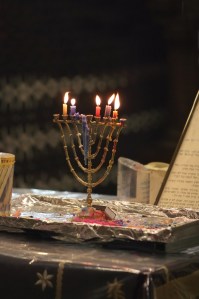
The Gospel According to Hanukkah

1512NLW_hanukkah_SS11601481

Shalom dear friend,

I remember the first time I read the New Testament like it was yesterday. I was attracted to the book—especially to the words of Jesus, but had sweaty palms as I turned each page.

You see, I was raised in a traditional Jewish home in New York City and though my family was not religious I was raised modern Orthodox. Everything I knew about Judaism was Orthodox and nobody needed to tell me that I should not read the New Testament. I cannot even begin to describe the guilt I felt in reading and enjoying the New Testament.

May I step back for a moment? I probably never would have even read from the New Testament—I was 19 years old at the time I encountered my first New Testament. And again, I would not have read it unless I had received it in a miraculous way. I was becoming interested in the message of Jesus, because the lives of my two best Jewish friends were transformed right before my eyes once they believed in Jesus.

They witnessed to me, but I resisted and tried to talk them out of it. I was trying to get them out of what I felt was probably some kind of weird cult. Instead they kept encouraging me to read “my Bible”—what is commonly called the Old Testament. As you probably know, Jewish people do not call the Bible the Old Testament—even though we do not read the New—because, in the Jewish mind, there is no New Testament! That’s the book that Christians read—not the book that Jews follow.

I loved what I was reading in the Old Testament and found myself wanting a relationship with God that was personal, intimate and even supernatural, just like Abraham, Moses and King David experienced. I had never noticed that what made these forefathers of mine so great was their relationship with God.

Weeks and months passed and I became more and more interested in knowing more about the God of Abraham, Isaac and Jacob. I just did not want to believe in Jesus, because I would have to tell my family and I knew that I would be rejected.

One day I just could not take it anymore, and I prayed my first spontaneous prayer (Jewish people usually pray in Hebrew and follow written prayers). I asked God, “If you are real, please show me and show me how to get you.”

That night, believe it or not, I found a copy of Good News for Modern Man—a modern English version of the New Testament—in a phone booth in the middle of a campground in the redwood forest where I was working at the time! I began reading the New Testament and fell in love with Jesus. He was the smartest person I had ever met—He knew how to answer people and was nobody’s fool. What really struck me was how Jewish He was!

I soon found myself wrestling with Jesus the Jew rather than Jesus the Gentile and I began to be attracted to the very person that the Jewish people mistakenly thought had inspired antisemitism and hatred of the Jewish people. I just could not figure out how a Jewish person would have inspired antisemitism. Of course He didn’t, but like most Jewish people I really didn’t know a lot about Jesus.

The more I read in the New Testament the more I understood that He was Jewish, celebrated the Jewish holidays and held the answers I was seeking. I finally came to the point where His words brought peace to my heart.

Finally, I accepted Jesus as Messiah and Lord in November 1970. The first holiday I celebrated was Thanksgiving, and that was really wonderful.

Soon after, I came upon a dilemma because both Hanukkah and Christmas were approaching. Some of my new Christian friends thought that I would really enjoy celebrating Christmas and of course I was raised in Jewish New York and we celebrated Hanukkah, almost as a protest holiday to the majority who celebrated Christmas. I loved Jesus, but I was not yet comfortable with the holidays usually associated with Him, as I was not raised that way.

Someone pointed out to me that Jesus celebrated Hanukkah. I think at that point I was still trying to figure out when and how Jesus celebrated Christmas. I was a little slow and it took me awhile to get the point! But I was very intrigued by His celebrating Hanukkah.

In fact, the only time Hanukkah is mentioned in the Bible is in the New Testament. It is not mentioned in any of the Hebrew Scriptures. After reading John 10 and studying the passage, I finally understood that the Gospel and Hanukkah were intertwined…it was really the Gospel according to Hanukkah!

One of the greatest statements Jesus ever made about Himself was during the feast of Hanukkah. As you will read in this newsletter, Hanukkah is a post-Old Testament holiday that developed during the centuries immediately prior to Jesus’ birth.

I believe that Hanukkah is all about the Gospel. Please take a moment and read this text!

1512NLW_Hannnukah-Gifts-iStock_4738348

At that time the Feast of the Dedication took place at Jerusalem; it was winter, and Jesus was walking in the temple in the portico of Solomon. The Jews then gathered around Him, and were saying to Him, “How long will You keep us in suspense? If You are the Christ, tell us plainly.” Jesus answered them, “I told you, and you do not believe; the works that I do in My Father’s name, these testify of Me. But you do not believe because you are not of My sheep. My sheep hear My voice, and I know them, and they follow Me; and I give eternal life to them, and they will never perish; and no one will snatch them out of My hand. My Father, who has given them to Me, is greater than all; and no one is able to snatch them out of the Father’s hand (Jn. 10:22-29).

The above statement is simply incredible! To think that the Messiah said this during the great festival of Hanukkah is astounding to me, having grown up in a Jewish home. But Yeshua did not stop there as He continued to infuse new meaning to the traditional festival of lights and redemption by showing the linkage between Himself and the Father.

The Apostle John records Jesus saying,

I and the Father are one (Jn. 10:30).

Believe me, the Jewish people of the day knew exactly what He was saying and His statement was not well received!

Look at what happens next,

The Jews picked up stones again to stone Him (Jn. 10:31).

The idea that a man would claim to be God is understandably offensive to the Jewish people who are taught that God cannot take on human form. I was taught this as well growing up in a Jewish home. And ordinarily this would be true. But, this perfect man would be the Messiah who died for our sins.

Dear friend, this is the Gospel according to Hanukkah. God sent His only Son as His greatest gift to you and me—better than any Christmas or Hanukkah present by far! And through this divine Messiah we have true spiritual freedom that will endure forever.

Merry Christmas and Happy Hanukkah—May the Lord fill your home with His light and joy.

Your brother in the Messiah,

Mitch

2 Comments

Filed under Holidays & Festivals

Lessons in Thanksgiving from the Hebrew Bible

Lessons in Thanksgiving from the Hebrew Bible

Shalom and Happy Thanksgiving!

1511NLW_Hand-Pear_TS487018409During this season of Thanksgiving I want you to know that I am very grateful for you! May the Lord continue to bless you for blessing the Jewish people. Thank you so much for your faithful prayers and financial support—we could not do the work of bringing the Gospel to Jewish people across the globe without your partnership.

The Sabbatical (Shemitah) Year

As you know, the Jewish calendar is quite different from the non-Jewish calendar. The Jewish year is a lunar year with 30-day months, and the Julian calendar is solar with both 30- and 31-day months. This makes it a little confusing when you are trying to align the Jewish calendar with the Gregorian calendar. We are now just a few months into the new Jewish year of 5776, based upon the traditional rabbinic date for creation.

The Jewish calendar has received a lot of attention over the past 12 months because of the many books and articles telling us that the year 5775 was a Sabbatical year, also known by the Hebrew term shemitah, or in English, “release.”

The primary rule of thumb for observing the Sabbatical year, which occurs every seventh year, was that the Israelites were supposed to leave the land fallow so that it could rest. They were to refrain from planting crops in that particular year and to trust God to provide for them.

You shall sow your land for six years and gather in its yield, but on the seventh year you shall let it rest and lie fallow, so that the needy of your people may eat; and whatever they leave the beast of the field may eat. You are to do the same with your vineyard and your olive grove (Ex. 23:10-11).

A second, and very important part of the Sabbatical year was the forgiveness of loans. The Scripture continues,

At the end of every seven years you shall grant a remission of debts. This is the manner of remission:  every creditor shall release what he has loaned to his neighbor; he shall not exact it of his neighbor and his brother, because the Lord’s remission has been proclaimed (Deut. 15:1-2).

Again, during the Sabbatical year, the Israelites were to show special mercy and grace towards the poor. This was to be done in a few different ways. First of all, the “successful” Israelite was commanded to help fellow Israelites who were impoverished by loaning them what was needed for their survival.

If there is a poor man with you, one of your brothers, in any of your towns in your land which the Lord your God is giving you, you shall not harden your heart, nor close your hand from your poor brother; but you shall freely open your hand to him, and shall generously lend him sufficient for his need in whatever he lacks (Deut. 15:7-8).

Secondly, they were to release those who indentured themselves because they had probably fallen on hard times for some reason—perhaps health, bad crops or whatever caused them to “lose the farm.” The only way for them to survive was to become enslaved to one of their fellow countrymen.

If your kinsman, a Hebrew man or woman, is sold to you, then he shall serve you six years, but in the seventh year you shall set him free.  When you set him free, you shall not send him away empty-handed (Deut. 15:12-13; see also 15:14-18).

Therefore, the “release” of the Sabbatical year meant that the Israelites could not plant crops in their fields, collect payments on loans, and keep all of what they produced and stored for themselves rather than giving generously to the poor. At the heart of the “release” was the opportunity to trust God for all of their needs.

Unfortunately the Sabbatical year was rarely followed and became the basis for God’s judgment during the 70 years of captivity in Babylon (Jer. 25:11).

Those who had escaped from the sword he carried away to Babylon; and they were servants to him and to his sons until the rule of the kingdom of Persia, to fulfill the word of the Lord by the mouth of Jeremiah, until the land had enjoyed its sabbaths. All the days of its desolation it kept sabbath until seventy years were complete (2 Chron. 36:20-21).

The Year of Jubilee

The Sabbatical year was, of course, to be observed every seventh year, but then in the 50th year—seven sabbatical years—a year of Jubilee was to be celebrated by the Israelites. You might view this as a super Sabbatical year! The word jubilee is a transliteration of the Hebrew word yovale literally meaning “with a rushing noise” (Ex. 19:13, Josh. 6:5).

Whereas the Sabbatical year helped alleviate the immediate needs of the poor, the Jubilee year was designed to give the poor in Israel a chance to start all over again. Leviticus 25:8-12 provides us with a full description of the laws for the Jubilee year.

You shall thus consecrate the fiftieth year and proclaim a release through the land to all its inhabitants. It shall be a jubilee for you, and each of you shall return to his own property, and each of you shall return to his family (Lev. 25:10).

God Himself was also the original distributor of the Land to the twelve tribes of Israel, and again, He simply allowed His land to be used by the Israelites (Num. 32, Josh. 19)—as the giving of the Land of Israel to the Jewish people was always portrayed in Scripture as a gift from God (Gen. 12, 15, 17, etc.).

Moses also promises Israel that if the Jubilee year is faithfully observed, the Lord will miraculously cause the crops to grow during the years that the ground was fallow (Lev. 25:18-22). The God who demands that the land remain unplanted is the same God who promised to provide in abundance.

It is also interesting to note that the Jubilee year began on the Day of Atonement (Lev. 25:9) as the spiritual cleansing of the land began with the spiritual renewal of the chosen people.

As one Old Testament commentary describes,

This year of grace was proclaimed to begin with the Day of Atonement of every seventh sabbatical year to show that it was only with the full forgiveness of sins that the blessed liberty of the children of God could possibly commence. 

Lessons in Thanksgiving

There are so many lessons to learn from the Sabbatical/Shemitah and Jubilee years. The most important lesson for us is to recognize that all that we have in this world comes from God. He owns everything! This means that every single one of our possessions, even the ones we worked so hard to earn, are ultimately gifts from a good God who loves His children.

The Israelites are also asked to recognize the special place given to the Levites who have a permanent right of redemption to their houses and whose crops could not be sold. They did not own land of their own, but were to be cared for materially as they cared for the Israelites spiritually (Lev. 25:32-34).

Clearly, one of the great lessons of the Sabbatical and Jubilee years is that God has called us to be stewards of all that He provides. His gifts are designed to be enjoyed, nurtured and, most importantly, shared.

We are to help provide for the poor, respect the poor, and warned not to take advantage of the poor (Lev. 25:35-43). This is one of the reasons why Your Mission to the Jewish People is doing so much to alleviate the pain of poverty in the lives of many, mostly elderly, Jewish people.

Thanksgiving is one of my favorite times of the year as it reminds me of how generous the Lord has been to me, to my Jewish people and to Chosen People Ministries.

Again, thank you for your prayers, love and support. I believe you are going to be blessed by reading the following expanded ministry reports of all God is doing in the lives of Jewish people around the globe.

Happy Thanksgiving and may the Lord fill your heart and home with His joy!

Your brother,

Mitch

Leave a comment

Filed under Thanksgiving

Stories of God’s Grace to the Jewish People

Dear friend,

Shalom from New York City!

I am grateful for what the Lord has done through Your Mission to the Jewish People this year. May I share several first-hand stories of “divine appointments” our missionaries had with Jewish people in which they had significant conversations about the Messiah? Some have even accepted Jesus quite recently through these efforts!

I know you will be encouraged and blessed to read these stories and most of all I hope you will pray for the Jewish people mentioned!

1511PZLW_Joeand-Sarah
The first story comes from Joseph who serves in Brooklyn and is a part of the team planting a new congregation at our Feinberg Center. Joseph writes,

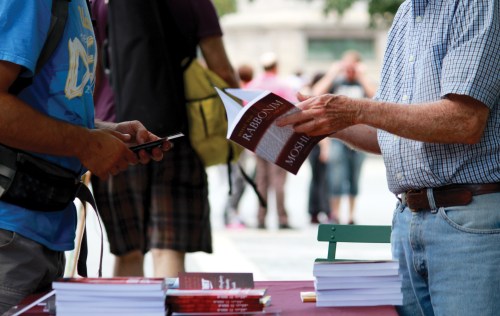
A couple months ago I met a young Yemenite Jewish man at my book table. Shmulik* was excited to receive a New Testament in Hebrew. It was as if I gave him a bar of gold the way he kept looking at it and skimming the pages! I showed Shmulik where to start reading in Matthew and as he read the opening words in Hebrew he grew very excited, “This is the genealogy of Yeshua the Messiah, the son of David, the son of Abraham.” Shmulik was beaming from ear to ear yet pacing around a bit, telling me how he was taught to avoid the New Testament. He was scared and excited at the same time. I encouraged Shmulik to think for himself, that he will stand alone before HaShem (the Lord) one day and have to give an account. He agreed.

Kirill serves in Chicago with his wife Elena. They came to the U.S. from Germany, but are originally from Russia. God blessed their ministry in Germany but today they have started two congregations for Russian Jews in the Chicago area. Kirill reports,

We recently had a great baptismal service! The testimonies of the believers deeply touched the hearts of those at the service. The testimony of a Jewish sister was very important to me personally. This young woman visited our congregation for the first time three years ago. After that service, we prayed the sinner’s prayer together. Her new life after accepting Jesus was not easy.  After years of personal discipleship and ministry she was finally ready to be baptized. What she said before I baptized her touched my heart and life and is a great encouragement to my ministry. She publicly testified, “Coming to faith in Jesus the Messiah and understanding everything He did for me, I want to spend the rest of my life being in His service. What a blessing!”

Anna in Toronto tells this wonderful story…

Ronald,* his wife Sarah* and two kids, Samuel* (12) and Aren* (4),  recently immigrated to Canada from Israel. Vladimir and I befriended them, and invited them to our home. We spoke about the Lord, and they were very interested, but could not make a decision right away. Little by little, Ronald and Sarah opened up to the Messiah. Recently we gathered together for tea. The conversation about the Lord was long, and at last they made decisions to pray. At that moment the doorbell rang and their neighbor, Violetta,* dropped by. She began to ask questions too, and we explained to her the way of salvation. Then we offered Ronald, Sarah and Violetta the opportunity to pray; they agreed. Suddenly, Samuel got up from the sofa, came to the table and announced that he was going to pray with us also. We held hands and bowed our heads. So that day, these four souls became children of God. Praise the Lord!

Person to Person – Heart to Heart

1511PZLW_Toronto-Skyline-BS69179341

I hope these wonderful stories of God’s grace give you some idea of what He is doing among the Jewish people through our staff! I am thankful this Thanksgiving to work with such gifted and dedicated servants of the Lord who serve Him in the power of the Holy Spirit. We do all we can to help our missionaries by praying for them and providing the administrative support and guidance they need to fulfill their ministries. But, I realize that the core of our almost 122-year-old ministry among the Jewish people is what is done by the Lord through His people—person to person and heart to heart, one seeker at a time!

Robert and his wife, Joanna, serve the Lord in Brooklyn and are also part of the team planting a new congregation in the “other” Holy Land! Robert shares,

I’ve had the opportunity to spend some time with a young Jewish man, David,* every week and to study the Bible together. After going through the story of the Exodus, I sensed it was a good time to make the clear connection to what God has accomplished for us through Jesus. We discussed how Jesus is our unblemished Passover Lamb, whose blood has been shed to set us free from slavery, to redeem us, and to bring us to God. The time was right so I asked David, “Do you believe this is true of Jesus?” David answered yes. So I followed up and asked, “Have you ever prayed to accept Jesus as your Savior and gone through the door from a slave to a free man?” He answered, “No…but I think that would be a good idea.” We then prayed, and he accepted the Messiah! 

Maxim, who serves in Israel, also shared with us a quick update and report about his incredible ministry among Holocaust survivors,

​One of our Holocaust survivors came to faith and got baptized recently. We were praying for his wife who used to say she was not ready for such a step. Nevertheless, she always asked for prayer that she might have the faith that her husband does. Praise the Lord! She said she is ready and received the Lord recently. She attends congregation with her husband and we are eagerly looking forward to her baptism.

Online and In Person
1501PZLW_BS-ipad-w-Is53-65636746
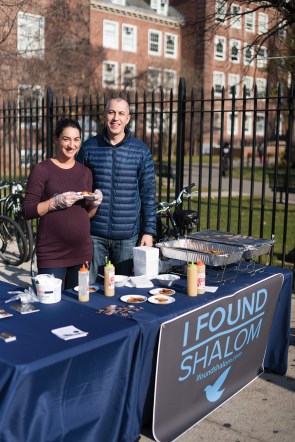
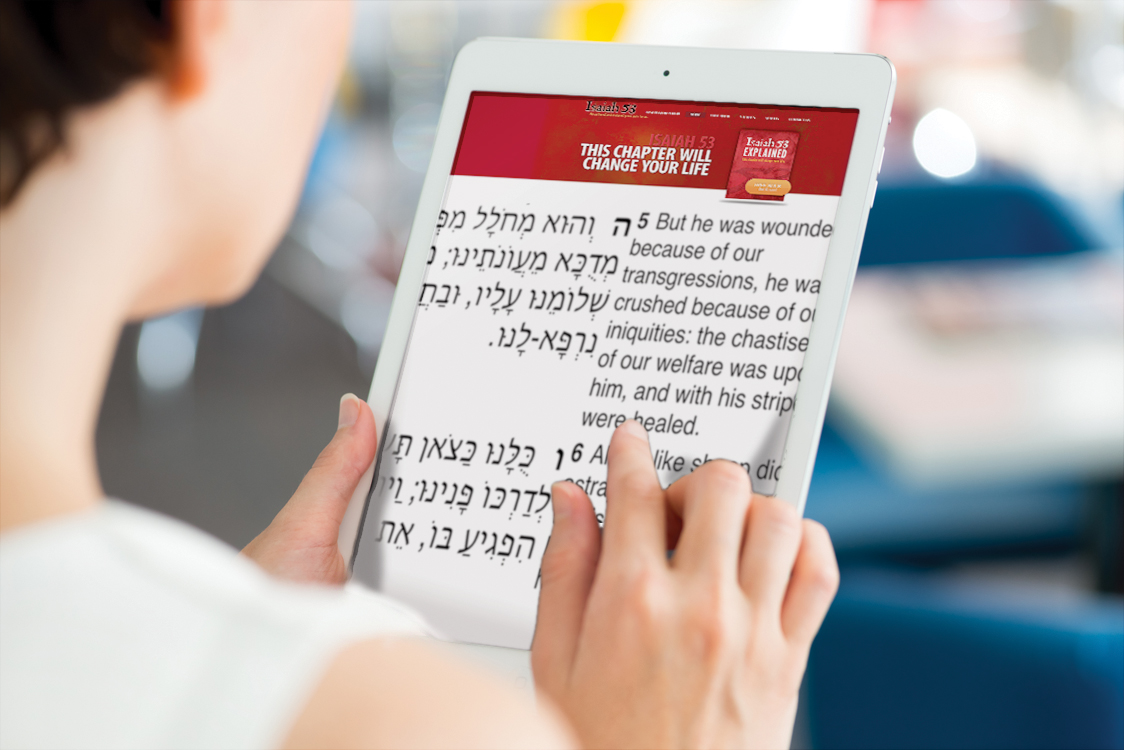
As you know, we have initiated extensive online ministries during the last few years including our Isaiah 53 Campaign, as well as our newest endeavor—I Found Shalom. These websites utilize video testimonies of Jewish people who have placed their faith in Yeshua (Jesus) and are amazing tools to share the Gospel with Jewish people. We have received the contact information of Jewish seekers throughout the United States, Israel and many other countries with whom we are personally following up! May I share one quick testimony? A Jewish man who is married to a born-again woman watched some of the testimony videos we produced and accepted the Lord! The dialogue unfolds as follows,

1511PZLW_Crawford-DSC05943
The Jewish man’s wife writes,
After watching some of your videos earlier in the week, he decided to pray and ask God to show him if Jesus is really the Messiah. I prayed too and ask the Lord to show him in any way possible His truth.

We found out that he lives near one of our staff and I asked our missionary to follow up. She writes a few days later,

Just heard from L. She conveyed how D. is growing and transforming in the Lord. They’ve already attended a Messianic congregation. D also now attends church and loves the pastor!

There are many other stories to tell you as our Isaiah 53 and I Found Shalom campaigns have introduced us to hundreds of Jewish people seeking the Lord and the follow up has almost been overwhelming…in a very good way!
​​
Thank You for Caring!
Will you commit to praying for our missionaries, as well as all the Jewish people (and Gentiles!) they are ministering to? Your prayers are a vital part of our ministry!

We deeply appreciate your prayers and faithful financial support of our missionaries. 

We established the “Daniel Fuchs Memorial Fund” for our under-supported missionaries who are still working on raising their full support (Dr. Fuchs was one of our former presidents who served Chosen People Ministries for many decades). Though we need your support in general, you might want to give a special gift this month to help one of our missionaries who have not yet raised their full support.

Your gifts keep Your Mission to the Jewish People moving forward for the Lord.

It takes a village to proclaim the Gospel throughout the world and to be able to follow up on individuals who want to know more about our Savior. So, your financial investment makes all the difference in the lives of our staff and, of course, in eternity for the Jewish people we reach for Jesus the Messiah.

​Happy Thanksgiving! I pray this season of the year will give you great joy for all He has done for us through His Son.

​Your brother,Mitch

1 Comment

Filed under Jews and Christians

The Power of a Good Story

Dear Friend, 

1510NLW_IFoundShalomBooklet

Everyone loves a good story.

I know I do! They may be funny and make me smile, or even laugh out loud. They may be emotionally moving—causing me to feel deeply what others have felt and even make me shed a sympathetic tear. Or the story might even be filled with new insights that lead me to an “a-ha” moment that can significantly change my life.

Storytelling holds a special place in Jewish life and tradition. The Hebrew Bible is full of stories. So is the Talmud. Jewish people have skillfully enlisted storytelling in service to religious truth for thousands of years.

We all know that a good story does not simply tell you what happened, but engages you mentally, emotionally and even spiritually. Good stories often lead to a point designed to make an impact in your life and the lives of others. A good story draws your imagination into a vivid world that holds out the promise of transformation—a promise that it is often able to deliver. These are really the best kind of stories! God made us to be very complex creatures and we need all of our senses engaged in order to be moved to the point where we can actually consider changing our behavior or begin thinking differently about life.

Mark Twain, in his little book entitled, How to Tell a Story, writes, “I do not claim that I can tell a story as it ought to be told. I only claim to know how a story ought to be told, for I have been almost daily in the company of the most expert story-tellers for many years.”

Storytelling is more than just a skill. It is an art. Some of us are better than others in spinning a yarn, telling a shaggy dog story, recounting a humorous incident or simply describing events in the way that helps the listener or reader feel as though they experienced the event for themselves. Not everyone can easily communicate the emotion, feelings, poignancy and pathos of life’s events. So many of us will admit that when we go to synagogue or church and listen to a sermon, we walk away remembering the point made through a story far more than anything else the rabbi or minister said.

Mark Twain added his thoughts on the most difficult stories to tell, “There are several kinds of stories, but only one difficult kind—the humorous…The humorous story bubbles gently along, the others burst. The humorous story is strictly a work of art—high and delicate art—and only an artist can tell it… .”

I think the author of Proverbs puts it best: A joyful heart is good medicine, but a broken spirit dries up the bones (Proverbs 17:22).

We all like a good laugh and a good cry. Stories, whether told, written, filmed or acted should be viewed as a gift from God to His creation. From Genesis on, our distinctively Jewish take on creation and humanity is reflected in our stories. As Rabbi Nachman of Bratslov once declared, “People tell their children stories to put them to sleep. I tell people stories to wake them up.”

I hope you will enjoy these moving stories of individuals who found shalom—peace—through their encounter with the God of Abraham, Isaac and Jacob through Yeshua, who is called the Prince of Peace. And may I be so bold as to say that I hope they “wake you up”?

The I Found Shalom Website

This is one of the reasons we created the I Found Shalom website. After all, if there’s one story we can all tell—it is the story of our lives. It is very difficult to argue or debate another person’s experience and try to determine if it is true or false. But if we are receptive to another’s story, we may find that it reaches us in unexpected ways. I hope that you will enjoy the following stories, which describe the ways in which these individuals had a personal encounter with the God of the universe.

Each one of the storytellers is Jewish and experienced what may be described as a “dramatic encounter” with the Messiah of Israel—Yeshua (Jesus). We have condensed and summarized their more lengthy and very personal accounts, which are on the website, for you to read and enjoy. After you have read them, I hope your interest will be piqued enough for you to go to the website and watch them. These men and women come from every walk of life: business professionals, moms, dads, old and young. Yet, all of them say something that is remarkably similar—that meeting their Messiah has enabled them to experience the peace and joy of knowing the One who made them.

If you are already a believer in the Messiah, I know that these stories will greatly encourage you as you see God work in the lives of others. If you are a seeker and not yet a follower of Messiah Yeshua, I hope that these written summaries and then the video stories themselves will make you laugh and even move you to the depths of your soul. My prayer is that you might discover exactly what these storytellers have experienced as well.

Finding Shalom in the Messiah

It was more than 40 years ago that I had the same experience! I was raised in a traditional Jewish home in New York City. When I was 19 years old, my two best friends became followers of Jesus the Messiah. Quite frankly, I was not looking for a relationship with God and I especially was not looking for Jesus. Like many of my generation, I was raised to believe that He was the enemy of the Jewish people and inspiration for antisemitism. Most Jewish people I knew believed the same way.

But, my two best Jewish friends became followers of Jesus amidst a host of incredible circumstances. Although I couldn’t deny their experience, I would argue to the best of my ability to show that they were wrong and that Jewish people should not believe in Jesus. They did not argue back! As I watched their lives change and their new stories continued to touch my life, I saw their shalom in the midst of difficult circumstances. I was amazed to see them pray and speak to God as if He was right next to them. Then I began reading the Bible. I was completely mesmerized by the parables—the stories that Yeshua told in the New Testament. Slowly, my eyes began to open and finally I recognized that Yeshua was the Messiah of Israel for both Jews and Gentiles.

I hope you enjoy these delightful and sincere storytellers!

Visit the website and watch the videos and request the booklet you will find offered there!

And now… on to the stories!

Dr. Mitch Glaser

President of Chosen People Ministries
(and one of the storytellers!)

1 Comment

Filed under Jews and Christians

Stop the Violence…In Israel!

This morning three innocent Israelis were killed in a personal terrorist attack in Jerusalem.  This is another in a long list of what may only be viewed as a new method employed by the enemies within Israel to create chaos by destroying innocent families in hopes of political gain.  And some of us wonder why peace talks have stalled?

Seventeen people were injured in what appeared to be “twin attacks” in Jerusalem by seemingly random terrorists!  It is now becoming more than obvious that these attacks are well planned and that some sinister force is behind the coordination of these “personal terrorists.”

One can search far and wide for reasons and try to even understand what motivates individuals, who also are husbands and fathers, wives and mothers to perpetrate these attacks and even be tempted to sympathize with the victim mentality portrayed by these terrorists in the media.  But, we must resist the urge to think kindly or in any way even trying to understand the predicament that leads individuals to respond in this way.  The response is far more horrible than any alleged crime.  Besides, these three Israelis were innocent.

I appreciate the comments expressed by one individual writing in the Jewish Express online version of the story,

These mass terror attacks on Israeli Jews by Palestinians using knives, guns, and autos to run down pedestrians, is a natural direct result of the PA incentivizing terror. Abbas and the PA encourage such terror, they reward it, they pay money to the family of any terrorist who is killed, they name parks and monuments after terrorists. Abbas recently said that he honors blood shed for Jerusalem That is a direct incitement. It is not the statement of a peace partner. At the same time, when Israel defends its civilians, the PA, the UN, and the media accuse Israel of being aggressors and using disproportionate response. Shooting a terrorist murderer to death is not a disproportionate response. An Israeli died from rock throwing at his car. Israeli Jews die from stabbing by Palestinians. Palestinian throwers of firebombs attempt to burn the Jews alive. It is serious and deadly. Abbas shows clearly that he has no intention of seeking peace. The PA should be cut off from support by the US and the EU.  Their corruption and incentivizing terror disentitle them to money from western countries. (Jewish Express…Tuesday)

We need to ask our elected officials to help Stop the Violence…in Israel!  I hope you will join thousands of others as we voice our concerns to our elected officials and to our Secretary of State, the Honorable John Kerry, to do what he can to meet with Mahmoud Abbas and if possible the leaders of Hamas – still listed as a terrorists group by the United States and demand that they root out whoever is controlling these “personal terrorists” and put a stop to the violence against innocent Israelis.  As you can see from the above quote – the Palestinian leaders seem to be creating the climate for these horrific attacks to continue.

We also need to pray for the peace of Jerusalem.  The Psalmist made this clear in Psalm 122:6.  And ask the Lord to fulfill His promise found in another Psalm, 121:3-4 and prayed in Synagogues around the world, “He who keeps you will not slumber. Behold He keeps Israel will neither slumber nor sleep”.

And pray especially for the victims of the personal terrorists that the Lord would bring comfort to their families.

2 Comments

Filed under Anti-Semitism, Israel

Turning a Nightmare into a Gospel Opportunity!

Shalom in the great name of Jesus our Messiah!

I do not usually speak about political issues, though, like you, I care deeply about the direction of our country.  That is why every so often I feel I must say something! And this is one of those times.

We are in the midst of a real crisis. It is a crisis for Israel, the United States and countries all across the globe. Allow me to express my concern as a question…

What could be more disastrous for the world than a nuclear-armed Iran?

How Real Is the Iranian Nuclear Threat to Israel?1510PZLW_Iran-Stamp-BS52160233Can you imagine the level of threat when, one day, Iran will be armed with nuclear weapons? They have already developed the missile delivery systems to reach Israel and Europe within a short amount of time.1 The very thought of this puts fear into my soul.

And, I am so sorry that our country has complied with what could be a suicidal agreement with an unabashed enemy of the free world. Even a cursory reading of the deal reveals major flaws that are a danger to Israel and the West. This deal placed unearned trust in the terrorist leaders of Iran rather than our allies and experts who have voiced their dissent. Even our Arab allies decry the deal because it spells danger for them too!

A few months ago the president and spiritual leader of Iran, Ayatollah Khomeini, wrote a book entitled Palestine. It has not yet been translated into English, but the book calls for the destruction of the “Little Satan”—Israel…and the “Great Satan”—the United States!

One of the most disturbing comments in the book is this:  “Without destroying Israel, our victory is incomplete.” 2

The book describes Khomeini as “the flag bearer of Jihad to liberate Jerusalem,” with a chilling message: Israel has no right to exist and must be destroyed. Khomeini uses powerful words to describe his goal for Israel’s eventual destruction—nabudi (annihilation), imha (fading out), and zaval (elimination).3

Four Critical Reasons Why the Iranian Nuclear Agreement Is So Dangerous

Let me give you four reasons why this alleged “deal” with Iran is a nightmare and can lead to the destruction of Israel, Europe and other nations within the range of Iranian missiles…and why those who love the Bible, the Messiah, and the people of Israel need to pray fervently!

#1. The “deal” virtually guarantees that Iran will one day have nuclear weapons.

#2. Iran will have billions of dollars released to them that they can use to purchase conventional weapons, arming Israel’s enemies and themselves for a conventional war.

# 3. Iran will be able to develop a new economic relationship with Western countries, especially in Europe, which will give them a platform to influence politics and economies around the globe.

#4. Inspections will have no effect on Iran’s plan to build nuclear weapons, as the methods for inspection take so long they are rendered useless.

This is all very bad news for Israel and the West. This more affluent, influential and nuclear-powered Iran is nothing less than a nightmare.

The Jewish People and Persia

1510PZLW_Arab-protest_SS110509355

The Jewish people have a long history in Iran—ancient Persia (586–332 BC). Over the centuries, the Jewish people developed a rich culture and heritage in Persia, beginning with Cyrus who gave the edict allowing the Jews to return to Jerusalem.4 Some returned but most did not and continued to build a life among the Persians which endured through centuries of Islamic rule.

In more recent times, Iran was probably the most Western of all nations in the Middle East and was quite favorable towards the Jewish people. However, after the establishment of the nation of Israel in 1948, Jewish people living in the Middle East and North Africa had to flee for their lives. Many Jewish people remained in Iran until the fall of the Shah and the rise of a more militant and fundamental Islam under Ayatollah Khomeini.

Today, the number of Jews still living in Iran has dipped below 9,000. Most Iranian Jews live in New York City or Los Angeles with the greatest number living in Israel—especially in the Tel Aviv area.

Iranians are very traditional and often quite religious. This group of Jewish people in Iran is not easy to reach for the Messiah and there has not been a focused effort to reach Iranians Jews for the Lord. But this is changing NOW!

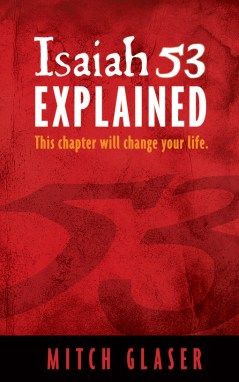
Your Mission to the Jewish People is partnering with a ministry in Tel Aviv led by a Persian Jew who has translated and published our Isaiah 53 Explained book in Farsi—the ancient language of Iranian Jews.

We have already begun testing Farsi ads on Facebook offering Isaiah 53 Explained books for free. We are focusing the ads in Israel and the United States for now and in the future we hope to offer the book as a download to Iranians living in Iran! It is highly likely that our ads will be blocked, but we are going to try anyway.

So how does the Lord turn a nightmare into a Gospel opportunity? 

Well, in this case, by enabling Chosen People Ministries to reach Iranian Jews for the Messiah by sharing the Gospel according to Isaiah 53!

A Ministry to French Jews Too!

I also wanted to bring you up-to-date on our efforts to reach Jewish people in France, which has the fourth largest Jewish population in the world.

The more than half a million Jews of France live under tremendous pressure today.  They are surrounded by a sea of hostile Muslim extremists who, as we know, have violently attacked members of the French Jewish community. This is why many thousands of French Jewish people are moving to Israel.

We have put a strategy in place to reach Jewish people as they move from France to Israel and also those who are taking their chances by remaining in France. This is why we have translated the Isaiah 53 Explained book into French, and why we have created a French Isaiah 53 website. 

We can reach multiple thousands of French and Iranian Jewish people daily by placing evangelistic ads on Facebook, YouTube, and other forms of social media. We have budgeted $500 a day for these ads and we hope to continue at this rate for at least 90 days. 

This would be impossible to do without employing a growing media team. I wish you could meet every member of this team, and if you did I know that you would want to invest in their ministries. The work of this wonderful team of dedicated and creative younger people costs about $20,000 per month.

We want to invest our time and treasure in reaching Jewish people for Jesus. We have discovered that using social media to find these Jewish people interested in Jesus, then following up with them personally through our missionaries, is incredibly effective.

Please partner with us in prayer for the Iranian and French Jews as we attempt to reach out to them through these channels. In addition, would you pray about giving a generous donation today so that we can sustain our media department and purchase the necessary ads to reach Jewish people with the Gospel—both online and in person?

By God’s grace we have already received a gift that allows us to print an adequate number of books to provide for the mailings once they are requested. We want every Jewish seeker to have an Isaiah 53 Explained book for free.

Your generous gift today will be used to support our digital media department and the advertising costs for our French and Farsi outreach campaigns.

I certainly hope that this “deal” with Iran will be rolled back in the future. But the Messiah is all-powerful and turns nightmares into Gospel opportunities, because He is Lord!

Thank you for caring about the Jewish people.

In Him,

Mitch

P.S. Check out our online store to purchase  The Fall Feasts of Israel, written by my wife and myself. This is a great resource to understanding and celebrating the High Holy Days! 

 1510PZLW-Fall-Feasts

ENDNOTES:
1    Isaiah 45:1
1    Isaiah 45:1
2    http://missilethreat.com/missiles/sejil-123/
3    http://irantruth.org/exclusive-first-translation-of-khameinis-new-book-on-the-destruction-of-america-israel/
4    Ibid.

1 Comment

Filed under Anti-Semitism

Tabernacles Tomorrow

The People, The Land and the Future of Israel Conference – Toronto, Canada, October 2-3, 2015

Introduction

According to the Bible, the Jewish people are the chosen people but what are they chosen for exactly? What did God have in mind by making them a people set apart? The ancient prophets speak about Israel’s future repentance, redemption and eschatological rejoicing in the coming of her Messianic King in great detail. Yet, none of the Jewish Festivals are mentioned – none, that is, except for Sukkot, otherwise known as the Feast of Tabernacles. Among all the feasts of Israel, Sukkot is the only holiday that will be observed by all of the redeemed nations of the world, Jew and Gentile alike after the Second Coming of Christ (Zechariah 14:16).

The prophet Zechariah wrote about a future day when all the nations of the earth, not only the Jewish people, will be called upon to celebrate the Feast of Tabernacles. This command might seem mysterious, but in light of Israel’s biblical calling and mission, the place accorded to Tabernacles is actually very well suited.

The Calling and Mission of Israel

The future observance of Sukkot by the nations of the world is connected with Israel’s election and mission. The universal nature of God’s plan for the Jewish people stretches back to His covenant with Abraham. In that holy agreement, God promised,

“And I will bless those who bless thee, and one who curses you I will curse. And in you all the families of the earth shall be blessed” (Genesis 12:3).

Israel’s election must always be linked with her mission to the Gentiles. From faithful Abraham’s seed, God would raise up His chosen people, Israel, to be a blessing to the nations! Israel was chosen to be God’s vehicle of blessing to the world!

Moses wrote regarding the choosing of Israel:

For you are a holy people to the Lord your God; the Lord your God has chosen you to be a people for His own possession out of all the peoples who are on the face of the earth. The Lord did not set His love on you nor choose you because you were more in number than any of the peoples, for you were the fewest of all peoples (Deuteronomy 7:6-7).

God’s choice of Israel was not based upon Abraham’s merit or the obedience of the nation. God chose Israel because He decided to love the nation.

… the Lord loved you and kept the oath which He swore to your forefathers, the Lord brought you out by a mighty hand, and redeemed you from the house of slavery from the hand of Pharaoh King of Egypt  (Deuteronomy 7:8).

God’s electing love falls upon unworthy sinners as He is a God of grace and a God of purpose. Oftentimes His election is linked to a particualr purpose He wants to accomplish and He chooses and uses whomsoever He wills – including Israel. Rarely in Scripture do those God chooses to use deserve the privilege!

God chose the Jewish people as His means to bless all mankind. God chose to love the Jewish people, and through this nation, to express His love for the world.  Israel’s chosenness did not mean to assure indivudal Jewish people of personal salvation. Rather, God’s choice garauntees the chosen nation of ultimately fulfilling His plan as God never fails to keep His promises. So although it may seem like God limited His line of promise by choosing one nation above others, His redemptive plan was always universal in nature so that His plan of redemption would be offered to the entire world.

This is why the Apostle Paul wrote,

Now if their transgression is riches for the world and their failure is riches for the Gentiles, how much more will their fulfillment be! But I am speaking to you who are Gentiles. Inasmuch then as I am an apostle of Gentiles, I magnify my ministry, if somehow I might move to jealousy my fellow countrymen and save some of them. For if their rejection is the reconciliation of the world, what will their acceptance be but life from the dead? (Romans 11:12-15)

Witnesses of the One True God

The prophet Isaiah announces that the nation of Israel would be a witness for God among the nations:

You are my witnesses, declares the Lord, and my servant whom I have chosen in order that you may know and believe me and understand that I am He.  Before me there was no God formed, and there will be none after me (Isaiah 43:10).

In this passage, the prophet paints the picture of a cosmic law court, where God is the judge, and the nations of the world stand trial for their idolatry.  Israel is the star witness for the prosecution, chosen to testify on God’s behalf. Isaiah further details the testimony of the Jewish people regarding the nature and character of God, the prophet writes,

I, even I, am the Lord and there is no savior besides me (Isaiah 43:11).

Israel’s mission was to proclaim to the world that the God of Israel is the one and only true God and there is no other Savior but Him.

Missionary Priests

Israel was to be more than a witness to the nations; they were also to be intercessors for the Gentiles. They were commissioned for this holy responsibility at Mount Sinai.

God called to Moses and said,

You yourselves have seen what I did to the Egyptians, and how I upbore you on eagles’ wings and brought you to myself.  Now then, if you will indeed hear my voice and keep my covenant, then you shall be my own possession among all the peoples, for all the earth is mine; and you shall be to me a kingdom of priests and a holy nation (Exodus 19:4-6).

Once again God expressed His concern for the world when He declared, “…all the earth is mine.” He chose Israel from among all the peoples of the earth for an eternal purpose – that they might be His vehicle to restore and reclaim a rebellious world. Israel was not chosen for their own sake, but for the sake of the nations. God describes their unique position as “a kingdom of priests.” Their role was to intercede between the sinful world and a holy God.

In the passage above, God called the people by an endearing term: “a special treasure.” Although Israel was intended to be God’s treasure and possession, we must remember that the entire world belongs to the Lord and is the subject of His redemptive concern. It is God’s intention for Israel to serve as a nation of missionary priests mediating His truth and redemption to the nations.

Israel’s Failure

Israel failed in their mission to reach the world.  Not only were they disobedient to the commandments of God, but they did not extend themselves in missionary activity. And yet, the God of all grace did not renege on His choice. He would still use the nation of Israel to bless the world and ultimately fulfill His promises to and through the Jewish people (Romans 11:11-29).

Israel did not fulfill their mission as a witness to the Gentiles and so God completed the task Himself. He sent His Son Jesus to live perfectly under the Law, to be a light to the nations and to intercede once for all on behalf of Jews and Gentiles. The faithlessness of man can never thwart the faithfulness of God. The Gentiles most assuredly would share in the salvation brought by the divine seed of Abraham. Paul wrote,

Christ redeemed us from the curse of the Law, having become a curse for us – for it is written, “Cursed is everyone who hangs on a tree,” in order that in Christ Jesus the blessing of Abraham might come to the Gentiles, so that we might receive the promise of the Spirit through faith  (Galatians 3:13-14).

It is tempting for some to think that Israel’s role in world redemption is completed, but quite the contrary– Israel remains chosen and still has a role to play in the future! The Apostle Paul declared:

Now if their transgression be riches for the world and their failure be riches for the Gentiles, how much more will their fulfillment be? (Romans 11:12)

And again he wrote, For if their rejection be the reconciliation of the world, what will their acceptance be but life from the dead? (Romans 11:15)

The Apostle spoke of a future day when Israel will once again don the mantle of obligation and fulfill her role as a missionary nation as Israel will again be used by God to bring the message of the Messiah to the nations; for Israel will be central to His Kingdom ministry.

Isaiah spoke of a day when Jerusalem would be restored, both physically and spiritually:

For Zion’s sake I will not keep silent, and for Jerusalem’s sake I will not keep quiet, until her righteousness goes forth like brightness, and her salvation like a torch that is burning.  And the nations will see your righteousness, and all kings your glory; you will be called by a new name, which the mouth of the Lord will designate. You will also be a crown of beauty in the hand of the Lord and a royal diadem in the hand of your God (Isaiah 62:1-3).

In that day,

Israel will not be the tail, but the head of the nations (Deuteronomy 28:13).

Jerusalem will be the spiritual focal point of the world because the King of Jerusalem, the Prince of Peace, will reign in His chosen city. Isaiah wrote of that joyful occasion:

Break forth, shout joyfully together, your waste places of Jerusalem; for the Lord has comforted His people, He has redeemed Jerusalem. The Lord has bared His holy arm in the sight of all the nations, that all the ends of the earth may see the salvation of our God (Isaiah 52:9-10).

The day is coming when a restored and renewed Israel will be a light to the nations, as the destiny of Israel is linked to the destiny of the world. Their testimony will be glorious and true because the One who is all-glorious in truth will sit upon His throne. In that day, the Jewish people will be “life from the dead” for the nations of the earth.

Universal Themes in the Feast of Tabernacles

God’s concern for the Gentiles is evident in the Talmudic writings regarding Sukkot. In Jewish sources, Israel’s role in world redemption was thought to be a major theme of the Feast of Tabernacles. The rabbis suggest that the seventy bullocks offered on the last day of the feast correspond to the seventy nations of the world and therefore, on Sukkot, the nation of Israel offered sacrifices on behalf of the Gentiles.

This is reiterated in the Midrash:

“At the festival of Tabernacles we offer up seventy bullocks (as an atonement) for the seventy nations, and we pray that rain will come down for them”  (Psalm 109:4).

Israel is viewed here as a nation of intercessors for the sins of the Gentiles.  This universal theme is also recounted in the later and more mystical literature of the Kaballah and the Zohar as well.

The traditional Bible reading on the second day of Sukkot is taken from the fourteenth chapter of the book of Zechariah. An additional portion read on Sukkot speaks about the War of Gog and Magog (Ezekiel 38:13-39:16). This seems incongruous – what thematic relationship could this Scripture portion have with the Feast of Booths? While it may not be evident to the casual reader, the common thread uniting these two passages is God’s universal concern for the redemption of the nations.

In Zechariah 14, the judgment against rebellious nations is pictured as God withholding life-giving rains from those nations disobedient and who do not come to Jerusalem to worship the Messianic King and celebrate Tabernacles.

Curiously, the judgment in Ezekiel 38 upon hostile nations is also described as rain – as judgment rains “hailstones, fire and brimstone.

The Lord declared, “I shall magnify myself, sanctify myself and make myself known in the sight of many nations; and they will know that I am the Lord” (Ezekiel 38:23).

Whether in blessing or in judgment, God intends to show the nations that He is the Lord.

The Meaning of the Prophecy

The prophet Zechariah spoke of the end of days, when Israel and the nations would celebrate the Feast of Tabernacles. In that day, Israel will be vindicated and her enemies destroyed. At the end of this great tribulation period, the Jewish people will cry out to God; and in His great mercy, the Lord will send His Messiah, Jesus, to deliver them from annihilation.

“I will pour out on the house of David and on the inhabitants of Jerusalem, the Spirit of grace and of supplication, so that they will look on Me whom they have pierced; and they will mourn for Him, as one mourns for an only son, and they will weep bitterly over Him like the bitter weeping over a firstborn” (Zechariah 12:9-10).

Israel will be restored, both spiritually and nationally. Her enemies will be crushed and the Messiah will reign on His throne over Israel and the nations of the earth:

“The Lord will be king over all the earth; in that day the Lord will be the only one and His name the only one” (Zechariah 14:9)

God does not want to destroy the nations, but to bring them into submission to His Throne. He will command the faithful among the Gentiles to come to Jerusalem and celebrate the Feast of Booths (Zechariah 14:16).

Why did God choose Sukkot, and not one of the other major festivals, as the test of obedience for the Gentiles? Some scholars feel that Sukkot, as the Feast of Ingathering, is the most appropriate time for God to gather the human fruit for His kingdom. Others believe that the heathen, who have been brought out of the wanderings of this life into the blessedness of God’s kingdom, celebrate the Feast of Thanksgiving out of their overflowing gratefulness to the God who redeemed them.

Most importantly, though, Zechariah describes the conversion of the nations to the one true God. In every age, God gives His people obligations. The Feast of Tabernacles must be viewed as one of the kingdom obligations of the Gentiles. It is their opportunity to worship God as well as His test point for their obedience. The prophet warned the recalcitrant and disobedient nations that there would be bitter judgment for any who would not keep the feast. The judgment, in keeping with the theme of the Feast of Ingathering, calls for God to withhold rain. If the nations were not willing to worship God in Jerusalem, He would withhold the provision of food as well as His blessings.

Yeshua the Messiah and the Feats of Tabernacles

Jesus is the fulfillment of all the Jewish festivals and this includes Sukkot. First of all we understand that Jesus Himself is the fulfillment of the Festival in that He is God in the flesh who “tabernacled” among us. As John writes,

“And the Word became flesh, and dwelt among us, and we saw His glory, glory as of the only begotten from the Father, full of grace and truth” (John 1:14).

The Greek term used for “dwelt” is skene, a word which refers to pitching a tent. The image is easy to grasp – God pitched a tent which was His flesh, veiling His pure glory, through the incarnation. Jesus pitches His tabernacle and dwelled among us for a short sojourn until the day reign. In that day The Messiah King will pitch a far larger tent that would include both Israel and the nations under His sovereign leadership and Lordship.

Jesus celebrated the Festival in John 7 where one of His greatest and most profound announcements of who He is came at the time of the Feast.  It is actually the seventh day of the Feast, Hoshana Rabbah and it was the custom of the Jewish people during this period to send a band of Levites with choir and orchestra down to the pool of Siloam to gather running water in giant urns and to then bring them back to the altar.

They would march around the altar crying our Hosheanah – Lord Save us…Lord save us… many times over…they would then pour the water out from the urns at the base of the altar. This symbolizes the future hope of the Jewish people looking towards the day when Messiah would come and pour His Spirit upon the people of Israel in fulfillment of Joel 2:28-29:

“It will come about after this that I will pour out My Spirit on all mankind: And your sons and daughters will prophesy, Your old men will dream dreams, Your young men will see visions. “Even on the male and female servants I will pour out My Spirit in those days.”

These events were to take place when the Messiah appeared on earth according to Jewish tradition. This pouring out was foreshadowed in the Temple by the pouring out of the water at the base of the altar.  The water drawing ceremony as it was known was a portrait of the day when God would send His Messiah and His Spirit and the Jewish people would come alive spiritually as never before.

Jesus understood this tradition and therefore, on the seventh great day of the Feast He stood up and the following took place:

Now on the last day, the great day of the feast, Jesus stood and cried out, saying, “If anyone is thirsty, let him come to Me and drink. He who believes in Me, as the Scripture said, ‘From his innermost being will flow rivers of living water.’” But this He spoke of the Spirit, whom those who believed in Him were to receive; for the Spirit was not yet given, because Jesus was not yet glorified (John 7:37-39).

Clearly, Jesus was telling the crowds gather from around the Jewish world for the Feast – one of the three of which it was commended for Jewish males to go up to Jerusalem…He was the Messiah, the Spirit of God is now poured out…and He is the living water and those who drink or believe in Him will never thirst again!

The Ultimate Sukkot

We would be remiss not to mention the ultimate and eternal significance of the Feast of Tabernacles, for the Apostle John wrote,

And I heard a loud voice from the thrones saying, “Behold, the tabernacle of God is among men, and He shall dwell among men and they shall be His people and God Himself shall be among them, and He shall wipe away every tear from their eyes; and there shall no longer be any death; there shall no longer be any mourning, crying, or pain, the first things have passed away” (Revelation 21:3-4).

We believe God will fulfill the kingdom promises to the Jewish people and establish the throne of Jesus in a literal but renewed Jerusalem. But that is not the end of the story – there is more to come. Ultimately, the whole earth will become the Sukkah booth of God and He will reign through His Son for all eternity. This reminds us of Solomon’s prayer, where he understood so clearly God’s intention to fill His redeemed earth with His very presence. Doesn’t this give a whole new perspective to why Tabernacles is called the Season of Our Joy? What greater joy can there be than to be in the presence of God forever?


Purchase Israel’s Glorious Future from our Online Store!
Israel_s_Gloriou_4fa35da7e9375

1 Comment

Filed under Jewish Holidays

The Jewish Year Begins in the Seventh Month

In the Torah, which consists of the first five books of the Bible, God prescribes the way He expects Israel to observe the major religious festivals and holy days. If you have had the opportunity to carefully read through these sections in the Torah, you may have noticed some curious differences between how God prescribes the holidays and how the Jewish community celebrates the festivals today. This does not mean the rabbis do not take the Torah seriously, because the opposite is true; they have been meticulous in helping the Jewish people remain faithful to the Torah.

7-Appointed-Feasts-Chart-JPG-1024x315

One notable example occurs with the celebration of Rosh Hashanah, which literally means “head of the year.” Rosh Hashanah falls on the first day of the seventh month, Tishrei, in the Jewish calendar. The term Tishrei reflects Israel’s exile in Babylon and originates from an Akkadian word meaning “beginning.” When God delivered Israel from Egypt, during Passover, He told the nation to establish the month of Nisan as the first month of the year (Ex. 12:2).

Nonetheless, the rabbis decided to make Rosh Hashanah the “head” of the civil year. There are some debates as to why the rabbis did this. One explanation is they wanted to mark the anniversary of the creation of the world, adopting the tradition from the Babylonians. A second theory posits that the significance of the seventh month is that it is the seventh month, hence “the Sabbath” of the year. In addition, Rosh Hashanah’s position prior to Yom Kippur leads the people to contemplate forgiveness and new beginnings. This imagery reinforces why the Jewish community considers Rosh Hashanah as the start of the year.

A Flexible Tradition and An Unswerving Faith

There are two contributing factors to the change in the Jewish festivals. First, traditions naturally change over time to reflect the additional meanings and significance attached to historical events. By the first century, when Jesus walked the streets of Jerusalem, Israel’s holidays already looked different from the rather methodical presentation we find in the Torah. Second, without a Temple, a change was necessary. The celebration of Israel’s festivals revolved around the temple, because observation of the holidays required the offering of sacrifices. When the Temple was destroyed, the rabbis sought to adapt the holidays to the changing environment. Following their exile to Babylon and subsequent provincial status under Roman rule, the Jewish community celebrated the holidays not only as reminders of past events, but also as promises of God’s future deliverance through the Messiah.

Rosh Hashanah and the High Holy Days

As you read the Torah, you will discover it does not use the term Rosh Hashanah to refer to the new year. The list of the major feasts in Leviticus 23 describes the day as zikron teruah, “a memorial of the blowing of trumpets” (v. 24). Elsewhere, it uses the designation yom teruah, “day of the blowing of trumpets” (Num. 29:1). Later, Jewish tradition refers to it in various ways, as the day of “remembrance,” “judgment,” and the “forgiveness” of sins. While the Torah does not clarify why the nation sounds the shofar, Jewish tradition views it as a means of calling the nation to repentance.

Rosh Hashanah precedes Yom Kippur, the Day of Atonement, by ten days (Lev. 16). The sounding of the shofar signifies the beginning of the “Days of Awe,” yamim noraim, which are ten days of repentance and introspection as the nation prepares for Yom Kippur.

Blowing the shofar remains one of the most anticipated features of the holiday. Its piercing blast awakens the nation from slumber, reminds the people of God’s reign over Israel and beckons them toward repentance (Micah 7:18-20).  The purpose of Rosh Hashanah, then, is understood through its three main themes:  God’s kingship (malchiyot), remembrances (zichronot), and the sounding of the shofar (shofarot). The final theme invites the community to look toward the future, to the time of the ultimate redemption with the Messiah—upon hearing the blast, hope for the arrival of the Messiah arises (Zech. 9:14).

Rosh Hashanah in Jewish Tradition

According to tradition, “All things are judged on Rosh HaShanah, and their fate is sealed on Yom Kippur (The Day of Atonement).”

Jewish tradition also teaches that repentance before the God of the universe is central to Jewish faith. This is why rabbis added various other names to the holiday:  Yom HaZikaron (Day of Remembrance), Yom HaDin (Day of Judgment), and Yom HaKeseh (Day of Concealment for Sins).

Rabbi Moshe ben Maimon (1138-1204 AD) taught that the shofar blasts of Rosh Hashanah call out to human souls, “Awake, you sleepers, from your sleep! Arise, you slumberers, from your slumber! Repent with contrition! Remember your Creator!” (Hil. Teshuvah 3:4). The importance of  “remembering your Creator” is tied to another tradition that states Rosh Hashanah commemorates the creation of the world, or more specifically, the creation of man on the sixth day of creation.

Finally, the tradition of Tashlich, (“you will cast”) is one of the most significant observances of Rosh Hashanah. During Tashlich, Jewish communities gather along bodies of running water to say prayers and toss bits of bread into the flowing water. This symbolizes the casting of one’s sins into the depths of the sea, as the prophet Micah states, “He will again have compassion on us, and will subdue our iniquities. You will cast all our sins into the depths of the sea” (Micah 7:19).

Sharing the Gospel on Rosh Hashanah

Rosh Hashanah is a Jewish holiday that even non-religious Jewish people recognize. For that reason, it provides a great opportunity for believers to share the Gospel. Rosh Hashanah is a perfect opportunity to share the Jewish Messiah with your Jewish friends and neighbors!

From the early chapters of Genesis through the rest of Scriptures, God has always been a God of relationships—with mankind in general and with the Jewish people in particular. God expressed His deep desire for relationship by teaching Israel how to relate to Him through many ways, including the Fall Feasts, as yearly reminders to bring Jewish people back to focusing on Him. The series of covenants culminates in the New Covenant made with Israel (Jer. 31:31-34) and are fulfilled in Messiah.

Rosh Hashanah teaches Jewish people to be concerned for their eternal destiny. This emphasis, developed from the Talmud, states, “three books are opened in heaven on Rosh Hashanah, one for the thoroughly wicked, one for the thoroughly righteous, and one for the intermediate. The thoroughly righteous are inscribed in the Book of Life, the thoroughly wicked in the Book of Death, while the fate of the intermediate is suspended until the Day of Atonement” (Rosh HaShanah 16b).

You can point out to your Jewish friend that the Apostle John, one of the early Jewish followers of Jesus, reflects the Jewish language of God’s judgment when he repeatedly mentions the “Book of Life” throughout the Book of Revelation. John writes,

I saw the dead, small and great, standing before God, and books were opened. And another book was opened, which is the Book of Life. And the dead were judged according to their works, by the things which were written in the books…. And anyone not found written in the Book of Life was cast into the lake of fire (Rev. 20:12, 15).

As believers in Yeshua (Jesus), you can show your Jewish friend that the death and resurrection of the Messiah provided atonement for us. No amount of prayer or good deeds will make up for the sin that separates an individual from God. The Bible makes it clear that we cannot merit our way to the Lord. This is clearly stated in the book of Hebrews where the writer tells us that,

God, who at various times and in various ways spoke in time past to the fathers by the prophets, has in these last days spoken to us by His Son, whom He has appointed heir of all things, through whom also He made the worlds; who being the brightness of His glory and the express image of His person, and upholding all things by the word of His power, when He had by Himself purged our sins, sat down at the right hand of the Majesty on high, having become so much better than the angels, as He has by inheritance obtained a more excellent name than they (Heb. 1:1-4).

Rosh Hashanah represents a juncture for the Jewish community. It is both a time to remember the covenant God has made with Israel in the past and a time for hope, anticipating God’s renewal of all things.

Ultimately it points us toward the Alpha and Omega of all things, Jesus the Messiah.

Leave a comment

Filed under Jewish Holidays

A Roadmap to Redemption: The Jewish High Holidays

Dear friend,

Shalom in His grace.  This is a very special season of the year!

In fact, every Jewish community in the world is focused right now on observing what are usually called the High Holidays. These holidays are three:  the New Year (Rosh Hashanah), the Day of Atonement (Yom Kippur), and the Feast of Tabernacles (Sukkot).

These holidays, or more properly holy days, are quite similar. First of all, they are described in Leviticus 23. The Day of Atonement has another entire chapter devoted to it in Leviticus 16.

All three holidays are observed in the seventh month of the Jewish calendar. This is the month called Tishrei in Hebrew and usually falls in September or October as the Hebrew/biblical lunar calendar is quite different from our Western version.

1509NL_P2-Sukkot-31794223

The Feasts of Israel

These three fall festivals are linked to the list of those found in Leviticus 23. Each holy day is similar to the others, yet also has an element or two pointing to some unique aspect of God’s plan and purpose for the Jewish people and all of mankind. Most of the festivals memorialize a great historical event. They also have a prophetic function. In fact, I like to say that they seem to look back in order to look forward.

Passover is a clear example of this principle, as the holiday looks back to the deliverance of the Jewish people from Egypt and forward to a day of greater salvation!

The prophetic character of these holidays is important. The holy days were given to the Jewish people as signposts or prophetic portraits of things to come. I also like to view the holy days as settings created for the diamond or the beautiful jewel that was to be placed at a future day.

It will not surprise you to know that I believe Jesus is the diamond—the beautiful, sparkling Jewel. When the beauty of His person is viewed in light of the Jewish holidays, His splendor and brightness shine even brighter.

The Spring Festivals

The first four holidays on the biblical calendar begin with Passover (Leviticus 23:5). The holy day of Passover is celebrated in the spring and is followed by seven days of the Festival of Unleavened Bread (Leviticus 23:6-8). Then, at the conclusion of Passover and Unleavened Bread, we celebrate the Festival of First Fruits (Leviticus 23:9-15). Afterwards, Moses told the Jewish people to count 49 days and then observe the Feast of Weeks; Shavuot in Hebrew, and in Greek, Pentecost (Leviticus 23:15-21).

Prophetically, this order of the festivals makes complete sense, especially in light of the coming of Jesus the Messiah. Jesus died on Passover—as the Lamb of God who takes away the sin of the world. He was sinless—unleavened—and therefore qualified by His perfect obedience to be our atonement for sin. He rose on Sunday—the day after the Sabbath attached to Passover and Unleavened Bread, which was First Fruits. Jesus is the first fruit from among the dead as described by the Apostle Paul in 1 Corinthians 15:2-23.

Finally, God poured out His Holy Spirit upon the Jewish disciples gathered in Jerusalem for the Feast of Weeks, as recorded in Acts 2—which was no coincidence! As the birthday of the church, we celebrate Pentecost—the Spirit-fused unity between Jews, Gentiles and the Messiah.

The Fall Feasts

If the first coming of Jesus is linked to the four spring festivals, then we can only deduce that the fall festivals have great prophetic significance as well.

The Jewish New Year

(Leviticus 23:23-25). The Jewish New Year is entitled “a reminder by blowing of trumpets” in the book of Leviticus. Jewish tradition understands this to be the shofar or the ram’s horn. You will be disappointed if you try to find that the New Year is in some way related to this first festival in the month of Tishrei. This first holy day of the seventh month came to be interpreted as the New Year later in rabbinic tradition and is usually viewed as the beginning of the Jewish “civil year.” Passover, which begins in the first Hebrew month, Nisan, is the start of the Jewish “religious” year.

Biblically, Rosh Hashanah is the Feast of Trumpets. The trumpet was sounded to alert the Jewish people to what was coming, which could be some type of danger or major announcement.

The Day of Atonement

(Leviticus 23:26-32; 16). In this instance, the event emphasized by the trumpet would come ten days later—The Day of Atonement—understood as the holiest day on the biblical calendar!

This was the day when the High Priest would slip behind the curtain separating the Holy Place from the Holy of Holies and offer the blood of the sacrifice on the mercy seat to make atonement for sins previously not atoned for by the Jewish people.

The Feast of Tabernacles

(Leviticus 23:34-36, 39-44). Seven days later, the Israelites would build booths reflecting the frailty of human life in the wilderness. They would also bind together various branches of trees and a citrus fruit and then wave these elements before the Lord, thanking Him for the final harvest of the year and praying for His provision for the following year. These days, Jewish people shake the bound branches, called the lulav and a fruit similar to a very large lemon called the ethrog as part of the contemporary festival ceremony.

The Prophetic Fulfillment of the Feasts

Like the spring feasts, those designated for the fall also find their fulfillment in Jesus the Messiah and the events associated with His second coming. The blowing of the trumpet is referred to by the Apostle Paul in a number of New Testament passages which indicate that the trumpet blast will be heard immediately before the second coming of Jesus the Messiah (1 Thessalonians 4:16-17).

The Day of Atonement was fulfilled through the death of Jesus and His first coming. However, there will be another great day of atonement for the nation of Israel. It is described in Zechariah 12:10, where the prophet tells us that the Jewish people “will look to Me whom they have pierced.” This describes the moment when the remnant of the Jewish people in the last days will turn to Jesus as Messiah.

According to Zechariah, this great prophetic event is linked to the second coming. The chronology seems to indicate that this initial turning of the Jewish people to Jesus brings about the return of the Lord. The prophet also predicts that Jesus will come and conquer the enemies of God and of the Jewish people in chapters 12-14.

Chapter 14 further prophesies that the nations of the world will come to Jerusalem to celebrate the Feast of Tabernacles. The prophet envisions the nations of the world submitting themselves to the Lord and enjoying the grace and mercy found within God’s future tabernacle, which encompasses our curse-lifted planet. This is the fulfillment of Genesis 12:3 as God told Abram that the world would be blessed through the Jewish people as further described by Paul in Romans 11:12, 15, 25ff.

Jesus’ coming is somehow linked to the sound of the blowing of the trumpet, and soon thereafter the redeemed will experience the fullness of His blessings provided through His sacrifice on Calvary. His kingdom will be established in Jerusalem for the blessing of all.

The Fall Festivals of Israel remind the faithful that there is more to come!

Please remember to pray for Your Mission to the Jewish People as we reach out to God’s chosen people during this season of the year. We will have more Jewish seekers attending our Bible studies, services and congregations during the next few months—perhaps more than any other time of year, except for Passover. So please pray that Jewish people will see the beauty of Jesus in the setting of these prophetic festivals.

I thank you for your love, prayers and financial support. We could not do this great work of reaching out to God’s chosen people without your help.

Happy High Holidays through Jesus the Messiah!

Your brother,

Mitch

1509NLW_Rosh-Hashana-41687441P.S. Please keep praying—especially for the follow up to Shalom Brooklyn, our short-term outreach recently held in the Jewish heartland of North America and the impact of our online outreach campaigns (Isaiah 53 and I Found Shalom), especially as we enter this very special holiday season.

Wondering about the apples and honey? Visit chosenpeople.com/highholidays for more information on the Fall Festivals!

1 Comment

Filed under Jewish Holidays

New Life in the Other Holy Land

Dear friend in the Messiah,

Shalom from the city with the highest concentration of Jewish people in the world! It is not Jerusalem or Tel Aviv—it is New York City! In fact, Brooklyn, one of the five boroughs in this city, has more Jewish people than Jerusalem! I often joke about Brooklyn being the other holy land!

Brooklyn is a wonderful place to reach Jewish people with the Good News of Jesus the Messiah—the Gospel that we love, cherish and proclaim. This is why we established a Messianic outreach center in the heart of Orthodox Jewish Brooklyn—and the Lord is blessing the ministries of the Center.

Shalom Brooklyn

We have just completed two weeks of intensive evangelistic outreach in Brooklyn. During the first week we had over 50 short-term missionary volunteers and staff involved with our efforts, and almost the same number during the second week. We distributed Gospel tracts on the streets of Brooklyn, set up book tables in busy areas, ministered in the parks and beaches and shared the Gospel with hundreds of Jewish people.

1509PZLW_SB13-TEAM-08178

It was surprising to see how many conversations our Brooklyn volunteers and staff had with religious Jewish people. There seems to be a real growing hunger on the part of Orthodox Jewish people for the Gospel. There is actually a whole movement under the radar of young people raised in religious Jewish homes—especially in Brooklyn—who are beginning to seek the Lord. We keep meeting these young people during the school year at Brooklyn College and throughout the greater New York area.

Isaiah 53 and I Found Shalom in Brooklyn

As you probably know if you have been reading our newsletter, we are using social media and websites to do evangelism on a regular basis. Our two evangelistic websites are Isaiah53.com and ifoundshalom.com. We have learned how to utilize Facebook and other online advertising tools to drive people to our websites to learn more about the Gospel. The Isaiah 53 site, of course, does this through introducing Jewish people to the great prophetic passage in Isaiah chapter 53, which predicts the death and resurrection of Jesus the Messiah in phenomenal detail. We also offer a free book, Isaiah 53 Explained, which I wrote to give further information about this great chapter and how the fulfillment of this chapter in Jesus can transform our lives.

The ifoundshalom.com website is focused on the testimonies of Messianic Jews from all walks of life who have found Jesus to be the true Messiah of Israel. We have literally had thousands of individuals exploring these testimonies each week, and we also offer a free booklet people can request.

We now have dozens of Jewish people that our missionary staff are following up as a result of the on the ground Shalom Brooklyn effort and our cyberspace web-based outreach campaigns. What a great day we live in!

Chosen People Ministries and Jewish Evangelism

1509PZLW_BMC1509PZLW_16_Brooklyn-street

If you are new to Chosen People Ministries, perhaps the best way to help you understand what we are all about is to share with you our mission statement:

Chosen People Ministries exists to pray for, evangelize, disciple and serve the Jewish community and to help others do the same.

This mission statement is based upon some of the great missionary passages of the Bible, including Matthew 28:19-20 (the Great Commission) and Acts 1:8, where Jesus told His disciples to begin preaching the Gospel first in Jerusalem, Judea, Samaria and then the uttermost parts of the world.

For over 120 years, we have taken this mandate both literally and very seriously. May I share one other critical passage of Scripture with you that will help you understand our ministry?

In Matthew 23:37, our Savior and beloved Messiah Jesus reveals His heart for His own people when He says,

Jerusalem, Jerusalem, who kills the prophets and stones those who are sent to her! How often I wanted to gather your children together, the way a hen gathers her chicks under her wings, and you were unwilling.

If anybody asks me, “What drives your ministry,” I would certainly refer them to the above passages of Scripture. Most importantly, we seek to evangelize and disciple the Jewish people because of God’s heart for them. He chose the Jewish people for a great purpose—to bring the blessings of Messiah to a sinful world—knowing that the vast majority of those He chose to be His bridge of grace to a broken world would fail to respond positively to the Messiah until just the right moment.

This is what drives us! We believe that moment is in the process of unfolding. God’s word will not fail. He is touching the lives of Jewish people even now, in anticipation of that great day.  

I wholeheartedly believe that what we are doing online and in person is part of God’s process in turning the nation of Israel to Jesus. Regardless of what will happen in the future, we want to see Jewish people believe in Jesus—today!

I hope this helps you understand what our mission is all about. We exist to bring the Good News in a Jewish way to the Jewish people so that the entire world will be blessed.

Your Prayers and Support Are a Blessing to Us!

We deeply appreciate your financial support as without your help we would not be able to reach the Jewish people in Brooklyn, New York City and in so many of the more expensive urban centers where my people live.

We recently entered our new fiscal year and have budgeted $20,000 per month to run the Brooklyn Center. This includes the utilities, staffing, outreach, advertising of events, the hosting of our Seminary training program and more!  But remember, we have no debt on this facility thanks to your generosity. So, all that you give goes towards the ministries of the Feinberg Brooklyn Messianic Center! Please pray about giving a generous donation today to our evangelistic work among the Jewish people. Not just in Brooklyn, of course, but for the more than 25 branches in the United States and Canada and our ministries in 15 other countries across the globe. You can do this through a one-time generous gift or consider giving regularly through our Watchmen for Jerusalem program.

1509PZLW_28_Brooklyn

Thanks so much for caring and also remember to pray for your Jewish friends during the High Holiday season that begins this month. We will have many Jewish seekers attending our services—many who heard about the Lord through Shalom Brooklyn and our online campaigns. Pray that God would open their hearts this month to the Savior!

I also hope you will visit our website and take full advantage of the wonderful information we have provided for you which includes videos, charts and so much more. We also provide some tips for you on how to share the Gospel with your Jewish friends through the vehicle of the Jewish High Holidays.

Blessings in our Messiah Jesus,

Mitch

3 Comments

Filed under Brooklyn, New York City