Category Archives: Holidays & Festivals

Lessons from the Festival of Booths

Shalom and welcome to my Sukkah! Before I enter, I want to stop and say the special prayer.

ברוך אתה יי אלהינו מלך העולם אשר קדשנו במצותיו וצונו לישב בסכה. אמן.

Barukh Atah Adonai, Eloheinu, melekh ha-olam, asher kidishanu b’mitz’votav v’tzivanu leisheiv basukkah. Amein.

Blessed are You, Lord, our God, king of the universe, who has sanctified us with His commandments and commanded us to dwell in the sukkah. Amen.

I wish you could walk around Brooklyn with me this week. It is a BIG PARTY! Sukkah booths are popping up everywhere.

The Feast of Tabernacles is all about joy, unlike Rosh Hashanah and Yom Kippur, which are somber and sober.

And there is much to celebrate, especially for followers of Yeshua the Messiah, even in the midst of this pandemic, economic hardship, and social unrest.

The Bible enumerates a number of Feast of Tabernacles essentials.

Leviticus 23

Again, the Lord spoke to Moses, saying, “Speak to the sons of Israel, saying, ‘On the fifteenth of this seventh month is the Feast of Booths for seven days to the Lord. On the first day is a holy convocation; you shall do no laborious work of any kind. For seven days you shall present an offering by fire to the Lord. On the eighth day you shall have a holy convocation and present an offering by fire to the Lord; it is an assembly. You shall do no laborious work. (Leviticus 23:33–35, emphasis added.)

There is more information about the festival in verses 39–44:

“On exactly the fifteenth day of the seventh month, when you have gathered in the crops of the land, you shall celebrate the feast of the Lord for seven days, with a rest on the first day and a rest on the eighth day. Now on the first day you shall take for yourselves the foliage of beautiful trees, palm branches and boughs of leafy trees and willows of the brook, and you shall rejoice before the Lord your God for seven days. You shall thus celebrate it as a feast to the Lord for seven days in the year. It shall be a perpetual statute throughout your generations; you shall celebrate it in the seventh month. You shall live in booths for seven days; all the native-born in Israel shall live in booths, so that your generations may know that I had the sons of Israel live in booths when I brought them out from the land of Egypt. I am the Lord your God.” So Moses declared to the sons of Israel the appointed times of the Lord. (Leviticus 23:39–44, emphasis added.)

Let us look at some Sukkot basics.

The Date

Sukkot is observed in the seventh month on the fifteenth day of the month for a total of seven days. There is one additional day. and then Jewish tradition adds a ninth day.

Sukkot is also called the Feast of Ingathering

“Also you shall observe the Feast of the Harvest of the first fruits of your labors from what you sow in the field; also the Feast of the Ingathering at the end of the year when you gather in the fruit of your labors from the field. Three times a year all your males shall appear before the Lord God” (Exodus 23:16–17).

Sukkot, like the other feasts, is God’s spiritual classroom

The game “Show and Tell” must have been God’s idea! He uses the physical to teach us about the spiritual. By touching, seeing, hearing (as in the case of the shofar), and even tasting (matzah, etc.), the festivals are His spiritual classrooms, where all of our senses are engaged to teach us profound and beautiful spiritual truths.

The Major Symbols and the Lessons

The holiday is filled with lessons, but we will look at three, based upon the biblical text and traditions of the festival.  

  • God Provides

The lulav and etrog teach us that God provides for His children.

We are commanded to take “the foliage of beautiful trees, palm branches and boughs of leafy trees and willows of the brook, and you shall rejoice before the Lord your God for seven days” (Leviticus 23:40–41).

We weave the following elements together to form what is known as the lulav, which represents the four species mentioned in the biblical text.

Etrog

The foliage of beautiful trees is p’ree eitz hadar (פְּרִ֨י עֵ֤ץ הָדָר֙), which literally means “fruit of beautiful trees” and refers to what we call the etrog—a fruit that looks like a large lemon.

The palm branches

The palm branches, orlulav, is a frond of the date palm tree.

The boughs of leafy trees

The boughs of leafy trees refer to thebranches of a myrtle bush.

The willows of the brook

The willows of the brook refer to the branches of the willow tree.

The palm branch, myrtle, and willow are combined into what is called a lulav. We use three willow branches, two myrtle, and one long palm frond to which the others are tied.

The joyful shaking of the lulav reminds us that God provides through the harvest.

He causes the rain to fall, the sun to shine, and the seeds to germinate. Our job is to harvest what He creates. It is difficult for those of us who are not farmers to appreciate this firsthand. Some of us do not even go to the grocery store these days, choosing instead to have our food delivered!

Still, we are commanded to be happy because God is our Provider! Waving the lulav and etrog is an expression of joy—joy that is tied to the harvest.

Mustering up authentic joy is not easy in the midst of a pandemic. Our lives have been so disrupted, and many of us have endured such significant loss; of a loved one, a friend, a business, income, education, fellowship with others in worship, and the joy of everyday life. We miss our normal lives, and we are eager to recapture what we have lost.

Yet, God commands us to rejoice—even in the midst of suffering.

In some ways, this has been the story of Jewish life and history—smiling while suffering!

For followers of the Messiah Jesus, the command to rejoice during Sukkot reminds us of the words of Rabbi Paul again, who wrote, “Finally, my brethren, rejoice in the Lord. To write the same things again is no trouble to me, and it is a safeguard for you” (Philippians 3:1), and also, “Rejoice in the Lord always; again I will say, rejoice!” (Philippians 4:4).

So, what is the secret to having joy? Should we rejoice when everything around us tells us not to? Are we speaking about some type of Jewish stoicism that ignores the hardships we face?

Not at all!

Sukkot reminds of God’s care for the Israelites through the desert wanderings.

We are encouraged to ask the Lord for the same provision and care today as we travel through the desert of this life. He provided the manna, quails, and even water out of a rock for our ancestors. He has not changed!

The Jewish people, my ancestors, experienced this supernatural provision. According to Moses:

He led you through the great and terrible wilderness, with its fiery serpents and scorpions and thirsty ground where there was no water; He brought water for you out of the rock of flint. In the wilderness He fed you manna which your fathers did not know, that He might humble you and that He might test you, to do good for you in the end. Otherwise, you may say in your heart, ‘My power and the strength of my hand made me this wealth.’ (Deuteronomy 8:15–17)

Yeshua said much the same, but a little differently in the Sermon on the Mount, “For this reason I say to you, do not be worried about your life, as to what you will eat or what you will drink; nor for your body, as to what you will put on. Is not life more than food, and the body more than clothing?” (Matthew 6:25). And also, “But if God so clothes the grass of the field, which is alive today and tomorrow is thrown into the furnace, will He not much more clothe you? You of little faith!” (v. 30). And He concludes, “But seek first His kingdom and His righteousness, and all these things will be added to you. So do not worry about tomorrow; for tomorrow will care for itself. Each day has enough trouble of its own” (vv. 33–34).

Hardship and suffering purify our souls as we learn to distinguish between our needs and wants and to thank God who provides our “daily bread”. This is what we learn from fasting on Yom Kippur and what we learn from the lulav and etrog—God always provides.

Applying the Lesson

Which grows out of the first…

The Lord wants us to serve Him by serving others.

Sukkot calls upon us to be thankful and generous, be grateful to God for all He has done, and to rejoice, but also to remember the poor and those who do not have what they need.

You might look for one needy family this week and give from the abundance God has given to you. I believe God will bless and reward your generosity as you care for others the way God has cared for you.

As Yeshua said, again in the Sermon on the Mount:

So when you give to the poor, do not sound a trumpet before you, as the hypocrites do in the synagogues and in the streets, so that they may be honored by men. Truly I say to you, they have their reward in full. But when you give to the poor, do not let your left hand know what your right hand is doing, so that your giving will be in secret; and your Father who sees what is done in secret will reward you. (Matthew 6:2–4)

  •  God’s Protects

Moses commands the Jewish people to live in booths for seven days. Moses wrote, You shall live in booths for seven days; all the native-born in Israel shall live in booths, so that your generations may know that I had the sons of Israel live in booths when I brought them out from the land of Egypt. I am the Lord your God” (Leviticus 23:42–43).

The Hebrew word for booths is sukkot סֻּכֹּ֥ת—the plural, which is where we get the name for the holiday.

The booths are not built for long term occupancy; they are God’s classroom. These flimsy structures with see-through roofs are supposed to remind us of the structures we lived in while travelling in the Sinai desert for forty years.

Let me put it this way: If built correctly, without nails, with a see-through ceiling, and a fragile foundation, you would not want to be in a sukkah during a strong wind!

The Sukkah also reminds of the frailty of human life.

According to Jewish tradition, we are supposed to eat and sleep in the sukkah booth for seven days. The rabbis compare the sukkah to the human body, which is frail and eventually wears out. It reminds me that we are Chevrolets, built with planned obsolescence—we are designed to eventually wear out.

I love the old hymn that says, “This world is not my home, I’m just passing through.” We need to view ourselves as perpetual tourists and live with the future in mind. A famous rabbi, Samuel ben Maier, commenting on Leviticus 23:43, believes the booths also call us to humility and to appreciate the simple things of life. He wrote:

Why do I command you to do all this? For the Lord your God brings you to a good … and you will eat and be satisfied, etc. As a result, your heart may become haughty and you will credit yourself with all this as your own achievement. (Deuteronomy 8:7–8) In order that this will not happen, and to show the Israelites God’s part in their success, they will move out of their solid houses as a reminder to the time when they had not been blessed with any of these benefits which they enjoy ever since inheriting the land of their forefathers. (Rashbam Leviticus 23:43)[1]

This lesson is repeated in the Shulchan Aruch, which means “the prepared table,” one of the guiding manuals on Jewish spiritual life.[2]

Jewish tradition suggests that God is our sukkah, and He is all we need. He protects us from life’s dangers. He guards and guides us through the twists, turns, and turbulence of life.

Unless He wants us to learn lessons from hardship or maybe He is simply calling us home. We agree with the rabbi from Tarsus, “And we know that God causes all things to work together for good to those who love God, to those who are called according to His purpose” (Romans 8:28). And David wrote in Psalm 23, “Even though I walk through the valley of the shadow of death, I fear no evil, for You are with me; Your rod and Your staff, they comfort me” (Psalm 23:4).

God uses the desert to bring us to our knees. Deserts are not very hospitable to human life. The days are too hot, the nights are too cold, the water is scarce, and the oases few and far between. We have lived in a type of desert for the last six months, and we have learned more than we wish about life and death through the pandemic.

The pandemic has driven many of us into the arms of a loving, caring, and protecting Savior to seek protection. We have been humbled! The pandemic has revealed our weakness and limitations. We also recognize that we cannot easily defeat our enemies, especially when they are invisible. It is really hard to fight what you cannot see. The Apostle Paul reminds us of the battle we are really fighting as believers, “For our struggle is not against flesh and blood, but against the rulers, against the powers, against the world forces of this darkness, against the spiritual forces of wickedness in the heavenly places. Therefore, take up the full armor of God, so that you will be able to resist in the evil day, and having done everything, to stand firm” (Ephesians 6:12–13).

We are fighting against far more than an invisible virus; we are doing battle with the world forces of darkness and spiritual forces of wickedness. This battle will not be won with worldly weapons but with the power of God by His Spirit and the spiritual armor He provides to fight; truth, righteousness, the gospel of peace, and the shield of faith.

So, it is time to read a Jewish children’s story! We learn so much about Jewish life and lessons from these stories. this is one for Sukkot.

Debbie and Danny were very unhappy.

When they tried to fast all day on Yom Kippur they hadn’t been able to go without food past 2 o’clock. Even though their parents had told them that when they were older they would have the self-discipline to be able to fast all day on Yom Kippur, they wanted to do it now.

And when they had tried to blow the Shofar after Rosh Hashanah family services they hadn’t been able to make a real sound; just a little squeak. Now their parents were telling them they were too young to sleep overnight in the Sukkah. It wasn’t fair.

Debbie and Danny had helped their parents build the Sukkah. In fact, the reason their family had a Sukkah of their own this year was because of Debbie and Danny. Their father had said he didn’t have the time to build a Sukkah this year, but the kids had offered to help with everything. When the Sukkah was finished their father was proud of how much they had helped. They carried a table and chairs into the Sukkah and prepared to eat their meals in the Sukkah. But when the kids said they wanted to bring their sleeping bags into the Sukkah and sleep overnight their parents said, “NO”.

First their parents said it was too cold to sleep in the Sukkah. Then they said the kids were too young. Finally, they said that it wasn’t safe.

Debbie and Danny said a Sukkah was as safe as a house. A Sukkah was God’s shelter for the Jewish people for all the years when the Jews lived in the desert after they left Egypt. And a Sukkah was the shelter Jewish people used in the Land of Israel when they were harvesting their crops and thanking God for the harvest. They reminded their parents that:

‘It is a Mitsvah [commandment] to build a Sukkah.’

‘It is a Mitsvah to eat meals in a Sukkah.’

‘And it is a Mitsvah to sleep in a Sukkah.’

Their parents were impressed that Debbie and Danny had such a great desire to do Mitsvot [commandments] so they agreed that the kids could sleep overnight in the Sukkah on Saturday night.

When Saturday night came Debbie and Danny were eager to sleep in the Sukkah. They had decorated the Sukkah with drawings and old Shanah Tovah [Happy New Year!] cards. They had hung different kinds of fruit and vegetables on the Sukkah. Now they got in their sleeping bags, ate a night-time snack from the fruit hanging on the Sukkah, and went to sleep.

In the middle of the night they were suddenly awakened. The Sukkah was shaking, but it wasn’t from the wind. The ground itself was shaking. It was an earthquake. They heard a loud crash. A tree had fallen on their house. They were scared. Then they remembered that they were in God’s Sukkah. They didn’t feel so frightened. They said the Sh’ma [a traditional Hebrew prayer from Deuteronomy 6:4] a few times and they felt even better. The earthquake stopped.

Their parents came out and they seemed to be more upset than the kids. The tree that had fallen had landed on the roof above the bedroom where the children slept. They might have been hurt if they had been sleeping in the house.

Thank God the kids had been sleeping in the Sukkah.[3]

  • Lesson #3.  God Gives us Hope

Like the children of Israel, we have a destination. Ultimately, it is not we who are going to Him, but rather He is coming for and to us.

If we pass from this life and enter His presence, or if we are taken up to meet the Lord in the air, the end of the story is all about His coming back to the world He created to establish His kingdom in a renewed and reclaimed earth.

Heaven ultimately comes to earth.

The sukkah reminds us that, one day, as promised, the earth will be filled with the knowledge of the Lord as the waters fill the sea. In fact, a day is coming when the entire earth will become his sukkah booth and tabernacle. We caught a glimpse of this with the coming of Jesus the Messiah, who, according to the gospel writer John, dwelled—literally tabernacled—among us.

I love Sukkot because it reminds me of the glory ahead. Knowing Him is a foretaste of the glorious future God has prepared for those who love Him. The sukkah reminds us of what is to come! As John wrote:

Then I saw a new heaven and a new earth; for the first heaven and the first earth passed away, and there is no longer any sea. And I saw the holy city, new Jerusalem, coming down out of heaven from God, made ready as a bride adorned for her husband. And I heard a loud voice from the throne, saying, “Behold, the tabernacle of God is among men, and He will dwell among them, and they shall be His people, and God Himself will be among them, and He will wipe away every tear from their eyes; and there will no longer be any death; there will no longer be any mourning, or crying, or pain; the first things have passed away.”

And He who sits on the throne said, “Behold, I am making all things new. And He said, “Write, for these words are faithful and true.” (Revelation 21:1–5)

Invitation:

Are you joyful? Do you feel protected? How are you doing right now in the midst of our season of trouble and trial when it comes to hope?

If you have never received Jesus as your Messiah, now is not too soon.

Pray this prayer with me:

If you are a believer and you are running on one or two but not three of these cylinders; joy, safety, and hope, then maybe you need to dwell in God’s sukkah booth for a while. You have all week to find or build one! Either way, I urge you to turn to the Lord and experience His provision that will give you joy, sense His protection, once again enjoy a sense of safety. In Him, you will also find hope. We are not locked down by the present if we know the Lord and believe that He is with us. In fact, the hope we have for better days is good practice learning how to hope for the best days when He returns.

Chag Sameach and Happy Sukkot…may you always dwell in the presence of the Lord.

God’s Sukkah is Safe

A Story of Hope

With the help of his two young neighbors, Justine and Duane, elderly Mr. Roth builds a sukkah, a little hut built by Jews to commemorate the harvest festival and to remind them of generations of homelessness. After the two children spend the night in the hut, they go to the market with Mr. Roth to buy foods for a festive Sukkoth meal to be shared in the hut. While they are at the market, a firestorm that has erupted in the hills rapidly obliterates their neighborhood. Miraculously, the only building left untouched by the rampaging flames is Mr. Roth’s sukkah. Amid the ghostly stillness at the scene, where not even the crickets have survived to chirp, can be heard another miracle–the cries of Mr. Roth’s cat, Tikvah, who has managed to escape the fire.[4]

And guess what Tikvah means—hope! The author was trying to tell the children that the sukkah was more than a little tent or temporary shack, it is a symbol of the hope we have in a God who always cares for and protects His children.

May the Lord fill your heart with hope, as even if things do not work out well for us on earth, we put our trust in the One who has overcome the world and has gone before us to build a mega-sukkah—a mansion where we will live forever. And nothing—not a wildfire, hurricane, pandemic or far worse—can destroy what He is building for those who love Him.

Let me summarize and close:

God is always faithful to provide for our needs—it is His nature.

Provision should lead to our taking action by providing for others.

He protects us, which should calm our fears and enable us to trust the One who protected the Jewish people in the desert.

We can have hope because a new world is coming for those who love Him, and we will live with our glorious God and Messiah forever.


[1] Rashbam, “Rashbam On Leviticus 23: 43,” Sefaria, accessed October 2, 2020, https://www.sefaria.org/Rashbam_on_Leviticus.23.43.1?lang=bi&with=all&lang2=en.

[2] Shulchan Arukh, Orach Chayim 639:1. According to very important Rabbinic document, the Shulkan Aruch – the Prepared Table, we are told the following about the Sukkah, “What is the Mitzvah of sitting in the Sukkah? That he should eat, drink, sleep, lounge, (Tur) and reside in the Sukkah all seven days, both in the day and in the night, in the same manner in which he resides in his house the rest of year. And all seven days a man makes his house temporary and his Sukkah permanent. How so? The fine dishes and linens, should be in the Sukkah; and drinking vessels, such as glass cups and mugs, in the Sukkah; but eating vessels after eating (Tur), such as pots and plates, outside of the Sukkah. The lantern should be in the Sukkah.” “Shulchan Arukh, Orach Chayim 639,” Sefaria, accessed October 2, 2020, https://www.sefaria.org/Shulchan_Arukh%2C_Orach_Chayim.639?lang=bi.

[3] Allen S. Maller, “A Succot Story for Children: God’s Sukkah Is Safe,” The Jewish Magazine, accessed October 2, 2020, http://www.jewishmag.com/126mag/succah_children/succah_children.htm.

[4] Polacco’s story is based on the firestorm that ravaged her hometown of Oakland, California. Actual framed photos of family members shown on bureau tops and posters of sports idols on a bedroom wall helpÿ20convey the reality of the event and of the personal losses suffered. Polacco’s vibrantly colored illustrations pulse with energy and emotion as the characters bend with the whipping wind, comfort each other in the temporary shelter, and rejoice in the sukkah when Tikvah is found. Good Sukkoth stories are rare; rooted in an actual event as well as in ages-old tradition, this one is a priceless gem

Ellen Mandel, review of Tikvah Means Hope, by Patricia Polacco, Amazon.com,  https://www.amazon.com/Tikvah-Means-Hope-Patricia-Polacco/dp/0385320590?pd_rd_w=7BZfa&pf_rd_p=3fdb7f7b-31a2-4f37-b9bc-1469e3d4fb18&pf_rd_r=4P0M388T0HVKA6JFQ5PY&pd_rd_r=e4469531-db4c-4746-9a31-7579e745830b&pd_rd_wg=met5J.

Leave a comment

Filed under Holidays & Festivals, Jewish Holidays

A High Holiday Sermon – Reminder: The Hope of Restoration

Introduction

We gather each year on the first night of Yom Kippur to hear Kol Nidrei, a traditional and moving prayer that serves as Israel’s appeal to wipe away sins by annulling the obligations of the previous year—vows that we made between the previous Day of Atonement and today. It is written in Aramaic, and its origins are disputed. Some scholars say it was written during the Gaonic period (ninth century), but many others have suggested the prayer was born out of the dark days of the Inquisition when many Spanish and Portuguese Jewish people were forced to convert to Catholicism under threat of death or expulsion.[1]

Although we are not sure why or when the prayer was created, once it was paired with the soulful melody that now makes the prayer so moving, the impact of Kol Nidrei on the hearts of Jewish people is certain. Whether religious or secular, this Yom Kippur tradition has become one of the most powerful prayers in Jewish life and faith. It is not unusual to have non-religious Jewish people attend synagogue each year on erev (the evening of) Yom Kippur simply to experience the Kol Nidrei prayer.

There are a variety of ways to present Kol Nidrei, some with unique adaptations. The following version was presented at Beth Sar Shalom—Brooklyn, and I thought it was especially creative and beautiful. Listen to it if you have a moment!

Versions of the Prayer

A traditional version of the prayer:

All vows, obligations, oaths, and anathemas, whether called ‘ḳonam,’ ‘ḳonas,’ or by any other name, which we may vow, or swear, or pledge, or whereby we may be bound, from this Day of Atonement until the next (whose happy coming we await), we do repent. May they be deemed absolved, forgiven, annulled, and void, and made of no effect; they shall not bind us nor have power over us. The vows shall not be reckoned vows; the obligations shall not be obligatory; nor the oaths be oaths.

The leader and the congregation then say together:

“And it shall be forgiven all the congregation of the children of Israel, and the stranger that sojourneth among them, seeing all the people were in ignorance” (Num. xv. 26).[2]

A more modern translation/version:

All vows we are likely to make, all oaths and pledges we are likely to vow, or swear, or consecrate, or prohibit upon ourselves between this Yom Kippur and the next Yom Kippur, we publicly renounce. Let them all be relinquished and abandoned, null and void, neither firm nor established. Our vows are no longer vows, our prohibitions are no longer prohibitions, and our oaths are no longer oaths.

The whole community of the Children of Israel, and the strangers dwelling among them, shall be forgiven, for all of them were without premeditation.—Numbers 15:26

O pardon the iniquities of this people, according to Thy abundant mercy, just as Thou forgave this people ever since they left Egypt.

The Lord said, “I pardon them according to your words.” (three times)—Numbers 14:20[3]

Rabbi Eric Solomon, a reform rabbi, writes so poignantly about the impact of the Kol Nidrei,

Kol Nidre may have been initiated by the personal need of the marranos to repent for a forced conversion, but its power has reached far past that narrow scope. When we daven the Kol Nidre together as a community, we are looking beyond the simple meaning of the words; we are beginning to focus inward, preparing to unleash our darkest memories, and paving the path towards genuine reflection on God and repentance.[4]

The Appeal of the Prayer

Clearly, at the heart of the prayer is the request of the penitent beseeching God to withhold His judgment and to be merciful for not fulfilling vows of obedience, promises of changed behavior and keeping mitzvot. There is also an underlying understanding that when we live in obedience to God, we are blessed and when we do not, we are judged. Kol Nidrei is an appeal, asking God to release us from the promises we could not keep. The prayer expresses a desire to be forgiven for making unkept vows and for not meeting God’s expectations.

At its core, Kol Nidrei expresses our desire for forgiveness and God’s blessings. Somehow, we all know, in the depth of our souls, irrespective of our theology, that we are worthy of judgment and are in desperate need of forgiveness.

I cannot disagree with these sentiments. The Bible is very clear about these matters. Judaism typically does not affirm the depravity of man in the same way that Christianity does. Yet, the regularity of committing sin is obviously recognized by the very nature of Yom Kippur.

Biblical Blessings and Judgments

The Bible teaches that there is a causal relationship between obedience and blessings, and between disobedience and judgment. It is a theme woven throughout Scripture in more places than we can count, and it generally describes the nature of our relationship with God. In very summarized terms, when we do what He says, we are blessed and happy, and if we do not, then we are judged and, well, not very happy. Israel’s experiences of these blessings and judgments vary throughout the Old and New Testaments, but I am sure no one would argue this pattern is fundamental to Scripture.

Blessing and judgments are embedded in the very covenants the Holy One constructed to guide our relationship to Him.

The themes of blessings and judgments are tied to His perfect nature. He is holy and just, and we are sinful. Yet, God calls upon us to act against our nature and live righteously. If we do, we will be fulfilled and happy. If we do not—if we fail to act righteously—then judgment should be expected. If He should ignore our rebellion against His standards and do nothing about it, then He would appear to be unholy, unjust, unrighteous, and even weak, making demands that not even He could fulfill.

Would we really want to worship a God who had no standards? What if there were no ultimate justice? Or would we worship a God who had standards but did not act upon them? As uncomfortable as judgment might be, we would still rather adore and follow a holy and righteous God who enforced His standards…would we not?

Yet, the Bible teaches that this same God is also loving, gracious, and merciful. As He proclaimed to Moses when He passed by him on Sinai,

The Lord descended in the cloud and stood there with him as he called upon the name of the Lord. Then the Lord passed by in front of him and proclaimed, “The Lord, the Lord God, compassionate and gracious, slow to anger, and abounding in lovingkindness and truth; who keeps lovingkindness for thousands, who forgives iniquity, transgression and sin; yet He will by no means leave the guilty unpunished, visiting the iniquity of fathers on the children and on the grandchildren to the third and fourth generations.” (Exodus 34:5–7)

We also read in the Bible of His willingness to override His justice and to show mercy, which is not getting what you deserve for your sinful behavior, and grace, defined as receiving what you could never merit.

God’s Covenants

Again, these relationships, on a larger and national level for Israel, are embedded within the covenants He made with mankind, including a promise to not destroy the world again by a flood (Genesis 9:9–17) and built into the two great covenants that form the foundation of Jewish national existence; the Abrahamic Covenant and the Mosaic Covenant.

In the Abrahamic Covenant, the Lord promised Abram and his seed that He would preserve them as a people (Genesis 12), they will possess a land with boundaries outlined in Genesis 15, receive blessings from God (Genesis 12), and be used by God to bring these blessings to the world (Genesis 12:3).[5]

This covenant is described as without time or conditions. The Lord takes responsibility to fulfill these promises sometime in the future without fail.

The promised blessing (Genesis 12:2, “And I will bless you”) may be understood as including the people, the land, and Abram’s reputation, but seems to focus on the promise that God’s blessings are linked to His presence with His people.

The blessings go beyond the land to the hope given by God that His presence will remain with the Jewish people throughout their existence as a nation. Israel would be a nation that would ultimately know the presence of God in their midst. As the Lord promised to Abraham,

I have made you exceedingly fruitful, and I will make nations of you, and kings will come forth from you. I will establish My covenant between Me and you and your descendants after you throughout their generations for an everlasting covenant, to be God to you and to your descendants after you. I will give to you and to your descendants after you, the land of your sojournings, all the land of Canaan, for an everlasting possession; and I will be their God.” (Genesis 17:6–8)

These manifold blessings will be mediated through Abraham, reside with those who bless the children of Abraham, and flow to the entire non-Abrahamic world. If Israel is disobedient, then according to the covenant with Abraham, the Lord Himself will take the responsibility of turning the hearts of the Jewish people to Himself (Romans 11:25–29). Leviticus 26: 45 says, “But I will remember for them the covenant with their ancestors, whom I brought out of the land of Egypt in the sight of the nations, that I might be their God. I am the Lord.”

The Mosaic Covenant is a bit different. The covenant God made with Moses is causal in nature, and both judgments and blessings are linked to the behavior of the Jewish people; blessings for obedience and judgments for disobedience.

These two covenants determined the history of Israel. When the Jewish people were faithful, they were blessed and remained in the land, and when we were disobedient, the Jewish people experienced God’s judgment and were removed from the Land on the basis of the Mosaic Covenant.

722 BCE – The Assyrians dispersed the northern tribes.

604–586 BCE – The southern tribes go into Babylonian captivity and the Temple is destroyed.

AD 70 – The Romans disperse the Jewish people and destroy the Second Temple.

AD 132 – The Jewish people are further dispersed by Roman Emperor Hadrian.

However, the Lord never allowed His chosen people to languish in captivity for too long and brought Israel back from exile—on the basis of the Abrahamic covenant. Today, almost seven million Jewish people have been gathered back to the land of Israel, but certainly not on the basis of obedience to the Mosaic Covenant! Their return is tied to the unmerited grace described in the Abrahamic Covenant and is part of His unfolding purposes predicted in Ezekiel 36–37 and Romans 11:12; 15; 25–29.

Two Passages that Predict the Future of Israel Based Upon the Covenants

Perhaps the two passages of Scripture that are well-known and speak so profoundly to this causal relationship and pattern—Disobedience:Judgement::Obedience:Blessings—are found in Leviticus 26 and Deuteronomy 28, which are perhaps my least favorite passages of the Bible.

Deuteronomy Chapter 28

This chapter outlines the blessings and judgments that would befall Israel on the basis of the Mosaic Covenant. There are fourteen verses of blessings and fifty-four of judgment. The following three verses at the end of Moses’ discourse summarize the nature of these judgments:

It shall come about that as the Lord delighted over you to prosper you, and multiply you, so the Lord will delight over you to make you perish and destroy you; and you will be torn from the land where you are entering to possess it. Moreover, the Lord will scatter you among all peoples, from one end of the earth to the other end of the earth; and there you shall serve other gods, wood and stone, which you or your fathers have not known. Among those nations you shall find no rest, and there will be no resting place for the sole of your foot; but there the Lord will give you a trembling heart, failing of eyes, and despair of soul. (Deuteronomy 28:63–65)

We see that this has transpired and is a sober and serious reminder of God’s judgment for our sin.

Leviticus Chapter 26

This chapter is similar but includes more of a focus on grace and the Abrahamic Covenant. The two covenants are interwoven in this text. Chapter 26 begins with two additional reminders of God’s Mosaic commandments, and then, in verses three through thirteen, outlines the promised blessings of obedience.

For example,

If you walk in My statutes and keep My commandments so as to carry them out, then I shall give you rains in their season, so that the land will yield its produce and the trees of the field will bear their fruit. Indeed, your threshing will last for you until grape gathering, and grape gathering will last until sowing time. You will thus eat your food to the full and live securely in your land. (Leviticus 26:3–5)

However, Moses then presents twenty-five verses (Leviticus 26:14–39) of severe judgment for disobedience. Again, this is a reflection of the Mosaic Covenant and the result of our disobedience to the covenant demands. The Mosaic Covenant is a standard of holiness that reminds us of God’s expectations and standards that we will never achieve on our own.

Principles of Spiritual Restoration

We can learn so much from God’s plans and purposes for the nation of Israel. These principles govern our lives as well. Though the Mosaic Covenant is specific to the Jewish people and the Jewish people are the main focus of the Abrahamic Covenant, by virtue of its promises, it extends to the nations as well. 

The hope of restoration is also seen in the midst of His judgments—a reminder of the promised future God has prepared for the nation of Israel on the basis of the Abrahamic Covenant. We read in Leviticus chapter twenty-six:

If they confess their iniquity and the iniquity of their forefathers, in their unfaithfulness which they committed against Me, and also in their acting with hostility against Me—I also was acting with hostility against them, to bring them into the land of their enemies—or if their uncircumcised heart becomes humbled so that they then make amends for their iniquity, then I will remember My covenant with Jacob, and I will remember also My covenant with Isaac, and My covenant with Abraham as well, and I will remember the land. For the land will be abandoned by them, and will make up for its sabbaths while it is made desolate without them. They, meanwhile, will be making amends for their iniquity, because they rejected My ordinances and their soul abhorred My statutes. Yet in spite of this, when they are in the land of their enemies, I will not reject them, nor will I so abhor them as to destroy them, breaking My covenant with them; for I am the Lord their God. But I will remember for them the covenant with their ancestors, whom I brought out of the land of Egypt in the sight of the nations, that I might be their God. I am the Lord. (Leviticus 26:40–45)

Personally, as a Jewish believer, I do not view the high holiday season as valuable for purely evangelistic reasons, though many Jewish people come to faith in Jesus during this special time of the year. I also do not fast and pray on Yom Kippur simply on behalf of the sins of my Jewish people and family. I have learned that the true value of the high holiday season, for me and all who cherish their Messianic heritage, is remembering that the God of Abraham, Isaac, and Jacob is a renewing and restoring God, and I take advantage of this season of the year to seek forgiveness and find the renewal that I believe is tearfully sought by the Kol Nidrei prayer.

I suggest we can draw two principles from God’s covenantal relationship with Israel that apply to our lives and are especially evident during the high holiday season.

The Lord will respond to our repentance with grace, mercy and forgiveness. Remember the words of Leviticus 26:40–42,

If they confess their iniquity and the iniquity of their forefathers, in their unfaithfulness which they committed against Me, and also in their acting with hostility against Me—I also was acting with hostility against them, to bring them into the land of their enemies—or if their uncircumcised heart becomes humbled so that they then make amends for their iniquity, then I will remember My covenant with Jacob, and I will remember also My covenant with Isaac, and My covenant with Abraham as well, and I will remember the land.

Notice the language. Moses certainly has the Abrahamic Covenant in mind. This covenant was made with Jacob, Isaac, and Abraham…in backwards order. This is the covenant that promises grace as the Lord staked His holy reputation on fulfilling what He promised. The day will come when Israel will experience these blessings again as the Lord will cause the hearts of the Jewish people to turn back to Him.

It is the reason we cry out for mercy on this holy day—because God is a God of restoration who keeps His promises. One day, Israel will turn from her disobedience and be totally restored as they live in the land, experience the blessings of God presence, and the nations will also enjoy the benefits of God’s kingdom on earth.

Theses verses remind us that judgment falls upon the chosen people because of our failure to obey the commandments in the Mosaic Covenant. But, the hope for Israel’s restoration is based upon a different covenant and different promises—those found in the Abrahamic Covenant. Even when Israel sins and is in exile, the Lord will still keep His holy hand upon His people. Not because of their obedience, but because of His faithfulness. “Yet in spite of this, when they are in the land of their enemies, I will not reject them, nor will I so abhor them as to destroy them, breaking My covenant with them; for I am the Lord their God. But I will remember for them the covenant with their ancestors, whom I brought out of the land of Egypt in the sight of the nations, that I might be their God. I am the Lord” (Leviticus 26:44–45).

If we were completely honest with one another, we would admit that our lives are a battleground! We are constantly struggling and battling against sin. The reason most people do not see this is because the battle is within. We are constantly sinning, repenting, and asking the Lord for renewal and transformation by the power of His Spirit. If not, then we are feeling defeated or, even worse, have given up. The good news is that God is a forgiving God by nature, and constantly extends His grace and mercy to those who have been bought by the blood of Yeshua! There is always hope for overcoming the sins that beset us. Victory is available but it might not look like the spiritual victory described in some Christian books or trite spiritual formulas. The battle for holiness that rages in our souls is one we will fight until we are perfected.

My hope and prayer for all of us is that we will seek the Lord and His strength while realistically recognizing the darkness of our souls. We should continue to fight the battles within our souls. Why? Because we know that the war was won on Golgotha as He said, “It is finished.” But we must keep fighting until He comes, knowing that He understands our frame and weakness and is always available to give us help, strength, and as Paul wrote, “Who is the one who condemns? Messiah Yeshua is He who died, yes, rather who was raised, who is at the right hand of God, who also intercedes for us (Romans 8:34).

So, please do not give up! Remember that the fight for spiritual growth is part of walking with God. It is a battle worth winning though there will certainly be losses along the way. We need to expect some losses and remember that restoration is always available and begins with repentance.

I love Kol Nidrei. It is an honest prayer reminding me of my failures and the multitude of ways even the best among us break our promises to God and man. We might as well admit it! Though we believe in Yeshua, we still break His holy commandments written in both the Old and New Testaments. Does God cast us off for our sins? No! Jesus told us that time and again.

“All that the Father gives Me will come to Me, and the one who comes to Me I will certainly not cast out” (John 6:37).

And again,

“If we confess our sins, He is faithful and righteous to forgive us our sins and to cleanse us from all unrighteousness. If we say that we have not sinned, we make Him a liar and His word is not in us” (1 John 1:9–10).

Like Israel, we are secured by a grace covenant through the death and resurrection of the Messiah Yeshua. When we find ourselves drifting from Him, we must remember that He will not forget us as He does not forget Israel—He always has His hands upon us. There is always hope for grace and restoration, and Yom Kippur and the entirety of the high holiday season is a wonderful time to rededicate ourselves to the Lord, repent of our sins, and find grace that leads to restoration. This repentance and seeking His grace should continue every day of our lives.  We really need to live a repentant lifestyle, which leads to a grace-filled life, filled with His powerful and comforting presence every day.


[1] For more on the origins of this important Jewish prayer, see Rabbi Lawrence A. Hoffman, ed., All These Vows: Kol Nidre, Prayers of Awe (Woodstock, Vt.: Jewish Lights Pub., 2011).

[2] Jewish Encyclopedia, s.v. “Kol Nidre,” http://www.jewishencyclopedia.com/articles/9443-kol-nidre.

[3] Rabbi Ruth Adar, “What Does Kol Nidre Mean?,” Coffee Shop Rabbi (blog), September 29, 2015, https://coffeeshoprabbi.com/2015/09/29/what-does-kol-nidre-mean/.

[4] Rabbi Eric Solomon, “Kol Nidrei Collection,” SaveTheMusic.com, accessed September 25, 2020, https://savethemusic.com/collections/the-kol-nidre-collection/.

[5] See the excellent Journal article in the Masters Seminary Journal by Dr. Keith Essex on the Abrahamic covenant: Keith H. Essex, “The Abrahamic Covenant,” The Master’s Seminary Journal 10, no. 2 (Fall 1999): 191-212, https://www.tms.edu/m/tmsj10n.pdf.

Leave a comment

Filed under Holidays & Festivals, Jewish Holidays, Jews and Christians, Judaism, Messianic Jewish, Uncategorized

A High Holidays Message: Hungry for Repentance? Try Fasting!

Matthew 6:16–18

“Whenever you fast, do not put on a gloomy face as the hypocrites do, for they neglect their appearance so that they will be noticed by men when they are fasting. Truly I say to you, they have their reward in full. But you, when you fast, anoint your head and wash your face so that your fasting will not be noticed by men, but by your Father who is in secret; and your Father who sees what is done in secret will reward you.”

Introduction

When I was growing up, in my home and in my friend’s home, fasting was required—but not enjoyed—and it was perfectly legitimate to share your misery with everyone. I understand this might not be the case in more religious Jewish homes and with some individuals, but this was true in my experience.

I have put together our family fasting rules.

Glaser Household—The Seven Rules of Fasting:

  1. Eat a huge meal the night before—as late as possible.
  1. Wake up the next morning as late as possible—1:00 pm is good!
  1. Take multiple naps during the day.
  1. Prepare for a headache by 3:00 pm, and accept the fact that Tylenol is not food.
  1. Remember, if you are sick, you do not have to fast; begin thinking through various illnesses a week ahead of time to make sure you have your list of symptoms prepared.
  1. Plan the break-fast well; decide between bagels and lox and a dairy meal or Chinese food. You may begin thinking about the meal after 4:00 pm, but try not to be consumed (get it?) … it is just a meal.
  1. Set your watch ahead by thirty minutes the day before (so you will not be late for synagogue) and question your watch only after you have taken your first bite. After all, if you have already broken the fast, then you cannot go backwards and should just keep eating!

I believe my family may have been just like yours! How many of us fast just because it is tradition?

As followers of Yeshua the Messiah, should we fast on Yom Kippur, and if so, why? We may have been taught that we fast to earn atonement, but the Bible and even Jewish tradition does not teach this. This common misconception might be why you, as a believer, have a problem with fasting on Yom Kippur. So, without my telling you what to do or trying to make up your mind for you on whether you should fast, let us look at the Scriptures and hear from God on this important matter.

If we do choose to fast, the words of Yeshua will guide us in how to get the most value out of fasting, the nature of the reward for those who fast well, and what can we do in the next twenty-four hours to receive this reward from the Lord.

The Jewish View on Fasting—Especially on Yom Kippur

As a start, we need to get some background about fasting from both the Hebrew Scriptures and Jewish tradition.

According to common Jewish thinking, fast days fall into three main categories: (1) fasts decreed in the Bible or instituted to commemorate biblical events; (2) fasts decreed by the rabbis; (3) private fasts.[1]

In Judaism, we observe five minor fasts[2] and two major fasts. The two major fasts are Yom Kippur and Tisha B’Av, the ninth of the month of Av when we commemorate and increase our mourning over the destruction of the Temple.[3] The fast for Tisha B’Av is a major fast in traditional Judaism, but it is not a fast required by the Torah, as is the case with Yom Kippur.

In dealing with fasting beyond the Torah, it may be useful to categorize the instances by their occasions. These categories show fasting as: (1) a sign of grief or mourning, (2) a sign of repentance and seeking forgiveness for sin, (3) an aid in prayer, (4) an experience of the presence of God that results in the endorsement of His messenger, and (5) an act of ceremonial public worship.[4]

And we see illustrations of this in the life of King David who fasted for the life of his son, Daniel who fasted and prayed on behalf of the Jewish people, and many other instances of fasting in the Hebrew Scriptures.

Dr. Kent D. Berghuis writes in his doctoral dissertation on fasting,

The various references to fasting in the Hebrew Bible and Jewish tradition begin to converge in several key theological themes. The most basic ancient purpose of fasting as a sign of mourning in times of death or disaster branches into two main theological ideas, namely fasting as repentance for sin and fasting to intensify prayer when seeking God’s favor. Both of these ideas, however, presuppose an even more basic theological idea that the OT occasionally highlights through fasting references: that God is the ultimate source and sustainer of life, and human life depends on connection to his presence and obedience to his words.[5]

According to the prophet Zechariah, the Jewish people during his day fasted a number of times, and one day, these fasts will become feasts in the Messianic kingdom as there will be no more mourning or repentance.

Then the word of the Lord of hosts came to me, saying, ‘Thus says the Lord of hosts, “The fast of the fourth, the fast of the fifth, the fast of the seventh and the fast of the tenth months will become joy, gladness, and cheerful feasts for the house of Judah; so love truth and peace”’” (Zechariah 8:18–19).[6]

This idea of fasting-today-turned-into-feasting-tomorrow is a wonderful biblical theme that Yeshua discussed with the disciples of John the Baptist in Matthew 9:14:

“Then the disciples of John came to Him, asking, ‘Why do we and the Pharisees fast, but Your disciples do not fast?’”

Yeshua answered in verse 15:

“And Jesus said to them, ‘The attendants of the bridegroom cannot mourn as long as the bridegroom is with them, can they? But the days will come when the bridegroom is taken away from them, and then they will fast.’”

In other words, fasting was linked to mourning and repentance, and since Yeshua was present, it was time to rejoice and not to mourn. After He left, it became more acceptable to fast. This also implies that, when He returns, it will be a time of joy and not mourning—a time for a Messianic banquet at which we will feast instead of fast. This is important, as we fast today not because we are mourning that we do not have the Messiah, but rather because we want to grow closer to Him.

The Key Yom Kippur Texts: (Leviticus 16; 23:26–32; Numbers 29:7)

It is important to know that the word for fast (צום) does not appear in the biblical passages about Yom Kippur. Instead, the phrase meaning “humble your souls” (וְעִנִּיתֶ֖ם אֶת־נַפְשֹׁתֵיכֶ֑ם) appears, which at times is also translated “afflict yourselves.”[7] It is actually used in Isaiah 53, where the prophet predicted that the Messiah would bear all of our afflictions:

Surely our griefs He Himself bore, and our sorrows He carried; yet we ourselves esteemed Him stricken, smitten of God, and afflicted (Isaiah 53:4).

In the traditional Jewish mindset, afflicting oneself and fasting were often synonymous. Afflicting ourselves might include other aspects of self-denial aside from fasting. We do not need to limit fasting to food!

Thus, the rabbis declare that ʿinnah nefesh, enjoined for the Day of Atonement (Leviticus 16:29, 31; 23:27–32), consists not only of fasting but of other forms of self-denial such as abstention from “washing, anointing, wearing shoes, and cohabitation” (Yoma 8:1; cf. Targum Jonathan, Leviticus 16:29).[8]

Leviticus 16:29–31

“This shall be a permanent statute for you: in the seventh month, on the tenth day of the month, you shall humble your souls and not do any work, whether the native, or the alien who sojourns among you; for it is on this day that atonement shall be made for you to cleanse you; you will be clean from all your sins before the Lord. It is to be a sabbath of solemn rest for you, that you may humble your souls; it is a permanent statute.”

Leviticus 23:26–32

“The Lord spoke to Moses, saying, ‘On exactly the tenth day of this seventh month is the day of atonement; it shall be a holy convocation for you, and you shall humble your souls and present an offering by fire to the Lord. You shall not do any work on this same day, for it is a day of atonement, to make atonement on your behalf before the Lord your God. If there is any person who will not humble himself on this same day, he shall be cut off from his people. As for any person who does any work on this same day, that person I will destroy from among his people. You shall do no work at all. It is to be a perpetual statute throughout your generations in all your dwelling places. It is to be a sabbath of complete rest to you, and you shall humble your souls; on the ninth of the month at evening, from evening until evening you shall keep your sabbath.’”

Numbers 29:7

“Then on the tenth day of this seventh month you shall have a holy convocation, and you shall humble yourselves; you shall not do any work.”

An Introduction to the message:

Fasting is not a way to earn forgiveness from sin. Fasting is a way to help us repent of our sin and everyday lack of dependence upon God. It should not be viewed as an end in and of itself.

Rather than repentance helping us to fast, fasting helps us to repent.

Yeshua, in speaking about fasting in Matthew 6:16–18, reminded His hearers that character is paramount and that our motives are what matter, not the externals of religious observance. Fasting, if done for the right reason, will lead an individual to repent in a way that could have great spiritual impact and lasting transformation.

Let us look closely at the text and try to understand what the Messiah is told His disciples.

The Context of the Sermon on the Mount

Yeshua focused on three areas of piety—good deeds, prayer, and fasting—all of which are acceptable and expected of godly people. He was not upset with what the Jewish religious leaders were doing, but how they were doing it. He was not upset with them for giving money to the poor, praying, or fasting. He was concerned with the way some of them were focusing on the externals of piety rather than on the condition of their hearts and motivation.

The Messiah believed that some of the religious leaders were eager to please men rather than God, and that is why they did religious things. The consistent message of the Bible is that God is far more interested in the condition of our hearts, our motivation for godly acts (like fasting), and our resultant behavior. As the Prophet Micah wrote,

“With what shall I come to the Lord and bow myself before the God on high? Shall I come to Him with burnt offerings, with yearling calves? Does the Lord take delight in thousands of rams, in ten thousand rivers of oil? Shall I present my firstborn for my rebellious acts, the fruit of my body for the sin of my soul? He has told you, O man, what is good; and what does the Lord require of you but to do justice, to love kindness, and to walk humbly with your God?” (Micah 6:6–8, emphasis added).

Fasting, a spontaneous phenomenon in the days of the First Temple, may have entered the calendar as a regular and recurring event only after the exile.[9] Theologian Kent Berghuis tells us that fasting had already become a regular part of Jewish religious life by the time of Jesus.[10]

Yeshua was obviously upset with a group of hypocrites who did good deeds and helped the poor but broadcasted their good deeds so that everyone knew what they were doing! Their motivation was to receive accolades from man rather than secret rewards from God (Matthew 6:2–4).

It is unfortunate that, throughout church history, religious Jews, especially the pharisees, were regarded as hypocrites. This is unfounded, so I do not want you to walk away from this message thinking the same thing! Yeshua was referring to a certain group who loved the praise of men rather than the praise of God. This charge cannot be laid at the feet of every religious Jew—either during the time of Jesus or today.

In fact, rather than thinking about others, it would be better to think about ourselves—our hearts and our motivation for worship and doing what we do. Are we in any way guilty of the same things that Jesus was concerned about regarding this group of hypocrites?

Yeshua clearly affirmed giving to the poor, praying, and fasting. But He instructed His listeners to do these things secretly for God, not publicly for the praise of man. If we obey His instructions, then “[our] Father who sees what is done in secret will reward [us]” (Matthew 6:4). Note His following instructions (emphasis added):

  • Matthew 6:2—“So when you give to the poor, do not sound a trumpet before you, as the hypocrites do in the synagogues and in the streets, so that they may be honored by men. Truly I say to you, they have their reward in full.”
  • Matthew 6:3–4—“But when you give to the poor, do not let your left hand know what your right hand is doing, so that your giving will be in secret; and your Father who sees what is done in secret will reward you.”
  • Matthew 6:5 —“When you pray, you are not to be like the hypocrites; for they love to stand and pray in the synagogues and on the street corners so that they may be seen by men.”
  • Matthew 6:6—“But you, when you pray, go into your inner room, close your door and pray to your Father who is in secret, and your Father who sees what is done in secret will reward you.”
  • Matthew 6:16–18—“Whenever you fast, do not put on a gloomy face as the hypocrites do, for they neglect their appearance so that they will be noticed by men when they are fasting. Truly I say to you, they have their reward in full. But you, when you fast, anoint your head and wash your face so that your fasting will not be noticed by men, but by your Father who is in secret; and your Father who sees what is done in secret will reward you.”

Jesus was not telling them not to fast, but to do so in the right way with the right heart.

He did not say if you fast, but when you fast, just like when you pray and when you give to the poor (vv. 16–17). The Lord expects us to fast at times, but to fast in an authentic way that glorifies Him and brings us a reward.

Jesus wants His followers to fast with the right motivation, indicated by their doing so quietly and without seeking public accolades (Matthew 6:18). Matthew 6 makes clear that Yeshua expected that at times we will fast, and so, you will be doing nothing wrong by fasting for the 24 hours of Yom Kippur. But it is important to know why you are fasting and to do so correctly.

Pastor and author, John Piper, wrote the following on authentic fasting:

Jesus calls them hypocrites. Why? Because the heart that motivates fasting is supposed to be a heart for God. That’s what fasting means: a heart-hunger for God. But the heart motivating their fasting is a heart for human admiration…. So there are two dangers that these fasting folks have fallen into. One is that they are seeking the wrong reward in fasting, namely, the esteem of other people. They love the praise of men. And the other is that they hide this with a pretense of love for God…. So Jesus tests our hearts to see if God himself will be our sufficiency—when nobody else knows what we are doing. When no one is saying, “How are you getting on with the fast?” No one even knows—no one but God!… If God is not real to you, it will be miserable to endure something difficult with God as the only one who knows.[11]

So, now instead of the Glaser Household Rules for Fasting, let me share with you eight other insights I have gleaned from Scripture on fasting that might be helpful.

  1. Fasting deepens our personal worship of the Lord.

The relationship between fasting and prayer is very important, and this can be seen in Daniel’s prayer of repentance.

So I gave my attention to the Lord God to seek Him by prayer and supplications, with fasting, sackcloth and ashes. I prayed to the Lord my God and confessed and said, “Alas, O Lord, the great and awesome God, who keeps His covenant and lovingkindness for those who love Him and keep His commandments, we have sinned, committed iniquity, acted wickedly and rebelled, even turning aside from Your commandments and ordinances. Moreover, we have not listened to Your servants the prophets, who spoke in Your name to our kings, our princes, our fathers and all the people of the land.” (Daniel 9:3–6)

If one is going to get the most value out of fasting, it is also important that we spend time in prayer, because fasting is not only about what we are denying (ourselves and this world), but what we are trying to appropriate and receive from the Lord—things that this world cannot give that will satisfy our souls.

Believers fast to make more of Jesus in heaven and less of ourselves and things on Earth. Fasting helps us to separate between our needs and our wants—to differentiate what is necessary and appropriate from what is extravagant. When we fast, we realize that a sip of water and a taste of bread that sustains physical life is all we need and that the rest of our diet—especially good food—should be viewed as signs of God’s grace and love. A great meal should cause us to give praise to a great God who created the building blocks for that meal.

  1. Fasting encourages repentance and leads to changed behavior and an increase in doing good deeds. 

Theologian Richard Foster reflects,

More than any other single Discipline, fasting reveals the things that control us. This is a wonderful benefit to the true disciple who longs to be transformed into the image of [Yeshua]. We cover up what is inside us with food and other good things, but in fasting these things surface. If pride controls us, it will be revealed almost immediately. Anger, jealousy, strife, fear—if they are within us, they will surface during fasting. At first we will rationalize that our anger is due to our hunger; then we will realize that we are angry because the spirit of anger is within us. We can rejoice in this knowledge because we know that healing is available through the power of Christ.[12]

On this topic, Piper also adds,

So here we have another test of authenticity. Jesus said, If you are fasting to be seen by others, you have your reward. That’s it. Isaiah says, If your fasting leaves you self-indulgent in other areas, harsh toward your employees, irritable and contentious, then your fasting is not acceptable to God. It’s not what he chooses. God is mercifully warning us against the danger of substituting religious fervor for righteous living.[13]

  1. Fasting is more about focusing on what you do than on what you do without.

One of the passages that speaks directly to this principal is Isaiah chapter 58. The prophet linked fasting to transformed behavior. He argued that if your fasting is not connected to godly living, then your fast is in vain. This does not mean we should not fast, but that we cannot try to please God by fasting and then displease Him the next moment by acting badly, disobeying Him, sinning against our fellow man, or withholding what is right, generous, and helpful to our fellow man.

Isaiah 58 wrote:

Is this not the fast which I choose, to loosen the bonds of wickedness, to undo the bands of the yoke, and to let the oppressed go free and break every yoke? Is it not to divide your bread with the hungry and bring the homeless poor into the house; when you see the naked, to cover him; and not to hide yourself from your own flesh?…And if you give yourself to the hungry and satisfy the desire of the afflicted, then your light will rise in darkness and your gloom will become like midday. And the Lord will continually guide you, and satisfy your desire in scorched places, and give strength to your bones; and you will be like a watered garden, and like a spring of water whose waters do not fail. (Isaiah 58:6–7; 10–11)

  1. Fasting strengthens your fellowship with other believers and leads to greater ministry and guidance. 

Acts 13:1–2 says, “Now there were at Antioch, in the church that was there, prophets and teachers: Barnabas, and Simeon who was called Niger, and Lucius of Cyrene, and Manaen who had been brought up with Herod the tetrarch, and Saul. While they were ministering to the Lord and fasting, the Holy Spirit said, ‘Set apart for Me Barnabas and Saul for the work to which I have called them.’”

Like the believers in the early church, sometimes we need to fast to seek His direction at important times in our lives or when we have a great need for guidance. This could be one good reason to fast during Yom Kippur.

  1. Fasting leads to a greater dependence upon God. 

Maybe you have heard it said, “You do not have to be overweight to be a glutton.” Some of us who are overweight are not gluttonous at all, and some of us who are quite fit can be gluttonous because we focus on the extravagance of good food without proper gratitude to God.

When we fast, we come to grips with the value of our “daily bread.” Fasting helps us to identify our lack of dependence upon God for our daily bread and our lust for food and other treats in this world, which cause us to focus on the created rather than on the Creator.

  1. Fasting leads to humility; therefore, those who fast should be discreet and not call attention to their fasts.

Mother Teresa won the Nobel Peace Prize in 1979 and is considered one of the most influential people of the twentieth century. This little story reveals her heart and how she illustrates the godly sacrifices that come from self-denial—fasting or otherwise. 

As the story goes, a well-known Christian speaker was visiting with Mother Teresa and everyone removed their shoes for prayer.

In most parts of India, it is a custom for everyone to remove their shoes when entering any place of worship. Shane noticed that when Mother Teresa took her shoes off for daily prayer, her feet were knobby, gnarled, deformed and pressed in the wrong directions. Shane wondered whether it was a birth defect, the result of an accident, the side effects of a disease or illness or perhaps due to leprosy. A sister of the Missionaries of Charity explained.

Mother Teresa and her sisters relied on donations for everything, including their shoes. They received donations of used shoes once in a while for distribution among the needy. When a load of used shoes would come in, Mother Teresa used to dig through the pile of shoes and consistently chose the worst pair for herself regardless of how badly they may have fitted. Her feet deteriorated by wearing substandard shoes. She crippled herself showing love and compassion to those that had nothing.

Mother Teresa loved the needy so much that she wanted them to have the best of the worst and not the worst.[14]

She said of herself, “I am a little pencil in the hand of a writing God who is sending a love letter to the world.”[15]

  1. Fasting helps you to identify with the suffering of others—the poor, those deprived of basic human needs, the misery of injustice, and the poverty of the soul.

Fasting reminds us of what we have and of how generous God has been to us. By doing without food, we appreciate what we have and become more sensitive to what others do not have.

Writer Rahel Musleah reminds us of this truth in her article entitled, “A Day to Bare our Souls and Find Ourselves”:

‘Fasting is an important way to feel our own privilege,’ says Reimer. ‘We have a choice whether to eat, but that’s not a choice we all have. I use fasting to identify with people who don’t have enough.’ As a child of survivors, Reimer grew up with stories of her parents living on a slice of bread a day—or less. ‘When I fast, part of me connects backward to their history. Then I look forward, to what my obligation is to others in the same place.’ Her congregation, the Worship and Study Congregation, part of Harvard Hillel, follows Kol Nidrei with an appeal for Project Bread, which provides food for the hungry.

‘I often joke that Yom Kippur is the day to invite people for lunch,’ says Reimer, who nonetheless uses the break in services to run home to set up for the post-fast meal. ‘It’s different than feeding myself,’ she muses. ‘It’s about my need to feed others.’ The haftarah—the reading from the Prophets—satisfies her sensitivity toward social justice. ‘It says that all the outside ritual is unimportant; all that matters is reaffirming our concern for others, our commitment to care for the needy, the outcast and those who are less fortunate.’[16]

  1.  Fasting for the right reasons and in the right way brings great reward.

I appreciate what the great Methodist preacher John Wesley said in one of his sermons concerning the question, “How are we to fast, so that it may be acceptable to the Lord?” He provided the following five instructions:

1. First, let it be done to the Lord, with our eye firmly fixed on Him.

2. Secondly, if we do desire this reward, let us beware of thinking we will merit anything from God by our fasting.

3. Thirdly, let us be careful to humble our souls as well as our bodies.

4. Fourthly, let us always join fervent prayer with fasting, pouring out our souls before God, confessing our sins, humbling ourselves under his mighty hand, laying open before him all our needs, all our guiltiness and helplessness.

5. Lastly, one other thing needs to be mentioned with regard to fasting: in order for our fasting to be acceptable to the Lord, we need to add prayers and gifts to the poor; works of mercy, within our power, both to the bodies and souls of men, for: “With such sacrifices God is pleased.”[17]

What then is the promised reward? And is it worth going without food? Yeshua said, “Your Father who is in secret; and your Father who sees what is done in secret will reward you” (Matthew 6:18).

While an answer to prayer may come, or direction in a problem, the greatest reward is clearly the Lord Himself; it is His presence. This is the reward most cherished by every believer in every age and even more so for those who have had their sins forgiven and know Yeshua as their Messiah.

Conclusion

May I suggest a menu for Yom Kippur?

A Day of Atonement menu should include the following:

  • The appetizer—repentance
  • The main course—fasting leading to our dependence upon God for all things
  • Side dishes—faith, wisdom, guidance
  • Dessert—joyful transformation and good deeds

What’s new about fasting as believers in Yeshua?

We fast on Yom Kippur not to obtain atonement and forgiveness of sins. As believers in Yeshua, we fast knowing our sins are forgiven by Yeshua’s once-for-all sacrifice. Piper explains this “new fasting” as follows:  

What’s new about the fasting is that it rests on all this finished work of the Bridegroom. The yearning that we feel for revival or awakening or deliverance from corruption is not merely longing and aching. The first fruits of what we long for have already come. The down payment of what we yearn for is already paid. The fullness that we are longing for and fasting for has appeared in history and we have beheld his glory. It is not merely future.

We have tasted the powers of the age to come, and our new fasting is not because we are hungry for something we have not tasted, but because the new wine of [Messiah’s] presence is so real and so satisfying. The newness of our fasting is this: its intensity comes not because we have never tasted the wine of [Messiah’s] presence, but because we have tasted it so wonderfully by his Spirit and cannot now be satisfied until the consummation of joy arrives.[18]

Hasidic Story

An old Hassidic story really sums up the role and reason for fasting both during Yom Kippur and at other times for the person seeking a deeper relationship with the God of Israel.

A man once complained to Chassidic master Rabbi Bunim of Peshischa:

“I saw it written in the holy books that if a person fasts a certain number of times, he will merit that Elijah the Prophet will reveal himself to him and teach him the secrets of the Torah. Well, I fulfilled the regimen of fasts, exactly as prescribed, yet Elijah did not reveal himself to me.”

Rabbi Bunim told the man the following story:

Once, the holy Baal Shem Tov had to travel to a far-off destination on a matter of extreme importance to the welfare of a Jewish community. As was his custom on such trips, the Baal Shem Tov told his coachman, Alexis, to drop the reins and turn around in his bench. No sooner had the coachman turned his back on the horses that the road began to literally fly under their feet, and they traversed a many weeks’ journey in a few hours.

The horses, noticing that they were galloping past the feeding stations without stopping, thought to themselves: “Perhaps we are not horses after all, but human beings. Otherwise, why are we not being given oats and water at the customary places? Surely we will eat with the men, when they stop for their meals at the crossroads inns.”

But the inns, too, flew by, one after another, with dizzying speed. “It seems,” the horses now surmised, “that we are not men after all, but angels, who do not partake of earthly food at all.”

But then the Baal Shem Tov and his disciples arrived at their destination and rushed off to attend to their holy mission, while Alexis unhitched the horses and led them to the barn, where they guzzled water and devoured oats like the horses they were…

“The purpose of a fast,” concluded Rabbi Bunim, “is to refine the person, to have him transcend, if only for a few hours, the gross materiality of the human state. But if the moment the fast ends he attacks his food with the fervor of a man who hasn’t eaten all day, what has been achieved?”[19]

As believers in Yeshua the Messiah, there are benefits and blessings that come with fasting that can last a lifetime. It is good for the body and for the soul.


[1] “Jewish Holidays: Fasting and Fast Days,” Jewish Virtual Library, accessed September 18, 2020, https://www.jewishvirtuallibrary.org/fasting-and-fast-days.

[2] “Three of these five fasts commemorate events leading to the downfall of the first commonwealth and the destruction of the first Temple, which is commemorated by the major fast of Tisha B’Av. Following is a list of minor fasts required by Jewish law, their dates, and the events they commemorate: The Fast of Gedaliah, Tishri 3, commemorates the killing of the Jewish governor of Judah, a critical event in the downfall of the first commonwealth. The Fast of Tevet, Tevet 10, is the beginning of the siege of Jerusalem. It has also been proclaimed a memorial day for the six million Jews who died in the Holocaust. The Fast of Esther, Adar 13, commemorates the three days that Esther fasted before approaching King Ahasuerus on behalf of the Jewish people. The fast is connected with Purim. If Adar 13 falls on a Friday or Saturday, it is moved to the preceding Thursday, because it cannot be moved forward a day (it would fall on Purim). The Fast of the Firstborn, Nissan 14, is a fast observed only by firstborn males, commemorating the fact that they were saved from the plague of the firstborn in Egypt. It is observed on the day preceding Passover. The Fast of Tammuz, Tammuz 17, is the date when the walls of Jerusalem were breached, another major event leading up to the destruction of the First Temple.” See Tracey R Rich, “Minor Fasts,” Judaism 101, accessed September 18, 2020, https://www.jewfaq.org/holidaye.htm.

[3] For a more extensive list, see “Jewish Holidays: Fasting & Feast Days,” https://www.jewishvirtuallibrary.org/fasting-and-fast-days.

[4] “Jewish Holidays: Fasting and Fast Days.”

[5] Kent D. Berghuis, Christian Fasting: A Theological Approach (Richardson, TX: Biblical Studies Press, 2013), https://bible.org/seriespage/chapter-1-fasting-old-testament-and-ancient-judaism-mourning-repentance.

[6] “Fixed fast days are first mentioned by the post-Exilic prophet Zechariah who proclaims the word of the Lord thus: ‘The fast of the fourth month, the fast of the fifth, the fast of the seventh and the fast of the tenth…’ (Zechariah 8:19; cf. 7:3, 5). Jewish tradition has it that these fasts commemorate the critical events which culminated in the destruction of the Temple: the tenth of Tevet (the tenth month), the beginning of the siege of Jerusalem; the 17th of Tammuz (the fourth month), the breaching of the walls; the ninth of Av (the fifth month), when the Temple was destroyed; and the third of Tishri (the seventh month), when Gedaliah, the Babylonian-appointed governor of Judah, was assassinated. Some scholars maintain that these fast days are much older, marking the beginning of a Lenten period which preceded the seasonal festivals, and to which only later tradition affixed the events of the national catastrophe.” See “Jewish Holidays: Fasting and Fast Days,” Jewish Virtual Library, https://www.jewishvirtuallibrary.org/fasting-and-fast-days

[7] “However, it is not specifically described as a ‘fast’ in the Hebrew Bible, nor is fasting enjoined. That is, the words from the root צום are not employed, nor is there any explicit reference to abstaining from food. Instead, the Hebrew uses a broader term ( תְּעַנּוּ אֶת־נפְשֹׁתֵיכֶם, which may have included fasting as an understood application) and commands the people to ‘afflict,’ ‘deny,’ or ‘humble yourselves.’ Jewish tradition practiced fasting on that day, as also evidenced by the Targums (which actually used the Aramaic cognate of צום), the Qumran literature, and the NT. Since Jewish tradition universally has interpreted the instructions of these passages to include fasting as a sign of afflicting and humbling oneself, it is possible that other places in the Bible that mention humbling, affliction, and the like may have in fact tacitly included fasting. This connection is clear in Ps 35:13, ‘I humbled my soul with fasting’ ( עִנֵּיתִי בַצּוֹם נַפְשִׁי) (NASB). Here, fasting is explicitly the means of ‘humbling’ oneself. Isa 58:3 similarly links these terms: ‘Why don’t you notice when we fast? Why don’t you pay attention when we humble ourselves?’ In this poetic text, צַּמְנוּ stands in parallel relationship to עִנִּינוּ נַפְשֵׁנוּ in the next line. It is reasonable that a similar logical relationship exists with the Day of Atonement admonitions, even though the Hebrew text itself is not explicit. Fasting is a particular expression of the more general concept of humbling oneself. The first use of צוּם and the first narrative reference to fasting after Moses is Judg 20:26, when Israel fasted during the Benjamite civil war.” See Kent D. Berghuis.

[8] “Jewish Holidays: Fasting & Feast Days,” JewishVirtualLibrary.org.

[9] “As the fasts of Israel turned routine, the prophets urged the people to true justice in anticipation of the eschatological day when their mourning would be turned to gladness, their fasting to feasting. Against the backdrop of Jewish fasting that occasionally obscured true humility, repentance and justice through hypocrisy and ritual, the eschatological realization of the ideal that fasting anticipated came in the person of Jesus Christ. … During the Second Temple period, daily or biweekly fastings were practiced for reasons of asceticism, especially among women (Judith 8:6; Luke 2:37; TJ, Ḥag 2:2, 77d), but also among men (Luke 18:12; Mark 2:18), or in preparation for an apocalyptic revelation (Dan. 10:3, 12; ii Bar. 12:5; 20:5–21:1; 43:3; iv Ezra 5:13–20; 6:35; Sanh. 65b; TJ, Kil. 9:4, 32b). The Jewish literature of the Second Temple period also advocates fasting as a way of atonement for sins committed either unintentionally (Ps. of Sol. 3:9) or even deliberately (Test. Patr., Sim. 3:4), or to prevent them (ibid., Joseph 3:4; 4:8; 10:1–2). These reasons for fasting were strengthened by the destruction of the Second Temple and even more by the repression of the Bar Kokhba revolt and the subsequent religious persecutions. The Second Temple period literature also stressed that a fast without sincere repentance is valueless and senseless (Test. Patr., Ash. 2:8; 4:3; cf. ibid., Joseph 3:5 – in addition to the fast, Joseph gave his food to the poor and the sick). In the Second Temple period fasting was also seen as an “ascetic exercise” which serves to purify man and bring him closer to God.” See Kent D. Berghuis.

[10] Finally, fasting as a discipline, a routine for the pious, is attested only in post-biblical times in the Apocrypha, Pseudepigrapha, and Qumran literature. See “Jewish Holidays: Fasting & Feast Days,” JewishVirtualLibrary.org.

[11] John Piper, “Fasting for the Father’s Reward,” desiringGod, February 5, 1995, https://www.desiringgod.org/messages/fasting-for-the-fathers-reward.

[12] Richard Foster, Celebration of Discipline: The Path to Spiritual Growth (San Francisco: Harper, 1998), 55.

[13] John Piper, “A Fast for Waters That Do Not Fail,” desiringGod, February 12, 1995, https://www.desiringgod.org/messages/a-fast-for-waters-that-do-not-fail.

[14] T.V.Antony Raj, “Mother Teresa’s Feet,” Impressions (blog), February 9, 2013, https://tvaraj.com/2013/02/09/mother-teresas-feet/.

[15] Mother Teresa, “Mother Teresa > Quotes > Quotable Quote,” Goodreads, accessed September 24, 2020, https://www.goodreads.com/quotes/30608-i-m-a-little-pencil-in-the-hand-of-a-writing.

[16] Rahel Musleah, “A Day to Bare Our Souls—And Find Ourselves,” http://barbarany9.blogspot.com/2006/10/day-to-bare-our-soulsand-find.html.

[17] John Wesley, “When You Fast,” Bible Bulletin Board, accessed September 24, 2020, https://www.biblebb.com/files/jw-001fasting.htm.

[18] John Piper, “When the Bridegroom Is Taken Away, They Will Fast—With New Wineskins,” desiringGod, January 8, 1995, https://www.desiringgod.org/messages/when-the-bridegroom-is-taken-away-they-will-fast-with-new-wineskins.

[19] “After the Fast,” Chabad.org, accessed September 24, 2020, https://www.chabad.org/library/article_cdo/aid/73823/jewish/After-the-Fast.htm.
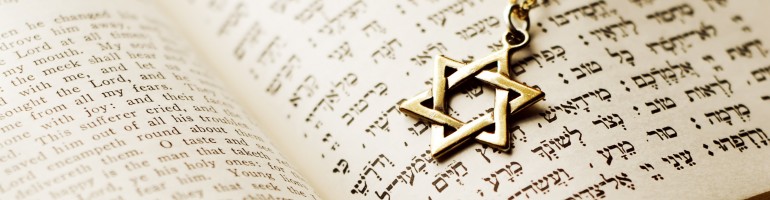
Leave a comment

Filed under Holidays & Festivals, Jewish Holidays, Jews and Christians, Judaism

The Gospel in the Jewish Holidays

Shalom, dear friend.

September is the month that Jewish people worldwide observe the three major Jewish holy days commanded by God in Leviticus 23. These holy days are observed in the seventh month of the Hebrew calendar, which usually falls during September and often spills over into October.

The Jewish New Year (Rosh Hashanah), the Day of Atonement (Yom Kippur), and Tabernacles (Sukkot) are all within three weeks of one another.

This season is an important time for Your Mission to the Jewish People. Excluding Passover, we usually have more Jewish seekers attend our many services around the globe during this season than at any other time of the year!

The Jewish holy days, given to Israel at Mount Sinai, cannot be canceled. World wars, famines, even pandemics must bow to God’s commands and calendar! Your Mission to the Jewish People will observe the festivals as we do every year, but this year we will give our celebrations a small “twist.”

In fact, we expect more people to join us this year than in years past since we will be holding services virtually and space is unlimited! We plan to host all three holiday celebrations online. We will enjoy our beautiful high holiday traditions and the wonderful Messianic Jewish music of Joshua Aaron on Rosh Hashanah, Marty Goetz on Yom Kippur, and Paul Wilbur on the Feast of Tabernacles.

Each festival will focus on Jesus, who celebrated the Jewish holidays and fulfilled them as well.

Please Join Us

I am hoping that you will invite your Jewish friends to join our online services. Many Jewish people will have nowhere to go in person to observe the holy days this year. Join us in praying that Jewish non-believers will be drawn to our glorious and beautiful Savior through these holiday events.

The following is the list of services. Please visit chosenpeople.com/highholidays, register, and join us!

New Year’s Eve – Friday, September 18 at 4:00 p.m. and 7:00 p.m. (EDT)

Day of Atonement Eve – Sunday, September 27 at 4:00 p.m. and 7:00 p.m. (EDT)

Feast of Tabernacles Eve – Friday, October 2 at 4:00 p.m. and 7:00 p.m. (EDT)

Hopeful Holidays in the Messiah

The holidays are a great time to celebrate the hope we have in Jesus, the Messiah. When you combine His Jewish background with the glory of His person as the fulfillment of all the Jewish people hoped for over multiple millennia, it is a stunning experience. So, please join us and allow the Lord to re-energize your sense of hope in Him.

The holidays also illustrate some of the great biblical themes we appreciate. The New Year points to new beginnings. One of the traditional themes of Rosh Hashanah, (literally, the head of the year in Hebrew), is repentance for our sins, leading to the next holiday focused on atonement and forgiveness.

The Day of Atonement foreshadows God’s provision of atoning blood through the death of Jesus on Golgotha. The festival of Sukkot, the Feast of Tabernacles, points to the great day when He returns, establishes His kingdom on earth, and the world is filled with His presence as the waters fill the seas (Habakkuk 2:14).

The theme of life-giving water is tied to the Feast of Tabernacles, which celebrates the final fruit harvest and ingathering of crops. Without water, we would never make it to the final harvest. Traditionally, Jewish people even pray for rain during the festival.

Jesus claims that, when we believe in Him, rivers of living water will flow from our souls!

Now on the last day, the great day of the feast, Jesus stood and cried out, saying, “If anyone is thirsty, let him come to Me and drink. He who believes in Me, as the Scripture said, ‘From his innermost being will flow rivers of living water.’” But this He spoke of the Spirit, whom those who believed in Him were to receive; for the Spirit was not yet given, because Jesus was not yet glorified. (John 7:37-39)

Your Prayers and Support

Your prayers and support have been such a vital part of helping Chosen People Ministries advance the work of Rabbi Leopold Cohn, our founder. We continue to follow the rabbi’s vision—to reach out to Jewish people worldwide with the unchanging gospel of our Lord Yeshua the Messiah.

We are able to continue this historic ministry because of your love, generosity, and prayers. Meanwhile, pandemic or no pandemic, we are preaching the gospel, and Jewish people are coming to faith. We are intensifying our online outreach campaigns in the United States and Israel. And we are following up on the thousands of contacts with Jewish people we receive through Zoom and phone calls, and God is blessing these efforts.

What is Next for Chosen People Ministries?

The future for our 126-year-old ministry will be similar to what believers have been doing since the day Jesus rose from the dead. We will depend upon the Lord to lead us, and in obedience to the unchanging Word of God, we will continue to advance His kingdom! Where He leads we will follow, knowing that He is always with us, which was His promise to His disciples (Matthew 28:20).

Your Mission to the Jewish People will continue to preach the gospel to the Jew first and also to the Gentile—you can count on this. Whether in the United States, Israel, or anywhere else in the world, we will look for new and creative ways to tell others about our eternal hope: the forgiveness of sins and the abundant life through Jesus the Messiah, which is available to all who believe.

We will minister online through Zoom, video, social media, and personally whenever possible…face-to-face and mask-to-mask! We know this present pandemic will pass, and we will safely begin conducting larger-group Bible studies and in-person worship services. We look forward to future street campaigns, campus ministries, and more! We experimented this past year with a new “gap year” residential campus work at New York University that was highly successful. We will do it again thanks to the generous support of a foundation.

My dear friends, the Light of the world has not been extinguished. He shines even brighter in the darkness. As the Savior said, “We must work the works of Him who sent Me as long as it is day; night is coming when no one can work. While I am in the world, I am the Light of the world” (John 9:4–5).

And we will keep working for Him!

Again, we hope you will join us for one of our special holiday services!

Your brother in the Messiah,
Mitch

Leave a comment

Filed under evangelism, Holidays & Festivals, Jewish Holidays

Finding the Hope of Yeshua in the High Holy Days

Dear friend in the Messiah,

I must admit that I am pretty tired of the pandemic! I cannot wait until it is officially over. I am praying for the Lord, our ultimate Healer, to work in the minds of brilliant scientists to come up with a vaccine and medications to counter the devastating impact of this disease that has killed so many people!

However, my hope is not in epidemiologists, though I pray for them and respect their hard work to find a cure. My hope is in the Lord.

We are social and spiritual creatures—especially as followers of Jesus—who love being with family and friends. We love sweet fellowship, praying as a community, worshiping and singing together, and hearing God’s Word unmediated by a screen.

All of us continue to mourn for what we have lost during the pandemic: schools, jobs, businesses, and, most significantly, loved ones who have suffered from the virus. I am grateful for our Savior’s words of promise, “Blessed are those who mourn, for they shall be comforted” (Matthew 5:4). Therefore, we will continue to seek comfort from the Lord and His unchanging Word.

Psalm 121 has greatly encouraged me: “I will lift up my eyes to the mountains; from where shall my help come? My help comes from the Lord, who made heaven and earth” (Psalm 121:1–2). In Him, we find our help, our hope, and joy for living!

LESSONS FOR CHRISTIANS FROM THE JEWISH HIGH HOLIDAYS

We are about to celebrate the Jewish New Year, which is called Rosh Hashanah. In Hebrew, Rosh Hashanah literally means “the head of the year.” There are ten days between the Feast of Trumpets (Rosh Hashanah) and the Day of Atonement (Yom Kippur) according to the holy days calendar outlined in Leviticus 23:23–27. In Jewish tradition, these ten days are called the Ten Days of Repentance. Our Jewish sages tell us that we have ten days to make things right between ourselves and God and between ourselves and our fellow man.

As followers of Jesus, we do not believe we are able to earn God’s forgiveness—He provides salvation and forgiveness graciously and freely (Ephesians 2:8–9). Our sin always requires payment, and the Day of Atonement graphically illustrates this. The Scriptures depict the Levitical priests offering blood sacrifices at the Temple altar for sinful humanity throughout the centuries until the Temple was destroyed.

As Moses explained, “For the life of the flesh is in the blood, and I have given it to you on the altar to make atonement for your souls; for it is the blood by reason of the life that makes atonement” (Leviticus 17:11).

Yet, we know that these offerings pointed to Jesus, the perfect sacrifice for our sins. As the author of Hebrews wrote, “He has been manifested to put away sin by the sacrifice of Himself” (Hebrew 9:26).

This atonement, achieved through the Messiah’s once-for-all death, was effective for all sins, for all time, and for all people. Unfortunately, most of my Jewish friends and family do not understand this. Jewish people today are generally unfamiliar with the Temple’s sacrificial system, which ended when the Romans destroyed this magnificent house of worship in AD 70.

Sacrifice for sin is now only a corporate historical Jewish memory. Modern Jews now only read about the Temple sacrifices in the Bible or Jewish literature and visit the Western Wall in Jerusalem, which was an outer wall of the Temple mount that still stands and reminds us of what once was!

Most Jewish people do not think about sin or atonement in the same way Christians do. Contemporary Judaism adjusted to the destruction of the Temple and teaches that the performance of good deeds is a substitute for the sacrifices of animals. Modern Judaism teaches that one’s name is written in the Book of Life when good deeds outweigh wicked deeds.

Yet, Jewish tradition teaches that the Temple will be rebuilt one day and that sacrifices will be restored. However, most Jewish people do not know about this future rebuilding of the Temple as it is believed by only the most ultra-religious within the Jewish community.

In fact, the Jewish people to whom I am the closest seem to live as agnostics or even atheists most of the year. Yet, surprisingly, many open their hearts to God and even yearn for forgiveness of sin during the high holidays. Maybe this is why the Day of Atonement is the most well-attended Jewish service of the year!

All human beings appear to have a deep inner longing for forgiveness; to forgive others and to be forgiven—even to forgive ourselves.

THE VALUE OF THE HIGH HOLIDAYS FOR ALL

As a Messianic Jew, Rosh Hashanah and Yom Kippur cause me to think about my relationship to God more profoundly. They remind me that atonement for sin came at a high price—Jesus’ death on the cross. God’s love and grace move me profoundly during the holidays as I reflect upon my sin and the forgiveness I have received through Jesus the Messiah. My heart cries out in joy with the Apostle Paul: “Therefore there is now no condemnation for those who are in Christ Jesus” (Romans 8:1).

Classical Judaism, on the other hand, teaches that humanity sins, yet it is not inherently sinful. Contemporary Jewish faith holds that we are free to choose righteousness or sin, and when we fail, atonement via repentance is always possible! Therefore, God’s offer of His grace, mercy, and forgiveness is received based upon our remorse and willingness to change.

When I found Jesus as my Savior, I became convinced of the opposite as I have broken with Jewish teaching on this topic because of what the Bible says (Romans 3:23) and because I know that I am sinful by nature. Yet, I do believe that regular personal repentance is a key to spiritual transformation. This is why I observe the high holidays. They are times for spiritual reflection, which are wonderfully enriching and essential for spiritual growth.

THE HIGH HOLIDAYS AND YOU

Your Mission to the Jewish People will observe the Jewish high holidays beginning with Rosh Hashanah, then Yom Kippur, and finally, the Feast of Tabernacles (Sukkot). We have planned three online services on September 18, 27, and October 2, 2020.

I hope you will join us and invite your friends—especially your Jewish friends who do not know the Lord and might not be able to attend synagogue services in person because of the pandemic.

It is one thing to tell a Jewish person they can be Jewish and believe in Jesus. It is quite another to sit next to them during a Messianic Jewish high holiday service listening to the blowing of the shofar, the chanting of familiar prayers, and hearing a Jesus-centered holiday message.

ROSH HASHANAH AND HOPE

I would like to add one closing thought about hope—one of my favorite topics these days. The Jewish holidays bring us hope as each festival looks forward to our bright future in relationship to the God of Abraham, Isaac, and Jacob. As followers of Yeshua, we know this world will one day fade away, as the trumpet will sound and those who believe will rise to a new and everlasting life.

Rabbi Saul—the Apostle Paul—wrote:

“For the Lord Himself will descend from heaven with a shout, with the voice of the archangel and with the trumpet of God, and the dead in Christ will rise first. Then we who are alive and remain will be caught up together with them in the clouds to meet the Lord in the air, and so we shall always be with the Lord” (1 Thessalonians 4:16–17).

We have a great hope, brothers and sisters! Our hope is a person—Jesus, who died for our sins once and for all and rose from the grave conquering death. He is the resurrection and our life!

Thank you again for your faithfulness and generosity.

Your brother,
Mitch

Leave a comment

Filed under Holidays & Festivals, Jewish Holidays, Jews and Christians

The Context of Pentecost Matters

by Pastor Greg Denham

While many believers today are praying for a “Jesus Movement”—an incredible work of the gospel—in our generation, to truly grasp what it means to be a Jesus follower, we need to understand the first believers, and it all begins at Pentecost. The impact of Pentecost is just as relevant today as it was two thousand years ago in the upper room. Pentecost began the Jesus Revolution. One might say that we must go backward to go forward, so let us journey back in time and learn how the context of Pentecost matters.

Following His resurrection, Jesus instructed His disciples in Acts 1:4 to wait in Jerusalem for the promise of the Father. We now know that He had a specific day in mind for that promise to be revealed—the day of Pentecost, which is one of the three pilgrim festivals required by the Lord (Exodus 23:14–17; 34:18–24; Deuteronomy 16:16–17). Pentecost comes from the Greek word penteconta (πεντήκοντα), which means fifty. The number fifty refers to the fifty days of counting the harvest, which began immediately after Passover.

The Hebrew name is Shavuot (שָׁבוּעוֹת), which means “weeks” and comes from the Hebrew word for “seven.” Shavuot is a harvest festival celebrating the end of the barley harvest and the first fruits of the wheat harvest. Yet, on the minds of the hundreds of thousands in Jerusalem for the Shavuot (Pentecost) festival was the belief that the Torah (the first five books of the Bible) had been given on Shavuot 1,300 years earlier. The Jewish tradition is called Z’man Matan Torah, “the season of the giving of the Law,” when the Lord separated His people from Egypt and drew them into a relationship with Him. It is when the earth shook with flashes of lightning, and God spoke in thunder!

Fifty days after Jesus gave His life on the cross was “when the day of Pentecost had fully come” (Acts 2:1). The events that follow reveal that the parallels between the giving of the Law and the giving of the Spirit—the beginning of the Jesus Revolution—are unmistakable. God manifested His presence atop Mount Sinai; 1,300 years later, He began the Jesus Revolution and inaugurated the New Covenant atop Mount Zion when He revealed His presence, power, and purpose to one hundred twenty Jewish believers. On Mount Sinai, God gave His commandments, written with His finger on tablets of stone; but at Pentecost in Jerusalem, He sent His Spirit to write His commandments on human hearts. At Mount Sinai, God judged three thousand for idolatry; but on the top of Mount Zion, three thousand people came to faith in Messiah Jesus!

In essence, the knowledge of God was exploding through the faithful remnant of Israel in the one hundred twenty followers of Jesus in the upper room! They were the remnant that was publicly and divinely identified by the tongues of fire above their heads and given the gift of tongues to communicate the wonderful works of God to an international gathering from fifteen different geographical locations with a variety of languages (Acts 2:3; 5–11). Peter declared, after being empowered and gifted by the Spirit, that Jesus, in His death, resurrection, and ascension, was creating all things new in Himself and would return to establish His kingdom on the earth in the city of Jerusalem! The New Covenant, inaugurated by Jesus’ blood on the cross at Passover, was now transforming three thousand Jewish people who had repented (Acts 2:37–41) and in whom now dwelt the Spirit of God. Now, the nations of the world could enter the New Covenant given to Israel, and could now experience the outpouring of God’s Spirit, too. (Acts 2:16-21; 39)

God’s plan, clearly revealed in His Word, has always been unstoppable! In that light, it is not surprising that both Passover and Pentecost frame God’s redemption narrative and point us to Jesus, the Messiah, who completes it.

Years ago, the apologist and Christian philosopher Francis Schaeffer was asked, “What is the greatest obstacle to the modern church?” His answer was fascinating. He did not say that the major problems were the “-isms” in culture: atheism, materialism, relativism, etc. Instead, he said, “The real problem is this: the church of the Lord Jesus Christ, individually or corporately, tending to do the Lord’s work in the power of the flesh rather than of the Spirit. The central problem is always in the midst of the people of God, not in the circumstances surrounding them.”[1]

Rediscovering the beginning of the Jesus Revolution in the first century—in its original context—can renew and even reorient to God’s intended course and mission for the Church!

For example, the context of Pentecost tells us that we can only accomplish God’s purposes for our lives in His strength! Jesus said, “You will receive power when the Holy Spirit has come upon you; and you shall be My witnesses both in Jerusalem, and in all Judea and Samaria, and even to the remotest part of the earth” (Acts 1:8). The Spirit’s work is comprehensive. He indwells the believer and gives assurance of being a child of God (Romans 8:16). He brings a believer into fellowship with “Abba! Father!” (Romans 8:15). The Spirit comes upon the believer to empower with divine gifting for a divine mission. Zechariah 4:6 reads, “Not by might nor by power, but by My Spirit, says the Lord of hosts.” The Spirit of God is the source of our strength in all areas of our life. We need to “be filled with the Spirit” (Ephesians 5:18) daily!

The context of Pentecost also tells us that Peter was addressing a specific audience in Acts 2:22, namely, the Jewish pilgrims who went to the Temple to give their offerings. In principle, it speaks of the often overlooked priority of Jewish evangelism. In Romans 1:16, Paul wrote, “For I am not ashamed of the gospel, for it is the power of God for salvation to everyone who believes, to the Jew first and also to the Greek.” Paul wrote this in the present tense, which means that if the gospel is still the power of God “for” salvation and is still for “everyone who believes,” then the gospel is still “to the Jew first.” The term “first” does not merely speak of sequence, but priority.[2]

Later, the Apostle Peter underscored an eschatological link to Jewish evangelism by saying,

Therefore repent and return, so that your sins may be wiped away, in order that times of refreshing may come from the presence of the Lord; and that He may send Jesus, the Christ appointed for you, whom heaven must receive until the period of restoration of all things about which God spoke by the mouth of His holy prophets from ancient time. (Acts 3:19–21)

Peter’s statement is consistent with Jesus saying, “For I say to you, from now on you will not see Me until you say, ‘Blessed is He who comes in the name of the Lord!’” (Matthew 23:39). Additionally, Revelation 1:7 reads, “Behold, He is coming with the clouds, and every eye will see Him, even they who pierced Him; and all the tribes of the earth will mourn over Him. So it is to be. Amen.” The reality is that before the world sees Him, Jerusalem will turn to Him! (Zechariah 12:10), “And so all Israel will be saved…” (Romans 11:26).

You can see that there is a tremendous spiritual battle regarding evangelism, of which we must be aware. “If Jerusalem will not see Him until she welcomes Him back, then no eye will see Him until Jerusalem receives Him!”[3] The origin of the Jesus Revolution at Pentecost reminds us that we cannot allow Jewish evangelism to become the “great omission” of the Great Commission.[4]

Pentecost reveals that the bullseye of the Church’s mission and preaching is the Person and work of Jesus! Peter proclaimed, “Men of Israel, listen to these words: Jesus the Nazarene…” (Acts 2:22). Keep the focus on Jesus, His death on the cross that bridged the gap between God and man, and His resurrection. Jesus demonstrates by rising from the dead that He is creating all things new in Himself. He said, “I am the way, the truth, and the life; no one comes to the Father but through Me” (John 14:6). Acts 4:12 reads, “And there is salvation in no one else; for there is no other name under heaven that has been given among men by which we must be saved.” There is only one reason why a person has eternal life in a right relationship with God; it is by making the right decision to follow Jesus (John 14:6; Romans 10:13; Acts 4:12; John 3:16)!

The context reveals the importance of repentance! On the day of Pentecost, the people were “pierced to the heart” and said, “‘Brethren, what shall we do?’ Peter said to them, ‘Repent, and each of you be baptized in the name of Jesus Christ for the forgiveness of your sins; and you will receive the gift of the Holy Spirit’” (Acts 2:37–38).

The Greek word translated as repentance is metanoia[5] (μετάνοια), which means to change the way one thinks. Such a change leads to a lifestyle change from a self-centered life in rebellion to God to a complete allegiance to Jesus Christ as one’s Lord and Savior. The call to repent and the promise to receive the Holy Spirit and forgiveness of sins remains today! In fact, God commands everyone to repent! The Apostle Paul said,

“Therefore having overlooked the times of ignorance, God is now declaring to men that all people everywhere should repent, because He has fixed a day in which He will judge the world in righteousness through a Man whom He has appointed, having furnished proof to all men by raising Him from the dead” (Acts 17:30–31).

The great evangelist D. L. Moody put it this way “Repentance is getting out of one train and getting into the other. You are in the wrong train; you are in the broad path that takes you down to the pit of hell. Get out of it to-night. Right-about-face!”[6]

Finally, the context of Pentecost reminds us that God’s plan unfolded in a Jewish environment. This perspective is essential for deepening one’s understanding of the Scriptures! We need great teachers today, we need great evangelists today, and we need a Church grounded in the truth and making Jesus known by the power of the Holy Spirit! The Jewish context is the basis for the accurate exegesis of Scripture, expository preaching, evangelism, and gospel contextualization in our twenty-first-century global audience.


Greg Denham is the pastor of Rise Church in San Marcos, California. Greg is a dear friend of Dr. Mitch Glaser, president of Chosen People Ministries. Greg loves the Lord, the Jewish roots of the faith, and is an active student of all biblical matters related to Israel and the Jewish people.

To contact Greg, or visit Rise Church online, click here.


Footnotes:

[1] Francis A. Schaeffer, No Little People (Introduction by Udo Middlemann) (Wheaton, Illinois: Crossway, 2003), 66.

[2] Walter Bauer, A Greek-English Lexicon of the New Testament and Other Early Christian Literature, trans. and rev. W. F. Arndt and F. W. Gingrich, second rev. F. W. Gingrich and F. W. Danker (Chicago: University of Chicago Press, 1979), 726; Wilhelm Michaelis, “proton,” in Theological Dictionary of the New Testament, ed. Gerhard Kittel and Gerhard Friedrich, trans. and ed. Geoffrey W. Bromiley (Grand Rapids: Eerdmans, 1968), 6:869.

[3] Michael L. Brown, Our Hands Are Stained with Blood: The Tragic Story of the Church and the Jewish People, revised & expanded ed. (Shippensburg, PA: Destiny Image Publishers, Inc., 2019), 226.

[4] Mitch Glaser, (lecture, Talbot School of Theology, La Mirada, CA).

[5] Metanoia literally means a change of mind. The Greek verb translated as “Repent!” is related to μετάνοια. The second-person plural imperative form of the verb μετανοέω (metanoeō) is mετανοήσατε, which is the word Peter used in Acts 2:38.

[6] W. H. Daniels, D. L. Moody and His Work (Hartford: American Publishing Company, 1876), 471.

Leave a comment

Filed under Holidays & Festivals, Uncategorized

The Joy of Shavuot

Shalom, friends!

We are looking ahead with anticipation of what our life will be like after the coronavirus pandemic subsides. With Passover and Easter behind us, we now find ourselves also looking forward to the celebration of Pentecost (Shavuot in Hebrew).

Shavuot (Hebrew for “weeks”) is known to Christians as Pentecost. It is one of three pilgrimage feasts found in the Hebrew Scriptures when God commands the Jewish people to go up to Jerusalem and worship at the Temple, and the last of the spring festivals. The festivals of Israel were designed by God to focus the hearts and minds of the Jewish people on God’s redemptive message.

The Spring Festivals

The Spring festivals listed in Leviticus 23 are Passover and the Feast of Unleavened Bread. The offering of firstfruits is mentioned in Leviticus 23:9–13. Each of these observances points to the Messiah in different ways. Passover is a prophetic portrait of the Lamb of God who takes away the sin of the world. The celebration of unleavened bread reminds us of the sinless nature of the Savior. The offering of the firstfruits points to a Messiah who would rise as the first fruit from among the dead.

The final Spring celebration is Shavuot, literally “weeks” in Hebrew, from the root word for “seven.” The Lord commanded Israel to count seven weeks from the day of the firstfruit offering (Leviticus 23:15) until the fiftieth day, at which point they observed Shavuot. In Christian tradition, this same festival is called Pentecost, which is the Greek term for “fifty.”

There are many Jewish traditions associated with Shavuot, such as reading the Book of Ruth, spending the entire night studying the Torah, chanting the Ten Commandments, decorating synagogues and homes with aromatic spices, and partaking of a dairy meal.

We read the Book of Ruth because Shavuot is a harvest-time account of Ruth, a Gentile, who identifies with the Jewish people and by following after herself to her Israelite mother-in-law, Naomi, and her God. Ruth is the great-grandmother of King David and part of the genealogy of Jesus (Matthew 1:5), which speaks of God’s intention to include Gentiles in the outpouring of His messianic blessings.

The Foods of Shavuot

No Jewish holiday is complete without its signature cuisine! According to long-standing custom, dairy foods such as cheese, cheesecake, and cheese blintzes (a delicious sweet cheese-filled crepe) are eaten on Shavuot. This tradition may be based on a passage in Song of Songs: “Your lips, my bride, drip honey; honey and milk are under your tongue, and the fragrance of your garments is like the fragrance of Lebanon” (Song of Songs 4:11).

This association compares the Bible to the sweetness of milk and honey. In some European cities, Jewish children are introduced to Bible study on Shavuot by eating honey cakes with passages from the Bible written on them.

The Messianic Fulfillment of the Festival

Now, if Passover was fulfilled in the death of the Lamb of God, the Feast of Unleavened Bread in His sinless character, and the first fruits offering in His resurrection, then we must ask ourselves: How did the first coming of Jesus fulfill the Day of Pentecost? It is no coincidence that God selected this Jewish festival as the day when he would send His Holy Spirit.

The Promise of the Spirit

According to Acts 1:15, there were 120 Jewish believers in one place, of one mind, praying and focusing on God’s work. They were waiting in obedience to the command of Jesus (Acts 1:4–5) and were observing the laws of Shavuot regarding “no work” (Leviticus 23:21). Many were pilgrims who had left their homes in other places to be part of this festival, as Pentecost was one of the three festivals when Jewish people were commanded to “go up to Jerusalem” to worship. These worshippers probably remained in Jerusalem between Passover and Pentecost and were, therefore, away from home for two months. God would bless their obedience now in a powerful way.

After many days of patient waiting, the presence and power of the Holy Spirit fell upon the disciples on the fiftieth day after Passover. It was a new revelation given on Shavuot/Pentecost! The giving of the Torah by Moses at Mount Sinai had come with signs and wonders, as seen in Exodus 19.

So it came about on the third day, when it was morning, that there were thunder and lightning flashes and a thick cloud upon the mountain and a very loud trumpet sound, so that all the people who were in the camp trembled. And Moses brought the people out of the camp to meet God, and they stood at the foot of the mountain. Now Mount Sinai was all in smoke because the Lord descended upon it in fire; and its smoke ascended like the smoke of a furnace, and the whole mountain quaked violently. When the sound of the trumpet grew louder and louder, Moses spoke and God answered him with thunder. (Exodus 19:16–19)

There were signs and wonders in the Upper Room, marking this transformed Pentecost, as well. It was the birthday of a new revelation and the fulfillment of God’s promises to pour out His Spirit in the last days!

The Tradition of All Israel Being Present at Sinai

According to Jewish tradition, our sages taught that every Jew who would ever live was at Mount Sinai, pledging their obedience to the Law. The rationale for this is that every Jewish person at that moment agreed to keep the Torah. The verse used to teach this is in Exodus 24:7: “Then he took the book of the covenant and read it in the hearing of the people; and they said, ‘All that the Lord has spoken we will do, and we will be obedient!’”

This Jewish tradition avers that every Jewish person standing at the foot of Mount Sinai that day heard the giving of the Law in their native tongue so that they could understand what they were hearing and obey. Now, this is a tradition; we do not believe this actually took place. But this custom is ancient and may have been known by Jesus and His disciples.

This new Pentecost took place fifty days after Jesus, the Lamb of God, died for our sins. There were signs and wonders accompanying the pouring out of the Spirit, just like at Mount Sinai, and those who listened to the disciples preaching heard this new revelation in their native tongue. The giving of the Spirit had come in a similar powerful manner as the giving of the Law at Sinai and therefore had great authority for the disciples and the Jewish people gathered who also witnessed this event.

How gracious of God to use our culture and human understanding to communicate His truth to us! He communicates with us in ways we can understand: God could make His point otherwise, but He often reveals Himself and His truth in ways that humans can understand.

Perhaps the best example of this is when the Son of God Himself took on flesh to communicate with you and me and help us better understand the Father.

Counting the Days

We do not know when the pandemic will end, and therefore we are unable to count the days until this challenging time is finished! We do know, however, that God is at work in the waiting. That is one of the lessons of Pentecost, which is clearly stated in the Psalms, “Wait for the Lord; be strong and let your heart take courage; yes, wait for the Lord” (Psalm 27:14).

May you be blessed in your waiting!
Your brother in Messiah,
Mitch

2 Comments

Filed under Holidays & Festivals, Uncategorized

Passover and the Resurrection of Jesus

Shalom in the wonderful name of Jesus, our Messiah!

This Passover/Easter time of year has undoubtedly been the most challenging, and yet in some ways, the most meaningful holiday season my wife, Zhava, and I have ever experienced. As I am sure you know, the Passover Seder is the foundation for the Lord’s Supper and fulfilled all that the Passover foreshadowed in the Book of Exodus regarding redemption and salvation.

On the night He was betrayed, Jesus, our Messiah, celebrated His last supper, which was, in fact, a Passover Seder—His final one. He demonstrated to His Jewish disciples that He was the fulfillment of all the longings and dreams the Jewish people had imagined about the ultimate deliverance promised in the Old Testament Scriptures. On that night, Jesus declared Himself to be the bread of life as He identified His body with the middle piece of matzo—usually broken, hidden, wrapped, and brought back, which is part of the traditional Passover Seder.

He portrayed Himself as the lamb of God, whose shed blood redeems those who put their faith in His death on the cross. The entire message of redemption is presented in type in the Passover and fulfilled by Jesus in the Last Supper. It is as if God sketched the Book of Exodus in black and white, and painted the Gospel of Luke in brilliant color.

Luke writes,

And when He had taken some bread and given thanks, He broke it and gave it to them, saying, “This is My body which is given for you; do this in remembrance of Me.” And in the same way He took the cup after they had eaten, saying, “This cup which is poured out for you is the new covenant in My blood. (Luke 22:19–20)

Jesus is unquestionably the Lamb of God, who takes away the sin of the world. He is the One whom Isaiah described when he wrote, “He was oppressed and He was afflicted, yet He did not open His mouth; like a lamb that is led to slaughter, and like a sheep that is silent before its shearers, so He did not open His mouth” (Isaiah 53:7).

I observed Passover with many friends of Chosen People Ministries via video on Tuesday night and with my Jewish family on Thursday night. There were forty of us on a Zoom call, reading through the Passover Haggadah, which tells the story of the exodus. Of course, my family does not yet believe that Jesus is the rest of the story, so please continue to pray that they might see that Jesus is our Passover.

We also had a beautiful Passover Seder, with all of its Messianic fulfillment, with my daughter and son-in-law, his parents, and my youngest daughter, as well—each one in their own home, but all of us together via the Internet. It was quite something until we tried singing one of the well-known Passover songs, Dayenu. It is not possible to have forty people on a Zoom call singing anything together. But it was still a beautiful and joy-filled experience.

The Chosen People Ministries staff are all working remotely in the United States and around the globe. We are having amazing conversations, Bible studies, and web-based outreach campaigns. People are home, available, and open to spiritual solutions to the overwhelming problems we face today.

I also wanted to let you know that Zhava and I are well, and our kids are all safe and sound. We continue to be healthy even though thousands around us in the greater New York area are sick and perishing. It just breaks my heart!

This morning, I awoke to a beautiful and sunny Resurrection Day to discover that the United States had crossed the threshold of 20,000 deaths due to the coronavirus and that the New York area accounts for almost half of this number. The state of New York recorded just under 800 deaths again yesterday. It is challenging to hold on to the rescue rope of social distancing and the various mitigation measures we have taken as a nation—as crucial as this is!

For those of us who believe in Jesus, Easter offers a better hope—a superior hope—as our greatest hope does not lie in our attachment to this world but to our relationship with the One who has conquered death and disease. He is the Great Physician who heals both body and soul and will one day remove the curse of sin from our world and wipe away every tear from our eyes.

If there is one thing we can learn from resurrection Sunday, it is that life goes on. The disciples who approached the empty tomb saw that the stone was rolled away but did not immediately believe Jesus had risen from the grave. They questioned the story told by Mary and the other women for a short time until He appeared to two disciples on the road to Emmaus and the rest of the disciples later on.

The truth is, Jesus rose from the grave and conquered death. It looked like His life had ended and with it any hope that He would establish the Davidic Kingdom at that time. Even though it now seemed to the disciples that they were alone in this world, without their Savior and Lord, whose mission seemingly failed, the truth was quite different. Jesus had not failed and, though He died, He had risen and was now alive—as He had promised!

The resurrection is the testimony that the work of salvation was completed on Calvary, that the promise of the Holy Spirit to be with us throughout our lives would be fulfilled, and that, one day, He would gloriously return.

This is why the Apostle Paul, at the conclusion of his first letter to the congregation in Corinth, wrote so eloquently, “…but thanks be to God, who gives us the victory through our Lord Jesus Christ. Therefore, my beloved brethren, be steadfast, immovable, always abounding in the work of the Lord, knowing that your toil is not in vain in the Lord” (1 Corinthians 15:57–58).

This passage guides and strengthens my life. It has kept me going in the face of family and community opposition, through tough times and difficulties, and now even a pandemic. It is this confidence in His resurrection and glorious return that puts a smile on my face today and every day, as I hope it does for you.

Thank you for your prayers and your generous and very faithful support.

I pray that this Resurrection Day will remind you of the great hope we have today and tomorrow, as HE HAS OVERCOME THE WORLD.

He is Risen,

Mitch

2 Comments

Filed under evangelism, Holidays & Festivals, Uncategorized

Hanukkah: The Messiah is the Light of the World

Shalom dear friend in the Messiah,

‘Tis the Hanukkah–Christmas season! It is a time of good cheer when, generally speaking, Jewish people are celebrating Hanukkah and Christians are celebrating Christmas. Though I must admit, even in New York, there are quite a few “Hanukkah bushes” (a Christmas tree decorated for Hanukkah) displayed in homes throughout the area.

It goes without saying that there are many differences between the holidays, but through the years I have discovered many parallels as well.

One of the most obvious similarities is that both Hanukkah and Christmas are observed the same time of year. The precise date of the Messiah’s birth is a bit controversial in some circles, but what is absolutely clear from the New Testament is that the God of Israel became man, dwelled among us, died for our sins, and was raised to life in fulfillment of the plan of God’s redemption detailed in the Bible.

This year, Hanukkah, which is an eight-day celebration, and Christmas overlap once again. This creates a natural tension between the two festivals, especially in Jewish communities. I grew up believing that one of the ways you could tell a Jew from a Christian was by the holidays he or she celebrated. For that reason, celebrating Hanukkah was viewed as a symbol of loyalty to the Jewish people. My family and other Jewish people who know that I believe in Jesus as my Messiah often ask me which holidays I celebrate. The underlying question being so subtly asked is whether or not I still view myself as Jewish now that I believe in Jesus!

In case you are unfamiliar with Hanukkah, let me give you a brief overview of the celebration. Hanukkah celebrates the great victory of the Maccabees, a family of Levitical priests, over the armies of Antiochus Epiphanes, the Syrian Greek general whom the Jewish people nicknamed “Antiochus the madman”! He tried to destroy the Jewish people by turning them into Greeks, but failed.

Hanukkah is also called the “Festival of Lights.” According to Jewish tradition, when the Temple was recaptured from Antiochus, there was only enough oil to keep the menorah in the Temple lit for one day. However, a miracle happened, and the eternal light of the Temple menorah lasted for eight days, the time it took for the ceremonial olive oil to cure and keep the lights perpetually burning. Jewish people see this as a great dual miracle—that God gave the Jewish people a humanly impossible military victory and marked the event by ensuring the lights lasted the full eight days. That is why we light a candle each night as part of the eight-day festival.

The lights provide an obvious bridge between Hanukkah and Christmas. When my kids were small, I used to take them through parts of Brooklyn during the Christmas season just to see the homes decorated with lights in the most magnificent ways. Some neighborhoods looked like they belonged in Rockefeller Center or Times Square at New Year’s!

The tradition of giving presents is also important for both holidays. Jewish people give one gift to their kids each night of Hanukkah, and the tradition of giving presents on Christmas, in the tradition of the magi at Jesus’ birth, continues until this very day. Of course, both holidays are often over-commercialized, but in my opinion, there is never a bad time to give presents, as long as you are focused on the real reason for this season. Jewish people are thankful to God for preserving the nation and express this thanksgiving by giving presents to one another. This is similar to Christmas, as we show our gratitude to God for sending His only Son to die for our sins by giving presents.

This is a great time of the year to show your gratitude to God and to the Jewish people by giving an end-of-year gift to Chosen People Ministries that will be used to reach Jewish people for Jesus!

And then there are the wonderful and delicious traditional holiday foods! Jewish people eat potato pancakes (latkes) and jelly donuts (sufganiyot). These are all cooked in oil and eaten to remind us that God enabled a day’s worth of oil to miraculously last for eight days. Christmas, depending on where you come from, is replete with wonderful and different types of food as well. From Christmas cookies to Norwegian pinnekjøtt (lamb or mutton rib) to delicious Italian panettone, the holiday foods are an essential part of our celebration.

What I like best about both Hanukkah and Christmas, though, is the focus on family. It is one of the reasons why this holiday season can be so sad for those who have lost loved ones or do not have a family, either physical or spiritual. Enjoying the holiday with family, whether relatives or “congregational family,” is truly beautiful. I pray that, if you have lost a loved one recently, God will give you a full measure of His grace and joy during this season of the year.

A Messianic Jewish Perspective

As a Messianic Jew, I am always looking for deeper links between the festivals and believe there is an absolutely amazing parallel that I want to share with you.

In the Gospel of John, chapter 10, we see that Jesus celebrated Hanukkah, also called the Feast of Dedication. (The Hebrew word Hanukkah literally means “dedication.”) The festival also served as a platform for Jesus to make one of His most profound statements about His person and ministry recorded in the New Testament.

It is this one statement that I believe brings Hanukkah and Christmas together in the most dramatic and profound way.

At that time the Feast of the Dedication took place at Jerusalem; it was winter, and Jesus was walking in the temple in the portico of Solomon. The Jews then gathered around Him, and were saying to Him, “How long will You keep us in suspense? If You are the Christ, tell us plainly.” Jesus answered them, “I told you, and you do not believe; the works that I do in My Father’s name, these testify of Me. But you do not believe because you are not of My sheep. My sheep hear My voice, and I know them, and they follow Me; and I give eternal life to them, and they will never perish; and no one will snatch them out of My hand. My Father, who has given them to Me, is greater than all; and no one is able to snatch them out of the Father’s hand. I and the Father are one” (John 10:22–30).

When asked if He was the Messiah, Jesus did not give a simple yes or no. Rather, He revealed His true nature to the Jewish leaders and declared that He and His Father were one. This declaration affirms the fulfillment of the prophecy of Isaiah who predicted that, one day, God would take on human flesh, dwell among us, and reveal the character of our heavenly Father in the most tangible of ways.

Isaiah wrote, “Therefore the Lord Himself will give you a sign: Behold, a virgin will be with child and bear a son, and she will call His name Immanuel” (Isaiah 7:14).

It is only fitting that Jesus made this declaration on the Feast of Dedication, which reminds us of the great miracle of the Incarnation and revelation of God’s glory and light. This parallels the symbolism found in the menorah in the Temple as God Himself is the true light that illuminates our hearts and souls. As Jesus said earlier in John’s Gospel, “I am the Light of the world; he who follows Me will not walk in the darkness, but will have the Light of life” (John 8:12).

The real link between Hanukkah and Christmas is Jesus Himself. He is God in the flesh; the light of the world who dispels our personal darkness and transfers us to the kingdom of His Son. As Isaiah predicted and Jesus fulfilled,

“But there will be no more gloom for her who was in anguish; in earlier times He treated the land of Zebulun and the land of Naphtali with contempt, but later on He shall make it glorious, by the way of the sea, on the other side of Jordan, Galilee of the Gentiles. The people who walk in darkness will see a great light; those who live in a dark land, the light will shine on them” (Isaiah 9:1–2).

And Paul adds,

“For He rescued us from the domain of darkness, and transferred us to the kingdom of His beloved Son…” (Colossians 1:13).

I hope you have great joy in this marvelous deliverance! I also pray you have a wonderful season of joy and that the light of your personal testimony of God’s grace and victory will shine brightly among Jews and Gentiles during this special season of the year!

Your brother in the Light of the World,

Mitch

P.S. We are now beginning our 126th year as a ministry among the Jewish people. Thank you for your faithful prayers and support. We are excited about 2020. Stick with us!

Leave a comment

Filed under Holidays & Festivals, Jewish Holidays, Jews and Christians, Uncategorized

Jesus is the Reason for the Season

Shalom in the great name of Jesus our Messiah.

Can I tell you a very personal Jewish Christmas story?

I was raised in a traditional Jewish home in New York City. I was born in what I like to call the true Holy Land—Brooklyn, New York! Both of my parents were Jewish and fairly typical of their post-Holocaust generation. Although my mom was more religious than my dad, they were both very committed to their Jewishness and, as a family, we celebrated all of the Jewish holidays.

Hanukkah was, without a doubt, my favorite holiday. This eight-day festival of lights celebrates the great victory of the Jewish people over the Greco-Syrian “madman” Antiochus Epiphanes. We celebrated the holiday by lighting candles for eight days and by giving gifts to one another on each night. And there were the holiday foods—potato pancakes dipped in applesauce or sour cream and delicious jelly donuts, called sufganiyot—mmm!

Sound great? Family, friends, gifts, and very unhealthy food. There is nothing like it!

In New York City, Hanukkah menorahs or beautifully decorated Christmas trees grace the windows of homes and apartment buildings. It always gets dark early in New York around this time of year, so it is easy to see which holiday the families are celebrating.

I was raised as a Hanukkah loyalist, which I equated with allegiance to my Jewish people. When I began considering the gospel, I thought I would have to choose between Christmas and Hanukkah. At that time, I thought if I accepted Jesus and agreed to celebrate Christmas then I would be a traitor to my heritage and might be committing a version of ethnic suicide by believing in Jesus and observing His birthday.

Yet, God was working in my heart, and I was drawn to Him through the transformed lives of my two closest friends who had become believers in Jesus. It was still very hard to make the leap because I thought this decision would mean I was no longer Jewish. How would I ever explain this to my family?

I began reading the New Testament seriously and soon discovered that even Jesus celebrated Hanukkah, or the Feast of Dedication, as recorded in John chapter 10. At the heart of the holiday is the celebration of God’s deliverance of the Jewish people from those who oppress and persecute us. I also found out that the Old Testament, my Jewish Bible, predicted that the Messiah would actually be God in the flesh. Therefore, the whole idea of the incarnation was not foreign to Judaism but was there all the time in my Jewish Bible.

So, I embraced Jesus as my Messiah and discovered that it was possible to be Jewish and believe in Jesus.

You might ask, “What holiday do you celebrate now?” Both, of course! Why give away eight presents for one when you could have nine? Seriously, what greater present could even come close to the gift of eternal life resulting from a personal relationship with the God of Abraham, Isaac, and Jacob through Jesus the Messiah? Over the years, I discovered that it is easy to be Jewish and believe in Jesus. It is like the proverbial “hand and glove,” as Jesus is the fulfillment of all my people’s hopes and dreams. He is the Deliverer and Redeemer we are waiting for.

He is Messiah, Savior, and Lord. The son of Abraham and David, and the Son of God. As the great prophet Isaiah predicted, “Therefore the Lord Himself will give you a sign: Behold, a virgin will be with child and bear a son, and she will call His name Immanuel” (Isaiah 7:14).

The prophet continued,

For a child will be born to us, a son will be given to us; and the government will rest on His shoulders; and His name will be called Wonderful Counselor, Mighty God, Eternal Father, Prince of Peace. There will be no end to the increase of His government or of peace, on the throne of David and over his kingdom, to establish it and to uphold it with justice and righteousness from then on and forevermore. The zeal of the Lord of hosts will accomplish this (Isaiah 9:6–7).

JEWISH EVANGELISM IN THE 21ST CENTURY

And now I have the joy of serving as the seventh president of our 125-year-old mission to the Jewish people, and we are about to begin our 126th year of faithful service among the Jewish people. Thousands of Jewish people have come to faith through the energetic, visionary, and faithful staff of Chosen People Ministries.

And we could not have done this without your faithful prayers and support.

THE ROMANS 1:16 TO THE JEW FIRST CAMPAIGN

During the next 12 months, we want to continue focusing on three special areas of ministry. Let me briefly tell you what they are now, and I will explain further in the months ahead.

ISRAEL

We are pouring financial and human resources into ministry among Israelis. Our twenty-five full-time workers in Israel are reaching Israelis day in and day out. We are also reaching Israelis as they travel after their army duty. We have been touching lives everywhere from the Upper West Side of Manhattan to countries such as New Zealand and India. Soon we will be starting a new ministry among Israelis traveling through Brazil. These young people are incredibly open, especially when they are away from home. Also, we are able, with a good-sized staff in Israel, to follow up with those who show interest in the gospel when they return home from overseas.

DIGITAL EVANGELISM

We are also investing heavily in the modern “Mars Hill” of digital evangelism through websites, video creation, and social media. God is leading us to thousands of Jewish people each year who we meet through the web and who are interested in the gospel. It is not cheap, but it is absolutely worth it. We have spoken now to tens of thousands of people through these ministries!

THE NEXT GENERATION

We are looking toward the future and providing training for the next generation of missionaries to the Jewish people. With a track record of 125 years of faithful service for the Lord, we fully understand the importance of passing the torch to the next generation. In light of this, we are continuing to train young people through our Charles L. Feinberg Center for Messianic Jewish Studies seminary program in Brooklyn. We are investing in the next generation of Israeli leaders through our Living Waters mentoring program in Israel and around the world via our global young adult conference, Muchan (Hebrew for “ready”), usually held in Europe. We are also providing a variety of internships and extending our outreach among Jewish students. We call this next generation effort The Joshua Initiative because we want to raise up a new generation of leaders like Joshua who will serve the Lord faithfully with courage and power (Joshua 1:5–6).

We can do this because of Him and your partnership and prayers.

YOUR FAITHFULNESS

May Jesus, the joy and reason for the season, fill your home with warmth, happiness, and grace during the holidays. I want to thank you for supporting Chosen People Ministries. You are an important part of our ministry family.

We are now serving in nineteen countries around the world and in twenty-five cities throughout North America. As we wrap up our 125th year of celebration and begin 2020, I cannot help but reflect upon His faithfulness, the amazing things He has done, and how much we have expanded the ministry, even this year. We want to be ready for tomorrow. And, by God’s grace, I believe if we embrace the opportunities of the New Year together, arm in arm, following in the Savior’s footsteps, we will.

Merry Christmas and Happy Hanukkah!

Because God became flesh,
Mitch

Leave a comment

Filed under evangelism, Holidays & Festivals, Israel, Jewish Holidays, Uncategorized