The Ten Plagues
The Jewish digital magazine, The Tablet Magazine, printed a comic strip drawn by Jules Feiffer with the title, “Wherefore (Why) is this plague different than all other plagues?” The Feiferesque drawing has one man sitting by himself at a rather long Seder table. The humor might need a touch of explanation. One of the classic parts of the annual Seder is the Four Questions asked by the youngest reader in the home. The first question is, “Why is this night different from all other nights?” The boy posits the uniqueness of the Seder among so many other days of the year or even days dedicated to holiday observance. The little boy is asking, “What is different about the Passover Seder?” The various answers comprise the section of the Passover Haggadah called the Maggid, which is a term similar to Haggadah from the Hebrew word “to tell.” Maggid refers to the story stitched together from Exodus and various Jewish traditions over the centuries, telling the story of the redemption from Egypt.
The recitation of the ten plagues is a critical part of the Seder event and one of the most memorable moments for Jewish children during the Passover Seder. Traditionally, we dip a pinky into a glass of sweet red wine and drip a drop of the liquid onto our plates while loudly naming each plague. This a favorite moment for the children because they get to shriek and scream as loud as they wish. We usually recite them in Hebrew, but of course, in the United States, we also shout out the translation.
There are two explanations for why we drop the wine on our plate. One reason is that it more dramatically portrays the plagues as judgments falling upon the Egyptian slave masters. The other is because the rabbis tell us to reduce our joy (symbolized by the sweet wine) by one drop for each plague that fell upon the Egyptians. Though they enslaved us, they are fellow human beings and God’s creations, and therefore we should not rejoice because of God’s judgment upon them. The Lord needed to use plagues against Pharaoh, causing him to let the Jewish people go free so they could worship the God of Abraham, Isaac, and Jacob. Because of their suffering, we reduce our joy.
This vital part of the Seder reminds the Jewish people that God sent plagues upon others in mysterious harmony with His will. He used plagues to move both the Egyptians and Jewish people to action. Biblical plagues are always purposeful and, while causing terrible circumstances and suffering, they are often used mysteriously by God for His divine purposes.
There are many biblical examples of plagues, including the ten in Exodus, the affliction heaped upon Job, and many others. Sometimes God caused epidemics, and other times, He allowed them to fall upon Israel, individuals, and the Gentile nations. For example, Naaman and Miriam, Moses’ sister, were plagued with leprosy for God’s holy purposes and His glory. However, leprosy was a common disease and not a biblical plague, per se.
Plagues are not always punitive. Like the healing of the blind man in John chapter 9, plagues fell upon humanity for the glory of God and accomplish His purposes among mankind.
At times, there seem to both punitive and revelatory reasons for these afflictions.
COVID-19 and the Ten Plagues
We are not suggesting that COVID-19 is an infectious disease that was imposed directly by God, similar to those described in chapters seven through twelve of the book of Exodus. There have been many instances of plagues throughout human history and in Scripture. Although the coronavirus is particularly vicious, we have no reason to believe that the spread of the virus is the result of God’s judgment. Our knowledge is limited to Scripture, and of course, the Bible does not speak about the coronavirus, nor the Black Plague, nor Spanish Flu. The adage, “Where the Bible is silent, so am I,” is appropriate in this regard.
On the other hand, we cannot deny that God used plagues as judgments in the past and will do so in the future. COVID-19 has unfortunately awakened us to the possibility that plagues, along with other signs, will pave the way for future judgment and the coming of the Messiah, according to rabbinic eschatology. Evangelicals would agree that “pestilence” or plagues are also signs of His second coming, according to what the Messiah stated in Luke’s portrayal of the Olivet Discourse (Luke 21:10–11).
Hopefully, one day, we will look back and see the good our heavenly Father accomplished through this epidemiological trial. We pray that somehow blessings will come for all, through this time of pain and suffering (Romans 8:28) and that the lessons learned in the darkness we will remember in the light. Hopefully, we will learn the more profound lessons God intends from this horrific plague and that the Lord will use the experience and loss to shape our character, reorder our priorities, and draw us closer to Him.
 Mordechai “Moti” was born in 1984 in Haifa, Israel, the only child of an Orthodox Moroccan Jewish family. As a young adult, Moti learned radio broadcasting and served in the Israel Defense Forces between 2003–2006. Moti traveled to the United States in 2007 pursuing his dream of becoming a photographer. He took classes at Photo Manhattan in New York while also working as a kosher supervisor on the Upper West Side. During this time, he became acquainted with Chosen People Ministries. He was challenged to read the Bible for himself and seek God on his own terms. After much prayer, thought, and study, Moti came to believe that Jesus was, in fact, his Jewish Messiah. When Moti returned to Israel in 2010, he signed up for classes at the Israel College of the Bible (ICB) to learn the Bible in a deeper way. Currently, Moti works with youth, soldiers, and students, teaching the Bible and sharing the good news in Israel. Moti and his wife, Orel, are both passionate about reaching their fellow Israelis, especially working with youth and young adults.
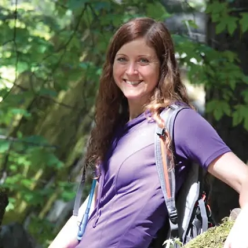 Ayelet was born in Tel Aviv, Israel, and was raised in a Messianic Jewish family. She came to believe the Bible and placed her faith in Yeshua at an early age. By the age of five, she was sharing the gospel. In her teens, she became active in camp and youth ministry. Ayelet always appreciated the cultural diversity in Israeli society, with Jews from all over the world. The Lord led her to study anthropology, Bible and theology, and apologetics, with a desire to minister to her diverse people in a culturally sensitive and biblically accurate way.
 David was born in Latvia to a family of Jewish believers in Jesus. As a teenager, he moved with his family to Israel and then served in the Israel Defense Forces. David committed his life to the Lord at the age of seventeen while reading